Software
Houzz Logo Print
valerie_sanchez96

What the FUNGUS?!

8 years ago
last modified: 8 years ago
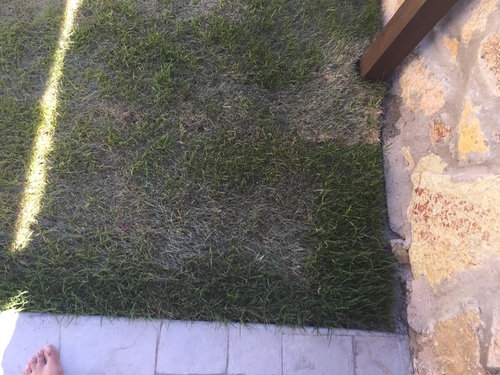
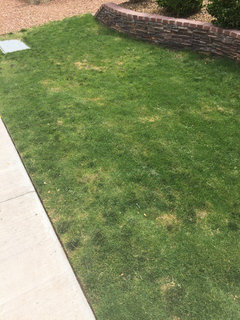
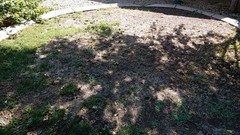
What is this fungus? I got new sod and overwatered at night. Hence, the nasty fungus consuming my entire lawn! I now water three times a week in the AM. Right when I get the lawn back on track, another spot develops. I’ve been treating with Immunox and it works but not long term. What gives?

Fungus · More Info


Fungus · More Info


Fungus · More Info


Comments (29)

  • 8 years ago

    Looks like summer patch to me

  • 8 years ago

    Is starts off with this grey haze and then boom!

  • PRO
    8 years ago

    You might check with the lawn care forum.

    What is the grass? I had a small Zoysia lawn that was gorgeous the first year. Next year got what it looks like you have. Treated ad infinitum and it never did any good. Now it is patio.

  • 8 years ago

    Well, I went to the local nursery and they said F-Stop will do the trick. I’m committed to getting this grass back!

    Fungus · More Info

  • 8 years ago

    Hi Rhizo_1, I thought it was Powdery Mildew also when it first started but, to be honest, at this point I have no idea what it is. I don't see the white spots characteristic of Powdery Mildew on the blade, just the grey haze. I thought Powdery Mildew, Pythium Blight, Red Thread, Brown Patch. The grey haze seems to be the wilting, thinning and loss of green color of the blade. I am hoping that the F-Stop works because I am beginning to get so discouraged. I just spent quite a bit of money landscaping my backyard and I don't want to lose the sod...

  • 8 years ago

    Everyone is guessing because they are internalizing your problem to their problem. We need to know where you live and what kind of grass it is before guessing further.

  • 8 years ago
    last modified: 8 years ago
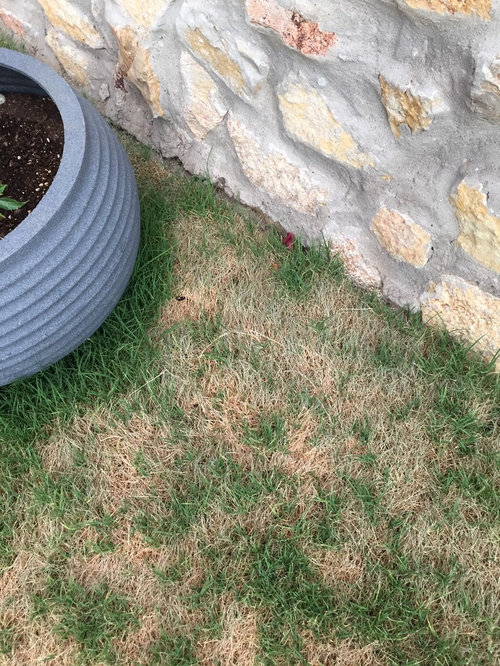
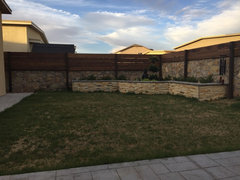
    Hi dchall_san_antonio, my name is Valerie and I live in El Paso, Texas. We are in the midst of 105 degree weather at the moment. I got my backyard landscaped about 2 months ago. The landscaper laid down Bermuda sod and I know they treated the lawn with some sort of soil/fertilizer before they laid it down. He told me to water it daily for 2 weeks, which I did. However, I watered (soaked) it in the evening times after work. After the 2 weeks of watering the grass looked IMPECCABLE, however, on May 6th I noticed a white/grey haze over a small patch of the lawn. Nervous it was fungus, I applied a neem oil treatment. I noticed it didn't help and further spread. From there, I applied an Immunox treatment and within a few days it looked like it worked but the grass turned yellow. I am assuming that the fungus had spread so badly and the Immunox killed the blades. The grass started coming back and filling in with green. I ended up changing my watering patterns to the morning, 3 times per week. There have been a couple of re-occurrences and I keep putting Immunox. I have probably put like 6 treatments. I sent my boyfriend to the Nursery yesterday with photos of the fungus and they recommended F-Stop. That's where I am now.


    Also, I put Scott's Lawn Food a week ago because I thought the lawn was so stressed that it could use it.

  • 8 years ago

    Thanks for the location. I think I remembered that from another one of your questions, but wanted to be sure.

    This might be more of a watering problem than a disease. Bermuda is bullet proof and rarely gets disease, and improper watering can look like what you have. Watering at night is not normally a problem because you would not normally be watering every night. At this point, assuming the sod is knit to the ground, you should be watering deeply and infrequently. What that means exactly differs for everyone, but especially for people in El Paso. Many of your neighbors have gravel instead of soil. It sounds like you might actually have soil. With this in mind, let's assume you are sort of normal but you live in the desert. You should completely stop watering for a few days and then start to measure the water as mentioned down below. Watering is the single most important part of lawn care.

    Most people don't get fungal disease. Most people in the desert really don't get fungal disease. The problem you will have with almost every chemical fungicide is that the directions say not to apply if the temp is going to be higher than 85 degrees in the next few days. That sort of limits us to November through April. I'm going to suggest you hold off on more fungicide for now and let the lawn recover with a watering adjustment.

    Watering: Deep and infrequent is the mantra for watering. This is for all turf grass all over the place. Deep means 1 inch all at one time. Put some cat food or tuna cans around the yard, and time how long it takes your sprinkler(s) to fill all the cans. Memorize that time. That will be the time you water from now on. My hose, sprinkler and water pressure takes 8 full hours to fill the cans. Your time will likely be less. I like gentle watering. As for watering frequency, that depends on the daytime air temperature. With temps in the 90s, deep water once per week. With temps in the 80s, deep water once every 2 weeks. With temps in the 70s, deep water once every 3 weeks. With temps below 70, deep water once a month. Note that you have to keep up with quickly changing temps in the spring and fall. This deep and infrequent schedule works in Phoenix and in Vermont, so it should work for you. The reason for deep and infrequent is to grow deeper, more drought resistant roots and to allow the soil to dry completely at the surface for several days before watering again. If it rains, reset your calendar to account for the rainfall.

    As I mentioned, El Paso is a little different. You have new sod, so the roots are not deep in the ground yet. Still, we're talking about bermuda. It is bullet proof. If it looks wilted for a day or two, it will recover instantly when it gets wet. Every time you water deeply and allow it to dry out, the grass will grow deeper roots. I have a friend in Phoenix where the temps fall from 110 in the day to 100 at night. He waters his St Augustine 3/4-inch every 5 days this time of year. You are slightly cooler with a more heat tolerant turf. You should easily be able to water 1 inch every 7 days and have a great looking lawn.

    Here's a general plan for bermuda in El Paso on real soil.

    Water all year as explained above. Use that as a guide and adjust according to the situation. If you get a period of overcast days, adjust the frequency but not the amount.
    Mulch mow at a low setting as often as needed. When the grass is growing fast, this might mean 3x per week. With temps above 105 I would raise the mower a notch.

    After the lawn has awakened in the spring (after you have mowed for
    the second time - begin fertilizing every 4-6 weeks with a high N
    fertilizer like urea. Continue throughout the growing season even in
    the heat of summer. Use an organic fertilizer at least once a year.

    Early spring (mid Feb) - apply preemergent herbicide.

    Mid spring (4 weeks after you are mowing regularly) - spot spray broadleaf weeds with Weed-b-Gon for Southern Lawns.

    In the heat of summer watch for chinch bug damage. They like to get started near the hot pavement, but be careful not to confuse lack of water with chinch bugs. Hot pavement remains hot all night and dries the soil faster than out in the middle of the yard.

  • 8 years ago

    Somebody in Valeries other thread suggested dethatching but I think this turf is way too young for that, please don't dethatch in the first year after the sod goes down. Wait until year 2 minimum, preferably year 3 if you still need it. If you bag your clippings, you will never need to bother with thatch removal.

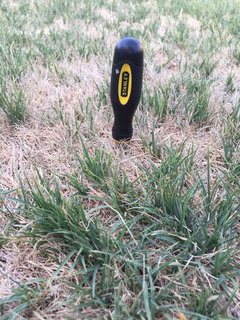
    For what it's worth, fungus seems very unlikely given your location, but I guess it's possible. Can you stick a screwdriver into one of those dead spots all the way to the handle, or do you hit a big rock after the first inch or two?

  • 8 years ago

    Hi reeljake, actually I

    Front · More Info

    've created 2 messes. The other thread is for my 4 year old front lawn. This one relates to my backyard which is 6 weeks old.
    Fungus · More Info


    d_chall_san_antonio: THANKS! I will work on what you said. Unfortunately, I don't have a sprinkler system in the back, just the front. I am going to follow your regimen for the backyard (new sod) and with hard work and good will, I will get it back. I do think it is odd that I keep hearing it is rare for fungus in El Paso because everyone I know has it. In fact, we were at Home Depot last weekend and I can't tell you how many carts I saw with fungicides. We must over water here or clearly don't know what the heck we are doing!

  • 8 years ago
    last modified: 8 years ago
    Fungus · More Info

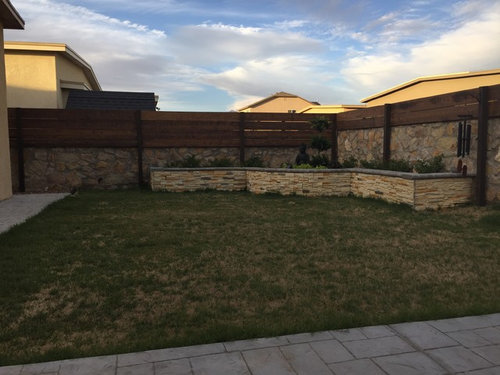
    Reeljake, I just did the screwdriver test and it goes all the way in, very easily.


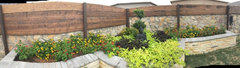
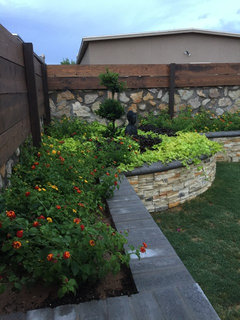
    On a more positive note, my flower bed has tripled in size!

    Fungus · More Info

    Fungus · More Info

  • 8 years ago

    Flower beds look great--Lantanas? I'm glad were talking about 2 different lawns, I was worried you were going to tear up your brand new yard with a dethatcher from Lowe's or HD.

    Maybe el paso is a hot spot for fungus? Alabama supposedly is thanks to weather & water currents, so anything is possible.

  • 8 years ago

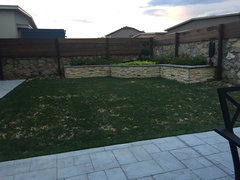
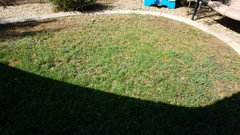
    UPDATE: It's been a little over 3 weeks and I cut down to watering deeply once a week. My fungus (or whatever that was) occurrence has stopped and all of the dead spots are filling back in!

    Before:

    Fungus · More Info

    3 Weeks Later:

    Fungus · More Info

    AND my flowerbed is doing so well!


    Fungus · More Info

    I am on the right track! Thanks dchall and company for the much needed help!

  • 8 years ago

    hahaha, my company and I say, "you're welcome." hahahaha

    Glad it is shaping up for you.

    Valerie Sanchez thanked dchall_san_antonio
  • 8 years ago
    Help! We moved in recently & have found the lawn looks Really hopeless after the heat. Looked sad, especially under the sissoo anyway, but now what to do? I thought of tilling it all under and starting again but read that is maybe not wise. Great monsoon last night which delivered 1.2 inches so it is really soft for the first time. We live in Phoenix. The rye did NOT want to die off well this year either. This has gone from completely unacceptable to disastrous!
  • 8 years ago

    Hi Lori,

    I know how it feels to be utterly stressed by an "under-performing" lawn. Although, I am learning that I was the culprit! With some feedback from the folks on here, I was able to get things back on track.

    I am a total newbie to this and am barely scratching the surface with my lawn knowledge. I recommend you take your post and start a new comment string. I am sure that folks will come to your aid as they did for me. In any case, good luck to you!

    Valerie

  • 8 years ago

    Lori,

    Please repost your original message but only to this forum. There is something wrong with that other forum that seems to be blocking the ability to post comments. There are a lot of issues to talk about.

  • 8 years ago
    i can't figure out how to... this is my first ever forum involvement. how? hellllp
  • 8 years ago

    Hi Lori,

    Follow these steps:

    1. On the main site, click on "Stories & Advice"

    2. On drop down, click on "Gardenweb Discussion"
    3. Place your cursor in "Start a Discussion"
    4. Type in your tag line where I have typed, "test 123456789". In the larger box, you paste your question that you have typed on my thread.
    5. After you click "Next", you will be prompted to choose a topic. Click on "Lawn Care" and then proceed to post.
    At this point, your post should be logged in the correct forum. Let me know if you have any questions.

    Valerie

  • 8 years ago

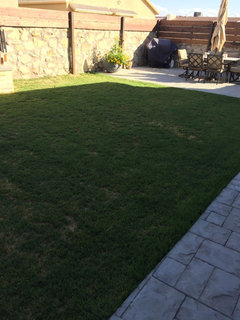
    It's almost all filled in! I am now a FIRM believer in deep and infrequent watering.

    Fungus · More Info

    Fungus · More Info

  • 8 years ago

    Lawn care boils down to watering, mowing, and fertilizing, but if you do it wrong, you can get into trouble. In your case you thought the problem was a disease. Had you simply treated for disease you would not have fixed the watering problem, and you would have stressed the grass plants more with the chemicals. And worse is applying the chems in the summer heat.

    Now that you are into deep and infrequent, you have about 90% of lawn care down. Once you have that right then mowing and fertilizing make up the other 10%. With deeper roots the grass will get nutrients from deeper in the soil, so it should look better in general. Now you can go on that 2-week vacation and not worry about the lawn dying.

    Valerie Sanchez thanked dchall_san_antonio
  • 8 years ago

    I'm glad you lawn is recovering. Im currently in the process of dethaching and overseeding my self. One of the members posted about deep infrequent watering. Is that applying 1 inch of water all in one day for the week or over a few days? I have kentucky blue grass and live in the midwest.

  • 8 years ago

    This is another general comment that is true for any lawn; everywhere I go I see the same thing - people wait too long to mow, then cut too short. This is a lawn killer. Now that you have adjusted your watering according to dchall's excellent advice, make sure you have the cutting height where it should be for your particular type of grass and cut often enough so you don't cut more than 1" or one-third of the blade length. I have Bermuda even out here in the Mid-Atlantic because its extremely hardy and drought-resistant. In fact I have started letting my lawn grow whatever it wants - crab, poa anna, Bermuda and various small broadleaf weeds. I don't water, feed or weed-kill. I cut it, its green and from the street it looks fine. I had some trees removed last year creating more open areas in the wooded back lot. This was in October, and when the trucks and tractors left, there was nothing living in the back yard. You should see it now - my 'whatever' lawn has spread to follow the light and we had lots of rain in May and June, so now I have a green back yard that spreads into the woods. I had to go buy a small riding mower so I could still mow the whole yard in an hour. My plan is to continue to remove small trash trees, undergrowth and hollies throughout the rest of the wooded area so its still wooded but there will be enough light to support more of this ground cover. I will be starting that soon as the weather will be turning a little cooler, and I hope to be able to seed the whole area this fall with 'contractor mix'.

    BTW, practically everyone using a riding mower that I have seen cuts way too short during the hot weather, practically/literally scalping and raising clouds of dust. These are people who pay to have the lawn aerated and seeded every fall, pay a lawn service to spray several times a year and have irrigation systems - then they get on the mower and go out and kill the yard. You can tell them but they won't listen.

  • 8 years ago
    Ok so 1 inch of water a week and water it all in once???????????
  • 8 years ago
    or over a few day, my question wasnt really answered, thanks.
  • 8 years ago
    last modified: 8 years ago

    It is best to apply all at once....that's where the 'infrequent' aspect comes in :-) But if the soil is compacted or the irrigation does not soak into the soil properly, you can break it down into a couple of applications.

    In my area, which experiences a prolonged seasonal drought every summer, the typical recommendation is to apply as much as you can in one go. If it doesn't seem to be soaking in fast enough, wait an hour or two (or a bit more, if necessary), then appy the rest - same day.

  • 8 years ago
    Ok, now I get it. Thank you very much.