

1920s Eclectic Prairie House Projects
Hopefully I don't jinx myself like last time, when I started posting on a house that we were interested in purchasing only to have our offer passed over for someone who could close much faster than us. But this time we are fully under contract, and have been for going on 2 weeks now, the inspection is completed, the financing is underway. Our current house is under under contract and everything seems to be on its way there. Fingers crossed that the appraisals, financing, title, and everything else falls into place and we will be closing and moving by mid-next month. I'm not asking a specific question with this post, but expect this to be a catch all for our journey and the projects and issues we come along as we get into fixing and restoring the great old house.
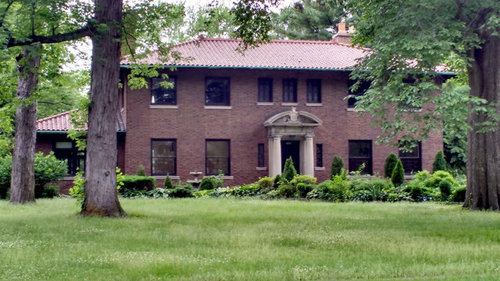
Anyway, we are currently in the process of purchasing a bank owned house in an inner-ring Chicago suburb. It was constructed in 1924 on a really great street of big old trees and historic homes. My research suggests that it may have been designed by Chicago prairie style architect George Maher late in his career, based on some of the houses styling, and the fact that the staircase and some of the moldings are nearly identical to some of his other 1920s houses. It's an interesting eclectic mix of Maher's typical boxy prairie massing and low hipped roof, with a Neoclassical entrance, Renaissance Revival style exposed rafter tails, and Colonial Revival interior.
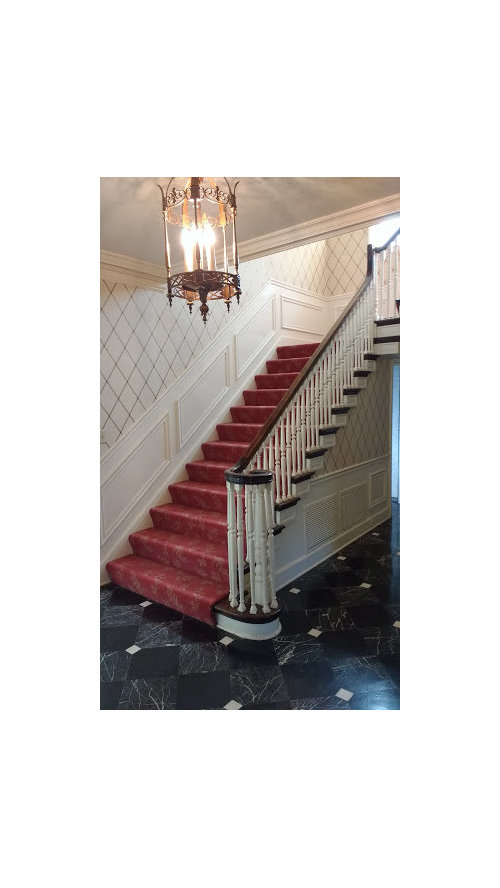
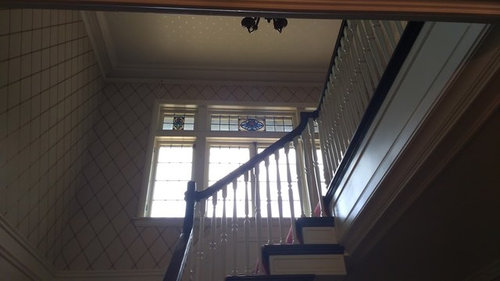
We are fortunate the house is actually in really good condition for the average foreclosure property. The previous owner put quite a bit of effort into the house during the 18 years that he lived there, and we suspect the amount of money he put into updating and decorating the house may have played a part in his financial misfortune. He's an interior designer who did many interesting things with the house, but his taste is also more extravagant than ours, and one might call it a bit dated.
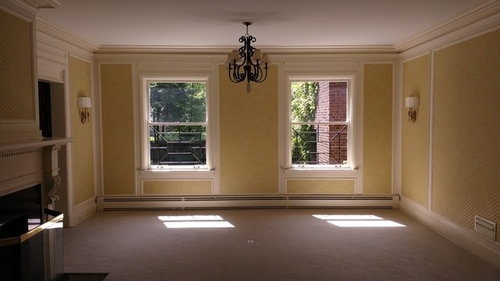
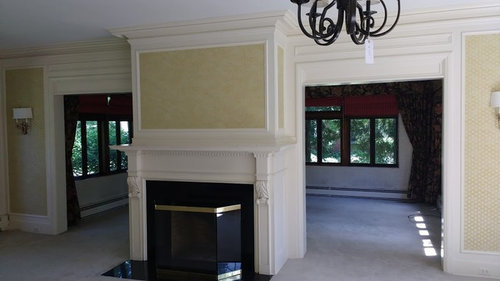
But there are still many projects that need attention. And once we get through those, we really want to start working on making the house both fit our taste and needs, while also bringing some aspects of the house closer to how it looked when it was built. First off, we are going to have to figure how to repair/replace the two rear doors who's original hardware and frames were damaged when the In bank or city forced entry to the home following the sherrif's sale. In the short term, both the 100 year old boiler, and unique water chilled forced air cooling system need attention, the masonry parapets on the garage need to be rebuilt, and the low slope (nearly flat) garage roof needs to be replaced. And we want to pull up all of the tired carpets to see the condition of the oak and red quarry tile floors beneath.
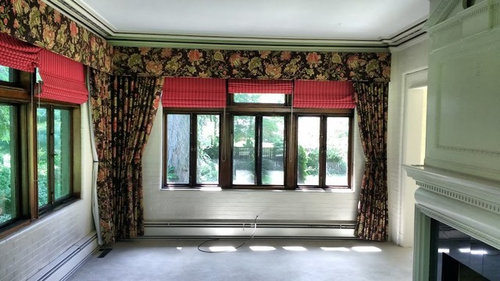
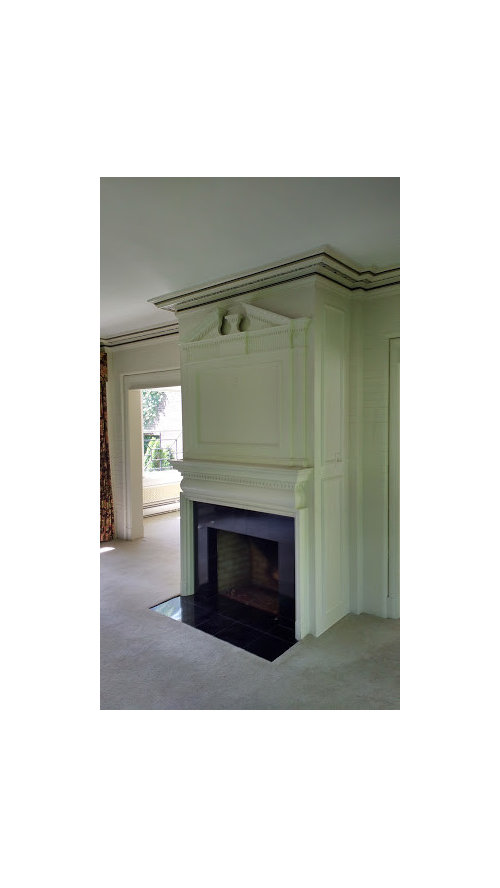
Long term, we are considering having some or maybe much of the woodwork stripped, as there is evidence in several areas that it was once stained. Similarly the sun room has brick walls that appear to be light brown under the white paint. We'd also like to give the house real access to it's back yard, rather than having to walk around the garage, and tweak the kitchen so that it feels less like the early 90s and more in tune with the rest of the house.
Please excuse my less than spectacular cell phone photos, and if anyone has any great ideas or insight, we'd be glad to hear them. We are looking forward to the journey.
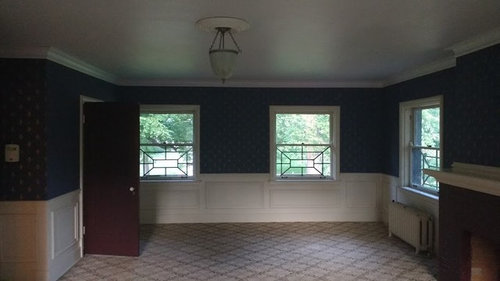
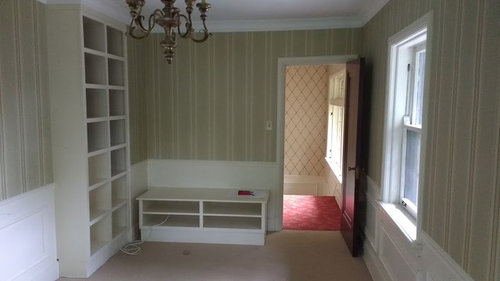
Comments (21)
 PRO8 years ago
It's a lovely house but I'm not seeing "Prairie" in it anywhere. Not really any arts and crafts style, either. But I do see lots of colonial/traditional.
You are going to have your hands full with all the structural/HVAC etc that must be done on this house before you do anything. Don't get yourself distracted and start stripping paint of woodwork or wallpaper. Take care of the important - ESSENTIAL - parts first.
I doubt that woodwork was stained. Even if it was, it's very hard to remove paint and then successfully stain woodwork. This actually happened in our major church remodeling - contractor thought all the millwork was to be painted white since it's a very colonial style church. He painted it an there was an outcry. He tried to remove the paint but ended up putting stain over paint and it looks like hell. Of course, the entire church looks like a "church designed by a large committee" since that's exactly what it was! But I digress...
Do the necessary work. They make a master plan for decorating. Hire a decorator if this is not something you like or are good at. And then do one room at a time. In the end, you will have a wonderful house!
Is the house in Oak Park? I'm very familiar with that town - college friend lived there for many years after she married, my aunt and I alway drove there to take the EL into the city, and my late FIL was born there!

A Fox
Original Author8 years agoThanks for the thoughts Anglophilia. We definitely are starting out with the necessities first, all the things listed above are basically part of a 3-5 year plan. But we are trying to master plan design to some extent at the same time, since some things, such as shades or blinds are going to happen sooner than later. But that's definitely good advice for my partner, who is ready to purchase whole rooms of new furniture and upgrade functioning kitchen appliances, when we don't even have the estimates for the exterior repairs yet. We certainly are aiming at not going broke like the last owner tending to this house.
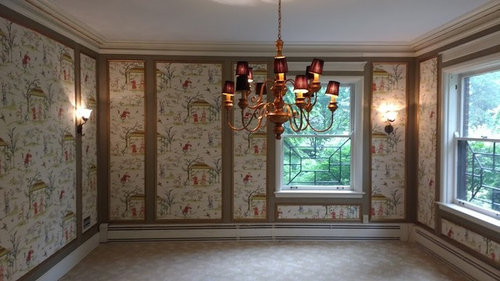
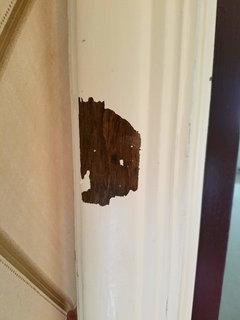
I'm pretty sure that most of the woodwork in this house was stained. There's one door casing upstairs where a 3" square section of paint has flaked of and there is brown stain underneath. The exact species of wood yet to be identified, but I assume whatever the stair banister is made of. The same stained wood was observed where I pulled off one of the radiator covers in the dining room, and I was scraping with my fingernail around a nail hole in the living room fireplace and was seeing a little brown there as well.
We figured we might start with some of the doors, which are currently painted red-brown and see how they come out. If everything was painted right over the stain and there aren't too many layers like I've seen so far, possibly the paint adhesion isn't very good and we will be in luck. If we are successful with the doors, then we will assess how far we want to go with the rest of the woodwork. Some of the current woodwork we are pretty certain was done by the previous homeowner and will need to remain painted, such as the chair rail and faux paneled wainscoting going up the stairs and in the upstairs bedrooms along with I think the sun room fireplace. But possibly we can work out a logical mixed scheme.
No, we aren't in Oak Park, but it's a great area that we would love to live in. Geographically we are on a completely different edge of Chicago, which in a way is fortunate for us, since this house would have cost us 2-3 times what it did if it were in Oak Park.
Related Professionals
Eau Claire Interior Designers & Decorators · Wilmington Kitchen & Bathroom Designers · Macon Furniture & Accessories · Pittsburg Furniture & Accessories · Bangor Furniture & Accessories · Lake City Home Remodeling · Chambersburg Home Builders · Florence Home Builders · Laredo Home Builders · Laconia Home Builders · Eureka Home Builders · Macon Home Remodeling · Chambersburg Home Remodeling · Concord Home Remodeling · Rapid City Bathroom Remodelers PRO8 years ago
What a beautiful stately home! My advice, start with the largest projects first...mechanical upgrades, windows, etc. And try to give priority to the architectural style of the home. In other words, don’t try to make it something it’s not. Restore, instead of redo. Congratulations!
- 8 years agolast modified: 8 years ago
I hope instead of, or in addition to Houzz forum you will seek out a professional historic preservationist to consult with, as well as look for some historic home forums ... Starting with your heading - Im not sure where the 1920s prairie appellation came from - I do see some prairie in it incl roof line, wide broad windows, etc but Im not sure about some of the elements, wonder if it had been futzed with over the years and colonial elements added on?
That's were a specialist would be of much value - to inform you what the original design intentions were and then how to design new to mesh with the old and come up with a house that is sublimely beautiful instead of a chaotic, disharmonious one with too many random elements thrown together.
With such a grand house Im sure you can find some pics of the original which would help inform you and your designer. If you find them pls do post here - Im dying of curiousity!
 8 years ago
As soon as I saw the house I thought Evanston but that's no less expensive than Oak Park! Beautiful house, a lifetime project for sure. Totally agree do all mechanicals (HVAC, electric, plumbing, sewer (get it video-ed to the street ) and take care of any structural elements that need to be addressed. Windows, exterior doors, flashing, tuckpointing, gutters, downspouts and grade. It's hard to put off all the fun stuff that you know will make it beautiful, but the best kitchen in the world may as well be non functional if the roof leaks and you can't appreciate gorgeous furniture if the electric is smoking behind the walls.
- 8 years ago
Your home is just beautiful no matter what style it is. I agree that doing the big stuff first is essential. I would also recommend waiting a year before tackling non essential renovations. Many times you learn to appreciate original features that you thought you would like to change.
I want to clear up one thing, just because the wood is painted, doesn't necessarily mean that the paint cannot be removed and the wood restained if it turns out that the moldings/trim were originally stained. Often, shellac was used to "stain" the wood and once the paint is removed the shellac can be restored. This was the case in our 1908 home. The paint came off pretty easily and then I could have re-shellaced it or restained it. I choose the latter but wish I would have re-shellaced it instead.
I hope all goes smoothly with your purchase.
A Fox
Original Author8 years agoAll, thanks for the thoughts so far. Hopefully it did not come off in any way that we want to drastically change the house in any way. The goal is definitely to let the house dictate what it wants to be, albeit tempered here and there by our tastes and functional requirements.
As far as hiring a preservation professional, the plan was to rely mostly on myself and go for second opinions whenever we get stumped. I'm an architect who has some preservation educational background and has been working on restoration and renovation projects in the corporate and public sector for 5 years now. But I'll admit even after that I recognize that I still have much to learn.
powermuffin: What was the process/product you used for stripping your woodwork? I'll admit that I don't know a ton about shellac other than that it isn't impervious to water and can be dissolved with alcohol. For what reasons would you have preferred shellac over stain?
For those interested, here is the sport where the paint has peeled off on one of the door casings:
And confirmed at the base board by pulling off one of the radiator end caps (sorry poor photo):
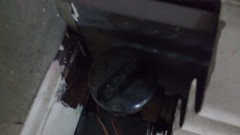
It's looks to me like there really is only 1, maybe 2 layers of paint, and that it was applied right over the previous finish. The few layers isn't too surprising, since we would apparently be only the 4th occupants of the home. And purchasing it in only the second time it's been for sale since it was built since the second family was the daughter of the first.
A Fox
Original Author8 years agoWe also had an HVAC technician look at the water chilled AC system today, and they managed to get it working. That's a really great thing, especially since only 4 windows in the house currently operate, and since we got the first quote for tuck-pointing and masonry work and it came out to $14k.
We are going to shop that one around though since they are charging the same price to do the top 8' of a chimney that we were charged to tuckpoint all 24' of chimney, repair the cap, and replace a few dozen bricks on our current house. And their quote doesn't even account for renting a lift to get up there.
- 8 years agoWow! Lucky you! Now....go out and buy a journal and document everything you do in this labor of love. Every day, every purchase. Every joy, every disaster. Create a blog for us to follow. Please?!? What a treasure! Good luck!!!!
- 8 years ago
Yes, please create a blog for us to follow! What a beautiful home and I'm so happy that it's in the hands of someone who will respect and preserve it! I get the Prairie reference from the exterior but it is certainly a wonderful lying eclectic mix inside. Congratulations!
- 8 years ago
One thing to keep in mind that, whether all the woodwork was originally stained or not (probably stain and shellac?), since the interior is pretty strongly Colonial Revival, the painted woodwork is not inappropriate either.
A Fox
Original Author8 years agolast modified: 8 years agoSome quick updates a month later:
The buyers on our current home should be closing as I type this. Our closing is scheduled for Wednesday, then we move everything in between then and Saturday, when the professionals are scheduled to move the big items over. At the same time all of the carpet in the house is getting pulled and everything is being given a good cleaning.
The most uncertain part of the move-in so far is that we need to have various locks repaired and re-keyed. That's going to be essential to the move-in since the front door is currently locked with no key and the back door is currently unlockable and secured only with a padlock. We have to trust our locksmiths have ordered the correct cylinders to get both doors working again. Finding parts for 100 year old locks was definitely one of the unanticipated challenges in buying a historic home. Luckily no part of the actual mortise locks seem to be damaged, but they are of a size that has made ordering replacement parts difficult, total hardware replacement is basically impossible without making major modifications to the door.
Here's our back door. This lock set is completely functional except that the city tried drilling into the cylinder before finding they couldn't break a mortise lock that way and kicked in the door.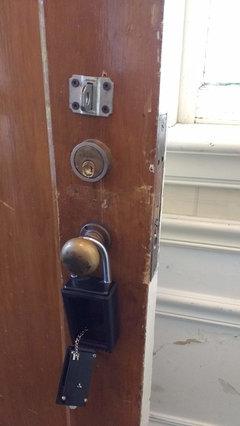
What's especially frustrating, is just finding people who can and will do the work. Many declined the job knowing that mortise locks or old doors were involved without even seeing pictures. And several times in the process we've been told that we are better off just replacing the door, even when we were just looking for someone to replace or repair the door frame. I suspect this will be a reoccurring theme as we continue to work on the house.
On the subject of trim, while repairing the aforementioned door jamb (a project that we've started before closing knowing that we need to get the doors locked right away), the casing that was pulled off is most definitely walnut. Since this was in the service stairs down to the basement, I can only assume that all of the woodwork in the house is walnut, with the exception of the front door, which appears to be quarter sawn white oak, I presume chosen for it's ability to stand up to the exterior elements.
When I get a chance I still want to make a post on the research that I've done so far on this house, and what I've found about it's style and potential architect. Someone that we ran across who knew about the house had the same suggestion that we create a blog on our work and experiences.
- PRO8 years ago
Be still my heart...walnut millwork. Take your time with this one!
 8 years ago
I am in Chicago and want to come see this place - it sounds great!
I know it is frustrating to find workmen. Honestly you might have to start DIYing more than you'd like to get the kind of craftsmanship you are after.- 8 years agoI can't quite see the logo on the lock set but it looks like Corbin. I have a Corbin lock on my front door and a similar situation with a foreclosure and no key. Actually I didn't have the inside door knob so I opened and closed the door with a flat blade screwdriver until we found and replaced the doorknob. I unscrewed the cylinder and took it down to the locksmith who rekeyed the lock and made me three keys for less than $30. After he did that, he told me it would have been cheaper to have purchased a new cylinder to fit and he said he had those for sale if I needed something similar again.
Old house locks and doors are an exercise in patience. I have spent quite a bit of time futzing with the locks at my previous house, all Sargent brand mortise locks (1931). Some previous owner removed the interior thumbturn so the only way to unlock from the inside was with the key. One day my husband had trouble because the entire cylinder turned when he tried to unlock the door as the set screw had come loose. It is very easy to do the fix but a bit more difficult to figure out what was needed. I have removed the locks from the door and opened them up when they don't work right.
First comment when working with locks is make sure to take a picture as soon as you take the cover off. Second hint is to be certain you are working somewhere the pieces won't be away to get away. The little springs have a way of popping off when you try to put it back together. My usual fix is clean and oil and sometimes replace the spring if it doesn't hold firmly. We have a great local Ace hardware staffed with old house people because the big box stores just don't carry the necessary items.
I am in Kane county and there is a house by Maher a couple blocks from mine but a fraction of the size of yours. That looks like a gorgeous house and you will have projects galore for eternity. It is so nice to see someone buy the older houses who doesn't want to transform them into a modern monstrosity. I hate to hear people suggest to replace a door because they don't understand the lock mechanism.
Old house guys are tough to find and can be expensive. These houses are built with different materials and methods than many modern houses and you just have to keep searching to find people who appreciate the vintage materials. I am sure you can find someone to rework your door casing but if it is too far damaged to repair, I know an old house guy who can make molding to match.  8 years ago
http://www.oldhouses.com/old-house-general-interest
https://www.facebook.com/groups/112721307203/?ref=bookmarks
https://www.facebook.com/groups/391126170964284/
Here's some sources to get you started.
Gorgeous house btw and you have walnut!
 7 years agolast modified: 7 years ago
That’s a beautiful home! We are going to check out an old house tomorrow. It has the same radiator heating as yours. I hope the house can stay warm in an colder zone. Anyone has radiator heating in an old house? .
- 7 years agoRadiator heat is fantastic. Very even, quiet, cheap to run if it is done well. The biggest downside is that it is difficult to install central air. Lots of people will denigrate radiators but once you have had a house with radiant heat, you quickly get spoiled
 7 years ago
This is one project I will love following. Congratulations on such a wonderful purchase.







l pinkmountain