Software
Houzz Logo Print
jacoblockcuff

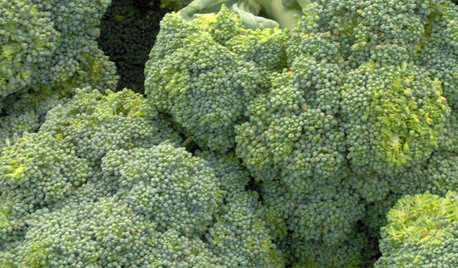
Fall Broccoli and Heat

Hey everyone. I've got a longer DTM fall broccoli growing in flats in a partial shade location outside. I can't help but notice that before the seedlings gain a few sets of leaves, they really can't tolerate full sun in the summer heat. They seem to handle it alright once they develop a few sets of true leaves, provided they get enough water. I'm growing in open flats for that reason- I find that they retain water much better than cells. This past week our temperatures have been hovering in the 70's, but it'll soon be hot again (around 90ish) starting tomorrow.


I won't be transplanting these until around mid to late July, but that's generally the hottest time of year around here, hovering somewhere in the 90's. My question: will I need shade cloth to keep these alive in a full sun location? Or will they survive if kept well watered and mulched? Most years it's cooled off considerably by Labour Day and our perfect broccoli cropping conditions are late Sept./early Oct (70's by day, 40's by night), so they'll only have about a month of extremely hot weather.


I'll also be transplanting my Brunswick (90 DTM) cabbages this next week. Same story with those! Weak at baby leaf stage, very hardy once they get a good few sets of true leaves. This leads me to believe that starting in flats in a partial shade location until they are bigger, then transplanting in a full sun location, can be quite crucial to a successful fall crop. What are your experiences with this?

Comments (15)

  • 8 years ago

    Jacob - I plant out my fall broccoli and cauliflower around August 10 up here and I shade with a layer or 2 of AG19 for the first 7-10 days until the roots get more established. Brussels Sprouts will go out around mid July and get the same treatment.

    jacoblockcuff (z5b/6a CNTRL Missouri thanked LoneJack Zn 6a, KC
  • 8 years ago

    Jacob, I've been thinking about trying to have a fall crop of brassicas but seeing as it's so stinking hot here, and dry, right when they need to be germinating, not sure I can pull it off. Been thinking about starting in little home-made newspaper cups in the house under the fluorescent lighting that I use in late winter when I start my tomato and pepper plants. I think Farmerdill's method of transplanting right around Labor Day might be a good one for us in OK and AR. LoneJack, you are in same zone as I, but I don't think I could ever manage planting in July or August. Our wind is like a dehydrator and sucks the moisture out of everything.

    I just finally managed to get a baby rabbit out of my garden and now I'm finding squash bug eggs and nymphs on my squash plants. *Sigh*. The beat goes on....

    jacoblockcuff (z5b/6a CNTRL Missouri thanked User
  • 8 years ago
    last modified: 8 years ago

    Ilene, I had attempted a fall crop of cabbages last year but transplanting in late August, and it was much too late. By the time daylight length began shortening after the fall equinox they really quit growing, and the cold killed them. We also don't seem to get the wind you have, which is odd; course, we have a lot of trees around us being in a forest. I seem to run a few degrees cooler than Lonejack here so I'd think I could transplant in July or August, but could be wrong.

    Now, if I kept potting up and transplanted at Labour Day as very old plants, there's a good method to avoid dealing with the heat completely, but- that's a lot of seed starting mix expense, and brassicas grow so quickly!!

    Jack, you use AG19? I have AG30 I could use for that first week. Do you elevate it up off the plants for proper airflow, so it doesn't heat up underneath?

    If they only need shaded for a week or two with transplant shock, I could always just cover with pots and containers after they get some morning sun, as we should be home.

    Thank you all for the replies; it helps a lot!

    Oh, an extra note: Ilene, you mentioned having troubles germinating the brassicas. If direct sowing, wet well and cover with wet cardboard. If in pots but out in sunlight, cover with wet cardboard as well. This works well every time for me. This year I've got them all germination in our shed, which is very shady being directly underneath a treeline. Of course, bringing indoors under lights works too, but I'd imagine hardening off at this time of year would be a pain in the you know what!! Good luck haha

  • 8 years ago
    last modified: 8 years ago

    Jacob - I put the AG19 just over the top of the plants like an umbrella. It is suspended over the bed using 1/2" PVC. They do need to be mulched well to keep the soil from drying out in the mid summer heat. I usually water almost daily for the first week until the roots can get some depth.

    Rockwhisperer - I wouldn't try to direct sow brassicas in the mid summer heat either. Transplants may look a little droopy in mid afternoon but they recover overnight. I do direct so carrots, green beans, and squash in July. I do like Jacob and cover the carrots with wet cardboard or burlap for 4 or 5 days until the start to sprout and then I shade them with some AG19 for another week or 2.

    jacoblockcuff (z5b/6a CNTRL Missouri thanked LoneJack Zn 6a, KC
  • 8 years ago

    All good ideas. Thanks everybody. I'm just not sure I have a decent climate for doing a fall garden, not even sure whether I should try. It seems like this is a hostile environment for gardens most of the time.

  • 8 years ago
    last modified: 8 years ago

    Ilene, I do wonder if you could start plants in spring and let them sit dormant over summer if transplanting is that hard due to wind. If I recall correctly, you've mentioned doing that with broccoli? I would do the same but with a relatively small garden space it's tougher.


    This region is a hostile environment. If it isn't rocks, it's trees. If it isn't early heat, it's late frosts. If it isn't bugs, it's an early late Sept. frost, if it isn't humidity, it's drought. If it isn't wind, it's hot and muggy with no wind at all!!

  • 8 years ago

    I may add, as well, that there's a very nice person with the username "Itsmce" that probably isn't too far north of you in Kansas. I've seen him/her (Itsmce, if you're reading this, want to verify that for me? haha) doing fall crops of broccoli. You may get some info from them, as I imagine they share the wind!!

  • 8 years ago

    Well, yeah, I hope Itsmce sees this and joins in. Kansas has a varied climate, as does OKlahoma. I was born in Kansas. My German ancestors lived in a little area called Mount Ida, near Garnet, which is where my great-grandmother grew up. It seems like, when you get to Garnet, there's another zone change. In the winter, that's where you first start seeing snow on the ground, if you're traveling north, and if it's spring, when they are starting to wear shorts and sleeveless tops in Oklahoma.

    My area in Oklahoma is within a very narrow band that is 6a. Tulsa, which is just 50 miles south, is zone 7. And I think once one gets closer to Texas, it becomes 8.

  • 8 years ago

    Yes, seems this whole area is quite varied. The old zone maps classify us here as 6A, and the newer ones as 6B, not a whole lot of difference. Seems to be somewhere there most winters. Go down south of the Ozark National Forest and you get to 7, then 8 below Little Rock! Crazy.

    Of course, winters likely used to be much harsher. The cycles of the weather change constantly from warm cycles to cold cycles to warm cycles in history, many a time solar activity being a deciding factor. Very fascinating.

  • 8 years ago

    That said, my husband and I were just talking the other day about how our parents gardened in this area, and they almost never had to water. His parents didn't even have running water OR a hose, so any water they put on the garden would've had to have been drawn from the well in a bucket. TALK about labor intensive! My parents had running water and hoses, but I don't remember them doing much watering at all. If anything, it was a little too wet, at least till August.

    I can't help but think that all those fires they've been enduring in California are heating up the climate, at least in states in the south central part of the country. Now there are more fires in Colorado, and Colorado is right next door to Kansas, and our panhandle. Scary.

    If you get the chance to study geology, I bet you'll find it very interesting. I had it as a college course and it was fascinating. Much going on gradually, in slo-mo, that is missed by the casual observer.

  • 8 years ago
    last modified: 8 years ago

    I always found that funny when reading about farming done centuries ago compared to now. Obviously, if a farmer had, say, acres of crops, it would be far too time and labor intensive to water all of that. Now, I've read of some farmers having large bodies of water nearby to flood their fields with (as is commonly done now), but not everybody had that. So how did their crops survive? 4 reasons I can think of: Crops/varieties were far more drought resistant during that time, crops were TRAINED to be far more drought resistant, or it just rained far more often during that time, OR yield just wasn't as good as yield is now with irrigation, thus the reason for planting acres for a family rather than a small garden. Did it rain more when you were younger?

    Interesting idea about the fires. It's commonly thought that the CLIMATE warming is causing the fires, but what about the other way around? Fires are causing the climate to warm?

  • 8 years ago

    Having been through those years on a subsistence farm without running water or electricity, maybe I can shed some light on the subject. We had dry years and we had wet years. Have not had any dry years as bad the thirties since., Bu many years were pretty lean. The key was to have multiple sources of food both plant and livestock to carry you through the lean years. The ground was plowed and disked deep enough to catch and hold water. No till is great for soil conservation but not for annual crops with out access to extra water. Varieties were not any more drought resistant, but we use to low yields even in good yields. Plantings were staggered so that if an early crop failed we could maybe get something from a late crop. Live stock had to depend on carry over hay and grains from good years. For table vegetables we had one patch on high ground and one creek bottom land. In a drought the high ground patch may be a total failure but the low ground patch would pull us through. In wet years the high land patch would come through, when the low ground patch flooded or washed away. In a good year lots of canning to prepare for years when about every thing failed.

  • 8 years ago

    Well, I have to say, that if Hubs and I had to live on what I grow in the garden we'd be dead long before spring. That's interesting, Farmerdill, about your subsistence farm and how you made it work. It sounds like the key word here is WORK. Lots of people today don't know what it's like to work hard. I mean to REALLY work hard.

    Jacob, my thinking is that those wildfires generate a LOT of heat and that heat has to go somewhere. It spreads out over the surrounding areas, working like a dehydrator, sucking the moisture out of everything. Granted, a lot goes up into the atmosphere, as heat rises and cold sinks and all that. But that's not a good thing, either. I've actually seen rain dry up before it even gets to the ground. We get lightning, thunder. No rain. During periods of drought, that's sure discouraging. There's a website here that gets into how one thing causes the other: https://news.nationalgeographic.com/2016/06/forests-fires-global-warming-boreal-nasa-earth-science/   . It must be like a lot of things: one thing causes the other, causes the other, causes the other, to infinity, and eventually no one knows which was the start. Just my humble opinion, though...


  • 8 years ago

    Farmerdill, thank you for that post. It really opens up a view into that time, a view much different than our present time! I think it's important to keep those stories going.

    Ilene, you're so right- we really DONT know what it is like to work hard. In a way that's a bad thing, but I won't say I'd want to live back then.

    Farmerdill, if you recall I had posted a thread about my late season winter cabbages last month(?). The one I decided to grow is entitled "Brunswick" at 90 days to maturity from transplant. Have you grown this in your garden before? I transplanted my seedlings out today at 4 weeks old, doing very well and holding up to the heat so far.

Sponsored