Software
Houzz Logo Print
sirk9895

Trying to minimize "chemicals"-- weed control question

8 years ago

Hi!


I am located in southern north NJ (zone 6b/7ish). The soil has a lot of clay.


I am trying to determine if I want to do anything to try to get the weeds in my lawn under control. We have two small kids, and I generally am trying to not use too many 'chemicals' in my lawn care (ie: I applied Milky Spore last year to get a jump on grub control/didnt see evidence of grubs but know it takes a while to take effect; I use Dr Earth for fertilizer, having dropped from spring/fall application last year to just planning on fall application this year)


I am noticing (this is year two in this house) that the weeds are becoming more prolific. Ideally, I'd put more grass seed down this fall, but I think the weeds are too established now.


Any ideas as to what these flowering weeds are, and what I should use to eliminate them? I am willing to use herbicides, if I have to.


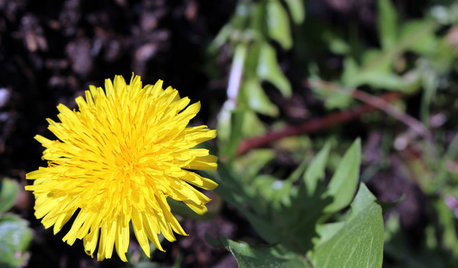
Close up of flowing weeds in lawn

Large areas of weeds across the lawn


Comments (21)

  • 8 years ago

    What you have there is clover. It will be extremely difficult if not impossible to get rid of it without herbicide. Ortho Clover, Chickweed and Oxalis killer will take care of it. Mix according to the label and spray only the clover. Spray in the evening and if you want you can water that area the next morning. Just keep the kids off until it is dry. Might take a second treatment to get it all.

    K thanked forsheems
  • 8 years ago

    That is white clover. And unfortunately, the only effective means of removal is using an herbicide. Unless you have the patience to hand weed. Pretty much any broadleaf lawn weed product will work.

    Clover used to be a routine addition to turf grass seeds :-) It is a nitrogen fixing legume that actually draws nutrients into the soil, reducing the need for fertilization. But the current fixation on a pristine, monoculture lawn has put paid to that as far as many homeowners are concerned. If you can tolerate its presence (which I do) it will actually help to keep other weed species down.

    K thanked gardengal48 (PNW Z8/9)
  • 8 years ago

    Ugh. I am half tempted to let it be. But my neighbors all have pristine (monoculture? Great term) lawns. I dont want to be the reason they start getting weeds.

    If I do go Ortho Clover, Chickweed and Oxalis killer, would that also kill the grass?

  • 8 years ago
    last modified: 8 years ago

    No, the Ortho product is a broadleaf weed killer......one of many on the market. It won't harm most turf grasses/lawns (exceptions: Bermuda grass or St Augustine). Just follow the label directions :-)

    ETA: a liquid or spray herbicide, once dried, will have no effect on kids or pets. Even if they eat the grass :-)

    K thanked gardengal48 (PNW Z8/9)
  • 8 years ago

    I have seen two different invasives work well together in the north. It was a mix of creeping bentgrass and Dutch white clover. The area was a weekend-use, par 3, golf course. He let the grass and clover grow all week. On Friday he mowed the greens and fairways. On Saturday he mowed the greens a second time. By the following Friday it was a pasture of clover flowers again.

    But to your point, sometimes you have to use a herbicide to get quick results. Then you can enjoy the lawn the rest of the season. With clover, a fast seeding plant, you will need to reapply from time to time until the seeds have all germinated.

    K thanked dchall_san_antonio
  • 8 years ago

    Clover moves in when little or no fertilizer is applied to the lawn.

    K thanked Jean
  • 8 years ago

    Clover in a lawn is not a "weed" or something to be gotten rid of. Clover can set nitrogen to help grass grow, and is not a sign of low nutrient levels. Clover in a lawn is beneficial and many people consider clover in the lawn as a sign of a healthy soil. Ortho Clover, Chickweed and Oxalis killer is not a product acceptable to anyone wanting an organic lawn.

    K thanked kimmq
  • 8 years ago

    Actually, if you consider clover a weed, it's a weed and something to get rid of. :-) In my lawn, the finest fescue would be a weed in my expanse of bluegrass.

    Never apologize for disliking a plant and thinking it a weed. Mom and I both love wild violet and allow them to grow wherever they want to. Most people consider them pernicious weeds and kill them on sight. :-)

    That having been said, clover is hard to get rid of. Short-term control does involve digging it out (and you'll probably get most of it back as the seed on the soil gets covered and germinates), or spraying it with oxalis control. But again, re-sprouting clover will fill back in unless you get grass coverage.

    Long-term (and very slow, but "chemical*"-light) control is to mow high, feed your lawn well at the correct times, reseed if necessary (for fescues and ryegrasses) and let the grass slowly choke out the clover. It's never perfect, but a lawn where the clover is mostly dominant can be changed to where the grass is mostly dominant.


    * Everything is chemicals. You are made of chemicals. The lawn food, organic or not, is chemicals. I prefer the term "synthetic control," and it's kind of a pet peeve... :-)

    K thanked User
  • 8 years ago
    last modified: 8 years ago

    But if your lawn is weak and thin from improper care, the clover will start to take over and then when you do eventually kill it off you will have patches of dirt. Get the Ortho Weed B Gone (make sure you get the one that says CCO that you mix and spray yourself). I would recommend that you add about a half teaspoon or so of liquid soap to your mixture. This will keep the product from beading up on the leaves. Ortho says the soap isn't necessary but I have gotten MUCH better results when adding it. It won't hurt the grass and you might have to apply more than once a few weeks apart to get it all. Do not apply it if temps are expected to be over 90 F.

    K thanked danielj_2009
  • 8 years ago

    There is no botanical definition of a weed - a 'weed' is just a plant growing where you do not want it. If the clover growing in your lawn is not what you want, then it IS a weed despite what benefits it may offer :-)

    And chemical (or manufactured/synthetic herbicide) control is really the only efficient method of getting rid of it, particularly given the expanse of its spread in your lawn. Manually removing it is possible but would be extremely time consuming and unlikely to be as nearly as effective as a herbicidal control.

    fwiw, it is difficult to be 100% organic and have a weed-free lawn. There are no organic herbicides that will work well enough to get rid of the clover or other weeds completely and fewer still that won't damage the lawn as well. So you either need to be tolerant of weeds to some degree or practice a blended approach that focuses on the synthetics (including pre-ermergents) for weed control and the organics for fertilization.

    And the healthier and thicker the lawn, the less likelihood of a serious weed issue developing.

    K thanked gardengal48 (PNW Z8/9)
  • 8 years ago

    This is the issue. Bought the house as an estate sale. Lawn was neglected

    this is our second spring here. Last year I fertilized spring and fall. This year, I skipped the spring application— maybe that was a mistake.

    Even last year, i had lots of crabgrass. This year, the clover is new.


  • 8 years ago
    last modified: 8 years ago

    "fwiw, it is difficult to be 100% organic and have a weed-free lawn."

    Another pet peeve of mine. This is a fallacy. I don't use most chemical controls (the exception being Tenacity for P. annua or P. triv as it's easier than the mechanical alternative. And that's not much or often as the lawn refuses even that).

    We get a few weeds a year, mostly at the edges and borders of things, which get manually removed with a Weed Hound.

    But rather than most people's "organic" methods, which translate to "ignore it," the lawn is properly fed, maintained, and weeds are removed manually before they become a problem.

    This was the photo from Labor Day 2017, showing the weed-crammed and utterly destroyed lawn and gardens due to the problems with "organic care."

    K thanked User
  • 8 years ago

    If you're going to skip a feeding, spring is the feeding you can get away with missing. As long as the lawn was properly fed in fall, it'll have the carbs to get through the spring season without difficulty.

    Most people feed too early anyway; spring feedings should be done around Memorial Day for best results (somewhat earlier if using an organic that has to decay in, same date if using an organic that's quickly available, like blood meal).

    That'll give it June to restore the energy in the roots before summer hits. But again, if you miss that one, it's usually not such a big deal as long as you got the fall feedings down. Winterization is also technically optional, but not one that I miss as it really does help with winter color, survival, and spring green-up.

    K thanked User
  • 8 years ago

    The above will work well if a) the lawn is not already inundated with weeds that need to be removed; b) it is of a manageable size; and c) you do not have neighbors who do not care about weeds or mowing frequently or even lawn health. When you are dealing with a half acre or more and have a field of dandelions and thistles growing next door it becomes a bit more problematic :-)

    Once you get the lawn into good condition, yes, it is easy to be more organically focused. And my statement still stands......note that I said 'difficult' - not impossible - and '100% organic', which the previous poster admitted he is not.

    K thanked gardengal48 (PNW Z8/9)
  • 8 years ago

    (cough). Another fallacy, I'm afraid. a) That's where I started, b) ten thousand square feet, in addition to the two thousand of gardens that require heavier maintenance, and c) the surrounding lawns are all weed pits.

    For half an acre, it can be done...if you're willing to put the time in. I'm managing both my lawn and my mother's of slightly greater size, so I'm already close to that.

    For those less than a hundred percent organic, it gets considerably easier, actually, as some synthetic use is allowed. I have no specific objection to a mixed or synthetic weed maintenance regimen and won't speak against it as this isn't the forum for that. It's just that the OP doesn't wish it.

    Again, if your primary mode of "maintenance" is to ignore it, feed incorrectly or inadequately, and not put in much time, then of course you're going to have a weed pit. That's just bad maintenance and laziness, which far too many people blame on the failing of "organics."

    K thanked User
  • 8 years ago

    Then please inform us poor fools who suffer under this "fallacy" exactly how you organically remove the weeds. What products do you use if one does not have the necessary free time (a 9-5 job, house, kids, other gardening activity....a social life) to spend endless hours manually removing weeds? It's not at all a matter of laziness. And more than a bit impertinent of you to assign it that designation. It is just that not everyone has unlimited time to address this without some sort of synthetic/chemical approach.

  • 8 years ago

    Hey, hey, hey, HEY, HEY! You two!!! You are coming from different places and situations where the rules seem to be different. morph has a 100% KBG lawn in Eastern PA that will spread quickly to fill in thin spots to form a dense sod of turf. GG has, if I remember correctly, perennial rye grass in the PNW, which is a bunch grass with no ability to fill quickly. Morph's sod is too dense to allow weed seeds to germinate. A bunch grass lawn like rye and fescue is susceptible to encroachment by weeds as it thins out due to disease, heat, or dry conditions. So you two have different circumstances to deal with. Morph has KBG for the reason it is a sod forming turf. GG has rye because, well, apparently KBG does not do well in the Pacific Northwest. Also as I recall GG is not nearly as obsessed with her lawn's appearance as morph is.

    I have a sod forming turf, too, and live in the country surrounded by wilderness that gets mowed every 3-6 months. My St Augustine easily pushes through the prairie bunch grasses (and even the bermuda), that live in my yard. However, the St Aug is no match for broadleaf weeds like clover. In my case the broadleaf weed is not clover but horse herb. One application of atrazine in April takes out the horse herb (and just about everything else) for the year allowing the St Aug to retake the area and become extremely dense. Once the St Aug has "densified," it is impossible for something else to get established even though I am surrounded by the #1 invasive bane of Texas, the evil King Ranch bluestem. KR bluestem was actually developed, on purpose, for the King Ranch as cattle feed, but it has escaped to blanket the southern part of the state. But for a dense stand of St Aug, even the KR can't get started.

    So to the point of the OP, the number 1 factor to keeping a weed free lawn is to have a dense lawn. KBG makes it easy, but it might not be your perfect grass. If you overseed in the fall with rye or fescue, you will continue to have thinning grass every year requiring more overseeding. If you overseed with KBG, you will eventually have a KBG lawn as the fescue or rye you already have dies out. The second factor to keeping it weed free is to not water all the time. Water deeply and infrequently and that will prevent most weeds from germinating. Some weeds can germinate from a simple rainstorm, but most require continual moisture for days. People who water every day will have more weed seeds germinating. Another factor is mowing the grass at the mower's highest setting. Most grasses become most dense when mowed high. The last factor is fertilizing. If you fertilize at least once a year in the fall, you are sort of on track. Herbicide may or may not be required regularly (April and September), but it should not be needed more than that if you are paying attention to the above factors. Once the lawn takes over, then you would only spot spray the weeds and not everything. That is a pretty minimal approach to weeds.

    Other thoughts: 1) everything is chemicals, but some of us bags of chemicals are alive and eat other aggregates of chemicals for food. That happens in the soil, too. 2) there is no purpose in having a 100% organic lawn. Nobody cares about that except a few folks in the organic lawn care forum. 3) a weed is a plant you don't like where it is. We have a beautiful plant that my wife does not want - it's a weed to us.

    K thanked dchall_san_antonio
  • 8 years ago

    I usually by a (predominantly fescue) stress mix at a local garden store. Not sure about where to get KBG/or if it would thrive in my shady property


    time to google! Thanks for all the replies!

  • 8 years ago

    KBG is not a shade lover. :-) It'll tolerate three hours of sun per day or so, but anything below that and it won't be thrilled...

    Most sun/shade grasses have a mix of all three seeds--fescue, rye, and bluegrass. Although the percentage of bluegrass may look low, it's because bluegrass seeds are tiny. A small percentage is a large number of seeds.

    (There are considerations on mixes as to what will end up dominating, but there's no real need to go into it; just buy a mix you like).


    K thanked User
  • 8 years ago
    last modified: 8 years ago

    Forget about your neighbors and do what you think is right. Clover looks beautiful in a lawn and makes it healthier. Your neighbors are probably using chemical fertilizers to keep their "perfect" lawns green, thus polluting all the nearby wetlands. Do you want to follow suit and do the same? Back in the day, people weeded their lawns by hand and enlisted their kids to help with it. Now noone wants to do any manual labor, just use chemicals. Back in the day there were butterflies and birds in abundance. Where have they all gone?