Software
Houzz Logo Print
jimmy_dorato84

Help with Hydrangea

8 years ago
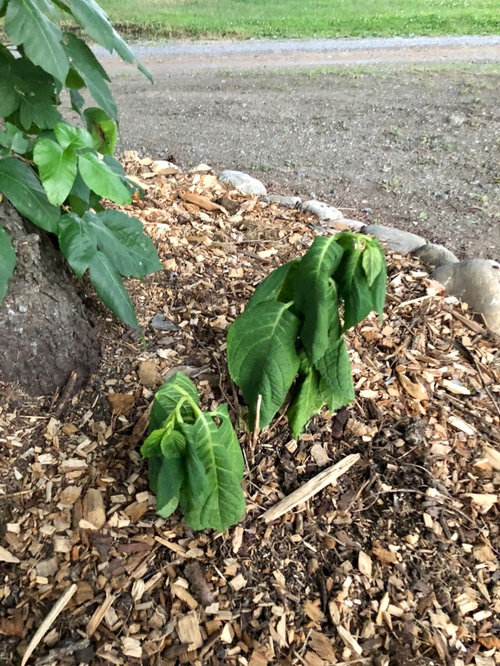
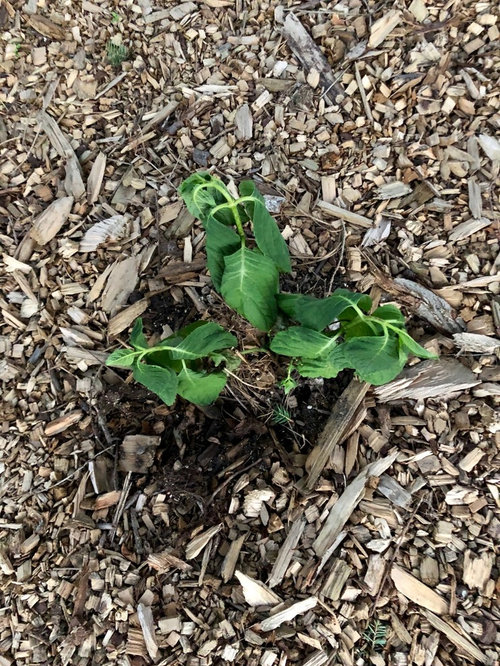
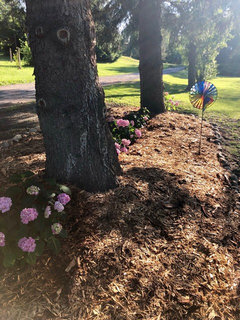
Can anyone help me diagnose what is wrong with my endless summer hydrangea? The wilted ones have been that way since we broke out of our heatwave in upstate NY but the soil is moist when I stick my finger in.

These were all planted in fall of last year.

Comments (31)

  • 8 years ago

    It looks desperate for water. How much are you giving it? Is it reaching the rootball?

    ps please tell us that isn't poison ivy growing behind the Hydrangea?

  • 8 years ago
    Too much hot sun, and probably not enough water. You might need to move to a shady area. They like cool morning sun, no afternoon sun.
  • 8 years ago
    It is in fact poison ivy, I built the garden from scratch when I bought the place last year (it was all overgrown) it got out of hand this year and I’m very allergic to it so I’m still trying to figure out what to do with it - I’m open to suggestions.

    My watering schedule has been 2-3 times a week, during the heat I was attempting to keep it cool with a shallow water in the evening and once the heat broke I had been waiting to until the soil felt dry to water again.
  • 8 years ago

    Luis, it is woodchips, not rock mulch.

    I would check the soil moisture a few inches down, not just right at the surface. Check the rootball and the soil outside the rootball. Sometimes one is wet and the other is dry because moisture isn’t moving well from one soil to the other. You can’t really water a new plant by prescription, you really need to check hwhe5er the soil is moist or dry or soggy. The goal I’d moist where the rooots are, which right now is most likely in the lower part of the original rootball. If the rootball is dry, remove it from the ground and submerge it in a bucket of water until it stops bubbling. If it is soggy, stop watering until it is lightly moist and then give it a good soaking.

    Give it temporary shade from a lawn chair or fabric on poles or something else that will give it more shade, especially during the hottest part of the day.

  • 8 years ago
    My big concern is overwatering and causing irreparable damage I did dig gently and saw some roots barely below the soil, the roots were light brown and white
  • 8 years ago

    Over-watering is not your current problem.

  • 8 years ago
    They’re actually perking back up already, you guys literally just saved lives. I watered 2 gallons each plant (purposely measured)

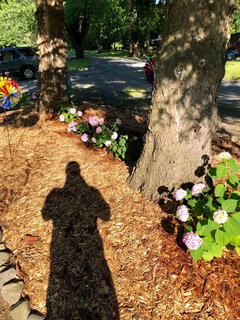
    What kind of watering schedule should I follow? I was doing 3 to 4 times per week but perhaps not as deep as I should have (which is why I thought I over watered) should I stick to every other day, weather pending? They’re obviously under pine trees so don’t get the benefit of the rain unless it’s steady, but it gives them some nice dappled shade during parts of the day. I was hoping for blue blooms having all the years of broken down pine needles, but my water is hard.. that’s a discussion for another time
  • 8 years ago
    last modified: 8 years ago

    At about the same time in the mornings (say 6-8am?), insert a finger into the soil daily for 2-3 weeks to a depth of 4". Water them if the soil feels dry or almost dry. Water from the root ball outwards, until the water gets down to 8" deep or so. Usually it may take 0.5 to 1 gallon (for a small-medium newly purchased plant in Spring); 1 to 1.5 gallons in Summer; 50% more than those guesses if your soil is sandy. Every time that you water, write a note in a wall calendar. After 2-3 weeks, review the notes in the calendar. Determine how often you had to water... example: you had to water every 2 days or every 3 days, etc. Then set the sprinkler or drip to water the number of gallons every 2 days/3 days/etc. If temps change 10-15 and stay there, retest using the finger method again.

    Note: watering 2 gallons for just one newly purchased plant sounds like a lot but, I am assuming your soil is not sandy. It may not harm to go overboard sometimes... well draining soil should make the excess water drain fast. Just do not water too much just because they look wilted. In well draining soil, you may get away with that but try not to do it. Especially if your weather turns rainy for long periods of time and you see puddles of water for long periods of time.

    The pine needles themselves will not necessarily help make things acidic. Perhaps the top 1/2 inch or something ridiculous like that. If your soil is already acidic, do nothing (your nearby local plant nursery can help answer that or get a soil test or ask a neighbor). Or look for similar hydrangeas in your neighborhood to see what colored blooms you notice. Otherwise your blooms will change colors until they stabilize at the appropriate shade of blue, purple or pink that goes with your soil. You can add aluminum sulfate if your soil is alkaline but that is another discussion altogether....

  • 8 years ago
    Soil is definitely not sandy, we have more clay here than we can handle. My water table out on the low spot of the lawn is 18 inches down, with plenty of standing water to late winter to mid spring.
  • 8 years ago

    I am clayish too and water about 1 to 1.5g in heat stressed Tx

  • 8 years ago
    I am in the NY area as well and I had to water mine every night during the heat wave. If not, they would look thirsty and start to wilt. I normally water them every 2 days. They are under the sun all day from 8am - 3pm, and that water schedule seems to work for them! They are starting to thrive nicely.
  • 8 years ago
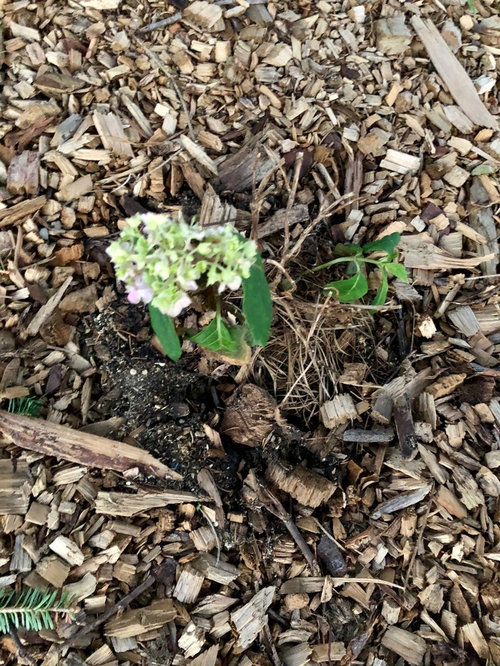
    Is the one that has a flower but barely any green normal for a young plant? Should I give it something to help it along? It was planted at the same time as the others but the only one growing slowly and surprisingly the first/only one that flowered this early.
  • 8 years ago

    The clue is in the name - HYDRAngea. They're deHYDRAted. All they need to 'help them along' is lots and lots of water. After a while you won't need to stick your fingers in the soil. I never do and never have, in fact I can't. The soil's not sufficiently fluffy in permanent plantings in native soil. But you'll start to notice subtle changes in the look of the leaves before they even start to droop. They go dull-looking. Basically just unhappy.


  • 8 years ago
    last modified: 8 years ago

    Hydrangea flowers undergo a series of color changes while they are attached to the stems. Once the bloom is old, it begins turning lime green and stays that way before turning brown. These color variations last weeks/months sometimes. They may also include splotches of pinks as well. Your bloom is now spent and doing all this. You can leave it for winter interest. It should fall on its own during Winter 2019 or Spring 2019. Or you can deadhead it (i.e., cut the petiole that links the bloom to the stem).

    Because your plants were grown in greenhouses, they were forced to bloom early so watch when important events like this happen starting in 2019, not when they happen now. For example, observe (and write in a wall calendar) when do you see the broccoli phase of the flower buds (when the flower buds open), when the flowers open, when the flowers start to change colors, when you had to increase/decrease their watering requirements due to summer heat, when the plant goes dormant (the leaves and blooms all brown out), etc.

  • 7 years ago

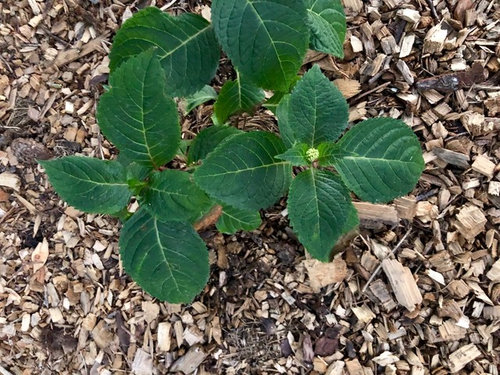
    For everyone who helped me out last year.. now to get them to turn blue..

  • 7 years ago
    last modified: 7 years ago

    Means your conditions favor them being pink instead of blue. Search the web for "turning hydrangeas blue" for background.

  • 7 years ago

    From what I understand, acidic soil will yield blue flowers, while alkaline soil will yield pink flowers.

  • 7 years ago

    I know it is supposed to be a myth but I have had really good luck watering soluble magnesium sulfate into my hydrangeas to keep them blue. You can also work aluminum sulfate or coarse dolomitic limestone into the soil.

  • 7 years ago

    It is the availability of aluminum in the soil that makes bigleaf hydrangea flowers blue - that is why aluminum sulfate is sold as "hydrangea bluing", not Epsom salts or magnesium sulfate. Acidic soils tend to allow greater aluminum avilablity; neutral to alkaline soils bind the aluminum and make it less available.

    The term "sulfate" attached to a fert or soil amendment will provide some acidity due to the sulfur in the formulation. But if there is not a sufficient level of aluminum, the hydrangea flowers will be pink regardless of soil acidity.

    Adding limestone will neutralize an acidic soil, or if in a high enough concentration, make it alkaline, so flowers will be pink, not blue. And very likely that the plant will be suffering from chlorosis as well.

  • 7 years ago

    My problem is that my water from the hose is very hard (not hooked up to the softener), I’m still working on a way to mitigate the alkalinity from the hose water without burning the plants.

  • 7 years ago

    Add a couple of tablespoon of table vinegar to your watering can.

  • 7 years ago

    Or water from rain barrels since rain is always acidic in the US.

  • 7 years ago

    What is the proper way to use rain barrels? I’ve strongly considered it, but I’m worried the water would get spoiled and do more harm than good

  • 7 years ago

    Unless you get some other junk in it - leaves, conifer needles, etc. - water doesn't "spoil" :-) And easy to attach a filter to a rain barrel to keep debris out.

  • 7 years ago

    Jimmy, after a few yrs I think Hys need very little WATER..again just saying

  • 7 years ago

    All of mine - none of which are located in full sun - need watering every 2-3 days. But then we have very dry summers. For best performance, hydrangeas need consistently moist (not wet) soil.

  • 7 years ago

    We are watering our hydrangeas every day for the last two weeks. It has been unusually hot and even with a couple of showers last week they needed the extra water. Hydrangeas will tell you when they need to be watered, with drooping leaves and drooping blossoms. I don't measure the water - I can hardly pick up a gallon of water so we use a hose with sprinkling fan. The plants in containers are especially sensitive to being dry but plunging the pot into a bucket of water will revive them in a day or so. If plants are pot bound, the water will run down the inside of the pot and out the drainage holes and the roots will be as dry as if it was not watered at all. The same thing can happen to a plant in soil if the original soil of a root bound plant is not loosened or shaken off when planted. Occasionally a plant bought on sale is so root bound that it has to be attacked with a screwdriver before planting. lol Looks cruel, but we never loose a plant.


  • 7 years ago

    Water has been in the planet for the last 4 billion years so, it does not spoil. It may look green or dirty due to algae/debris growth though. That is ok for the garden though (but not for home use).

  • 6 years ago

    Can anyone help me with pot sizes for incrediball? I’m trying to grow a hedge on my property line and they seem to be cheaper now. I have a green house (early Christmas present) I can keep them in, would I be better off getting a quart pot and growing it until last frost under lights, or wait until March and plant a 1 gallon dormant - or just plant a quart pot in March. I’ve heard the smaller the better when planting in the ground, so I’m looking for something that’ll be some impact quickly, but will naturalize in its new home the quickest.

  • 6 years ago
    last modified: 6 years ago

    Depending on the actual plant sizes, you may be able to start with around 36" pot per plant (probably less or... maybe more) sizes in upstate NY. I have not potted Incredible but its cousin, Annabelle, outgrew its container fast down here (it was potted for 2 years and then moved into the ground). If your Incrediballs are going to be planted as soon as the soil does not freeze this Spring, I would hold them in the pot in which they are typically sold, as a few months of waiting potted in the greenhouse will be fine... as long as they get some water now and then during warm days. If they will be potted for a year or more then I would consider putting them in a container (ck to see that the roots are not circling the pot when you buy them). Those pots usually come with those round fertilizer pellets so I would consider not fertilizing them in Spring 2020 (wait until 2021?)