

AC running continuously for days?
Our AC is old and we've started to become aware of this fact. We figure that since the night time temps are expected to only drop into the 80's for the next few weeks, our AC unit is likely to run for days on end without stopping. The unit came with the house so we aren't quite sure how old it is but we figure it is 10-15 years old. Do you see any risk in having the unit run continuously for days?
I'm sure it has done this in the summer in years past, but we hadn't really noticed until we started getting paranoid about how old it was and how hot it is this year.
Thanks in Advance
Comments (45)
 PRO8 years ago
If it's not working properly there is no point in running it / all it is likely to do is cook itself to death. Heat is the enemy.
 8 years ago
If it maintaining the desired temperature, then running it continuously is not a problem.
Related Professionals
Florence General Contractors · Terre Haute General Contractors · Elkton General Contractors · Cherry Hill General Contractors · Richmond General Contractors · Napa General Contractors · Bend General Contractors · Bartlesville Home Remodeling · Victoria Home Remodeling · Queens Home Remodeling · Greenville Bathroom Remodelers · Middletown Bathroom Remodelers · Chicago Bathroom Remodelers · Webster Bathroom Remodelers · Manchester Bathroom Remodelers- PRO8 years ago
Mike it depends on the temperature.
If it is 80 degrees outside and the unit maintains 75 degrees inside. Running continuously in this condition will eventually kill it.
If the temp of the day is 95, 99, 105 --- what ever it is, the unit will run longer under those conditions. However, the outdoor temp changes when the flaming rock in the sky cycles the earth.
So if it was say 99 degrees during the day, at night it could be in the mid to low 70's. This in turn should get the AC to cycle off once the load of the structure decreases. If the unit does not cycle off under this scenario, there is no way it is running properly. (ask Mike for a refund lol).
Exception: (system is not a high end inverter style 'load matching' HVAC system.)
- 8 years ago
When I see posts like this, I always ask when was last time AC system had a PM checkup. Not much facts to go on. What is your location? What size is your home? What size is your system? What is typical average high for your area? What is thermostat setting and is AC system maintaining that setting? Running continuously all the time never cycling raises issues telling me something is not right. What is your supply temperature middle of day? Post back.
IMO
- 8 years ago
Hi Marty, home ac systems should be designed such that on the most torrid days of the year, it should run continuously, or nearly so at the hottest part of the day. If the temperatures are at record highs an it is cycling, the system is oversized and that is not good. If it is not holding a comfortable temperature in the heat of the day and then cycling at night, you have problem.
There are some good questions above that you might answer for feedback from some knowledgeable people. Please be careful since as Austin pointed out, if it is not operating properly, it could be damaging itself with continued operation. As Tiger suggested, having someone look at it might be a good idea. If your capacity has decreased, it could be minor, repairable problem that turns into a complete failure if not attended to.
 8 years agolast modified: 8 years ago
Ours runs continuously from May through October. We're located outside of San Antonio in the Hill Country. Temps never drop into the 60s at night during those months. We're having one of those rare spells right now, but expect low temps to be in the humid 70s in a day or two.
- 8 years ago
dchall_san_antonio, if you have a single-speed system, there is a significant diurnal temperature change, and your compressor runs continuously, you must have an indoor temperature increase during the hotter daytime hours. I don't see how it could be any other way.
Mary Townsend
Original Author8 years agolast modified: 8 years agoAustin Air/ionized_gw - This is Texas (DFW) with a heat advisory. We are seeing 105-110 during the day and high 80's at night (we may get down to 83 here in the near future). The unit is not quite keeping up when the temps go above about 103. It can only sustain 78 in the house at that point.
FYI - capacitor was replaced last year and the unit got a clean bill of health during its checkup in April.
Size of home = 2200 sq ft. This is a 4ton unit (Seer 13). I just learned the unit is 11 years old. The house is older (original part of the house was built in 1966 with a major addition in 1983). Daytime thermostat is set at 78 right now with 72 at night. But with a caveat here. There have been multiple nights in the last week where the outside temp did not drop below 100 until after 11pm. When I lived in Las Vegas we saw a greater drop in temp at night (by 8pm) than I'm seeing now.
- 8 years ago
You also have one inch of insulation in the attic which is another reason the AC is running non-stop when the outside temp is over 100. I think all things considered the AC is operating about as well as expected.
Mary Townsend
Original Author8 years agoMike. Thanks for the followup... My main question here is: do you worry about the system running continuously? Is that a problem?
Mary Townsend
Original Author8 years agoFolks, thanks for answering all of my newbie questions here. I really appreciate the advice.
- 8 years ago
Holding 78°F inside at 105°F to 110°F outside is very good IMO. I'm in TX 5.5 hrs toward the coast from DFW. My house (2004) is 2350 sq. ft. with 9' and 10' ceilings. 5-ton heat pump. I run 78°F day time and night (sometimes 77°F). 72°F at night during the summer heat would be too much of a chill for me. However, usually cooler between seasons for humidity control. As you know it's not unusual to run air conditioning in December around here.
Anyway, my system does cycle at 100°F+ outdoor temp although it of course does run for noticeably longer periods ... but it's 1 ton larger capacity than yours. We're not running quite as high current temps as the DFW heat-pocket.
I've noticed that it's not unusual that air conditioning is undersized nowadays, particularly as the summer temps continue to ramp-up each year. A friend in Sugar Land (2-story house, 2500 sq ft) has two systems. She has the temp set fairly high but both run continuously during these extreme summer days and her house never really feels cool even at other times. It's cooler than outside of course.
I visited friends in Nashville several years ago in July for a full weekend. Two-story house, separate systems upstairs and down. Neither shut off either day or night for the entire time I was there. The indoor temp was comfortable but surely not a "chill" ... except the first day when someone had set the upstairs system to heat mode and they thought something had gone wrong with it, they didn't catch the mode switch until the next morning.
- 8 years ago
AC equipment is designed to run for long periods of time. I would not worry about it. You should have a reliable tech come out and check do some preventative maintenance checks. You could be low on refrigerant or most likely the condenser coils haven't been cleaned in years.
- 8 years ago
Mary, I'm in DFW with a 1987 construction, 2200 sqft and a 5 ton unit. We maintain 73 during the day, with continuous running between 2-3PM and 9PM, when the temperatures hit 105+. At 100, we have a couple of cycles during the same time.
How many air returns (sucking air into the system) do you have and how large? Do you have south and west facing windows? We have a set of large south facing windows that were shaded by a large Bradford pear till this year, and our cooling needs have increased quite a bit on the hottest days, and plantation shutters only help so much. If you have significant window exposure, you may be undersize for this heat...but this heat is currently the exception rather than the rule...
Mary Townsend
Original Author8 years agoNorth Texan: Only one South facing window in the house, 3 small west facing windows... most of the windows are on the North and East sides. Also, all windows were replaced with Low-E in the last couple of years, and the blinds are always closed during the day. We have one air return in the entire house... does that matter?
mike_home: Our system gets yearly checkups. Refrigerant was added this year, so I'm fairly sure it isn't low (last time was 2 years ago). I don't remember anyone cleaning the condenser coils. Is that a service option?
- 8 years ago
Refrigerant shouldn't need to be added unless there is a leak. It doesn't wear out and need replacement. The system as a whole is sealed other than the access ports (which can be a source of leaking).
The condenser should be cleaned (flushed with water) on a regular basis. How often depends on exposure to debris ... such as plant/tree pollen, blowing dust, lawn clippings, etc. I've seen condenser/compressor units placed near a dryer exhaust, which is horrible positioning for pulling lint into the coils and obstructs airflow to dissipate the collected heat. The evaporator coil in the indoor air handler may also need to be cleaned.
- 8 years ago
One air return for the whole house sounds undersized, but without knowning the size, that is speculative. How large is the return?
With improved windows and low south and west exposure, plus the blind fiddle, it makes more sense that you are running 4 tonnes with few issues. If you are under returned, you might see a nice improvement from added an additional return or two, placed strategically.
Mary Townsend
Original Author8 years agoThanks North Texan and Austin Aire...
FYI on the south wall of the house we added a second wall when we had to do some repairs due to carpenter ants. So that wall is a double deep 2x4 wall (yes, 2x4) and yes the studs are offset between the old and the new. Hopefully that makes a bit of difference. We are trying to be energy efficient while doing all remodeling with cash.
The air return is 24"x24". It is located at the intersection of the old and new parts of the house.
Lastly, I'm going to say that I don't know how to determine the level of heat on the condenser. Nor do I know how to identify the motor either. I think that is going a bit beyond what I can technically do. I apologize for that.
- PRO8 years ago
That's ok, this is just giving you insight as to how things can go bad. I really don't recommend that home owners attempt to work on the unit themselves. There is a lot that can go wrong in things a home owner may attempt because of something they read on line or heard from someone.
A simple check you can do is with the unit running go out and feel the air blowing out the top of it with your hand. It should feel like a warm cup of coffee in your hand. If it's doing that (which I suspect it is) it's probably doing it's job.
If the air doesn't feel warm it may be the compressor is not running. It may be that the compressor is running but not enough refrigerant or the compressor has been damaged (bad valves). Obviously if you don't feel warm air that's as far as you should go.
This occupation is dangerous so keep that in mind. I, in no way shape or form recommend ANYONE attempt to work on their AC system without proper 'paid for' training like that in a trade school type setting.
- 8 years ago
Hopefully Austin, Tigerdunes or Mike_Home can comment, but one 24x24 return sounds like the bare minimum for 4 tonnes. I see numbers from 144 to 200 square inches per ton, and a 4 ton would need between 576 and 800 square inches using that math...and that doesn't address the actual size of the duct.
The fact that you have a single return also makes me uneasy, because even with 2 returns (20x20) we were getting a stagnent area in the master. The addition of a couple of smaller returns in the master and just outside (Y'd together in the attic) dropped the average temperature about 2 degrees in the master.
- 8 years ago
North Texan, for a 4 ton AC you should have about an 800 square inch filter, but the return can be smaller. The 24X24 return should be adequate. This assumes it is not a flexible return without a big kink in the middle.
- 8 years ago
Walter, that is not funny. Sometimes a creative, sarcastic post with information that is 180 degrees opposed to the truth can be amusing. Yours is not one of those posts.
Mary Townsend
Original Author8 years agoThanks mike_home and North Texan. So you are saying that if I have multiple intakes, it will help move air more and cool the house more evenly? Is that the general idea?
- 8 years ago
Lets think of it this way...you have lots of little vents all over the house that blow out cold air. The air gets cold by being sucked into your single 24 x 24 return vent and pumped through the coil. So, the only air being sucked into the A/C is through the single return, and then the air blowing into the other rooms moves some of that air toward the return.
Consider my house, it's a U shape. The living room is in the bottom middle, the kitchen is bottom right, but you don't want a return there (smells like garlic suddenly, eh?), the dining room and a hall to the halfbath/utility room and garage are in the right upright, where my first return is.
The lower left is the bath and two bedrooms, with a return in that hall. The upper left is the master, and had no return...and was always a bit hotter. When I changed the system last year, we added a pair of smaller returns to that upper left, because my 5 ton unit was straining a little to pump enough air through my 800 sq/in of return, I needed closer to 1000+. With two new 12 x 12 returns, I now have 1088 sq/in of returns, and better overall airflow and balance.
So you have 576 sq/in of returns, right on the low side, like my unit was. You also have a single return, and probably some areas of the house feel a bit warmer or more stagnent, eh? If you added perhaps two more 10 x 10 or 12 x 12 returns, strategically placed, you might see better performace and more comfort. Now, that's just my two cents, we'll see if I got it wrong shortly.
- 8 years agolast modified: 8 years ago
A single return is fine as long as it large enough to allow the required air flow. A 24 X 24 return can handle the 1600 CFM needed for a 4 tin AC. But the filler should be 800 sq. inches for a one inch filter.
- PRO8 years ago
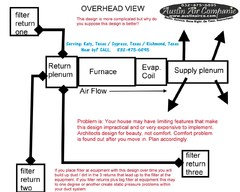
Duct system design is best done in person. A 24x24 return for 4 ton system is borderline (depends on filter rating among many other things) it would be my preference to incorporate 3 strategic returns for a 4 ton system for better air flow and reduce if not eliminate 'hot air' trapping, not to mention reduce static pressure on the HVAC duct system which can reduce wear and tear on the system.
This would make the system more efficient at cooling and heating, increase filtration among other benefits.
However, every home is different and this 'better' AC return design isn't always feasible / or possible to pull off without major home renovation.
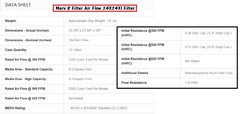
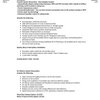
This photo below is to further the discussion and at the very least show a different side to this often confusing subject. Click to enlarge it.
- 8 years ago
Please read by two earlier posts. I said a 24 X 24 X 1 inch filter is too small for a 4 ton system with 1600 CFM. However for a 24 X 24 return duct is more than enough to handle the air flow back to the air handler.
The filter grille or box needs to be bigger than than the duct work to which it is attached. Think about it for a minute. The filter adds resistance to the air flow. So to lower the resistance the filter needs to be bigger in area. The duct work behind the filter has much lower resistance. The cross sectional area does not have to be as big as the filter.
I have no experience with attic installed equipment, but it seems the practice is to make the filter and the return duct the same size. You don't see that with equipment installed in conditioned space. The over sized duct would take up too much space.
A static pressure reading should be taken on any new installation in my opinion. That would remove all doubt as to whether the return duct and filter are sized correctly.
- 8 years ago
Mike, the problem here (in North, and generally almost all of, Texas) is that return grill size is totally unrelated to what kind of return is really behind it. In the case of a closet mounted system, they most often simply draw the air into the framed in area under the shelf the unit sits in and put as many return vents as they can...my old house had a hallway on two sides and return grills on those two sides. With an attic system, it is very seldom installed that way here.
It is possible that Mary's system is mounted directly above her 24 x 24 return vent and thus has a straight 24 x 24 hard duct to the unit, but it's unlikely. It's more likely the 24 x 24 vent is hiding a 20" or 15" flexduct to the unit in the attic.
As an example of the variety, I have 2 20 x 20 returns and the 2 12 x 12 returns I added. The old 20's each had a 20 x 20 x 1 filter, for 800 sqin of filter for a 5 ton unit, a bit short. The new configuration uses a 20 x 20 x 4 in a media cabinet, giving me 1600 sqin of filter...sound great...but...
The first 20 x 20 return feeds a 15" flex duct (176.625 sqin), the second is a 12" flex duct (113.04 sqin), the two 12 x 12 are both 9" flex ducts (127.17 sqin total) that feed into a 12" duct (losing about 14 sqin of capacity). So my actual flowable intake volume is about 403 sqin to 1600 sqin of filter capacity. This seems to work fine, and I don't understand the things that you, Austin and Tiger do about systems draw capacity, but I'm still concerned about Mary's return capacity.
Mary Townsend
Original Author8 years agoThere are 2 - 15" flex ducts from the 24x24 vent to the unit. So are you saying that the 24x24 is not the limiting factor? That the 2 -15" flex ducts (ie ~350sq in) is the actual issue here? (or AN issue).
My dear husband is pointing out that the coldest room in the house is the room directly under the air handler. The warmest room in the house is the farthest room from the air handler itself. He believes that this is the core issue.- PRO8 years ago
There are 2 - 15" flex ducts from the 24x24 vent to the unit. So are you saying that the 24x24 is not the limiting factor? That the 2 -15" flex ducts (ie ~350sq in) is the actual issue here? (or AN issue).
Mary, flex duct is either 14" or 16" - the 15" size isn't made. I know it's difficult to measure so easy to make a mistake. Either way for a 4 ton system I would want to see (2) 18" or even better (2) 20" flex ducts for the return of a 4 ton system.
Typically flex is going to have bends and turns and this will decrease air flow rate further.
My dear husband is pointing out that the coldest room in the house is the room directly under the air handler. The warmest room in the house is the farthest room from the air handler itself.
Yes, this is very common. For the simple reason a central return will draw all the cold air back to the main return. This is another reason why I prefer a multi return approach for a hot climate.
A solution if there is enough room to do it is to add a new return near where this hotter room sits. Install at a minimum another 20X25 filter grill box, attach that to a 20" flex and run this back to the furnace return.
If there is another problem area with excess heat (hot spot) consider adding another filtered return near by that area.
The idea in this design is to limit the amount of air being sucked back to the central return and increase air flow (return air) in areas of high heat. Your air conditioner works by removing heat. So if you give it heat to remove it will work much better.
- 8 years ago
North Texan, I understand that it is very common for an attic installation to have the same size filter and return duct. Keeping the sizes the same makes for an easy installation but it results in undersized filters. The filter and duct calculations are not the same.
Installing multiple return grilles is a good idea. The problem with the attic installation is that in most cases multiple filters are installed. The tendency is to use cheap 1 inch filters. In my opinion it is best to have one properly sized 4 inch media filter fed by multiple returns.
- 8 years ago
Mike, we're agreeing, using differing terms, I believe. Generally here, the filter/return grille is a square or retangular size that fits in the joists easily and then connects to a circular flex duct. The size of the duct is completely unrelated to the size of the grille (see my above note for an example of two returns same size with differing size ducts attached).
So, can you confirm the following?
1) Actual filter usable crosssection is a key variable for limiting draw. That is, we want 200 sqin of filter surface per ton.
2) Actual duct size is less limiting because the system can pull a higher velocity than through the filter, so it can draw a 24x 24 filter area through smaller volume circular ducts.
3) With regard to filter size, is a 1" Filtrete brand lower quality than a 4" of the same brand? I assume that if you had 4 returns, you could use a 1" version on each for a similar effect, at a higher cost?
- 8 years ago
North Texan, 200 sq. inch per 400 CFM is a good guideline. The air flow for a ton of AC should be in the 350-400 CFM range. You don't know what the air flow is unless you measure it.
The return duct can be smaller than the filter especially if it is a hard duct. Flexible ducts have kinks so over sizing them is a good idea.
Filtrete filters are actually high quality but they are restrictive. They are not the filter of choice if the filter is under sized. I used them on my old HVAC system and I would get poor air flow to one of my bedrooms on the second floor. I don't think the Filtrete filter comes in a 4 inch size, but I could be wrong.
A 4 inch filter has more surface area which makes it less restrictive. They also last longer and are a better value. If you had 4 returns you could use multiple 1 inch filters. Not every return will have the same air flow, but you would probably have more filtering than is needed. In general more returns is better, but it can't compensate for a bad installation, or uninsulated and leaky duct work.
- 8 years ago
Mike, thanks for that explaination. Filtrete branded 4" filters are available in most all sizes, and work great. I checked the restrictiveness of them and found some interesting data, so feel pretty good about them. Of course, if my 5 ton is supposed to flow 1850-2000 CFM, my 1600 sqin of filter is a little low...oh, dear.
As for Mary, if you possibly can, go with the filter in a media cabinet that will hold a 4" filter and get rid of the individual 1" filters at the returns. My 4" lasts 3 months between replacements (and could go 4 or 5, but I prefer to change early) and cost $33-35, where my 2 1" filters cost $20 each and lasted 2-3 months. With four returns now, it would cost me almost three times what I'm paying now for a 4" filter to use 4 1" ones.
And, Mary, sorry to hijack the thread.
Mary Townsend
Original Author8 years agoThis is awesome info everyone... and no North Texan, I don't think this is hijacking...
Since the worst of the heat is gone (we are down to 100 at the heat of the day!!! woo hoo) and the AC is the little engine that could again, we are going to wait until early Oct and get some quotes at that time. I'm storing all of this info for when we talk to the people we are getting quotes from.- 8 years ago
Mary, when you get quotes, the folks here all will have opinions about them...good and bad, but it's nice to hear a diversity of thought. So post away, wearing asbestos gloves, of course.
- PRO8 years ago
As far as filtration goes, if you have 3 returns at 1" filter each = 3" worth of filters. So I think there is some hair splitting over a single 4" inch filter as being better.
Filters are priced more or less by the cost of material used to filter the air. I prefer to buy the cheapest 'pleated' filter I can buy for the simple reason they are less restrictive.
Filters are rated for a certain air flow, click that picture I posted several posts back. 300 FPM / 500 FPM you'll notice in that pic I posted that the resistance doubles from 300 FPM to 500 FPM.
This has a profound effect on static pressure but also how effective that filter will be at keep dust particles from going thru it.
By adding the multi return approach with the multi filter approach you accomplish a multitude of things for a hot climate, not to mention lowering system static pressures.
A more moderate climate like New Jersey as an example (not to poke at you Mike, just to clarify things a little)? A single 4" filter with a central return is probably quite adequate. So you really have to put into context what it is 'exactly' you are wanting to achieve.
It's not as simple as saying one way is better than another. It depends primarily on the climate and what kind of comfort you are wanting to achieve and also what the structure will allow you to do. In some situations your options are few.
- 8 years ago
I think changing a single 4 inch filter every 6 - 12 months is easier than changing 3 -4 one inch filters of different sizes every 3 - 6 months..
The goal is to be comfortable when the temperature is in the upper 90s when the humidity is also high. I don't see how the filter arrangement will affect that goal.
- PRO8 years ago
Mike, I use all the same size filters for each return.
The advantages in better cooling / better comfort in a hotter climate far outweigh the 5 minutes it takes to change filters.
I don't see how the filter arrangement will affect that goal.
Sometimes living it is required. (Experience is thy teacher)
 5 years ago
With such a lot of completely different air conditioners on the market, then many various homes, however does one grasp what is 'normal' for cooling system cycle? The lower you set your thermostat in summer, the longer your cooling system can have to be compelled to run to succeed in it. the most important think about cooling system run times is that the size of your cooling system. LG cooling system that's too huge can decrease your run time to around ten minutes or less. An enormous cooling system would cool the air however it would not dry your home. a technique you'll decrease run time for your cooling system is to strategically cool solely the rooms you are exploitation.
Long story short? do not panic concerning your air conditioner's run time.
- 4 years agolast modified: 4 years ago
I wanted to buy an air conditioner to handle the load of heating the room continuously for five days or more. I have the idea of creating a greenhouse with tomatoes and eggplants during the cold seasons for my family and immediate family. For this, I need a heat lamp and a good AC that will work without unplugging from the power grid. I looked at several Caravan Air Conditioner Reviews and almost settled on one. What do you think of it? Has anyone had a model of this air conditioner? If so, please share your experiences.









Austin Air Companie