Software
Houzz Logo Print
publick_man

Mexican sea salt - does it have iodine?

8 years ago
last modified: 8 years ago

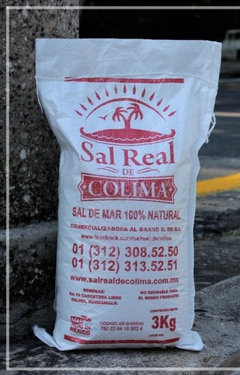
I bought a bag of coarse Mexican sea salt (I think it was Sal Real De Colima, but I did not save the bag) with the intention of using it for fermenting, but now I think it might have iodine in it. The reason I thought this is that I bought some sea salt from Trader Joe's, and it definitely says that it contains natural iodine from the sea. The Mexican sea salt is extremely coarse and also contains a few small black rocks, but I only use the salt dissolved in water, and so the rocks sink to the bottom.

Will this salt be okay for fermenting cucumbers and cabbage (and other vegetables), or should I go back to Kosher salt? I won't use the TJ salt since I know it has iodine in it.

Comments (20)

  • 8 years ago

    Given the unknown I wouldn't use it. Even the same brands can make both an iodine and a no-iodine version so the only way to know for sure is to contact the manufacturer and give them the lot number. Since you don't have that it is going to end up being your choice to risk the foods or not. For me its not worth the risk.

    Dave

  • 8 years ago
    last modified: 8 years ago

    Lars, my guess is the Mexican sea salt could very well have some iodine in it. If you're not sure maybe just go with the kosher salt.

    One thing you might try is doing a google image search for the bag you tossed. It might show you info about the iodine. Do you remember if the bag looked anything like this one?

  • 8 years ago
    last modified: 8 years ago

    It did look like that bag, but I still can't be sure. For some reason, I thought it was Gulf Coast salt, and Manzanillo is on the Pacific coast. Here is what the web site says:

    contiene muchas trazas de minerales esenciales que tu cuerpo necesita para mantenerse sano.

    That still does not tell me whether or not it contains iodine, but it does let me know that it has not been refined and that it probably contains traces of iodine. The question then is whether the ocean contains iodine. If it does, then this salt will contain iodine. Whether it contains too much to affect the fermentation process is another matter. I've been using sea salt, and I do seem to be getting fermentation but I don't know whether I need to switch or not.

    I bought the Mexican salt at a Lebanese market, but I also bought some Okinawan salt at a Japanese market called Makidaki No Shio. The only ingredient listed is salt, but it does say that one serving (5 grams) contains 5% of daily requirement of Iron - everything else is 0%, except for Sodium 75% of daily requirement. I think this salt should be safe to use for fermenting.

  • 8 years ago
    last modified: 8 years ago

    It's a good bet that it has iodine besides the iron since it's good for your physical health. I don't know enough about fermentation to say anything about the process and safety, but do you want all the extra minerals anyway? If nothing else, they would affect the flavor. You can't trust the nutrition info to tell you anything about the other minerals because of rounding error. If there's less than half a percent, it'll say zero. Fermenting is a scientific process. Unless it calls for something else, I'd stick with NaCl. We're lucky to live in a time when pure salt is cheap. You could use the Mexican salt for salt crusted potatoes or something.

  • PRO
    8 years ago

    Here's what one source says about salt. It does not recommend Kosher salt, and so I think I will switch to the Japanese salt. I will also have to see how my current batch turns out using the Mexican salt. If it turns out okay, then I guess I could use it again. I used it for kimchi, and that turned out fine, but I did rinse the cabbage after salting it, and so that may make a difference. I know that the Japanese salt does NOT contain an anti-caking agent, as it was already caking in the package, although I could still break it up, but I would not be able to use it in a salt shaker. Kosher salt does generally contain anti-caking agents, and most sources say to avoid that. All sources seem to say that sea salt or Himalayan salts are best. I only have a small container of Himalayan salt in a grinder that I use at the table, and so I won't be using that for fermenting. I bought that in Brazil, and so I've had it for a year.

    Here's what The Wild Gut has to say. I might buy some Morton's Sea Salt, but I don't know what I'll do with all of the rest of the salt I have, since I rarely use salt except for fermenting. I was very disappointed that the Trader Joe's sea salt has iodine.

  • 8 years ago

    also, if the salt is caking in the package, crumble it and add some rice to absorb the moisture in the shaker... but i think you probably knew that.

    Lars/J. Robert Scott thanked bragu_DSM 5
  • PRO
    8 years ago

    I'm going to be using the TJ's salt in my shakers, but we use so little salt at the table that it will take me years to go through the small box of that which I bought. I do have rice in my salt shakers, but I use the salt grinder at the table myself. After having it for a year, I have only used 1/3 of it. I also have two small glass containers of truffle salt that I would use on salt crusted potatoes, if I made those.

  • 8 years ago
    last modified: 8 years ago

    Lars/J. Robert Scott

    I'd have to disagree with the link you posted. Not only because kosher salt is the most commonly recommended salt for fermenting but because every brand I have ever seen does not contain anti-caking additives - that's why using it is so commonly recommended.

    Now I suppose it is possible there is somewhere a brand of kosher salt with some additives added but it isn't the norm. And heaven knows there are hundreds of differing opinions on how to properly ferment. None of those are gospel and each of those and a $1.25 gets you a cup of coffee.

    That author's primary objection to both it and canning salt is because they are "refined". Personally I'd refer the refined ones since that means they don't contain the rocks and sand and chunks of various unknown minerals.

    But in the end, an awfully lot of successful fermenting is done using both kosher and canning salt.

    Dave

  • 8 years ago

    okay, way off topic ... but have you tried the tellicherry pepper from penzeys? so much better than mccormick or tones or other. And the tones factory is just 40 miles away so we get fresh stuff. (grind days smell really intense)

  • 8 years ago

    Dave: coffee for ONLY 1.25? let's go!


    Dave

  • PRO
    8 years ago

    I don't mind the rocks in the salt because, as I said, I dissolve it in water and the rocks sink to the bottom. I really have no other use for this salt because of the rocks, and this is why I wanted to continue using it. I'll know in a few days whether it worked for my fermentation or not. The Kosher salt that I have DOES have an anti-caking agent in it.

  • 8 years ago

    Morton's makes both iodized and non-iodized salts, and the packages don't look very different. Read the labels. I think they all have anti-caking agents, though--when it rains it pours, right?

    There are kosher salts that have nothing but pure salt.

    Lars, I think your choice with the Japanese salt sounds good. As to the salt crusted potatoes, I think we're talking different recipes. I meant the kind where you bury the potatoes in a couple pounds of salt, which wicks away all the surface moisture and give you a crispy skin and creamy center. I've seen someone cook a bird that way too, but haven't tasted it. I've had the potatoes and they were fab. I don't care enough about potatoes to bother learning the method, but if I cooked them often, it would be my first choice. I would thing the mineral (inc. rocks and sand) content wouldn't be an issue for that kind of use, since you brush it off before serving.

    Lars/J. Robert Scott thanked plllog
  • PRO
    8 years ago
    last modified: 8 years ago

    I've only started fermenting this year, and so I'm pretty new at it, although I've been making refrigerator pickles for several years, but those have vinegar in them.

    Yes, I was thinking that you just sprinkled coarse salt on potatoes. I've never made anything encrusted in salt (such as fish) and I really do not want to. If I have a large fish, I have a large poaching pan that I can poach it in. In fact, I need to get a large fish because I've very seldom have a fish large enough but do like the results.

    The next salt I will use for fermenting will be the Japanese salt. The Kosher salt I have is Morton's, and it says that it has an anti-caking agent. I generally use it when I am making a garlic paste in a mortar and pestle, as it is good for crushing/grinding the garlic.

  • 8 years ago

    Morton’s has anti-caking, Diamond Crystal does not. DC is... salt.

  • 8 years ago

    Does the iodine make the picked product turn brown?

    Let us know how it turns out. How long does it take to ferment hey do you have to wait long before eating afterwards?

  • 6 years ago

    Forgot to follow up. The fermentation went okay but it appeared to be slow. I think I let it ferment for about a week, and the kimchi can be eaten right afterwards. I left the fermented cucumbers in the fridge for a week before eating them, however.

  • 6 years ago
    last modified: 6 years ago

    The best resource I’ve ever found for fermenting is the book Fermented Vegetables by Kirsten K Shockey and Christopher Shockey. It answered many questions I’ve had for years and some I didn’t know I had. Here’s a little on what the Shockeys say about salt:

    ….there is no reason to settle for kosher pickling salt or other highly refined salts,
    which contain additives that are not helpful to your ferment. These refined salts are salty in a way that assaults your taste buds. When people come to us with talks of too-salty kraut, the first question we ask is, what kind of salt did you use: The answer is almost always pickling salt.

    Mineral –rich salt added to nutrient –dense food is a good solution [to the issue of mineral
    deficiency].

    Because all salts are not the same, density, and therefore weight, will vary according to mineral content and coarseness. That is partly why the amount of salt given in these recipes is not exact. We have made the same recipe, changing only the salt variety, and had very different results---another good reason to taste your ferments when salting.

    We are not concerned with the trace amounts of iodine in unrefined salts.


  • 6 years ago

    Thanks! I think I'll try the Mexican sea salt next, to see how it compares with the Japanese salt. I have quite a bit of the Mexican salt because I bought two bags of it, not knowing that I already had one bag when I bought the second one.

  • 6 years ago

    Let us know how the ferments turn out, Lars.