

"No Joe For You!"
The closer I get to retirement, I’ll be 63 on November 3rd, it seems the less tolerance I have for potentially difficult customers. I’ve had three lately. My age and the smoking hot economy has shortened my metaphorical fuse considerably.
I took a small down payment on a sink replacement job recently and emailed the customer a contract/receipt. The next day I got an email from the customer wondering if the contract amount was correct. He obviously spent some time on it, as he had estimated the cost of the sink fairly accurately and had allocated a fair wage for the day’s work, however, he failed to calculate the cost of the ad that motivated him to call me in the first place. But I’m not doing this for a fair wage. If I wanted a fair wage, I’d be employed by someone and have no risk. I’m running a business for profit.
Whenever I get customers wanting a material and labor breakdown, I always put them on “double secret probation” as the Dean did to the frat boys in the movie “Animal House.” How much money I’m making is absolutely none of a customer’s business. I wouldn’t imagine asking a client how much he earns in a year, yet the reverse-engineer-the-contractor’s-contract game seems perfectly acceptable to many people.
I emailed him back, telling him I’d do the job for the agreed-upon price or I’d refund his down payment with no hard feelings. He wants his sink.
There may be cultural differences between the way I do business and the way another potential repair customer does business. I don’t hold an accent or a culture against anyone, but that doesn’t mean we don’t have to come to a mutual understanding. Over a period of several weeks, I got some odd text messages after our initial telephone conversation. Messages asking me how I refinished solid surface countertops and did I do it like he saw on YouTube?
Several days ago, he texted that he had some bids from other contractors and named specific amounts in an apparent attempt to negotiate. I texted back that because he was a price and not a value shopper, I didn’t think we were right for each other and apologized that I was unable to convince him of my value. He texted back that he was ready to have the job completed. I texted back “No thanks.”
I completed a sink replacement job for a young couple that turned out great, they loved it, and paid in full at completion. He told me his father-in-law would probably be contacting me regarding a sink replacement, but to be aware that he was quite a wheeler-dealer. Sure enough, he called, I visited their 6th floor gulf-front condo, sold them a sink, and collected a $500.00 deposit. Just as his son-in-law predicted, he got me to take about 3% off my original proposal. Sometimes you’ve got to throw these types a bone to make them feel better.
The following morning, I got a call to the effect that I supposedly promised his son-in-law and daughter-in-law that I would discount any job they referred to me by $250.00. We talked about a lot of things, but they do not have that in writing, believe me. I offered another small price concession in an attempt to save the deal. He was belligerent and having none of it. He was getting the mythical $250.00 discount or else. So I gave him “or else”. I mailed back his deposit along with an apology for not being able to convince him of the value of my services.
His living in a gulf-front condo in some of the most desirable real estate in the country is irrelevant to his argument that I’m not a good value. I’m falling for the logical fallacy of relevance, ad hominem circumstantial. I can’t help it, but there is no way this blue collar businessman is going to work for a multimillionaire at discounted rates. Not happening.
His wife had told me that they had shopped around and had been told that a sink replacement couldn’t be done. My portfolio convinced them otherwise. I don’t think this guy knows how much trouble he’s going to be in when he has to explain that she isn’t getting her new sink because of him. He overplayed his hand and is about to find out just how good a negotiator he really is.
Comments (194)
 8 years agoBry -"I guess my confusion is that I don't quite understand why this needs to be said." Perhaps it didn't "need" to be said, but having read some of the comments above, casting all contractors in the same unflattering light, I felt that fairness required it "should" be said.
I agree that people can't "due diligence" their way out of all potential problems with contractors, doctors or lawyers. On the other hand, more than a few of the disasters we see on Houzz occur because people exercise no diligence at all. There's a middle road there, surely, in finding the right person to do the job. Checking out references and recommendations from people you trust, using Sophie's check list or the medical/legal/accounting equivalent, and applying some common sense can avoid a lot of problems. What I don't see is how, going back to an earlier point, a contractor breaking down all his costs for the customer, tells the customer anything useful at all about his ability to actually do the work. There are better gauges for that.Joseph Corlett, LLC thanked jmm1837Related Professionals
Ardmore Design-Build Firms · Albuquerque Design-Build Firms · Logan Design-Build Firms · Poplar Bluff Home Builders · Watertown Home Remodeling · Pocatello Home Remodeling · Baltimore Kitchen Remodelers · Kalamazoo Kitchen Remodelers · Lansing Kitchen Remodelers · Victorville Kitchen Remodelers · Cleveland Bathroom Remodelers · Pocatello Bathroom Remodelers · Carbondale Kitchen & Bathroom Designers · Natchitoches Kitchen & Bathroom Designers · Orange County Kitchen Remodelers 8 years agolast modified: 8 years ago
"You don't know what you don't know and even the bad contractor knows exactly what you don't know."
This is exactly my point. I would venture to say that MOST people that are hiring contractors, "don't know what they don't know". These people expect that someone that advertises themselves as a professional, has a professional profile/website/truck/reviews - all the stuff...actually know what the hell they are doing, and are not trying to rip them off. For the folks that wind up overpaying - far too much - a cost breakdown, in addition to references and other "due diligence" is at least SOMETHING for them to give some sense of what they are paying for. I don't expect anyone to tell me what their costs are, but I do expect both a material and a labor breakdown. I think that is a completely logical and reasonable expectation, and I would always advise someone to request that in the quote.
If you only cater to the wealthier crowd who doesn't really care how much you charge, then obviously you are playing in a different arena than folks like myself and others I know. More power to you.
 PRO8 years agolast modified: 8 years ago
Joseph replaces sinks. I know a very good local plumber who, among other things, replaces water heaters.
My plumber friend will discuss various quality water heaters, their warranty, and what he will charge as a lump sum to remove my old WH, and replace with the WH of my choice, and meet local codes.
Sorta like I think Joseph works.
That's just fine with me. I know the knowledge and experience the plumber has, and a reasonable lump sum cost is just fine.
I could care less about how much flex pipe, pipe dope and solder is required. It really doesn't matter to me if labor takes an hour or 4 hours. Chances are, I'll be around from time to time, exchanging stories with the plumber anyway.
I simply want a reasonable, quality job with a known product, and a warranty. I already know that my plumber friends has some of the best knowledge and experience in our area.
And I want to know what the total cost will be.
Simple.
- 8 years agoJoe would be a perfect match for me too ..but I don't think I could afford his travel costs!
I actually have used a couple of our builder's subbies for small projects (at the builder's recommendation, I might add, so I'm not stepping on anyone's toes). He's a good builder and he is good in part because has good guys working for him, so I trust his advice on who to hire. And no, I don't ask for breakdowns of costs, just the total price. If it's within my ballpark, I pay it, and if it isn't , I don't do it. - 8 years agolast modified: 8 years ago
On the other hand, more than a few of the disasters we see on Houzz occur because people exercise no diligence at all. There's a middle road there, surely, in finding the right person to do the job.
^^^^
That is a textbook example of a confirmation bias. I don't think the majority of problems come from people who don't do any due diligence. However, even allowing that to be true, you still haven't established that lack of due diligence was the reason for the problem.
Suppose that 80% of customers with significant workmanship problems didn't do any research on the contractor. That really doesn't tell you anything unless you know what percentage of customers as a whole didn't do any research. So suppose that 80% of customers who hired a contractor didn't do any research. Then bad work would be consistent despite the customer's attempt to learn more.
Furthermore, you have to factor in cost. So the actual assessment would look something like this: Marginal weighted average loss from lack of due diligence - the marginal weighted average premium for due diligence.
This obviously seems ridiculous, I mean why in the world wouldn't due diligence be beneficial? However, we are actually better at doing this calculation without thinking about it than people suspect. We will work towards higher quality when we better understand the products and services. When we don't understand the products and services we start looking for value in other ways. In other words, getting more is worth more than getting less, and paying less is worth more than paying more. If you can't evaluate what you are getting, you start evaluating what you are paying.
You actually did this earlier when you talked about the lawyers, "the law firm had taken $100 million off the top of the settlement for its services, awarded bonuses to its partners..." Suppose another law firm would have only won them half as much money, they are better off than they would be with half as much money and lower fees. But you probably can't evaluate the quality of their work, so you evaluate their price and other things.
------------
using Sophie's check list or the medical/legal/accounting equivalent, and applying some common sense can avoid a lot of problems.
Sophie's list is almost all soft skills. None of them tell you anything about the craftsmanship involved. To be fair, I find Joseph to be a bit abrasive, and he is welcome to do work for me without having to learn to sit and roll over.
As for doctors I want the guy who has the best results, not the guy who is willing to hold my hand and communicate with me. My wife works with a surgeon who is the biggest [insert bad word here] on the planet, I would chew off my own arm to get away from him, and he is the same person I would want to reattach it.
Joseph Corlett, LLC thanked bry911 - PRO8 years ago
No shortcut for skill, experience and good judgment. It doesn't matter the field or the situation.
A list of labor and materials charges is no substitute for skill, experience and good judgment.
- 8 years ago
"A list of labor and materials charges is no substitute for skill, experience and good judgment."
Never said it was. - 8 years ago
Bry - confirmation bias? Really? You're basing an argument against my viewpoint on the assumption I said something other than what I actually did say.
I was speaking strictly about that subset of people who have had problems with contractors, not about the set of all people who have dealt with contractors. I didn't say that every person who has a problem failed to exercise due diligence, nor did I say that everyone who failed to exercise due diligence ended up with a problem. Therefore, some of you counterarguments are irrelevant to the point I was making.
What I actually said was that "more than a few of the disasters we see on Houzz occur because people exercise no diligence at all." I can't be bothered to work up a spreadsheet to support my point, but there are innumerable threads about problems arising from people not understanding the difference between an architect and a CAD operator, a licenced contractor and an unlicenced one, an expert tiler or carpenter or fabricator and some guy operating from the back of a truck, a pro hired because his name is on a list of licenced pros by the overarching trade organization and someone advertising his services on YELP. Whether they're in the majority or minority of people who have problems doesn't change the simple fact that there are a lot of them.
Nor do I need to prove that lack of due diligence was the reason for the actual problem, because it wasn't . The root problem was/is the lack of contractor skills/integrity. Failure to undertake due diligence simply increased the risk factor.
As for the "softer skills," we'll have to disagree on this, at least in part. I agree that a top notch surgeon needs a high level of technical skill, and not much in the way of charm. Fine. But a top GP needs a high level of those softer skills - he or she must be able to hear what the patient is saying, and also what the patient is not saying; probe for more information; and assess what treatments and advice the patient is most likely to adhere to. Oddly, I would argue that a top notch architect needs some of those skills as well. - PRO8 years ago
Nothing "odd" about that last statement at all. It applies to all professionals who offer professional services. And it also applies to all vendors and contractors as well.
- 8 years agolast modified: 8 years ago
@ jmm1837
I guess I should explain what a confirmation bias is, as your entire post did nothing other than reassert it.
A confirmation bias happens when you find a commonality in a subset and ascribe causation to it, without investigating its rate of occurrence in the larger set.
To know how effective vetting contractors is for avoiding bad contractors we HAVE to know the overall percentage who are vetted, as well as the percentage who end up bad.
Again, suppose that 80% of jobs that turn out bad had no vetting of the contractor. To be meaningful we have to know how many of the entire set of people who had work done vetted their contractor. So if 90% of people DON'T do any due diligence, yet they make up only 80% of jobs that have gone bad, then you have evidence that vetting does more harm than good. On the other hand if only half of all jobs are unvetted then you have evidence that vetting helps.
Homeowners who don't do sufficient due diligence account for the vast majority of problems because they account for the vast majority of all consumers.
-----
"As for the "softer skills," we'll have to disagree on this, at least in part. I agree that a top notch surgeon needs a high level of technical skill, and not much in the way of charm. Fine. But a top GP needs a high level of those softer skills"
With respect, this is not what you are arguing. How do soft skills measure competance? A GP may well need soft skills to get and keep patients, but that doesn't in any way mean he is competent at his job.
You might even make a case that soft sills are necessary for a succesaful project, but they are from sufficient for a good project.
When it comes down to it, a smooth talking hack is still a hack. You can't get good work from someone without the skills to do good work no matter how good he is at presenting himself. You can good good work out of a highly skilled craftsman who is bad at presenting himself. The project may be a very unpleasant experience, but quality is at least achievable.
 8 years agolast modified: 8 years ago
@bry911: I can't agree that soft skills are optional to a well-done job. If a contractor (or other professional) can't listen to me and understand what I want; if they can't communicate to me how what I want and what is possible intersect; if they can't guide me to a better solution by asking me questions until I answer my own objections, then it won't matter how perfect their work is. It will probably not suit. In simple situations like "fix leaky toilet" those kind of communication skills may be less necessary though always valuable. In complex projects like "build me a house", they are absolutely essential to a good result. Otherwise you end up with this kind of situation.
- 8 years agolast modified: 8 years ago
"I can't agree that soft skills are optional to a well-done job. If a contractor (or other professional) can't listen to me and understand what I want; if they can't communicate to me how what I want and what is possible intersect; if they can't guide me to a better solution by asking me questions until I answer my own objections, then it won't matter how perfect their work is."
I am not sure why you are responding to me, because nothing I said would disagree with that. Collaboration may be necessary for a successful project, however, it is not sufficient for a successful project. The question becomes can consumers due diligence their way out of a smooth-talking bad contractor.
The cold hard reality is that a Dale Carnegie class is now more important than an apprenticeship. Too many contractors have learned to play the Public Image game. Which is great, but it makes it a lot harder to distinguish between good and bad professionals.
- 8 years ago
@bry911: You said, "You can good good work out of a highly skilled craftsman who is bad at
presenting himself. The project may be a very unpleasant experience, but
quality is at least achievable."I argue that on a job of any complexity, bad communication skills can be just as detrimental as low skill. There are plenty of dilemmas on Houzz illustrating just this issue. So yeah, warm fuzzies and low skill won't get a job done right, but neither will high skill and an inability to communicate. Both combinations are sub-optimal.
- 8 years agolast modified: 8 years ago
How in the world do we go from whether or not the contractor takes his shoes off to he will not be able to undersand what I want?
My posts are a conversation about effectiveness of vetting contractors. They are not intended to be separated out and picked apart outside the context of that conversation.
My posts are specifically about whether or not consumers have the skills necessary to distinguish between a good contractor and a bad contractor by viewing work, calling references and interviewing them.
My position is that consumers lack the ability to actually critique most of the craftsmanship they hire out and so base their critique on other things, which overvalues those things.
Case in point: dovetail drawers... your cabinet maker isn't hand cutting your dovetails. Even a small cabinet ahop will have a dovetail machine or pemanent dovetail station. A lock miter is better in every way than half blind dovetails cut on a crappy Grizzly machine. Yet consumers still believe dovetails are a mark of quality...
- PRO8 years ago
A time out for some popcorn and a brief description of a dovetail and a lock miter may be in order...
Dovetail joints:

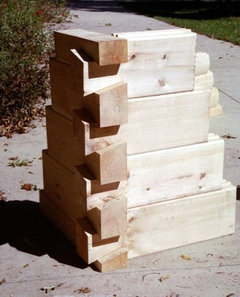
Locking miter joints: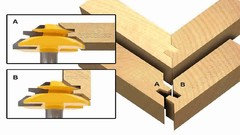
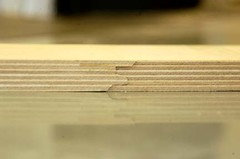
We now resume our friendly discussion-in-progress... - 8 years agolast modified: 8 years ago
A lock miter isn't better "in every way". First off, both are overkill in almost all use cases for a house, so then it's a question of what you are paying for. With a dovetail you are getting something that, in most people's opinions, is quite attractive. Aesthetics have value.
- 8 years agolast modified: 8 years ago
Just to be clear...
Most of the drawers I make have dovetails, but they are hand cut. I never said that lock miters are better than dovetails. I said that lock miters are better "than half blind dovetails cut on a crappy Grizzly machine."
Aesthetically, whatever floats your boat, but they are not a mark of quality...
- PRO8 years ago
Brief time out for a crappy Grizzly dovetail machine, the $3,900 G0611X. Disclaimer: I've never used one of these...so I yield to bry911's experience.
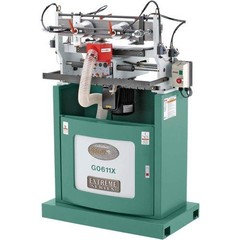
- PRO8 years ago
This is a $4,000 + machine...it sings pretty! But the boy's assembly leaves something to be desired...
- 8 years ago
the boy's assembly leaves something to be desired...
Which is exactly my point. Dovetails are often presented as a mark of quality but the dovetail station is the one most likely to be manned by the least skilled person.
Which brings us back to the point I was making.
I don't know if consumers today can actually distinguish quality. I am not saying it is the only important thing to a successful project, but I do suspect that for a typical consumer choosing a contractor is a game of chance. I believe the best way to increase your odds of success are to hire a contractor through an architect or designer rather than references and viewing work.
Beyond that I would ask questions about when things went wrong. I don't want to see work that turned out great, I want to know the project that almost made you quit, why that happened and what would you do differently. Every project isn't going to turn out good, I find how a person discusses the bad projects to be even more telling than how they discuss the good projects, but even that is more about personality than craftsmanship.
- 8 years ago
Bry - I understand what confirmation bias is at least as well as you do. For example, I see your own confirmation bias in your responses to my comments. You have decided what my position is, and are marshalling your arguments against it but are ignoring the simple fact that I'm not saying what your bias leads you to think I'm saying.
As for your other point: "How do soft skills measure competance(sic)? A GP may well need soft skills to get and keep patients, but that doesn't in any way mean he is competent at his job." Soft skills don't measure competence. Who suggested they did? Not me. No, what I'm saying, is that for GPs, architects and many other professions, soft skills are an essential element of competence.
 8 years ago
I wish there was a way to turn off notifications for a particular thread here on Houzz.
- 8 years agolast modified: 8 years ago
"I wish there was a way to turn off notifications for a particular thread here on Houzz."
There is. Look at the very bottom.
 8 years ago
How did we get from people trying to barter services and demand a very detailed bill to dovetail vs lock miter joints (which I had never heard of)?
Owing your own business is tough. People always want a deal. I never see anyone try to barter on gas or on movie tickets at a movie theater yet they do it constantly when trying to book functions or parties at my husband's restaurant. They say you get what you pay for. In most cases I agree.
Bry I think you are probably different from most people looking to build a home that have virtually no experience in doing so. I can tell shoddy work if it is obvious to the naked eye.
Don't most rely on word of mouth?
- 8 years ago
I think that only stops email notifications, which I already have disabled. I’m talking about the notifications by my username. Thanks, though!
- PRO8 years ago
Extended conversations typically ramble a bit, but it's often worth continuing to follow the interesting ones, for the zingers which come without warning...
- 8 years ago
Hillside House, I don't think there's any way to turn off the ones on the bell, alas.
 8 years ago
I think that only stops email notifications, which I already have disabled. I’m talking about the notifications by my username. Thanks, though!
It's not just for email notifications. It works for online notifications by username.
I know because I stopped email notifications a long time ago : ) .
- 8 years ago
FWIW, I've always had all notifications turned off, but it doesn't stop the #$%$ bell thing.
- 8 years ago
I don't think so. I'm still getting notifications to this thread and I tried to use the link to stop it! I don't want all my notifications off just certain threads here or there.
- 8 years ago
Interesting. It worked for me on the Amy and short bathroom thread. This might be another Houzz glitch.
- 8 years ago
Well, it is houzz, after all, so it's entirely possible that there are eleventy different ways that things work for different users.
- 8 years agolast modified: 8 years ago
My intention isn't to divert the discussion to one about various joints. It's to question bry911's belief that people underrate build quality vs. 'soft' factors. I don't think most people care, nor should they, about build quality once it hits an acceptable level. And by acceptable, I mean that it will withstand normal use cases and hold up for a reasonable lifetime for the product. In the joint case, I would argue that even a mediocre dovetail joint is more than sufficient to keep a drawer box together for the lifetime of the cabinets under normal use, so caring about aesthetics is reasonable.
Getting somewhat back to the original topic - let's posit that Joe is in the top decile of sink installers by quality. First off, what does that even mean? Second, and more importantly, how much of an impact does that have vs. using someone in the 5th decile (i.e. the median). I would argue that Joe has little competition because sinks rarely fail, thus it isn't a market that can support many competitors.
Building a house is about a lot more than just getting a house that's well-built. It's a process that, as everyone on here can tell you, involves a lot of hand holding. It can be fraught when issues arise (as they almost always do). Just like 100s of thousands of people a year choose tract houses because they are willing to forgo a level of quality in return for the ease of a production builder and pre-chosen plans, it's reasonable for the owner of a custom home to balance quality (again, assuming it's reasonable) in exchange for a contractor who is organized, communicates well and is respectful.
- PRO
Joseph Corlett, LLC
Original Author8 years ago" I would argue that Joe has little competition because sinks rarely fail, thus it isn't a market that can support many competitors."
No, I'm in the fashion business. Everyone for whom I've replaced a sink had one that worked, they just didn't like it for one reason or another. Occasionally sinks are replaced to repair a blown reinforcement rod, but even then, that's choosing fashion over a lower cost repair.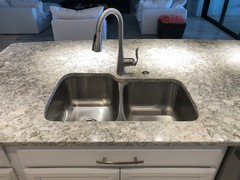
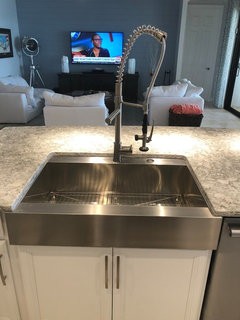
You could have a nice new refrigerator for what that ^ sink replacement cost my customers yesterday, even excluding the faucet. - 8 years agolast modified: 8 years ago
@Joe - I'm still confused by your business model. Do I say I want X sink installed and then you tell me the price inclusive of your supplying the sink. As I stated earlier, I have no problem with a vendor marking up supplies nor do I care about anything for a single discrete project other than final price (and quality of job of course), but there are so many sinks. At what point does sink model choice enter into the mix?
- PRO8 years agolast modified: 8 years ago
If you call Joe, it's because you don't like your existing sink and want to replace it...
If you don't tell Joe what sink you want as a replacement, how will he know?
Or do you want Joe to make some recommendations?
His is a simple business model: he replaces unsatisfactory sinks and makes people happy about their sinks.
- Joseph Corlett, LLC thanked friedajune
- 8 years agolast modified: 8 years ago
I am confused because he has written that only some people know how much their sink costs. If I select a specific sink, I would know how much it would cost me to purchase that sink. Perhaps I didn’t understand his prior responses ness, but he seemed surprised that people would know who much a specific sink costs. Therefore it is relatively easy for a potential customer to determine labor charges with obviously some margin in terms of Joe’s markup since presumably he can get the sink for less than a retail customer can.
Joes billing seems to be pretty straightforward even if it isn’t specifically broken down. A sink plus labor equals his flat fee. Where is the mystery?
- PRO8 years ago
Some folks know what a specific sink costs to purchase. Other folks don't.
It's the way life works.
- PRO
Joseph Corlett, LLC
Original Author8 years ago"Do I say I want X sink installed and then you tell me the price inclusive of your supplying the sink?"
You call me. I look at your cabinets and layout and tell you which sink(s) you may select from, because your cabinets and layout tell me. - 8 years ago
A slight adjustment, if I may.
His is a simple business model: he replaces unsatisfactory sinks, preserves (often stone) countertops, and makes people happy about their sinks and countertops.
- 8 years agolast modified: 8 years ago
let's posit that Joe is in the top decile of sink installers by quality. First off, what does that even mean? Second, and more importantly, how much of an impact does that have vs. using someone in the 5th decile (i.e. the median).
I posit that this proves my point. I suspect there is a lot of difference between the top and the median, and it isn't simply a sink replacement involved. It is very often a sink replacement and modification of a very expensive counter top.
Building a house is about a lot more than just getting a house that's well-built. It's a process that, as everyone on here can tell you, involves a lot of hand holding.
Nowhere have I said that craftsmanship and quality are the only factors. Not once have I said that communication is not required for a successful project, only that they are not sufficient for one. In fact, the point isn't about the project and its completion, it is about hiring the contractor and why people will not pay for quality. Once the contractor has been hired and the contract signed, discussions of a consumer's ability to vet their contractor are largely a moot point.
My original contribution to this thread, was that companies have learned how to play the customer service game extremely well, and can pass off median quality at artisan price levels because they are so good at dressing up their service.
Just like 100s of thousands of people a year choose tract houses because they are willing to forgo a level of quality in return for the ease of a production builder and pre-chosen plans,
Please prove that people buying tract houses understand that they are not buying quality. If being on this site this long has shown me anything it is that the people who buy tract houses are completely unaware of the extent to which quality suffers in tract houses.
In fact, I would argue that half the people who build custom houses don't even understand quality. How many people start with a great piece of land then add a canned plan and hire a draftsman to fix it right up for them? All the while wholeheartedly believing that they can achieve substantially the same result as an architect.
Additionally, supposing what you are saying it true, it still supports my position. That when people feel they can't judge quality they start judging price and viewing all levels of quality as equal value and thus prefer the lower price item.
- 8 years agolast modified: 8 years ago
Just like 100s of thousands of people a year choose tract houses because they are willing to forgo a level of quality in return for the ease of a production builder and pre-chosen plans,
I agree with bry:
I don't think that people who buy tract houses think they are giving up quality at all. Some may, but only if they have lived in something better or built something better, first, and really are buying a builder house because of convenience or need.
I have a client who grew up in a family where the father had an executive position, but everything the parents bought was either the cheapest model, scratch and dent or had a mysterious fell-off-the-back-of-a truck pedigree.
When I did work for her, she felt that the least expensive Kenmore slide in range, an American made but big box store cabinet, and a $1000 sofa were all "very high end". But she was the sort of a person who hitherto would buy a $250 clothes dryer with two settings Off and Scorch, rather than figure out what was wrong with the old one.
She didn't think she was foregoing quality, she had no idea what quality was, for the most part.
I think many people fall into a category of thinking middling quality is good, and a group that would not pay for good quality even if they could
Then there is a group of course which realizes that there is better quality but can't have it or doesn't achieve it for various reasons. This is the group I feel bad for. Ignorance is bliss. I am one of those people whose quality expectations really outstrips my income level and it's a constant struggle.
I doubt the people who execute these lower quality builds or terrble tile jobs think they are doing a bad job. They think it's fine. Actually there is evidence that people who have low skill levels routinely over estimate their skills.
- 8 years ago
Wow. There goes time I will never get back, but like a train wreck, I couldn't look away. I do have several comments though, thus adding to this lengthy post....
- To Joe: Kudos
- To those who made me laugh: Never knew when I came to Houzz that it was also entertainment. Thank you.
- To all who chose to get confrontational: can't we all just get along here?
- To all who are looking for a good contractor: Word. Of. Mouth.
As someone who is married to a general contractor who has been in business many years, I can tell you we have never advertised, do not maintain a web presence, and have built a business on word of mouth and repeat business. Quite a few customers have even become friends over the years.
- To all who get a detailed estimate from a contractor, and then state his price is too high (based on what you would like to pay, not on the cost of the job) and want to negotiate: Fine. But be aware that a good GC likely spent days gathering material costs and subcontractor pricing from his vetted subs, and then countless hours calculating time and material, and preparing a detailed proposal with allowances. His pricing is accurate, he has calculated your price on actual costs. Your expectations may not be. Perhaps you could have been more upfront on your budget up front. You want to keep costs down, you may need to select a less expensive tile/tub/cabinet/countertop, etc. But no reputable contractor should EVER give you their price and then be able to say "oh, sure, I can do it for xxxxx less" without something changing in the scope of the job or material.
(Side story: He once had a potential customer belligerently ask "where the hell did you come up with that price!?!?" My husband told him "well, you see I have this hat, and I just reach in, and......." (i love my husband) Discussion followed, husband hired, repeat customer for years.)
- to the person who's contractor added thousands of dollars to their price mid job: I am so sorry. First, he should have refunded you money for items on the bid that were ultimately not done. But that he did not accurately figure out their time should have been on Him! They gave you a price, they should be held to it. There are somethings that cannot be foreseen, such as rotted boards under floors, or electrical issues that are discovered behind walls and many contracts include clauses to cover things of that nature, but he should have been more thourough in estimating his time. As a contractor, some times things go quicker than expected, some times they are nightmares. (Tile guy had to leave to go get a sick child from school, didn't finish until next day, plumber scheduled for next day when tile should have been ready has other commitments until following week, plumber finally gets there only to discover wrong faucet delivered, needs to come back, inspector didnt show, can't close up a wall yet, truck with all you equipment breaks down..and I can go on forever but you get the picture). You may price a little high to account for the unforseeable delays that you know will come, but you don't go back to a homeowner for more money because you figured your time badly, or the job took longer than you thought.
- to those who hire based on price alone: buyer beware.
Is your contractor licensed and insured, and getting all required permits?
Perhaps has a lower price because he works out of the back of a truck, and/or using inferior grade products? Doesn't have the experience to know what your job will truly cost?
Do you get a tail-gate guarantee, or will they come back should you need them to?
Karma. Be good to your contractor and he will be good to you.Joseph Corlett, LLC thanked slontine - 8 years ago
Sounds like you dodged a bullet with both of these potential clients. A waste of your time but lesson learned. You are fortunate that you have the ability to walk away. Your fixed price business model works for you and those that don't like it have the ability to use someone else. It's transparent to me. You want X it is going to cost Y.
Joseph Corlett, LLC thanked wantsideas














User