Software
Houzz Logo Print
zooba72

Help Hydrangea in decline - vole damage ?

8 years ago
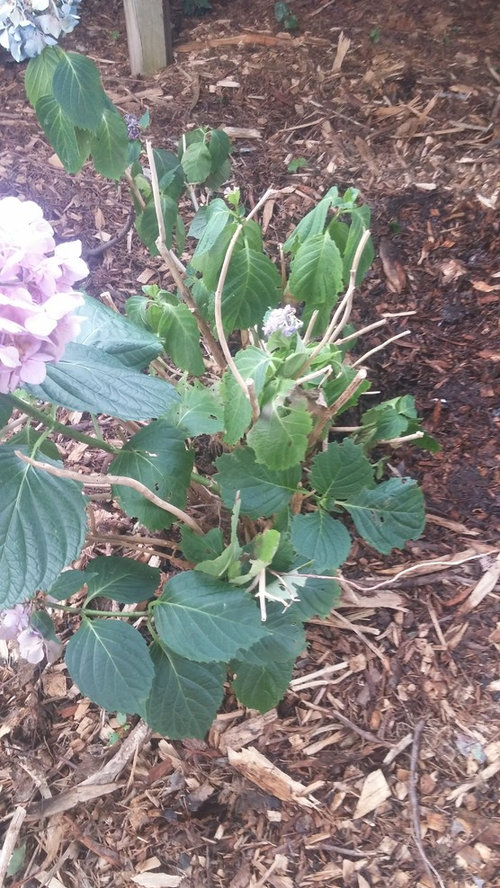
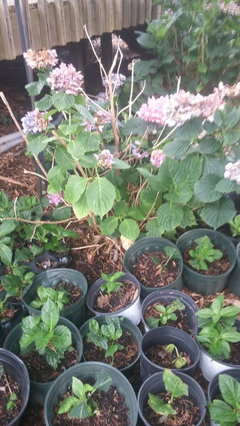
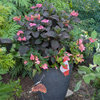
Hello Everyone - I have several Hydrangea's around my deck (I'm pretty sure they're mophead) which were in very healthy condition until this year. In late Spring I noticed two of them drooping and the overall size of the plant was much smaller than the previous year. They definitely get enough water - I actually propagate Hydrangea and they happen to be right next to where I keep my pots, so they're well cared for. So today while I was staring at the plants, I noticed a rodent roaming around my pots, which is right next to the Hydrangea that's in decline. After some reading I saw that moles or voles can attack the roots and cause this kind of decline. Long story short, I managed to kill the rodent running around my plants, but now I'm wondering what I can do to save this plant? Some questions I have - does this look like rodent damage? I scraped away the arborist wood chip mulch from around the plant, but did not see any tunnels. Any thoughts on next steps ? I have a few pictures - I also have a picture of the dead rodent, but not sure if I should post that or not ... I'll leave it out unless someone is interested. Thank you in advance !


Comments (17)

  • 8 years ago

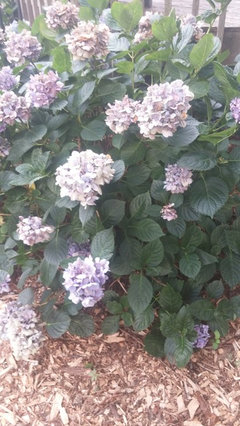
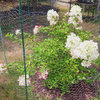
    This is the other one - not doing as bad as the first picture, but much smaller than it had been.

  • 8 years ago
    last modified: 8 years ago

    The pests that you mention will munch on the hydrangea roots, bark, etc. Top growth that depends on those roots will be affected. It may die out completely or partially. The affected stems' leaves brown out and fall.


    The only problem I saw on the pictures was leaves drooping. Since you did not find tunnels, bark damage and it is warm this time of the year, "regular" drooping is probably what you see. Drooping/wilting of leaves just means the plant leaves are loosing moisture faster than the roots can absorb water from the soil. You can give them a ton of water but that would not help... the roots cannot absorb the water as fast as the leaves "loose" it.


    It also appears to me that winter zapped some of last year's stems, which now appear as dried out wood in the pictures. New stems developed from the crown but, it will take a while before those stems are as tall/wide/large as the dried out ones used to be last year. As a result, the plants look smaller. The root system this year would be larger than last year's root system though. You can prune those leaf-less stems any time after the end of May.

  • 8 years ago

    Thank you for the response. Ordinarily when I apply water to a drooping Hydrangea it will bounce back within an hour, usually less. This one does not - that's why I'm concerned something might have gotten to the root system. The rodent I killed today might have been a mole/vole - I'm not sure. There was a thick layer of mulch around the plant, not sure if that might have hidden the tunnels.

  • 8 years ago
    last modified: 8 years ago

    I have never "timed" the "revival" of those wilted leaves. I figured there were too many variables involved. As long as they fix themselves overnite when temps go below 85F and as long as the soil is evenly moist (no periods of dry/wet/dry) then it is ok for wilting to happen. But I would agree that they definitely do not look good (while wilting) or happy! Hee hee hee.

  • 8 years ago

    I have never had something look stronger in an hour, I can just imagine how much water those poor baby need if they look that better fast, but I am also in zone 5 so my heat is not intolerable, my first guess was "that plant needs water", I am trying to make a couple of quick fire hydrangeas that were VERY reduced at my local nursery, it has taken about a month and a half now but a bit of love and fertilizer is doing the job... sometimes all it takes is a lot of patience and even seasons for a plant to be back to normal.


  • 8 years ago

    Voles look like mice, moles are darker in color and have squinty eyes and paddle shaped front feet. Moles eat insects. Voles eat vegetation.

  • 8 years ago

    This particular Hydrangea gets daily water and it's not in direct sun. The other Hydrangeas in the same area, same conditions are all in excellent shape. I agree the drooping leaves makes it look thirsty, but If this plant needs water, then the root system is damaged and it's unable to absorb it. This is why I posted my question - No matter much water it gets, it's always wilting. The other clue is the reduction in size of the plant - I'm attaching a picture of the Hydrangea that is right next to it. They were all this size last year.


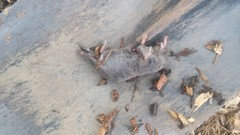
    Also including a picture of the rodent that was roaming around this plant

  • 8 years ago


  • 8 years ago

    Eew, thanks for the rodent. You may be overwatering.

  • 8 years ago

    Yeah, sorry about that - I was hoping someone might be able to tell me if that's a vole or not?

    Over-watering is a possibility but I usually do a quick mist over the pots and this particular Hydrangea gets the spray. I'm not doing frequent deep watering. I'll continue to watch it - I don't think there is anyway to tell for certain without digging it up and inspecting the roots. Thanks

  • 8 years ago
    last modified: 8 years ago

    Try pushing firmly on the soil with your fingers to see if there are tunnels under the soil surface and if there are, push them all to fill in the currently air-filled tunnels in the soil. Check soil moisture and water well as needed. They like moist but not soggy soil. Frequency of watering is less important than that the water has a chance to penetrate deeply, so long and slow (but not as often) is best. Another possibility might be that this plant is in slightly faster-draining soil, perhaps due to construction of the home or deck in the background or even that it gets a bit more sun or heat from surrounding pavement.

    I have never looked at a vole upside down, and I can’t judge size from your photo. However, shrews (which like moles don’t eat plants but whose tunnels can expose roots to air) have pointed noses like your photo, while voles have blunt noses like gerbils. So I agree that it looks more like a shrew than anything else as best I can determine from your photo.

  • 8 years ago
  • 8 years ago

    Hyed, be thankful that you don’t have first hand experience with moles and voles in particular!

  • 8 years ago

    Yes, critter in photo is a shrew. And while they are primarily insectivores like moles, they can and do eat some vegetation and will gnaw on roots and bark to keep their very sharp teeth filed back (like rabbits and squirrels, they grow continuously).

  • 8 years ago

    Thank you everyone ! Great information. I will try to compress the soil around the plant to see if there are any obvious tunnels. I also read that Shrews can gnaw on roots - so I would prefer not to have them around. I'm somewhat convinced this is not an irrigation issue. This plant was well established in this location and has been thriving up until this year. The other Hydrangeas are all doing very well - Maybe the Winter affected this one, but I have about 60 or 70 others throughout my property, and this is the only one that I see struggling.

    Final question - Do Shrews live in communities? or would the one I killed be on his/her own ?

  • 5 years ago
    last modified: 5 years ago

    Please don't go killing your shrews. They are not rodents and are very valuable animals to have around. They are not like mice, rats, moles and voles as they are constantly eating nuisance insects like cockroaches. They very rarely will invade your house or plants unless you leave a huge opportunity like your garage door wide open with food inside. But then you'll probably have a mouse infestation first. Shrews will kill and eat mice by the way. I have lots of them around my half acre garden and they really help keep down the need for pesticides.

    The picture submitted in this forum is that of a fat little shrew. I'm certain that he was not the cause of your root damage but may have instead been protecting your plants from voles.