Software
Houzz Logo Print
maackia

Any Hot Prospects?

8 years ago
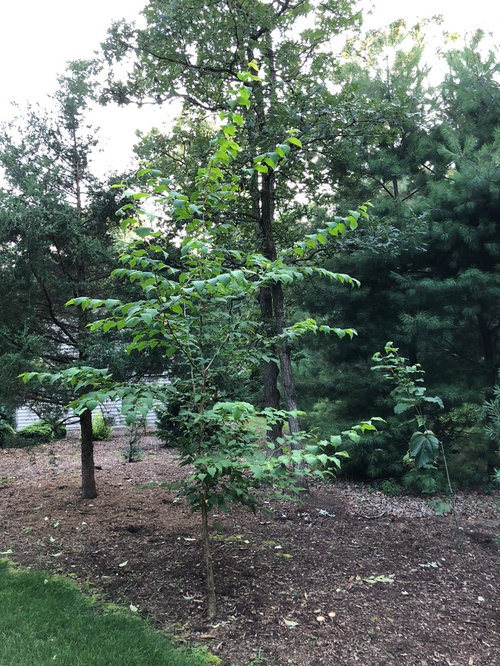
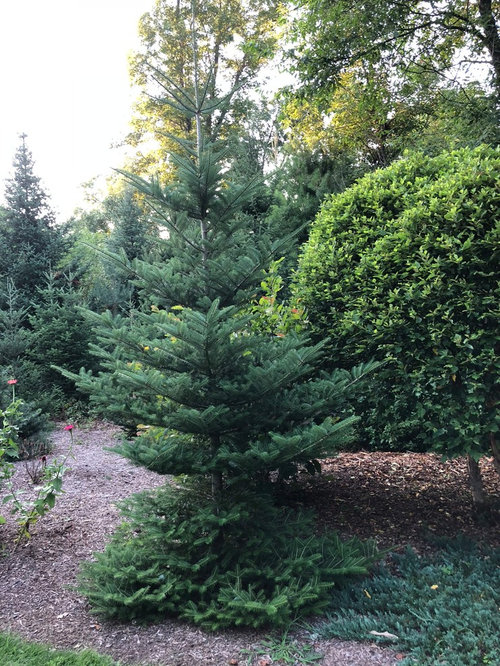
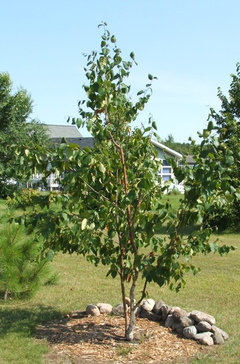
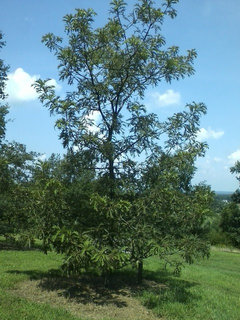
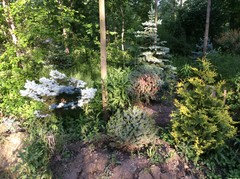
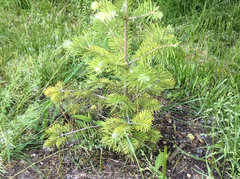
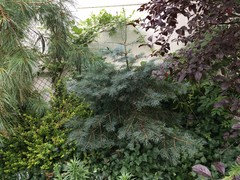
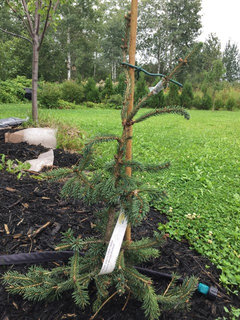
Do you have any trees too young to get overly excited about, but doing well enough to excite? This Corylus fargesii and Abies koreana do it for me.


Comments (56)

  • 8 years ago
    last modified: 8 years ago

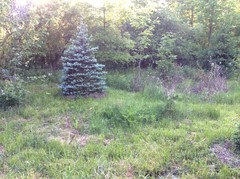
    The rocks are leftovers I moved here, to skirt the bottom of my new shed. They remind me of Chester park and other areas we've been, around Duluth MN (except mine don't have water seeping out from behind them). ;-)

    We think they add something to the looks of our sterile appearing, mowed grass yard. And they should help to catch some snow this winter.

    I thought about possible stored heat but it can't be any worse than the summer sun beating directly onto my sandy, dead grass ground and they actually provide some shade.

    I put the rest of what we hauled by the Betula papyrifera.


  • 8 years ago

    'Horstmann's Silberlock', which was planted a year earlier. The cultivar is doing well, but as they mature I find the seedling more attractive.

    YEP! The cultivars seems to yellow or look dirty, I can't explain it. But anytime I've seen the species at an older age they just look nicer.


  • 8 years ago

    These are more experiments than hot prospects, but I have a seedling black cherry (from Sheffield's) and two seedling horse chestnuts (gathered in Ft. Collins) in their first summer from seed. These are both trees I've never seen in my town :) hope they make it. Also have a small sycamore from Wal-mart and a small Accolade elm from Wal-Mart, both in their first summer from 5 gal pots. Also have never seen these two trees in my town, either. Also hope they make it.

  • 8 years ago
    last modified: 8 years ago

    >A root-knotted one gallon plant is actually more intractable in some cases, than an under-rooted liner<

    What I have seen repeatedly with grafted material at least is badly root-bound liners, that may have been sitting around being stored at production facilities for extended periods of time being used as stocks. So that right from the start a grafted combination has seriously deformed roots.

    This is I believe why so much grafted material in particular appears at garden centers being held up by stakes, even when it is of the size that should have long since been able to hold itself up.

    I'm also inclined to suspect reports of certain fast-growing scions always "overgrowing" particular stocks is based at least in part on root-bound stocks having been used. And that fast-growing, heavy-seeming kinds like Leyland cypress are described as being prone to blowing over because growers are not keeping them potted on in a timely manner. So that they are going onto final planting sites with bound roots that will not be able to keep up with the later size and weight of the tops.

  • 8 years ago
    last modified: 8 years ago

    Embo, I see what you mean, but liner might have been the wrong term to use in this case. Does it always apply to grafts?

    Clearly the Cornus was either cutting grown, or micropropagated and the plantlets put into tiny <3" square pots. Even smaller than the typical 'band pot' which I'd guess is 5" square or thereabouts. They didn't seem pot bound - I definitely looked for that - but they seemed like they'd been fed a lot to get quick top growth. If they'd stayed in those for any longer of course, they would have quickly gotten knotted.

  • 8 years ago
    last modified: 8 years ago

    LOVE the new growth on that Quercus, coniferbros.

    Also like the tortoise!

  • 8 years ago
    last modified: 8 years ago

    Yes, naturally: all manner of woody plants I see here may show signs of having been in small containers too long regardless of propagation method.


  • 8 years ago

    Yes, I figured that was the point.

    At least with smaller container volumes, one has less to inspect! I've been at my most infuriated with certain nurseries when I dig into the center a huge 5+ gallon pot root mass and find that something had been terribly knotted when it was up-potted a couple year prior. A superficial inspection doesn't reveal that.


  • 8 years ago

    " I think I was one of the naysayers about being able to grow T. canadensis on a cold, wind swept spot. It will be interesting to watch this one develop and I hope to be proven wrong. :) "


    Yes, me too. It's hard to believe how strong the winds can be around here at times. But maybe Tsuga c. gets more tolerant as it gets larger and more mature? I can't believe the state champion in Brainerd has calm conditions all the time. :-\

  • 8 years ago

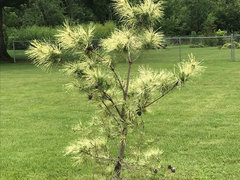
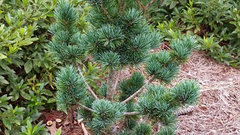
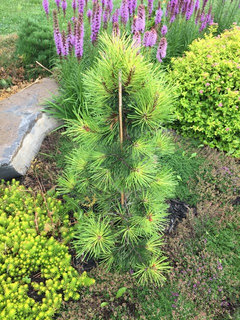
    When I saw this in a local big box, I’d no idea how ‘white’ it would read from a distance as those needles matured. Some day, as a big tree, it’s going to be gorgeous, I think. Pinus densiflora ‘Oculus Draconis’ planted spring of 2017.

  • 8 years ago
    last modified: 8 years ago

    You may find the amount of yellowness of the pine to vary at different times. And also that during some of those winters that it is more yellow (as it is now) there is also some defoliation.

  • 8 years ago
    No hot prospects here lately, but that is one super looking fir tree your growing!
  • 8 years ago

    maackia, thanks for starting an interesting thread.

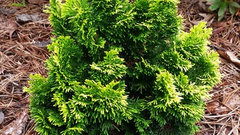
    This Chamaecyparis obtusa 'Nana Lutea' has stolen my heart; it hasn't burned and keeps its cheery gold color on the outside, year-round.

    Pinus parviflora 'Aoi' is doing well but still <1m tall.

    Finally, I can't wait for this Platycladus orientalis 'Columnaris aurea' to add a strong vertical accent to the bed of young ones. I have more time than money, so all but two of my conifers were bought when small.

  • 8 years ago

    “stupid hybrid vigor”

    I like smart hybrid vigor. :) BTW, David, I stumbled onto the Gerdeman Garden in Yachats, OR, which had some interesting Big Leaf Rhododendrons. I thought of you and wondered if you’ve visited this place?

    I wanted to purchase two trees yesterday at one of the larger retail garden centers here, and arguably the best conifer vendor we have. They were Aesculus ‘Autumn Splendor’ and Pinus densifora ‘Umbraculifera’, but both were way too large for the container size. I don’t know the formula for moving plant stock up, but it looked like it should’ve been done a long, long time ago. I was frustrated and they didn’t make a sale. It was a lose-lose.

    Thanks everyone for sharing some photos of your plants. I enjoy it immensely and hope you’ll post pictures of them from time to time. It would be a real treat to see Coniferbros oak or Indygirl’s pine as they develop. Garden stories!

    Jon, you’re welcome...and great looking plants!

    Just in case any of you are still not sick of me bragging on my Corylus, here are a couple more pics:

  • 8 years ago

    That hazel tree is really nice and I'm still searching for one myself. I hope you will keep posting pics of it the coming years so we can follow its development

  • 8 years ago

    Maack, what year did you plant the Corylus?

    It will be a good zone 4 planting to watch!

  • 8 years ago

    Huggorm, I will definitely keep you posted on its progress. :)

    Whaas, it was planted the Spring of 2015. It’s one of the very few mail order trees I’ve purchased, and it came from RareFind in a 1 gal. pot. The growth rate has been a complete surprise. I’m still not convinced it’s a z4 tree, but it will be interesting to see how it turns out.

  • 8 years ago

    Worth mentioning that of the tree Corylus I observed recently at Dawes Arboretum (colurna, chinensis, jacquemontii, & fargesii) the fargesii appeared to have the least Japanese beetle damage. Though it did have some sawfly larvae on it.

    I obtained one small potted multi stem fargesii (6") last year and over wintered it in the pot (in mulch), and it came through the winter with no damage. Planted it in the spring and it has been extremely slow this year, only a couple inches of new growth.

  • 8 years ago
    last modified: 8 years ago

    Re: coniferbros' Quercus dentata 'Pinnatifida', here is a specimen at Dawes (sorry, not the clearest photo):

  • 8 years ago
    last modified: 8 years ago

    The way it is stretching up that 'Nana Lutea' is apparently being invigorated by seedling root-stock, already on its way to growing out of character - I have seen plants in my area under the name that were yards high.

    Due no doubt to invigoration by seedling root-stocks. With true-to-type plants being instead quite dwarf.

  • 8 years ago

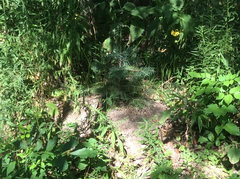
    About 3-4 years ago I bought 5 or 6 five dollar Abies Concolor (this isnt a math problem, I swear:). This was after my first “Im all planted out” (due to lack of sunny spots). Im down to 3, and of those 3, this is the best looking one and the last planted (in the “worst” spot). While it doesnt get much direct sun, it does have excellent drainage. Looking forward to seeing it grow.


  • 8 years ago

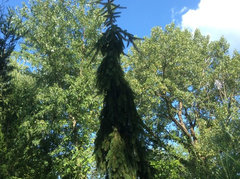
    I’d like to see P. Abies ‘Slender Silhouette’ continue to reach for the sky at 2+ ft/yr and stay slender. (8’ +/-@50 years).


  • 8 years ago

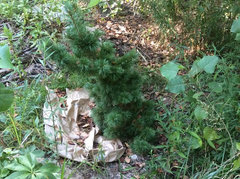
    Id like Pinus Parviflora ‘Goldilocks’ to be fluorishing in 30-40 years(Im experimenting with yard waste bags and pizza boxes to combat weeds).

  • 8 years ago

    Hey, Pete, thanks for sharing a few conifers that keep us optimistic. That Concolor is tucked in, but still some rays of hope are reaching it. Any chance of it being completely shaded out, or will it get its share of sun as it grows?

  • 8 years ago
    last modified: 8 years ago

    Pete, my Blue Cloak is in full shade yet maintains its blue color nicely and has been doing great. Parts of it don't even get any direct sunlight. I guess Concolor is extremely shade tolerant. I'll try to post a photo of mine tomorrow.

    By the way, I really like your Abies ‘Slender Silhouette'.

  • 8 years ago
    last modified: 8 years ago

    White fir is less tolerant of shade than associated true firs (except red fir), is slightly more tolerant than Douglas-fir, and is much more tolerant than pines or oaks [157,178,219].

    https://www.fs.fed.us/database/feis/plants/tree/abicon/all.html#SITE%20CHARACTERISTICS

  • 8 years ago
    last modified: 8 years ago

    The area the concolor is in is packed too dense with (future) large conifers to guarantee unlimited future sun for the concolor :).

    From my shadow in lower left, you can see west is looking into the pic (May pic). The concolor is slightly back and to the left of the largest P. Pungens (in front of white trunked tree back there). The 70 feet behind me in the pic are mostly clear but then there are 80-90’ trees blocking direct sun for the last 2 hours or so. Unfortunately I dont have much control over morning sun. It gets morning sun in the winter(when leaves/perennials gone) at least but there are some dense larger wildflowers growing on my neighbor’s property that block lower level morning sun(there are also 3 or 4 larger cottonwoods you cant really see that block direct sun until it is overhead). I didnt have much choice when I planted it. It was what I considered my best available spot at the time. (this was 3-4 years ago, Ive planted many, many conifers since, and I need to find 12 more spots to plant conifers this fall lol)

    If it does well Ill cut down what I need to. A few of the trees were planted with this in mind. One of my goals in conifers is trying to grow the largest “flawless” specimen of all the species of conifers I have. Ive attached a 5/23 pic of my “2nd best” from those original 6 concolors This one gets direct sun from a couple hours after daybreak until 3:30 then mostly shade until dusk. In the winter it will gets more sun as the deciduous trees dont have leaves.

    My main goal for my property (2 acres, 0.75 of it is “woods”) is large conifers and a lot of them. So I have a lot of basic P. Abies, P. Strobus, P. Pungens, etc. Of my P. Pungens, this is my narrowest so far so I am excited to see if it stays fairly narrow (May pic).

  • 8 years ago

    Every garden tells a story. Did you mention earlier that you don’t live on this property? The venerable Wisconsin Tom had a property he planted in conifers (I think) that was about an hours drive of his home. Is this similar to your situation?

  • 8 years ago
    last modified: 8 years ago

    Hey Pete, Can you give us any more info on your weeping spruce 'Slender Silhouette'. I've never heard of that one before. Your growing a great looking tree there!
    Al

  • 8 years ago

    Pete wasn't that the one we ( I ) thought was rotenhausii

    ron

  • 8 years ago

    That tree was purchased as P. Abies Pendula. Since the leader is growing vertical without staking (this is first year it wasnt staked), it is either a genetic mutation of P. Abies Pendula or it was mislabeled(and perhaps is a rotenhousii or similar). Of those two choices a mutation seems more likely to me (though perhaps it shouldnt since I have no idea how rare or not so rare noticeable genetic mutations like this are). Some of this is because I dont think mislabeling conifers is very common (based on nothing). Since it is a genetic mutation then, I can unoficially call it whatever I want since it is now unique.. I just thought of that name for fun though I doubt I will call it that. If it turns out to be something soecial and clones are made, Ill reconsider the (just for fun) name. My other choice was ‘seldom seen’ as that is the street I (soon will) live on but that name sounded too exclusive. At any rate I was just joking with the name. But if it stays narrow and keeps putting up 2+ ft/yr, this should be a nice specimen in 50+ years. Im still not convinced that the leader wont weep next year. I live 30 minutes from my property. By 12/31 my house is supposed to be done so I will live all my conifers. :)

  • 8 years ago

    Here's the photo I promised to post of my Concolor Blue Cloak in full shade:

  • 8 years ago
    last modified: 8 years ago

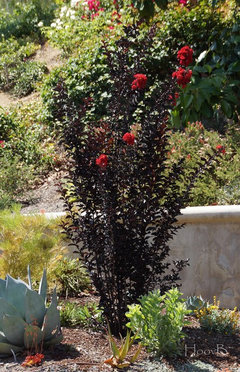
    This Lagerstroemia (Crape Myrtle) 'Ebony Embers' is a slow grower, but eye catching. Planted in 2015. It is over 6' tall now.


    It got extra water this summer because it was really really hot here for weeks (and still is). The extra water seems to have improved it.

  • 8 years ago

    Great thread, great photos!

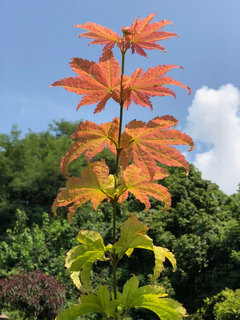
    Acer japonicum 'Giant Moon' - Great big leaves and the new growth has a fantastic color before fading to green. This photo shows it's second flush this year.


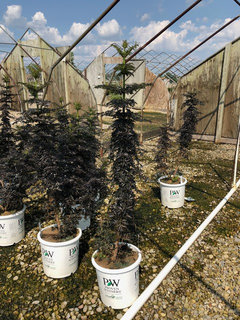
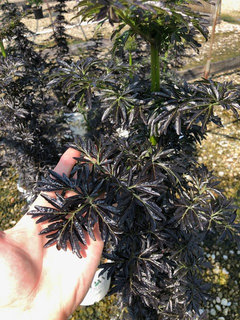
    Sambucus nigra 'Straight-Laced'. Fastigiate small footprint, super glossy black foliage, clusters of pinkish white flowers, followed by medicinal fruit. Ooh wee!! Well, the flowers do have a bit of a musky smell. I have a 'Black Lace' but this one takes the cake. I'll be picking it up next month. They do sucker and can form colonies but I won't mind a colony of these. I'm usually adamant about pruning suckers though.


  • 8 years ago

    I have no idea what ‘Ebony Embers’ is, but I can see why you’d be excited about it.

    Medicinal fruit? Just what the doctor ordered! It’s good to be ‘Straight Laced’.

    Stuart, I’ve got a a Concolor that looks like that: big on the bottom and little on top.

  • 8 years ago

    funny, when I tried elderflower cordial (a couple years before everyone was talking about it due to the recent royal wedding) I found the flavor to be _musty_, not musky LOL.

    At any rate, nice looking Sambucus! I might have to look for that one...

  • 8 years ago

    Elders are cane growers so you don't want to be cutting the "suckers" off or you will be preventing the specimen from continuing and renewing itself. Also I've never seen one produce runners to form groves or thickets ("colonies") in the manner of an aspen, running bamboo, sumac or species rose.

  • 8 years ago

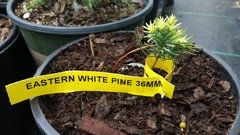
    I have many many little babes that are too young t get excited about... This is my favorite so far


  • 8 years ago
    last modified: 8 years ago

    Brandon, really cute!

  • 8 years ago

    What's the story behind the little P. strobus, Brandon?

  • 8 years ago

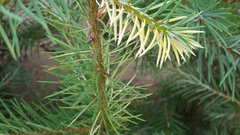
    I work for a seedling grower and we do about 2.5 million conifers a year by seed, all straight species. I typically find a few dozen mutations a year but most are unstable forms of variegation. We did 215,000 white pine this year, so it was easy to spot this one among the others. I don't think it's dwarf; it has a standard strobus seedling growth rate, but it put on several lateral branches with a creamy tip, right from the start. Typically the white pine group can push lateral buds out if they lose their leader, but this one has its leader still intact. It's too early to tell what it will turn into but I'm definitely keeping my eye on it!

  • 8 years ago

    Interesting — thank you!

  • 8 years ago

    now that's a hot prospect !

  • 8 years ago

    >It's too early to tell what it will turn into<

    Yes: they aren't conifers but certain snake-bark maple species, English oak, golden-rain tree and pagoda tree produce numbers of variegated seedlings that don't stay that way over the long term.


  • 8 years ago
    last modified: 8 years ago

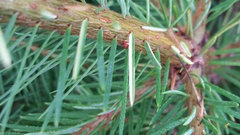
    Another find from today on this Douglas. You can't tell as much from these photos, but the needles on the leader have split variegation on the vein.


  • 8 years ago
    last modified: 8 years ago

    Can I add one more!?
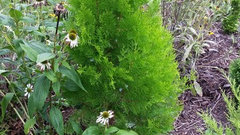
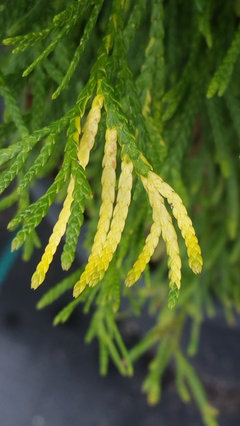
    Found this on an 'Emerald Beauty', which is surprising since they're cuttings.

  • 8 years ago
    last modified: 8 years ago

    I have a few as well:

    Pinus contorta Taylor’s Sunburst

    My garden pictures · More Info

    Picea glauca Ketch Harbor

    My garden pictures · More Info

    Picea pungens Maigold

    My garden pictures · More Info

    This one I’m most excited about, because I could not find pictures of a mature specimen anywhere: Picea glauca ‘Canadian Weeper’

    My garden pictures · More Info

  • 8 years ago
    last modified: 8 years ago

    >Found this on an 'Emerald Beauty', which is surprising since they're cuttings<

    Do you mean 'Smaragd' (emerald or emerald green in English)? I've seen it with small yellow sections like this several times myself - branch sports of trees and shrubs aren't limited to seedlings.

  • 8 years ago

    I like 'Ketch Harbor' quite a lot. 'Canadian Weeper' is a new one to me. Will be cool to see what what it does.