Software
Houzz Logo Print
lilia_ignecia

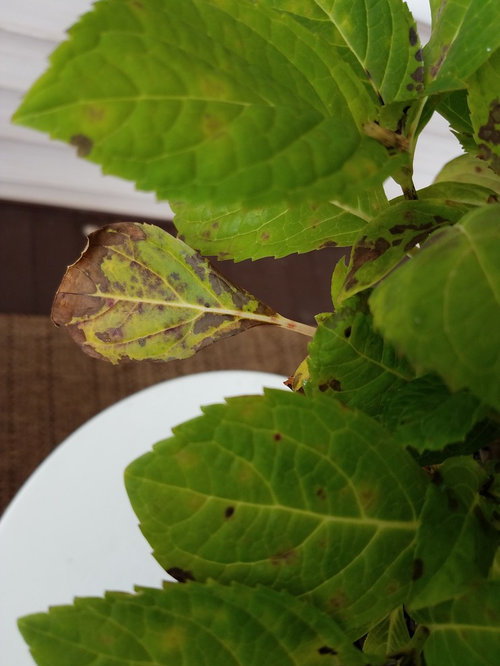
what happened to this hydrangea!!!?

8 years ago
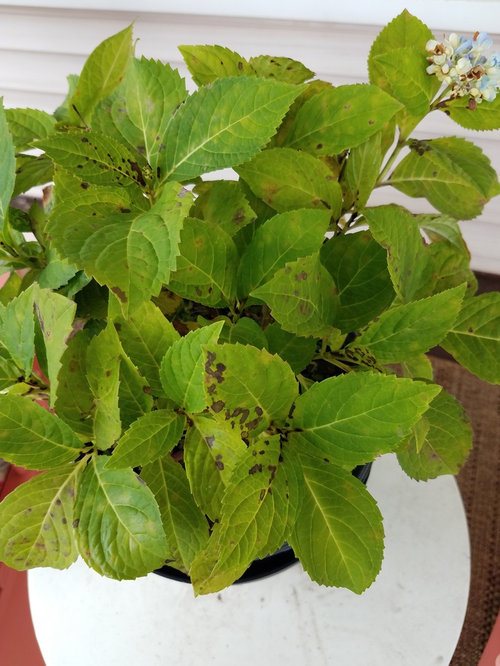
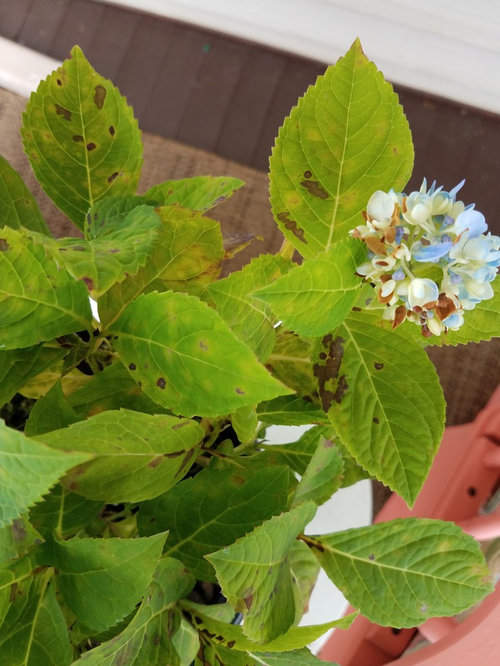
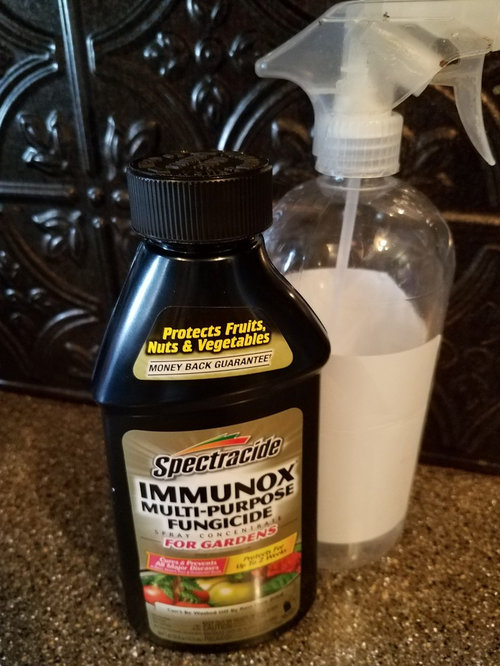
Hi there, I am seeking some guidance on what to do!. I bought this hydrangea on clearance at wallmart. It was literally almost dead. It was my mission to bring it back to life. Well, I kinna did..until I notice it had a few leaves with black spots. I looked it up and I read that I could use a fungicide to help with the spots, and so I did!... I got the Immunox multipurpose fungicide, I mixed half water/half fungicide and sprayed it. Within a matter of days the plant was covered on black spots.

I was excited to see its first bloom since I got it, and now I don't think it will bloom nicely as even the bloom is turning brown. is it too late for this plant? should I just get rid of it? is there anything that would help it?.

Comments (11)

  • 8 years ago

    "Once the shrub has it, you cannot get rid of it."

    Not true!! It is not systemic and only affects the leaves. This disease is easily controlled and generally nursery grown plants that have it will easily grow out of it once fully established. As mentioned, overhead watering is the usual culprit as are late summer rains and high humidity in those climates that are prone to them. Most never treat for it as it tends to appear late season and while somewhat unsightly, it doesn't affect the health of the plant to any great degree.

    Clean up and discard all the affected foliage when it falls. And apply a fresh layer of mulch to smother any fungal spores that could overwinter on the soil.

    Control of Cercospora leaf spot

    Cercospora leaf spot

  • 8 years ago
    last modified: 8 years ago

    Well, cercospora only affects the leaves but the spores can be found in leaves, stems, mulch, flowers so you have to strictly water the soil only and get rid of plant debris to minimize the outbreaks. Would it be easily controlled? Depends if you apply good sanitation techniques and have optimal weather in your location to limit its spread. Like I said, my shrub still gets it every year to varying degrees (more in wet Fall years). But the fact it has not spread in so many years shows it is not that easy to spread to other nearby hydrangeas.

    I would not buy Immunox for only one shrub (it is kind of expensive $$ for use only in late Summer and Fall on a single plant). Maybe if I had a hedge with lots of plants that were heavily infected. But it will not make the plant immune to those nasty spores.

    Since the plant was bought during clearance at Wallyworld, I do not think you can do something like return it. ;o(

    The infestation can sometimes be seen early if you really look at the leaves very closely. Looks like a very slightly different kind of green; just a tad.

    This reminds me of some oakleaf hydrangeas that a plant nursery had for sale at regular prices and all the shrubs had rust. The plants had come from the wholesaler with this issue. At regular prices, I decided not to get one from them that year even though rust is rare here.

  • 8 years ago

    It would be helpful to know where LIly lives, as how the disease progresses or even shows up next season can be highly dependent on location. In the south, where luis lives, heavy summer rainfalls and high summer humidity could continue to pose a problem. In my area, summer rainfall is virtually nonexistant and humidity low and even overhead watering with sprinklers doesn't really encourage the problem. In all my many years of growing hydrangeas (of all kinds) I have never had an issue with cercospora outside of those from the nursery that might have had a slight case. And that disappeared quickly, never to be seen again.

  • 8 years ago
    Thank you for identifying what is going on with the plant. It has been raining a lot in upstate new york, and that made everything worse. I don't know what I am going to do moving forward. I am torn between just dealing with the unhealthy appearance, or toss it as I don't want the fungus to spread and somehow make it to other plants.
  • 8 years ago
    last modified: 8 years ago

    Well, I would not panic if you have never seen this fungus before. Surprisingly, it is very common and already found in many unexpected places. In my travels, I have seen hydrangeas with this problem in many states and even places outside the country. Yes, the leaves look ugly but, it is just an aesthetic problem... and it normally would not kill the plant.

    The look of your leaves can be improved considerably by just watering the soil always; never watering the leaves directly or indirectly (rain); and by disposing of infected plant parts.

    I have never looked to see what other plants can be affected by this fungus but, knock on wood, my infected hydrangea has been "it" so far for over 15+ years. Even an identical mophead hydrangea located about 2' away from the infected mophead has not caught this fungi. Other "non mophead" hydrangeas located a few more feet away have not caught it either.

    When I first moved into the house 15 years ago, the infected one had leaves with many more uglier lesions than in your pictures. I selected the worst leaves, aesthetically speaking, and cut the worst ones. I tried to leave a lot of leaves though, since leaves provide food for the plant and I did not want to remove every leaf with just a tiny lesion. You could try doing that to improve the look of the plant; cut the petiole string that connects a leaf to the stem. Then discard the leaves in the trash.

    Since your shrub's water supply can be controlled by only watering the soil, since you can easily discard dried out leaves/blooms in the Fall in the trash and since you can protect the leaves from rain by placing the potted shrub in semi covered locations, I would feel optimistic of its future condition in August 2019. Actually, I would be more concerned with winter issues in upstate NY.

  • 8 years ago

    Lily, the only label directions that I can find call for one ounce of the chemical to one gallon of spray. Did your product have different instructions?

  • 8 years ago
    Thank you luis, I will cut off the leaves that look really bad, and see how it will do next year. I hope all the black spotting decreases!

    rhizo, the bottle I got did not have any instructions at all, it just said to mix with water. I watched a video on YouTube and that is how I got to half/half.
  • 8 years ago
    last modified: 8 years ago

    Pesticide labels are defined by Federal law. Of course it will have directions for use, otherwise it cannot be sold!! And you can download labels if for some reason yours has been removed or damaged so that it cannot be read: Spectracide Immunox label.

    Just an FYI, but I would avoid taking the gardening advice of any YouTube video. Most are completely inaccurate and not worth the time it takes to watch!!

    Cercospora has a pretty wide host range but its impact on most ornamentals tends to be limited to mostly aesthetic issues. I would exclude both roses and Indian hawthorn (Raphiolepis) from this list as they can be rather severely damaged. But not likely to be grown in close proximity with hydrangeas anyway.

  • 6 years ago

    Hello, would someone possibly assist with my hydrangeas, is this a powdery mildew, should i use immunox?

    any advise will be appreciatted, my location is Detroit MI

    ngeas , see photo below

  • 6 years ago

    It is only one picture but it appears to be. I would first start reviewing its care and environmental conditions that may be helping develop high humidity levels. Best used at the first sign of PM. I also used a solution of 40% milk and 60% water on powdery mildew of my Crape Myrtles; discard unused solution; reapply after 7-10 days.


    http://www.tnstate.edu/extension/documents/Foliar%20diseases%20of%20Hydrangea%20FBG%20022916%20G1.pdf