Software
Houzz Logo Print
upperbaygardener

deadliest summer ever!

7 years ago
last modified: 7 years ago

decided on that headline due to the melodramatic tenor of our times!

So, we had a very wet May, then a long hot rainless but very humid stretch...and then, the wettest early-to-mid summer spell I can remember. (but not late summer - that was around Hurricane Irene in 2011)

But it is proving to be the worst spell of summer death for my rarities ever. I'm probably forgetting a few things. Without further ado:

Plants definitely dead:

Rhododendron 'Evening Glow' - had long been struggling, I think Greer had sold me something with super knotted roots. Yes, I will speak ill of departed nurseries!

R. 'Double Eagle' - just not established enough; impressed a norcal bred yellow survived last two summers, w/o antifungal, and the following winter. Shows it is at least fairly tough! Need to get a grafted one. It is the intense yellow seen here: https://www.gardenweb.com/discussions/5263994/sonoma-horticultural-nursery-and-garden-tour#22097585

Rhododendron 'Wild Ginger' - I'll never been completely sure whether it was the dry spell, or the deluge that followed. I definitely did give it some sips of water, at least twice, during the dry spell. I think in these kind of cases it might really be both. The drought stresses it so the Phytophthora can really go to town when it does rain. Although it might make a nice grafted plant here (not too much winter damage at 0F) - it just wasn't a very special flower considering the trouble to grow it. 'Sun Dust' is a roughly similar or even more showy flower, on a tougher plant. Maybe these Barlup hybrids look better in the PNW.

Escallonia 'Apple Blossom' of commerce...oh little Escallonia, the ups and down we've been through...mostly downs LOL. Poor thing creaked along since the founding of this garden in 2006. Would languish in the heat of summer though never die back, and was killed back by colder winters but only a tiny bit survived this one, because of the lack of snow cover. I think the first wet spell (May) actually finished off those couple remaining 8-9" stems with maybe 20 leaves each. SAD!

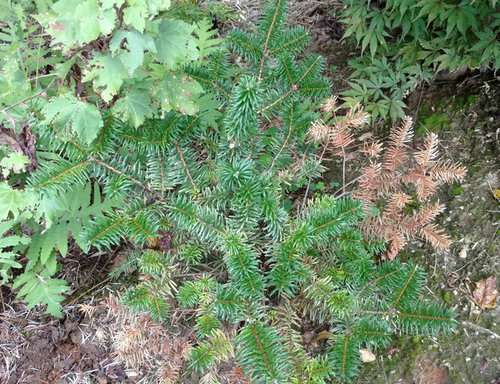
One of two remaining Abies delavayi seedlings. A 3rd died in a wet spell awhile ago.

Sequoia 'Atlanta' - ground around it just got way too wet, and I didn't realize the magnitude of the problem until too late. Was winter stressed but not winter killed. Others, ('Chapel Hill', and 'Soquel' are ok)

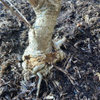
Large 10' Fagus 'Dawyck Purple' that I had just severely root corrected/pruned to relieve knotting. It was growing back and would have made it in a normal year. Main learning issue here is to fully examine ALL roots of all future woody ornamentals.

Fuchsia 'Porphyria' - the F. magellanica parentage seemed to give it hybrid vigor, but apparently, heat sensitivity compared to plain F. regia. Which is fine.

Plants on life support:

Rhododendron 'Cinquero' - probably the last one I did NOT either plant on a mound or a slope. Before I realized the extreme benefit of that in this climate. I knew it was risky and here we are. About 1/2 of it is dead, I applied emergency anti-fungal to it. This does appear capable of rescuing plants that aren't completely dead, though I don't recommend it as an approach/technique.

R. 'Orange hose-n-hose-ola'. Bizarre name Hank gave it but not officially registered yet. Similar to 'Wild Ginger' and 'Sun Dust'. As above, one of the last I didn't plant in a smart location. Have already moved it to a much better spot, applied emergency anti-fungal 2.5 weeks ago, and am getting vigorous regrowth. Though only on 2 branches of what had been a big 3'X3' plant. Fingers crossed.

Another Abies delavayi. Have applied same emergency anti-fungal. Just dieback on one branch for now, but it can spread quickly. These were planted on a mound...so this demonstrates that technique (mound planting) might only buy you some time, rather than completely stop TRAGEDIES lol.


Things (knock on wood) I am relieved seem completely unfettered so far:

2 probably hardier than average Phormium tenax clones. One in ground had to grow back from winter damage.

all grafted rhodies including some that are incredibly rot sensitive and would no doubt be dead if not grafted or protected with regular anti-fungals

both Larix X eurolepis. As noted in my prior threads, a bunch of prior L. kaempferi and L. X eurolepis have died. So maybe I have 'selected' a tougher strain. They are not in especially well drained areas.

Berberis X stenophylla. Guess it will become the new token Chilean plant in the garden haha.

Comments (27)

  • 7 years ago
    last modified: 7 years ago

    Unfortunate situation, david. It's so wet here, even tho August rain (only 4" so far) hasn't been as incessant as earlier, my lawn is still sopping wet. Seems groundwater continues moving downhill from the surrounding slopes. The only causality seems to be my Shumard/Nuttall oak that has an almost complete foliage failure from continuing bacterial scorch (adjacent pin oak is unaffected). It'll live of course, but no appreciable growth this year. Larches are OK.

    UpperBayGardener (zone 7) thanked bengz6westmd
  • 7 years ago
    last modified: 7 years ago

    This has not been the hottest summer in the MidAtlantic or much of the Northeast, but it certainly was distinct in have sustained periods of insanely humid, tropical dew points (averaging in the 70's). It has, so far, been THE wettest on record west of NJ (and among the wettest for the rest of the region). (Yeah, I will never forget the year of Irene, we had 80 inches of precip that year. ) I don't recall EVER spending less time in my yard or shaded deck either, due to discomfort this season (even at night)! I've spent much more time outside in much hotter (but drier years). I don't think my plants have really been suffering except for the Mediterranean herbs (rosemary and lavender), also Crape Myrtles again are having mildew issues. Most of us here are growing "temperate" trees and shrubs (though my subtropical and tropical collection is large), I wonder if maybe the reason for so many of the plant problems the OP has noted were due to excessive periods of humidity without intermittent drying. I see a lot of Rhododendrons on that list. I note that I recall Rhodies like a lot oxygen at their roots, so that would be an issue is soaking rains reduced the oxygen at the roots (which is why they and azaleas do like planting on mounds/berms).

    Hoovb, those plants you posted are cycads (specifically, Cycas revoluta..., one of the most common species available). I realize that they are grown throughout warmer regions of the West, but this species is native to a very mild subtropical, HUMID semi-monsoonal climates of Asia (southernmost Japan, Okinawa, Taiwan, etc..), I suspect that your SUN, and aridity are just occasional going to really scald the plants. They should recuperate with cooler/wetter weather but there are probably better cycad species for southwestern climates.

    UpperBayGardener (zone 7) thanked User
  • 7 years ago

    Well, you ARE pushing the zone pretty hard (LOL), and the weather over much of North America can vary greatly from year to year, and we tend to forget past weather... I'm pretty much over the zone thing, and I'm letting attrition have it's way with my collection with no regrets. It took me many decades to learn that hard fact, and I'll spend my remaining years enjoying my trees as they begin to take on the appearance of maturity, or maybe I'll move to Florida LOL!

  • 7 years ago
    last modified: 7 years ago

    Jurasico - yep - this year is definitely the most humid I can remember. Even on days when a supposed "cold front" came through, it really didn't push out the muggy. For years my parents would rent a summer beach house at either Nags Head or VA Beach. I hate beaches (unless they have some other redeeming quality - I doubt I'd complain about being able to teleport myself to the beach on Tresco Island! Or at Mt. St. Michel in France!) but I'd make a perfunctory appearance for a couple days, most summers. It was always remarkable how different the climate was at the northern tip of the Bay than the southern tip. There was just an extra degree of mugginess apparent.* Well, this year no need to drive!!! Every single freakin' day has had that extra-oppressive humidity...like you said, dewpoints stuck above 70F. (which we always had a chance of getting, but only for a 2-3 days before a front would bring in at least somewhat more refreshing air. Another difference up here is that, excepting areas right on the beach getting a sea breeze, we are windier than SE VA. Something you can see on wind energy maps. In fact the northeast of the US, in general, is way windier than the southeast.)

    Those cycads look to be in almost full sun. Not something I noticed out there in spring 2016, but I would have thought that other in the immediate Bay Area where summer high temps are < 80F, something like Asian Cycads would do better in partial shade in most of CA. (though maybe not things from slightly hotter, drier climates like Macrozamia moorei...they would be more arid-tolerant, perhaps? Or some of the cycads from Africa.)

    * - although, likewise, when we do actually have a "cold front" come through, in summer, my area stays somewhat humid compared to areas away from the water. I've had a day where I drove up to say, Reading PA and back by nightfall, and noticed it was less humid in Reading than coastal Cecil county!

  • 7 years ago
    last modified: 7 years ago

    btw interesting you are saying crape myrtles have mildew issues. Was just in the garden of a neighbor who has several, didn't notice that. (not an immediate neighbor, all of whom I have issues with, but a couple at the other end of the street. They were showing me their hibiscus, which are doing well this year no doubt!)

    I only have 1, but no mildew so far.

  • 7 years ago
    last modified: 7 years ago

    "Well, you ARE pushing the zone pretty hard (LOL),"

    Oh, I know...remember, I certainly [don't [(https://www.houzz.com/discussions/omnibus-2018-winter-damage-report-for-the-mid-atlantic-region-dsvw-vd~5263307)ADVOCATE people be "experimental gardeners". And I think by sharing findings here, it's a way to help other people not make the same 'mistakes'. Which they really aren't if you assume anyhow, that you will have failures and setbacks. My garden is still a more interesting garden for it, which is all I care about.

  • 7 years ago
    last modified: 7 years ago

    ZONE 23: Thermal belts of Southern California’s coastal climate

    One of the most favored areas in North America for growing subtropical plants, Zone 23 has always been Southern California’s best zone for avocados. Frosts don’t amount to much here, because 85 percent of the time, Pacific Ocean weather dominates; interior air rules only 15 percent of the time. A notorious portion of this 15 percent consists of those days when hot, dry Santa Ana winds blow. Zone 23 lacks either the summer heat or the winter cold necessary to grow pears, most apples, and most peaches. But it enjoys considerably more heat than Zone 24—enough to put the sweetness in ‘Valencia’ oranges, for example—but not enough for ‘Washington’ naval oranges, which are grown farther inland. Temperatures are mild here, but severe winters descend at times. Average lows range from 43 to 48°F (6 to 9°C), while extreme lows average from 34 to 27°F (1 to –3°C).

    https://www.sunset.com/garden/climate-zones/sunset-climate-zone-los-angeles-area

  • 7 years ago

    Not sure why posted here? Was that in reference to the cycads?

  • 7 years ago

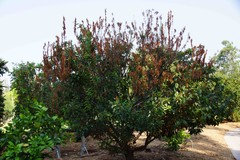
    The Cycas revoluta in the photo is at the LA Arboretum (Sunset 20). There was quite a bit of damage from our record heat early July heat wave when temperatures were about 15-20 degrees above our "normal" heat waves of 100-105F. A fruit tree of some sort also at the LA Arboretum.

  • 7 years ago

    Is summer normally the season of doom for the mid-Atlantic? Other than an Oak(s) stricken with wilt, this is my safe season. Well, until a tornado decides to visit.

  • 7 years ago
    last modified: 7 years ago

    "Is summer normally the season of doom for the mid-Atlantic"

    Considering some of the plants I try to grow, any season can be a season of doom!

    Hoovb, for some reason had always thought you were in interior northern CA, not interior SoCal. No matter, the same issue potentially applies to plants from high summer rainfall climates. Assume the LA Arboretum must have other, bigger cycads?

  • 7 years ago
    last modified: 7 years ago

    For my mostly Asian collection of broad-leaf evergreen trees and shrubs, I'd say Jan-March is the 'season of doom'. Some of the Asian trees are loving this 'monsoonal' period.

    UpperBayGardener (zone 7) thanked Dave in NoVA • N. Virginia • zone 7A
  • 7 years ago
    last modified: 7 years ago

    Oh yeah, noticed my European beech (10' tall) at the farthest point on my lot & kind of hidden from view has turned yellow, I assume because of wet soil/poor drainage. It was always in too wet a spot -- never very vigorous and perhaps this summer has done it in.

    And yes, David, most summers here only rarely get up to 70F dewpoints (mid 60s are common), but 70F is almost constant here since late May.

    UpperBayGardener (zone 7) thanked bengz6westmd
  • 7 years ago
    last modified: 7 years ago

    Sunset 20 (& 21) is "Warm and Cold Spots in Southern California's Areas of Occasional Ocean Influence" and not what I would call the interior of California.

    The orchard fruit tree shown above looks to be a plum and is therefore a stone fruit susceptible to things like fire blight and brown rot. So it seems possible it is not summer heat damage in this instance.

  • 7 years ago
    last modified: 7 years ago

    Ok, when I've said 'interior' of CA, now or in the past, I didn't mean the middle of Death Valley! Or even El Centro! I just meant "away from the immediate coastal influence". Sorry if I was using the wrong Californese.

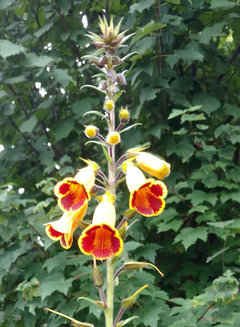
    It was a good year for this exotic looking thing, which would survive milder winters around here but definitely couldn't be trusted for garden permanence:

  • 7 years ago

    What is that “exotic looking thing?”

  • 7 years ago
    last modified: 7 years ago

    ZONE 20: Cool winters in Southern California

    In Zones 20 and 21, the same relative pattern prevails as in Zones 18 and 19. The even-numbered zone is the climate made up of cold-air basins and hilltops, and the odd-numbered one comprises thermal belts. The difference is that Zones 20 and 21 get weather influenced by both maritime air and interior air. In these transitional areas, climate boundaries often move 20 miles in 24 hours with the movements of these air masses. Because of the greater ocean influence, this climate supports a wide variety of plants.You can see the range of them at the Los Angeles County Arboretum in Arcadia. Typical winter lows are 37° to 43°F (3 to 6°C); extreme 20-year lows average from 25 to 22°F (–4 to –6°C).Alltime record lows range from 21 to 14°F (–6 to –10°C).

    http://sunsetwesterngardencollection.com/climate-zones/zone/los-angeles-region

  • 7 years ago
    last modified: 7 years ago

    I'm somewhat confused as to why a sub-thread about So Cal climates was required...one doesn't have to go very far inland there to have a very different one.

    Seasonal average high for Santa Monica is 70F with a mean max of 83F; at Pasadena, near the LA Arboretum, it's 91F with a mean max of 103F! I doubt East Asian Cycads in full sun, at 103F or more with blistering dry air, are going to be very happy.

    The plant: Titanotrichum oldhamii | Oldham's Gold Woodland Foxglove for sale $18.00 | Plant Delights Nursery

    subtracting a full zone is probably a good starting point with any PDN rating LOL. It may not even be 7b hardy in a really cold winter w/o bushels of mulch. It does like it wet!

  • 7 years ago

    A David - Embothrium sub-thread. Haven’t we seen this before? ;)

    Ken’s commentary on the “zone thing” is the direction I’m heading. I feel like I’m in a soft edit phase, where planting is less important to enjoying what I have. I still plant, transplant, and delete, but no where near where I was a few short years ago. The planting fool phase...

  • 7 years ago
    last modified: 7 years ago

    " I feel like I’m in a soft edit phase, where planting is less important
    to enjoying what I have. I still plant, transplant, and delete, but no
    where near where I was a few short years ago."

    Oh I think I'm getting there in my own way. I'm getting tired of the uncertainty of experimenting, generally, but still want to have a core collection of the rare to very rare LOL. Have decided that ANYTHING below a certain threshold of winter hardiness (could it die in anything but a 100 year winter - which I might not live long enough to see) will have a backup kept inside, if possible. But not so many of those as to be a complete nuisance. Like, I'm not interested in trying any more than one Grevillea anymore. I know G. sulphurea does well here and satisfies the novelty of being a reasonably showy Protea relative from Australia. And so I wish when it died in PV-II, I had rooted a backup copy, which would have been easy to do. As with Euc. parvula, it was returning after a near death in PV-I.


  • 7 years ago

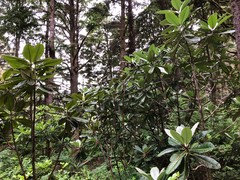
    David, do you have this one?

  • 7 years ago

    Maackia, what tree did you post?


    At first, I thought it was M. grandiflora, but looks different upon the closer look.

  • 7 years ago

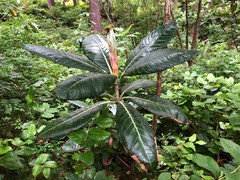
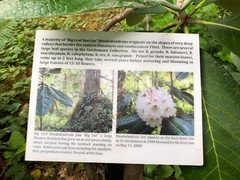
    It’s a Big Leaf Rhododendron of some sort.

  • 7 years ago
    last modified: 7 years ago

    That is some kind of "big leaf" rhododendron. I don't have one. I have no doubt a grafted one would grow well for me...at least the hardiest big leaves like R. rex.

    So this is perhaps a good time to express my increasing infuriation with the paucity of what we should perhaps call "performance grafting" in the US. (Vs. something like Japanese Maples, which much be grafted, so is really propagative grafting) . Probably the biggest rhodo nursery in the world, Baumeschule Hachmann in Germany, ONLY produces grafted plants. Namely for performance reasons, too, although the concern there is limey soil, not hot, wet soil. Though they surely also have a awareness that certain cultivars will do better grafted, even in chilly north Europe. The Scottish Coxes, gardening in the most maritime of climates, nevertheless complain that certain cultivars perform better if grafted, in their vast encyclopedia of hybrids. As far north as MA, a R. rex in a collector's garden died one hot summer ,not one winter. The root rot is even a problem up there! So absolutely, grafting onto a rot resistant rootstock would allow R. rex to survive here. Even on the benign North Island of NZ, it's been done to permit certain big leaf species to grow without threat of root rot collapse.

    But here? I'm not going to name names, but feel like I've exhausted my options for convincing a commercial source to do it. Am I too cynical to wonder if they just like knowing a certain % of what they ship outwith the PNW is likely to eventually die of root rot? And thus need to be replaced? Perhaps. Or maybe it's just "this is the way we're always done things, and we don't like upstarts with new-fangled ideas".

    At any rate it leaves the only option being trying to breed tougher big leafs. Tim who sometimes posts here, is raising some promising hybrids, including one involving the native Rhododendron maximum. (Which still isn't tough enough to be seen much south of DC, in the Piedmont and plains at least.)

  • 7 years ago
    last modified: 7 years ago

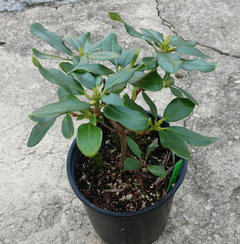
    For example: here is my grafted 'Yellow Petticoats'. I am about to pot it up.

    You might say, "doesn't look like much for 3 summers of growth", but you have to realize that when I got it, the tuft of Yellow Petticoats foliage was about the same size as the little bit of 'Charles Loomis' seen coming out of the rootstock. I was hesitant to fertilize them, early on, because I thought it would increase the chance of the rootstock 'rejecting' the scion. Although I don't know if that's really a valid concern or not. So this plant has not been fertilized except for a couple spritzes, literally, of a standard miracle grow solution. But the root system is so vigorous, that when I lifted it from the ground to take this picture, it had started rooting through the drainage holes!!! Not something you expect to happen to a just-above-liner-sized rhododendron! (which might actually demonstrate why intensive watering and feeding of liner sized plants is BAD thing. Why grow a big root system if every week during the growing season, the one you've got gets fed? And you're in a greenhouse so it's not like you need a grow a root system to anchor yourself)

    This plant looks very healthy! Especially considering the horrendous weather we've had this summer. I tried two Yellow Petticoats cuttings from Van Veen, in earlier years, because that's what Kathy recommended I try as the strongest yellow she had in stock plants, along with 'Nancy Evans'. Basically by the end of each summer, half of their leaves would have fallen off. At all times at least some leaves would be yellowing. They never grew beyond looking like cuttings, and died after a couple years. This is a variety the Coxes say does better grafted, even in Scotland!

  • 7 years ago
    last modified: 7 years ago

    And...not to bump my own thread...but I've been calling around various mid-Atlantic nurseries looking for a couple larger B&B or container grown trees. In one case, to replace the Fagus I mention dying above. A few days ago, asked whether roots had been prevented from girdling when something was up-potted. This at a place that produces their own stock but sells retail. Said the nursery manager was going to call me 'right back' about that. It's been over 72 hours now. Nothing. And I don't expect to hear from them.

    The attitude of American nursery industry increasing seems to be "you're lucky to be getting any plants from us" LOL. Nevermind it being grafted to ensure long term performance. Never mind its roots having been checked at every stage to ensure they won't someday strangle themselves.