Software
Houzz Logo Print
webuser_9548191037255351

new flower bed question

8 years ago
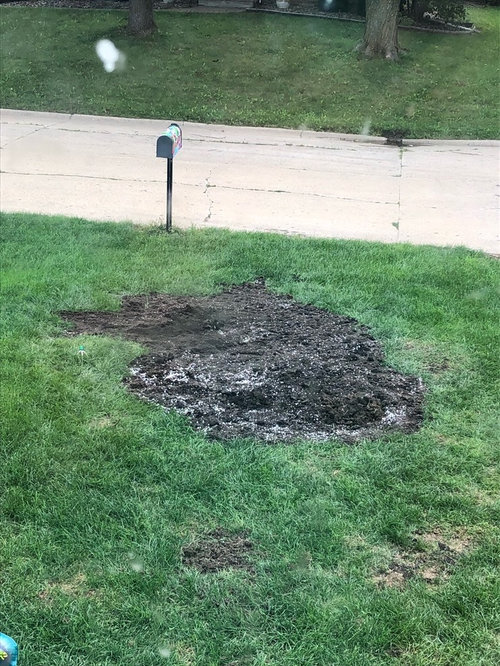
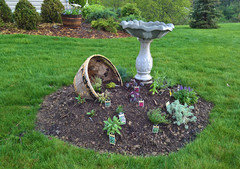
I had a sink hole in my front yard this spring. I decided it was a great time to prepare a flower bed. The hole was roughly 3 feet deep and 4 feet in diameter. Some surrounding area was tilled also to be incorporated. It was filled with some fill dirt at bottom, but mostly bagged top soil and compost. Also added some perlite and work castings. The main ingredient in the top soil was compost also. I have numerous flower bulbs arriving in a few weeks. My question is...will all this compost just disintegrate within a few years? Are all of these bulbs just going to sink and die? Any advice on how to proceed would be appreciated! I live in zone 5b and have heavy clay soil. Thanks

Comments (8)

  • 8 years ago

    Did you determine why you had a sinkhole and deal with the problem? Filling a hole in clay with compost might just give you a bowl of mud, and yes, the compost is going to break down and sink to some degree. Bulbs will rot if the area is not going to drain well. You don’t say if it stays wet or not.

    Some bulbs will fizzle out after a few years anyway, so it may not matter, depends on what you are planting. Daffodils will multiply and return for a long time if you let the dying foliage ripen. Tulips tend to bloom for a couple of years and then decline. Species tulips last longer than hybrids.

    If you want to make it a flower bed you probably need to make it a more defined shape than what you have there now. Bulbs will bloom in the spring, then leave you with a bunch of dead leaves. Do you have a plan for additional plants to hide the dying foliage? Also plan on maintaining a neat edge between the bed and the lawn with a shovel, a couple of times per year, or the grass will creep back in.

    Your best bet might be to level it and replant grass, and plant your new bulbs in another location or existing bed elsewhere instead of in a spot that appeared spontaneously in the middle of the lawn.

  • 8 years ago
    Thanks for responding. We bought this house two years ago. We noticed the yard had low spots in the area that sunk. Neighbors told us a tree was removed several years ago. This area also happens to be above the water line. Neighbors said roots had grown into line and it was repaired or replaced. Line is 4-5 feet down. I think the problem was a combination of improper backfill and decomposition of tree roots. Lawn care company drove tractor over the area about 10 hours after we received almost 4 inches of rain which finally made the low area cave.
    We have gotten a lot of rain this week, and while the area has been wet, it’s not a mud hole and still very tillable conspired to the rest of the clay in my yard. My husband was planning on installing pavers around the flower bed, so the area will raised a few inches above the rest of the yard.
    I have several alliums, some tulips, a peony, a reblooming iris, and 2 reblooming lily plants coming. I have another flower bed that I’m planning on using also and haven’t decided what will go where yet. I’d like to get a little limelight hydrangea if space allows.
    I have to decide this week before my order ships on what to do. I’d be disappointed if my only option is grass, but perhaps that it is best.
  • 8 years ago

    I wouldn’t say that grass is your only option. You will just need to add enough other plants to camouflage the bulb foliage as it dies after blooming. small shrubs, including a couple of evergreens, lots of perennial choices. Maybe you can add enough soil to the bed to raise it a bit to counteract any settling.

  • 8 years ago

    That would be perfect for a Rain Garden.

  • 8 years ago

    With a high level of compost in your mix the area will sink down as it decomposes and the soil compacts over time. I would add some more mineral soil (even just some inexpensive bags of topsoil, look for stuff without much organic in it). Mound it up above the surroundings, maybe a couple of inches. When it settles it will be closer to ground level.

    It's not necessarily 'improper' backfill - some soils just take a long time to settle and can't be compacted completely by machinery. Nor would you want them to compact topsoil too hard anyway. If it's clay it can take a loooong time to compact naturally. As for roots, that's a long process too. I took out a cottonwood tree 2 years ago, had the stump ground, and removed a lot of the chips/soil mix from the hole and replaced it with soil, last year. This year it has sunk down 4" again. I have just refilled it and it took a surprising amount of soil to bring it up to ground level. I'm going to mound it up a little high so it can settle even more, and plant some grass on it. I'll probably have to fill it again in a year or two.

  • 8 years ago

    Maybe there’s a dead dog and two dead cats buried there. I’m also in zone 5, and that’s what caused the depression under my bedroom window. My dip is about 3’x4’x12”.

  • 8 years ago

    There are two variables here. First, did it finish settling, or is the problem farther below (like a leaking water pipe)? Let's be optimistic and assume that the initial settling is over. The second variable is the one you introduced with the fill material. That is definitely not over - there is more settling to be done.


    But this is a good thing. The soil was previously compacted and you have now introduced oxygen and a great environment for worms and other critters. Look at it this way, this is the natural order of things as organic material decomposes. Just do what the forest does - add another layer next year that compensates for the deconstruction of the material underneath. It's that deconstruction that releases nutrients organically into the soil, so it's all good. Plants will adjust to the gradual raising of the soil level year by year.


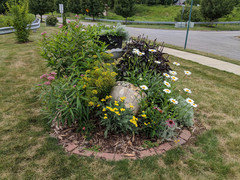
    I took out a tree in my yard this past spring which left a similar scar in the middle of the yard. I put in a herb & butterfly garden to attract beneficial insects and butterflies - some Swamp Milkweed, Coreopsis, Dill, and Yarrow with some Basil, Sage and low-growing Thyme for contrast. Everything except the Basil should come back next year. This fall I am adding some Daffodil and Crocus bulbs for spring color - and then that's it. It should be interesting from early spring to fall.


    Here it was last spring after I planted it.


    Here it is now.