Software
Houzz Logo Print
daninthedirt

how to get female flowers on squash?

7 years ago
last modified: 7 years ago

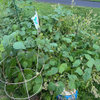
Yeah, this is an old, and somewhat tired question. I have some Tahitian melons that I put in at the beginning of July. Multiple healthy vines now about 20 feet long. I have ONE squash (which I manually fertilized), after about a hundred male blossoms. It is kind of remarkable that I've never seen a responsible answer to the question, aside from "just wait", and "luck". You would think that some horticultural research would come to bear. Has there been none on this point? What factors determine flower sex production? Nutrients? Weather? Variety? Aside from the "just wait" and "luck" answers, responses to this question that are all over the web are completely irrelevant -- eat the blossoms! here's how to identify the blossoms! here's how to fertilize!, enjoy the color!, I get loads of females! -- and don't even try to answer the question. Please, don't pollute this thread with such irrelevant responses.

I would appreciate seeing some real research that even concludes that there is nothing you can do about it. You would think that this has been at least discussed among commercial growers. Maximizing female flowers, and managing the M/F ratio has to be important for productivity.

My season is long, so I still have a chance to get decent production. It is kind of interesting that, in another bed, butternuts are doing fine.

Comments (10)

  • 7 years ago

    Ahhh, the sex life of plants!! Always an interesting topic of discussion :-) Googling "factors that influence the sex of cucurbit flowers" I did come up with various scientific studies that address this topic. Apparently for many cucurbits, sexing of the flowers is very much a seasonal issue and tied to the maturity of the plant, with female flowers appearing later in the season in response to shorter day length and cooler temperatures. How easily these factors can be manipulated may be up for further discussion.

  • 7 years ago
    last modified: 7 years ago

    Yes, I think it is clear that male flowers come out first. But thank you for the links. I will study those. One thing one needs to get straight is the terminology. The researchers de-sexify it, and refer to "staminate" and "pistillate" flowers. I believe it is true that reduction of light increases the number of the latter. Maybe I should throw on some shadecloth. Though we've had a rainy, mostly cloudy week for the first time in a long time. I'll inspect the plants and see what the newest flowers look like. Also, the more fruit on the plant, the fewer of the latter, which makes a lot of sense.

  • 7 years ago

    Only anecdotal evidence, not scientific FAIK, but there is an old farmer's tale that holds some merit IME.

    When one has a vining variety that is producing only male flowers cut the vine back by half. And 20' long vines can easily stand some trimming. ;-)

    New vines will begin to sprout from the adjacent-to-the-cut nodes and they will contain primarily female flowers. Doing this is more practical of course if one plants 3-4 seeds per hill rather than single plants and only trims back one or two of the vines so you get a mix of M/F flowers. But that requires big spacing that many aren't willing to or can't allow.

    The node trigger of new growth has a scientific basis, the nature of the resulting flowers *shrugs* who knows. But it has proven to work for me for many years.

    Just something to consider.

    Dave

  • 7 years ago

    Dave: what you described as worked for me as well.

    Kate

  • 7 years ago

    That's good to know, thanks for that tip from me too. I planted late cukes and they were loaded with males for the longest time before a very females appeared, but by then the vines were dying (now). I will make note for next year.

  • 7 years ago
    last modified: 7 years ago

    Ah ha ha. So here we are, a month and a half later and ... NO FEMALE FLOWERS! (Well, I had one, and it made a nice squash, but ...) These are Tahitian Melons, and I was very successful with them last year. I had half a dozen (humungus!) fruit in a 6x6 foot area. So I went bigger this year. My Tahitian Melon squash bed is extremely healthy, and about 20x8 feet across. I get about 3-4 new *male* flowers per day and, well, you can do the math. I've had about 150 male flowers, and 1 female flower.

    I tried some of the tricks we discussed earlier. Cutting the vine, extra potassium, and we've had nice weather (not hot) for the last month. No joy.

    Well, I waited and saw. But I have never seen anything like this. I wish I could say it was just one bozo plant, but there are four or five plants in there.

  • 7 years ago

    Granted the odds are slim but is it possible you got a packet of sterile seed aka "bull plants", seeds from a plant that was poorly pollinated last season or fruit wasn't fully mature when harvested for seed collection? I wouldn't expect this to happen with any of the big name seed providers but it does now and then depending on their seed source. But a bad packet - assuming all plants were from the same pack - could explain the consistent poor performance across the board.

    I have no personal experience with Tahitian Melons but I have seen it happen with tomatoes and various other squash.

    Only other possible explanation I can think of is with 4-5 plants and a 20x8' patch - maybe too much nitrogen?

    Dave

  • 7 years ago

    Nothing new to suggest - but I can possibly eliminate one possibility. Tahitian is in the same species as butternut, but is more tropically adapted - or so you might think. I've grown it here in the higher latitudes, with longer summer days, and it blossomed heavily even in mid summer. So blossoming does not appear to be photo-period sensitive; but he response to day length could still be a factor, if your timing is off. Perhaps days that are shortening - but still more than 12 hours in length - are the trigger.

    I might have suggested more irrigation, but I think you've had plenty of that lately. ;-)

    Come to think of it, the question could be indirectly related to nutrients; not their presence in the soil, but the amount being taken up by the plants. I grow Tromboncino (also in the same species) and it definitely puts out
    large numbers of female blossoms in late summer. The vines had rooted heavily from the nodes at that point, and many of the branches emerging from those nodes quickly developed female blossoms. Have your vines rooted heavily along their length?

  • 7 years ago
    last modified: 7 years ago

    But this was the same seed packet that gave me the successful plants last year. So the performance was consistent this year, but not consistent in the packet.

    Too much nitrogen? Yes, it's possible. I've been dosing them about weekly with Miracle Gro. Really just throwing a gallon on near the stems. But the roots are more widespread than that.

    Makes for a really pretty patch. But that's about it.

    The vines have heavily rooted along their length. In order to keep the bed under control, I routinely pull up a long stem and throw it back on the heap. In doing so, I have to pull roots up.

    The day length is an interesting thing to consider. As I said above, it is understood that longer daylength in cucurbits produces more female flowers. In fact, this patch only gets five or so hours of sunlight a day anyway. So maybe just not enough sun? Last year they were in a different place and got more sun. That's an important consideration for future planning.