

Kasandra hybrid persimmon
Quick bit about Kasandra. I have a couple of these trees and they've fruited for the first time this year. This is reported to be a hybrid persimmon. My first fruits have ripened, and I'm pretty impressed so far. I will post photos eventually. The fruit is a very nice red color, similar to Honan Red, and about the size of the larger varieties of American Persimmon. It is very early, ripening about the same time as American persimmon and much earlier than the kakis that I've grown. Sheng, for example, which is pretty early, is currently solid green and far from harvest at this point. It has fruited precociously and is moderately prolific. The consistency is good, jelly-like, similar to Hachiya, but superior I would say. Sweet honey-like flavor but without any of the characteristic American persimmon flavor. There is no detectable astringency. There were a few seeds in the fruit.
Main question that remains is whether and how cold hardy this variety is. Last few winters have been mild here and have really not tested this variety yet. As is, it is a superior variety of astringent kaki-like persimmon, particularly notable for its earliness and red color. If this proves to be cold hardy, it will be a game changer, but not all hybrids (such as Nikita's Gift) have proven to be so.
Comments (28)
 7 years ago
Thanks so much for the description of this hybrid creekweb. Sounds like a really nice one. By the way, how hardy have you found Nikita's Gift to be? I'm in zone 6b, and have just assumed I that I would have to stick to American cultivars. So far all I have is a well established seedling, but I'm still waiting to see if it even makes sense for me to graft onto it, given the mediocre growth I've experienced, and my crazy climate.
creekweb
Original Author7 years agoI don't have experience in your climate so I can't comment about that, but some of the more hearty varieties of khaki persimmons can be grown in 6B . I would not put so much stock and draw conclusions from the lack of vigor of your one American persimmon. This species is known for the variability of individuals encompassing a whole range of qualities, so I would recommend trialing a few more trees and you may find that some of them do better. Regarding Nikita's gift I have not found that this hybrid is more cold hardy then the more cold hardy kaki cultivars. What is promising about Cassondra is that it not only presents a persimmon with lkali (kalki) qualities that can fully ripen during the shorter north eastern ripening season , but that it just may be reliably cold hardy enough to withstand the winters of zone 6A or even possibly colder. Great wall and Shang do this to some extent but Kassandra would constitute a significant upgrade from these varieties if it proves to be as cold hardy or more. Lax
Related Professionals
Florence Landscape Architects & Landscape Designers · Orangeburg Landscape Architects & Landscape Designers · Murfreesboro Landscape Architects & Landscape Designers · Frisco Landscape Architects & Landscape Designers · Montréal Landscape Architects & Landscape Designers · Dover Landscape Contractors · Middletown Landscape Contractors · Cambridge Landscape Contractors · Fort Smith Home Additions · Effingham Home Additions · Louisville Home Additions · Jackson Home Additions · Fort Wayne Home Additions · Muskegon Home Additions · Poughkeepsie Home Additions- 7 years ago
nmfruit,
I also live in 6b (in NJ) & even though I'm a newbie, I grow kaki persimmons just fine. My best varieties are Kyung san ban si & Fire Crystal. Fire Crystal seems slower growing for me, but it's in a shadier spot. Also, I do not do any winter protection of the trees once they are > 1 ft tall.
- 7 years ago
That's good news about kaki in 6b, princeton701. I think it might still be questionable in my climate though, due to the drastic swings in temperature. 40 degree day/night temperature differences are not too uncommon here, and I've noticed my American persimmon tends to suffer from the late spring freezes in particular. In any event, it might be worth a try at some point.
creekweb
Original Author7 years agoNot a particularly cold winter passed here with no temps lower than -2F, but I suspect some combination of weather elements was most responsible for a very hard hit on my kaki trees (and Nikita's Gift) in zone 6a. None of them have yet budded out and while I do expect that some will eventually recover, they will only with severe dieback. Even some of my American persimmons were affected, though much less so. My hybrids, including Kassandra, JT-02, and Rosseyanka were unaffected. So while this was not what I was looking for in terms of evidence that the hybrids could withstand extreme winter lows, it does suggest that the hybrids have a distinctly different degree of susceptibility to winter stress than do the kakis.
creekweb
Original Author7 years agoNow that I've reviewed the temperatures over the winter, I see that there were consecutive -5F lows recorded and that looks to be the likely cause for my kaki damage. So not spectacular evidence yet for hybrid cold hardiness, but enough and a clear difference from kakis so that I will replant with hybrids only and give up on kakis in 6A.
creekweb
Original Author7 years agoBlack spots appearing on the calyces of the Cassondra fruitlets prior to their falling off the tree. My largest tree set about 70 fruit and just about all are affected. Not seeing this on GTO twoor any of the American persimmons for Rossi anchor.. May just be a treatable fungal issue but holding my recommendation on this variety.
- 6 years ago
Creekweb, how did the fruit on Casandra turn out this year? Did the spots on the calyces affect the fruit itself at all? Did any other varieties in your orchard show signs of the same problem? And am I correct in understanding that you didn't notice any signs of the problem with Casanda in 2018 at all?
I always very much appreciate the information you share about persimmons, kaki and native and hybrid. If there are any other places where you're posting about persimmons, would you send me a private message and let me know where? It seems like I haven't seen as much from you here lately. creekweb
Original Author6 years agoThe disease on my Kasandra persimmon tree during the 2019 season caused near total fruit loss from drops with only a couple of fruits ripening, and these were spotted and not flavorful. No other varieties of hybrid, kaki or American persimmon were so affected. The tree itself seems to be healthy. It’s part of a multi grafted tree With Prok and 100-46 .
I would highly doubt this is fungal. I suspect and in compatibility issue with the root stock. Will graft it again.
My small GT. Jt02 hybrid had one fruit. Ripened on the later side. Nothing special yet but will give this another season or two before commenting further.
- 6 years ago
Thank you very much . Hope everything works out ok. Keep in touch.
creekweb
Original Author5 years agolast modified: 5 years agoMy Cassandra this year were again notable for very sweet fruit, more honey like in taste than Hachiya .No problems with spotting or improper development of fruit, and tree set appropriate amounts for its size.. Ripening was much later than previous and harvested in late November with a slight astringency still evident. Fall leaf color was identical to kaki with oranges and reds unlike Rosseyanka and Jt02 which have yellow leaves similar to virginiana. Still no die back in 6B, but has not yet seen the really severe weather.
creekweb
Original Author4 years agoKassandra notable this year for good productivity, surpassing my American persimmon varieties, and only behind Saijo and Rosseyanka. It has become my go to persimmon when I’m in search of a snack. But lots of seeds in the fruit. Again note that flavor similar to the kaki variety Honan Red. Ripening over an extended period from October through November. but again note some mild astringency remaining in the fruit. Still no severe cold temperatures exposure last winter.
 4 years ago
Creekweb, I'm in Zone 6b and looking to grow a hardy variety of persimmon. I've never had a persimmon, so I don't know how drastic the differences are between a hybrid and American. I'd be curious to get your thoughts on the JT-02, Kassandra, Rosseyanka and some of your favorites since you grow quite a few. If you could only grow a couple, which ones would you grow?
- 4 years ago
blueKY, I grow all those varieties you asked about, although I haven't gotten any fruit from JT-02 yet. If I were in 6b KY and could only grow two persimmons, I'd probably choose an American and then either JT-02 or Kasandra (which I believe are rather similar and should both both easily survive a half zone or more colder than your average winter extreme.)
One nice thing about American persimmons is that they typically ripen a month or more earlier than any kakis or kaki hybrids. For me in z7 NC, American persimmons typically ripen late August through September with some later varieties extending the season into October and potentially even later. I don't hardly have any kaki or kaki hybrids until late October, and November is peak season for them, and they have enough shelf life that I can keep eating them through December if not into January.
But American and kaki persimmons are also very different, so even if there weren't any difference in seasons I'd still want them both for the same reason that I would still want apricots even if I had plums (if I lived in a place where I could grow both, which I basically don't.)
For an American persimmon, if I could only choose one I might choose H118 or Early Golden. I grow a few other varieties I'd recommend, too, but those two would probably top my list. The only named variety I have that I really wouldn't recommend is Meader.
If I could grow a third persimmon, I'd consider Rosseyanka. It's very different from the other hybrids I've tried, so it would give you something distinctly different from both the Americans and hybrids like Kasandra, and it can also hang on the tree very well very late, at least into December in some circumstances. It seems the taste varies according to the circumstances, but at its best Rosseyanka is exceptionally good. - 4 years ago
That's interesting! Thank you very much for the detailed response! You make a good point about the different tastes and seasons. My main concern with the American varieties was I'm imagining having to mow grass through a mass of persimmons that dropped. I'll have to think about that. Do you have issues collecting from Rosseyanka? It sounds like it gets tall and unlike most American persimmons, the fruit hangs.
It's funny you mentioned Meader...I planted 100 persimmon seedlings a few years back for wildlife at my property that's an hour drive. I started grafting varieties over last year, including Zima Khurma (NB-02) and Barbara's Blush. This year I traded scions and got John Rick, Meader, and Szukis (yet to graft them). I know only a bit of what I've read about any of the varieties. I figure it's better to have known females than a chance seedling regardless. If the issue with Meader is just the taste, I'll keep that variety for the deer :)
Regarding your JT-02 and Kassandra, do they have good fall color and what size do you expect them to get to? I imagine JT-02 won't get very big but not sure about Kassandra. - 4 years ago
I wouldn't worry about mowing through masses of dropped persimmons. They're very soft once they're ripe and they rot very quickly, so I think whatever wildlife didn't eat would basically disappear pretty quickly. If you're talking about grafting at the place you said is an hour away from where you live, though, then it might not make as much sense to plant American persimmons, though, because they are so perishable. Kaki persimmons and kaki hybrids, on the other hand, don't fall from the tree and can be picked underripe and ripen well off the tree, so those traits would seem to be a big advantage if you're only going to have an opportunity to harvest the fruit once a week or less. You could harvest American persimmons once a week, but there would be a lot that you'd lose in the meantime. So maybe for your circumstances it would make sense to bump the Rosseyanka up ahead of an American, especially if you have other Americans grafted already.
I would plan on needing to use a ladder to harvest fruit from Rosseyanka. It definitely has the potential to grow too tall to reach all the fruit from the ground, and they don't fall when ripe like American persimmons. My Kasandra trees are still young -- they only started fruiting this year -- but I wouldn't be at all surprised if they grow big enough to need a ladder to harvest their fruit, too, especially without summer pruning to keep them shorter.
I think Kasandra has had nice fall color like a lot of kakis, but I can't remember for sure. JT-02 I only just grafted this past year, and this was an unusual year where none of my kakis had hardly any fall color, so I really don't know about JT-02.
I think Meader tastes okay, but I don't think it's anything special, and the fruit is relatively small (compared to other named varieties) and full of seeds. I definitely wouldn't go to the trouble of grafting it. If you're going to go to the trouble of grafting, I think it would be worth getting scions of a better variety than Meader. I mean it's okay, but I think there are just a lot better varieties you could graft. Pretty much every other named variety I've fruited is a lot better than Meader. Not everyone is quite as unimpressed with Meader as I am, but it was a real disappointment to me. - 4 years ago
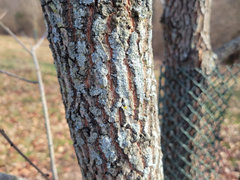
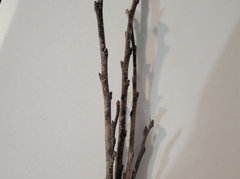
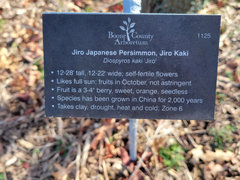
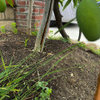
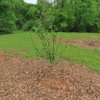
I'm leaning towards planting a hybrid (JT-02, Kassandra, David's Kandy, Rosseyanka or something like that) or two along with some rootstocks that I could graft over when they get a few years on them. I went to the local arboretum to get an idea how big they get. All planted in 2009, they had a couple Asian varieties: Saijo and Jiro. They had a few common and a Meader. Being zone 6, I think the Saijo died back to the roots. I'm not sure if the rootstock or Saijo grew back, but that was proof it's not reliably hardy. Is there a way to tell the difference between the Jiro and an American persimmon? I'm curious, because if Jiro survived 12 years, maybe it'd be a good one to consider.
Saijo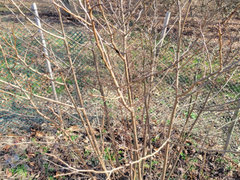
Meader in front, Jiro in back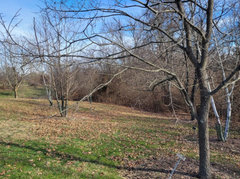
Pictures of Jiro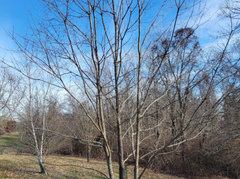
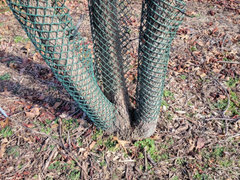
- 4 years ago
Is that second to last photos of the twigs supposed to be Jiro? I can't tell from that photo for sure, but my guess looking at that photo would definitely be virginiana, not kaki, so if that's from the tree labeled Jiro, then I'd guess the graft did die and that's growth from the rootstock. I think the dormant buds ought to be as easy a way to tell a kaki apart from a virginiana. If you can find some good close-up photos of kaki and virginiana twigs on the internet, you can probably figure out what it is. Jiro, in any case, I'm pretty sure isn't an especially good bet for a cold hardy kaki. Read some of creekweb's (who started this thread) old winter persimmon survival reports if you're looking for the cold hardiest kakis. Or just stick to the hybrids. You might like Kasandra better than any of the pure kakis anyway (even though it is relatively small compared to the average pure kaki.)
If you decide to go with two hybrids, I'd recommend Rosseyanka for the second one, because I think a lot of the others are more similar and Rosseyanka might complement the others better. American persimmons are really good, too, though, especially the rich taste. The kakis and hybrids are more refined, though (generally less seedy, generally nicer cosmetics...) and they have the advantage of much better post-harvest storage potential... - 4 years ago
Yes, those are some scions from the tree labeled Jiro. I couldn't tell much of a difference from a couple pictures of kaki I saw online vs the scions or even the American scions I have. The tree had 3 trunks, which I found odd since it would be grafted. I didn't see any stumps where the graft died like I saw with Saijo though. I was thinking if it was Jiro, it clearly would have survived a long time, so it's good in my climate. I won't graft it if I can't confirm though.
I didn't realize the hybrids would roughly be the same taste, so that's interesting. The one thing about Rosseyanka is it gets tall and doesn't drop. I'm almost wondering if getting an American (early dropper) wouldn't just be better but I'm open to that. JT-02 is said to be not vigorous. It sounds like it might be able to be maintained small. Either way, one of the hybrids would probably work. Thanks so much! - 4 years ago
Yeah, it would seem very unlikely that a tree with 3 stems would be grafted, and my first guess looking at the photo of the twigs is D. virginiana, and Jiro isn't especially winter hardy, so all those things point to the tree not actually being Jiro. My one attempt to grow Jiro in my zone 7 (officially 7b, the warmer half of zone 7) died from winter injury, even though I've had lots of success with other kakis, both non-astringents and astringent-until-soft-ripe varieties.
Every kaki and kaki hybrid I know of doesn't drop fruit (like American persimmons do) but the fruit would need to be cut from the tree. I'm pretty sure you could keep Rosseyanka pruned to no more than 15' tall if you wanted to do that. I don't think it would get a whole lot bigger than that even if you didn't do any height-limiting pruning at all. - 4 years agolast modified: 4 years ago
I imagine you're right about the Jiro tree. It probably died back the first year or two it was planted. I'm going to dispose of those scions I collected on the off-chance it was Jiro. I appreciate you sharing your thoughts on that.
I have 25 rootstocks coming along with JT-02, 100-45, 100-46, Prok, and H-120...maybe a couple others. However, even if I don't get Rosseyanka or another hybrid, I can plant the rootstock then graft them next year. I'm haven't decided which I'll put in my back yard (other than the hybrid JT-02) and which ones I'll graft at my property. I have some time to decide though.
In the meantime, I need to take out a few very large black locust and black walnut trees in my yard to give the seedlings more sun.
- 4 years ago
If you only go to your separate property once a week or less, I'd recommend planting the kakis/kaki hybrids there and the Americans at your house. Harvesting the kaki/kaki hybrids once or twice per year would probably work totally fine, but I'd ideally want to harvest the Americans every day or two. You could harvest the Americans less frequently, but then a lot would go bad or get eaten by wildlife after they dropped.
Planting some of the rootstock now and grafting in another year or two should definitely work, probably even better than grafting right away. - 4 years ago
You're right in that I don't get there but once a week at most typically. I probably won't collect a lot of persimmons from there to be quite honest. It's hard to predict how many my family and I will consume, but I figured 4 or 5 trees in the yard ought to suffice. If I need more, I ought to be able to collect from one of about 80 or 90 trees I assume I'll have producing in the future. I originally planted those for deer, which is why I wanted to stick with the Americans there since the fruits drop. American varieties also grow taller and can compete/outcompete on the forest edge too. I can't dedicate pasture space since its a cattle and hay operation farm too.





creekwebOriginal Author