

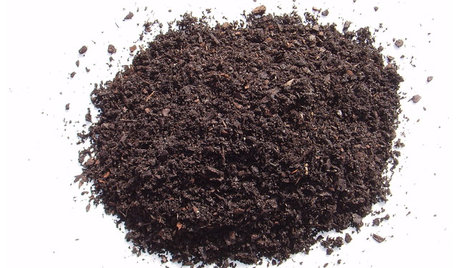
Black Kow Composted Manure
I'm interested in added some beneficial bacterial and nutrients to my soil with Black Kow. Is it any good, and does it contain any harmful substances? Thanks!
Comments (140)
 4 years ago
I'd have to refrain from talking yard & garden or I'd be a nervous wreck if some of you folks lived next door to me. I garden to relax,not obsess over what could be lurking beneath the soil.
- 4 years ago
Of course, lots of people obsess over what they put in the soil, and conveniently avoid thinking about what might already be there.
Related Professionals
Orangeburg Landscape Architects & Landscape Designers · Mission Viejo Landscape Architects & Landscape Designers · Little Rock Landscape Contractors · Murrieta Landscape Contractors · Des Moines Accessory Dwelling Units · El Paso Accessory Dwelling Units · Muskegon Landscape Architects & Landscape Designers · Fort Smith Landscape Contractors · Springfield Landscape Contractors · Lebanon Landscape Contractors · Las Cruces Landscape Contractors · Rocky Mount Stone, Pavers & Concrete · McAllen Stone, Pavers & Concrete · Enfield Stone, Pavers & Concrete · Brooklyn Stone, Pavers & Concrete- 4 years ago
Gardengal - I can't believe that you would spend the time researching a source of free manure and then spend the time to fill a pickup with that manure and settle for manure with wood chips in it. How do you amend your soil without incorporating the manure into the soil. Sure you could pile it up on top of the clay, but you could pile the manure on top of the soil also, Why not spend your time getting manure that is manure.
While much of the bedding used in stalls these days seems to be wood chips, there are barns with soil underfoot and in a case like that they don't use any bedding at all. So you need to do the search for the best manure. I can tell you that it's a lot of work getting it in and out of a pickup truck. While we're talking the work there are barns that will load your truck with their loader for free. They really do want to get rid this ..... stuff.  4 years ago
I don't use manure. My comment was in reference to a mixed product compost and to the appropriateness of using wood chips as a mulch.
And I do not amend my soil. I only topdress or mulch with organic matter, usually compost.
btw, not everyone has access to horse manure. In my area, horse facilities are very rural, requiring a lengthy drive and the use of a pickup, which again, not everyone has. But bulk soil and compost suppliers are far more common, even in-city and will deliver as well.
Manure is not the be-all and end-all of soil amendments. Any kind of decent organic matter will work equally as well.
- 4 years ago
I'm not going to argue with whats available in your area, but with a google search term of "horse boarding New York City" I find 11 facilities, including in Brooklyn and Harlem. In my town google finds 8, 5 of them have a website. In addition the closest facility to me and my source don't show up on that google search.
I kinda knew you don't use manure; from your posts. I also use other forms of organic matter in my gardens. I just had 4 yards of mushroom compost delivered for $196.88. Took about an hour. I also make my own compost and also have dug kitchen waste into the soil in winter and have used peat. The peat works great in my clay with a 1/2 inch or so of sod on top. One thing I notice at my source of horse manure is that immediately under the 20 or so feet of manure coming down that slope is nothing but raw clay. - 4 years ago
There are wood chips, and there are wood chips.
Chips from tree trimming, especially in summer, that contain a lot of branches and twigs and not so many big logs, are fairly high in N compared to solid wood from the center of the tree. These will get hot if left in a pile when fresh. Oh, they won't break down all the way very fast, but they're not so bad. I've composted some of them by using as a brown when I had an abundance of greens.
I still don't think I'd dig them in, except maybe in the fall, if I was desperate for soil amendments. Sure, straw-based manure would be ideal, but wood chips aren't so bad. - 4 years ago
@dchall_san_antonio I've mentioned my Bermuda grass problem before, not much to tell, it's in amongst the coarse fescue lawn and I've been spraying this Bayer Bermuda Control on it for several years. It's a sort of detente. :-]
- 4 years ago
Lots of wisdom in what Tox said. "There are chips then there are chips". Cypress and Bois-D-Arc may never rot in your life time but lesser wood has it's place in gardens for both mulch and compost. Librairies have books dedicated to mulch so knock yourself out. Composting or amending with wood doesn't get much attention so I'll try for a few converts. I'd first draw your attention the practices known as Hügelkultur and Keyhole Gardening. The focus is to create long lasting and optimum moisture retaining ability. That translates to hands off, low maintenance which for me is golden. I go a liitle out of the way to get Hackberry which rots fast and is in over abundance in my area. #1 tree planted beneath power lines by birds so if I'm in need and hear/see tree trimmers,I follow them to heavy Hackberry growth beneath power line,have them swing chute directing chips into my trailer being towed alongside. I keep an eye out for hollow trunks on public right of ways to harvest for planter pots. I cut log into planter size pieces,cap bottom with Easter Red Cedar scraps from sawmill,fill with potting soil and plant various things in them. I can't make enough to keep up with demand when weather is hot and dry. If you aren't willing to put in effort for large quanity of chips,do a hollow log planter and I promise you will be ready to get on the wood chip wagon after witnessing plants growing in the log.
Back to stall cleanings,misleading and misinformation has been posted here. First off you'll find sawdust and planer shavings from furniture shops more often than chips like those from a tree service. H U G E difference in how long it take's to braek down. I don't reccomend incorperating uncomposted material into beds (esp wood) unless it isn't to be planted following season. If you have space I suggest you handle manure thusly. Move a few worms to the pile,keep surface damp up tp 10 days or until barley,oats and other grain in manure sprouts. If horse owner isn't feeding bagged feed,toss rye grass seed on pile. In mild weather clover,vetch,beans and other legumes are idea because they are very sensitive to herbicides. If low and behold the worms die or seed fail to sprout,don't despire,go ahead compost and spread on turf. After you are sure material isn't hazardous waste,wet and flip until at least partly rotted before incorporating into beds. If manure contains unusually large wood chips add N from and source available, poultry manure being ideal but bagged fertilizer will do. Above all relax,have fun and injoy your garden,we've all had failures and keep coming back for more.
 4 years ago
Again with horse manure herbicides area huge problem. If you haven't experienced it yet you're just lucky
- 4 years ago
Could you share details about herbicides in horse manure Daniel? Which herbicides have you found most prevalent and what are the possible ramifications?
- 4 years ago
Grazon is one brand name for aminopyralid, which careful gardeners have been talking about for a long time. It was once branded as Milestone. The straightforward way to avoid herbicide contaminated manure is to just get assurance from the owners that the animals didn't eat stuff treated with that herbicide. If you can't get that assurance, don't use it. That's not "luck". That's care. I'd be astonished if the Black Cow company, whose whole business proposition depends on having clean products, didn't have that assurance or test for contaminants.
- 4 years ago
Their bag literally says not for organic gardening. You might have also been astonished if you looked at my pictures of manure colored wood chips. Thats what black cow sells where i am and ltlots of ppl on the net have
- 4 years ago
I see. Well if the order of the day is hit and run statments,I have one for you.
Paranoia kills more people every day than have died from Grazon in all history.
- 4 years ago
"Their bag literally says not for organic gardening."
Please provide some evidence of this statement. Nowhere on the bag does it say this as far as I can see however it does say that it - the composted manure - is an "all-natural organic way to improve native soils". No claims to be certified organic nor any statements one way or the other as to its appropriateness for organic gardening.
- 4 years ago
@gardengal48 (PNW Z8/9) read the fine print on the back. @klem@klem1 not paranoia i have proven grazon contamination in the 5 bags i bought against a control plant with
- 4 years ago
I have read the label thoroughly, including the fine print. There is nothing on the packaging anywhere that indicates it should not be used for organic gardening. It does not address that issue at all.
If you have evidence to the contrary then please provide it. Meanwhile, I call baloney on your statement!
- 4 years ago
Paranoia and drunkenness are often mistaken for one other. Either way,both kill more people than Grazon does.
I'll probably be sorry that I asked what "against a control plant with" could possibly mean in your statement."not paranoia i have proven grazon contamination in the 5 bags i bought against a control plant with"
- 4 years ago
It's certainly a huge problem if your garden is a victim. Amongst all the gardeners I know (IRL, outside of this forum), I can't think of anyone who has had this awful thing happen to them (knock on wood). It's very hard to measure the frequency of it too.
 4 years agolast modified: 4 years ago
Thank you Daniel Scott for posting video & pics of the Black Kow you purchased. I bought it a few years ago & it looked different - no mulch. It is produced locally so I expect it varies from place to place & also by lot. I purchased another product meant for raised beds recently & it looked very similar to what you are showing for Black Kow (lots of wood mulch) - so I am wondering if industry standards have declined in recent times.
I had similar herbicide contamination issue from Soil3 compost, which advertises 'no killer compost' on their website. I thought at first it was curly top virus, but we do not have BCTV in this area (North Carolina). I contacted my local agricultural extension service, showed them pictures of the affected plants & they said it was probably herbicide contamination.
gardengal48, what Daniel means is he conducted a bioassay test which compares a plants - usually beans or peas since they are most sensitive & also grow quickly - grown in medium suspected of being contaminated vs medium known to be free of contamination which serves as the control (as in 'experimental control'). I will have to conduct many such tests now & in future, unfortunately.
Here is a link to information on herbicide contamination provided by my ag extension service:
https://caldwell.ces.ncsu.edu/2020/07/herbicide-damage-in-the-garden/
Here is a link to a video by a soil scientist who discusses the issue in some detail, and suggests that the problem may not be an herbicide but rather a surfactant. I think it is probably the former, but it's an interesting idea & the video gives a pretty good overall picture of the problem:
- 4 years agolast modified: 4 years ago
@klem1 "don't despire,go ahead compost and spread on turf."
I wrote to my extension service that if my home-made compost failed the bioassay test (I had been adding garden refuse from contaminated beds to my compost pile before I understood the issue), I planned to spread it on my front lawn. They said I should not do that, but instead I should hold it for a year until the contaminant fully breaks down.
I don't know why - that's just what they said to do.
- 4 years ago
It depends entirely on the persistent herbicide the compost was contaminated by. Some will breakdown in a few months......others take several years.
I can see no problem spreading the questionable compost on your lawn. It will have no effect on any turf grasses.
- 4 years ago
I don't see why it would be an issue, but I figure the extension service expert knows more than me so I will follow their advice.
- 4 years ago
At least aminopyralids are quite selective, and target broad-leaf plants, like weeds, and specifically not grasses. That's why they're used in rangeland, and that's why grazing animals ingest it. Because their food grasses are growing just fine after having been sprayed. Maybe someone can comment on the other persistent herbicides.
- 4 years agolast modified: 4 years ago
That extension agent may know something that we don't, but my gut feeling is 'I don't think so.' Maybe they didn't click that you were going to use it on a lawn, or the only answer they know is 'it takes two years to break down' and they just weren't thinking.
No one here can see a reason to keep it off of turf grasses.
Actually, do we know it won't break down on the lawn in two years as well?
- 4 years ago
All 4 known persistent herbicides are from the same family of picolinic acid herbicides and behave in essentially the same manner. They target broadleaved weeds and can be used freely in pastures, turfed areas (parks and golf courses), hayfields and on grain crops.
Since they first became a concern, their use has been restricted and the most likely way Joe Homeowner would come into contact with them is via the manure from livestock feeding on treated fields. In many areas, manures are now prohibited from municipal commercial composting operations but they can easily slip by with the small, mom & pop operation.
- 4 years ago
It's interesting. These persistent herbicides are not rated for residential use. One might wonder why. You'd think they'd be a great way to destroy weeds in your lawn. You can buy the stuff easily. They are considered low toxicity for humans, and are practically non-toxic to birds, fish, honeybees, earthworms, and aquatic invertebrates. Turns out that vapors from these herbicides, after spray-on application, can migrate to nearby locations. So if you have broadleaf plants of value around your lawn, might not be smart to use it on your lawn.
- 4 years ago
Perhaps the extension agent is concerned about run-off? If Ashley the Gardening in Canada vlogger is correct that it is a surfactant then that could be an issue. I'm starting to think that she might be right. In the video she is commenting on the experience of the Roots and Refuge Farm channel owner Jessica. Jessica says that the company she purchased from had testing done (chemical analysis) and nothing came up:
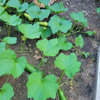
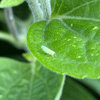
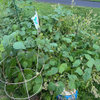
Plants that were affected in my garden: tomatoes, beans, cowpeas, nasturtium (but some nasturtiums were fine)
Plants not affected: tomatillo, lettuce, cucurbits, sweet potato - 4 years ago
That's a good point. Turns out that the major route for dissipation from the soil of these persistent herbicides is runoff and leaching. Another good reason not to use them on residential turf.
- 4 years ago
Low toxicity that we know of so far. I doubt they've done extensive research. And yea its very common for one farm to mess up crops on an organic nearby spraying it. Its very easy to spread. But i live in new york city where there is definitely none used around me
- 4 years ago
Grandad told us "use yer head fer something besides holding yer years apart". Nowhere is that advice better applied than online forums. Folks think they can ask about anything and receive comprehensive answers that will allow them to do anything with precision while barely lifting a finger. Forum info is only a single piece to a puzzle. Safeguards regarding herbicides have been offered,take it weigh it then act as you are lead. With all the drilling down on Garzón and Chicken Little reactions, here's things that weren't mentioned. Feedstuffs treated with Grazon are generally forbidden by law to be used off premises where they were grown. Near 100% of hay fed to feedlot and dairy stock is Alfalfa and a grower would be insane using Grazon near Alfalfa. More horses are fed Alfalfa than prairie hay. That information alone should make it reasonably easy finding manure suitable for composting.
Click here for link to discussion where I attempted to give a houzzer an environmentally friendly,inexpensive and highly effective solution to a problem plaguing 90% of population living in that area of country. For those not living in the area,the displaced creature I speak of is to local residents what loons are to The Great Lakes,Giant sequoias are to Ca. Maybe you will recconize the inquirer who blew me off saying "there are none of those here". Well duh,the whole idea is to have them return. All together now, what did grandpaw tell the kids about using their head? I wouldn't ordinarily call someone out like this but it shows so much contrast I couldn't let it go after this Grazon deal refused to be dropped and move on to more productive discussion.
- 4 years ago
In case anyone is interested, here's toxicity info on clopyralid (just picked one at random and googled).
Clopyralid also has a low order of chronic toxicity. For chronic or subchronic exposures, no effects have been observed in laboratory mammals at doses of 50 mg/kg/day or less. At doses of 100 mg/kg/day or greater, various effects have been observed in different species and different bioassays. These effects include weight loss, changes in liver and kidney weight, thickening of epithelial tissue lining the stomach, irritation of the lungs, and decreases in red blood cell counts. These effects appear to be non-specific toxicity; they do not implicate clopyralid in any specific target-organ toxicity. Technical grade clopyralid has been subject to several chronic bioassays for carcinogenicity and none of the bioassays have shown that clopyralid has carcinogenic potential, although technical grade clopyralid does contain low levels of hexachlorobenzene. Hexachlorobenzene has shown carcinogenic activity in three mammalian species and has been classified as a potential human xiicarcinogen by the U.S. EPA. Thus, this effect is considered both qualitatively and quantitatively in this risk assessment.- US Forest Service
chrome-
extension://efaidnbmnnnibpcajpcglclefindmkaj/https://www.fs.fed.us/foresthealth/pesticide/pdfs/120504_clopyralid.pdf
Cancer Classification: Not Likely to be Carcinogenic to Humans- NIH PubChem Database
https://pubchem.ncbi.nlm.nih.gov/compound/Clopyralid#section=Evidence-for-Carcinogenicity
EPA also posts all the documents submitted as part of the FIFRA registration(s). I did not go through the 4 documents linked here.https://ordspub.epa.gov/ords/pesticides/f?p=CHEMICALSEARCH:7::::::
I'm far more worried about plant-killing compost than about human toxicity with this one. - 4 years agolast modified: 4 years ago
Well, you know, if it's got a chemical name, it's necessarily BAD STUFF. So we're told. Gotta look out for that dihydrogen oxide as well. As we all should know, several thousand Americans are killed by the stuff every year!
- 4 years ago
There is quite a bit of that approach out there dan (avoid all chemicals, they're bad). I don't go to that extreme. At the same time, in general think we should use a lot fewer pesticides, and I am very selective with them in my garden. In fact I only get them out in dire circumstances and usually just for one type of plant.
- 4 years ago
Yes, that's my philosophy as well. I don't garden "organically". I garden "safely", paying close attention to MSDSs and use instructions. You can kill yourself with the wrong garden chemicals. You can also kill yourself with a shovel.
- 4 years ago
Points that some seem to have missed:
- the problem is widespread
- it affects the growth & productivity of popular garden vegetable plants (tomatoes are probably most popular vegetable garden plant)
- the company Jessica of Roots & Shoots purchased from did laboratory chemical testing anddid not find any known herbicide - the problem substance remains unidentified
The videos I posted links to are worth watching. - 4 years ago
"the problem is widespread"
Actually, it is not. The use of persistent herbicides is highly restricted and if you avoid manures or manure-based compost, there should be NO issues!
If you have issues with Black Kow for whatever reason, simply do not buy or use it. It is not the only compost on the market!!
 4 years ago
Agree with gg. Has any problem with ingredients been demonstrated with Black Kow. I mean besides sand in the mix (my experience)? Daniel Scott made some claims 4 days ago, but there was no support for his claims. I took a picture of the sand crystals in the open bag I found at Lowe's but that was 12 years ago. They probably have a different mix by now.
The herbicide problem might have been widespread in 2005, but I believe state laws have made farmers aware of the issues.
- 4 years ago
I would say that if you find your own source of manure and test it, even if only with a seed germination test, that you would have a safer and consistently trustful source of soil amendment with good fertilizer qualities. Find a horse boarder who doesn't use wood or perhaps even straw as a stall bedding you have a resource to be valued.
The main problem is buying bags from companies with multiple sources and product that changes from lot to lot. And then there's the suppliers who knowingly add human sewage sludge into their product.
The barn I get my manure from has two horses and two owners. They've "boarded" their horses there for many years, at least 10. Nothing changes the manure quality stays consistent.Before them there was one owner with 2 horses for a couple decades.
The property owner doesn't own the horses. He maintains the barn and the fences but doesn't get involved in the care of the horses. The barn is an old multistory traditional barn. I would guess that a newer one story barn will have a concrete floor and bedding must be used. The bedding is the main problem. All that straw or wood chips.
I'm currently using mushroom compost because my health limits my physical activity. But that's a manure based compost that was used to grow the mushrooms that many of us eat. - 4 years agolast modified: 4 years ago
The problem is probably even less widespread than it used to be. These herbicides started being used a decade ago, and the problem was wholly unanticipated. Now that it is a formal issue with EPA and USDA, a lot more care is being taken by compost suppliers. Again, given that user satisfaction is of primary importance for Black Kow, and is an essential element of their business plan, I find it hard to believe that they don't take some care in this regard. Current problems are largely with self-composters picking up loads of manure without asking any questions about persistent herbicides.
I do find it a little surprising that Black Kow hasn't conspicuously addressed this, and provided assurances. Has anyone actually asked them what their strategy is for persistent herbicide avoidance?
- 4 years ago
I was told by their representative they source manure from random partner farmers they don't have their own production. they don't really have vertical oversight or control. They collect bag and market it. At least that's what they told me. Whose to say if a few of their many producers fed their stock with grazon or not. They may not even know
- 4 years agolast modified: 4 years ago
Well, it sounds like you didn't even bother to ask about their strategy to avoid persistent herbicides. Someone should. There is no need for "vertical oversight or control" if they have contractual assurances from these farmers that their animals weren't exposed to them. Then again, if their business plan doesn't include such a strategy, they won't be around for long.
- 4 years ago
Man, someone was complaining before about an anti-manure attitude, but the anti-wood and bedding discourse here is absurd.
Funny, it seems to go in a cycle, repeated ad infinitum - 'wood ties up nitrogen' > 'not if you use it as a mulch, just don't dig it in' > 'oh no, fine if you use it as a mulch' > 'I love manure, it helps my plants when I dig it in' > 'be sure not to get it with wood in it though, terrible stuff' > 'see, wood ties up nitrogen' > 'not if you use it as a mulch' > 'oh no, fine as a mulch of course'
- 4 years agolast modified: 4 years ago
So I posted a question about persistent herbicides to Black Kow. They answered within the hour. (I don't even use the stuff ...)
"There are more concerns today about herbicides sprayed on pastures getting in Black Kow and then damaging plants. The herbicides creating most concern are (chloryralid or aminopyralids). These herbicides were mainly used on lawns on the west coast. So the residues have usually been found in yard waste composts. The residue from the herbicide will dissipate if it is aerobically composted over a period of time. We compost our products for 10 to 12 weeks. Then the compost is cured for an additional 6 to 8 months.
We also routinely perform growth tests and lab tests to check for contaminants.
We have never found herbicide residue in our products."
I think it's time to retire this thread, and to remind people that before they go heaving accusations around, they might take the trouble to do a little research.
- 4 years agolast modified: 4 years ago
Edit: A big thanks to daninthedirt for going straight to the source. My analysis below is not meant to take anything away from that.
Let me say first that I don't doubt Black Kow is running tests as they say - no reason to question that. If they're not finding it, they're not finding it. I would buy their product.However:
The herbicides creating most concern are (chloryralid or aminopyralids). These herbicides were mainly used on lawns on the west coast. So the residues have usually been found in yard waste composts.
My understanding all along was that they were used mostly on AG crops like hay, and not so much on residential yards. This seems to contradict that.
Recently I found a resource for ag pesticide usage rates - USGS. No wonder I didn't find it looking at USDA and EPA. The latest map they have for clopyralid is 2018.
https://water.usgs.gov/nawqa/pnsp/usage/maps/show_map.php?year=2018&hilo=H&map=CLOPYRALID
The highest usage area is (was) a swath from the Dakotas southeast to KY and OH. Remember this is ag usage so it doesn't say anything about residential use. It does suggest the most likely area to find it in manure is the upper Midwest.
Picloram has a lower usage rate overall but it's centered in a north-south band from TX as well as some to the east through the southern tier and into the Carolinas.
https://water.usgs.gov/nawqa/pnsp/usage/maps/show_map.php?year=2018&map=PICLORAM&hilo=L
Aminopyralid distribution looks similar to Picloram only a bit more intense usage.
https://water.usgs.gov/nawqa/pnsp/usage/maps/show_map.php?year=2018&map=AMINOPYRALID&hilo=L
Now, maybe the usage on lawns in the West was much higher than ag use anywhere. I don't know. It does beg the question: if they're selling manure, wouldn't you expect to find manure in their product and not yard waste? Their statements seem to steer you in that direction. But it's clear these herbicides are used agriculturally in the Midwest and Southeast.
Again, I'm sure they are concerned about it because it can potentially ruin their product, cost them a lot of money and make their customers mad (which threatens the whole business). I'm just seeing a disconnect in the messaging.
I guess we are to assume that the amount of time they are composting their manure is enough, but they seem to be careful about not claiming that straight out.
Put me down as cautiously optimistic and healthily skeptical.
- 4 years ago
That sounds a little like censorship @daninthedirt (USDA 9a, HZ9, CentTX, Sunset z30, Cfa) unless the thread is still going to be here for people to see. One of the elements of doing the research is reading about problems people are having with the product. Getting bags full of manure stained wood chips is certainly something i would have liked to hear about when making the decision over mushroom compost this year nevermind the contamination. I did read plenty of reviews like this but i assumed it was isolated and i hoped for the best. I'm just a service to anyone considering using this stuff here thats all. I've posted the photos and videos proving that what they are selling is manure soaked woodchips at best. You can argue about the herbicides if you want but even looking beyond that this company is scamming people for woodchips sold as composted manure. And charging more than humus/manure or mushroom compost for it
- 4 years ago
Tox,I'm so sorry to hear about losing the old horse. We're going to miss the gentle nature and cute neighs. His memory shall never be forgotten and will remain in our hearts, always.
- 4 years ago
I believe I'd take that response from Black Kow with a large grain of salt :-) First, there is no doubt some degree of proprietary bias in that disclaimer. That's just human nature and good business PR.
Second, they don't have their facts straight. The whole issue of persistent herbicides first became known more than 2 decades ago when gardeners in eastern WA state noticed a variety of plants in their gardens dying or failing to thrive after the application of compost generated by a Spokane commercial composting facility. It was determined that compost had been contaminated with clopyralid, a primary ingredient in a lawn care product, Confront. Within months of this discovery, both clopyralid and picloram were withdrawn from any approved residential usage and became "state restricted use" herbicides only.
Oregon and California quickly followed suit. These herbicides have not been used on West Coast lawns for years so they are not "usually found in yard waste compost"! And any non-ag approved applications (like golf courses) were required to be composted only onsite.
To my knowledge, much of the US has taken similar steps in restricting the usage of these herbicides. So to make the implication that the primary source of contamination is yard waste compost is egregious at best! About the only way anyone, anywhere would come into contact with herbicide contaminated compost is via manures from livestock fed on treated pasture grasses.
And that could very likely include Black Kow's contracted dairy farms.
- 4 years agolast modified: 4 years ago
Censorship, Mr. Scott? Geez Louise. Retiring the thread doesn't mean removing it. It means moving on to more interesting and important things, which I guess some are reluctant to do.
As to proprietary bias, that means that one can't trust ANY compost maker, because it is proprietary bias for them to tell you what you want to hear. You're welcome to pose any more specific question to Black Kow, but it's flailing in the wind to do otherwise, unless you're going to actually test the stuff yourself.
I myself will retire from this thread.
- 4 years agolast modified: 4 years ago
I believe most people are good and honest so I err on the side of trusting them first. Unless or until their statements can be shown to be biased or aren't consistent with verfiable facts.
I don't think it's the end of the world but it's certainly a potential risk for gardeners that hasn't entirely gone away. It's a good idea for gardeners to be aware.







kimmq