Software
Houzz Logo Print
whaas_5a

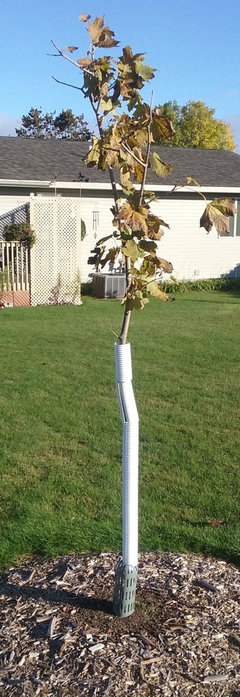
Don't forgot to put your tree protectors on!

7 years ago
last modified: 7 years ago

Last year I didn't get to it until mid Ocotober to then learn that a buck already destroyed by Forest Knight Oak and nearly destroyed my Katsura.


I put them on last weekend.


Am Leo as the white ones on sale. They are more to protect against sun scald but still work for deer.

https://www.amleo.com/leonard-vinyl-tree-guards-bundle-of-5/p/VP-VTG/

Comments (49)

  • 7 years ago

    My neighbor, just told me his 3ft. burr oak was completely de-barked by deer last winter. That was a short distance on the other side of my lilac hedge. I had no idea until he showed me.

    My 9ft. Picea glauca had several lower branches chewed off by a rabbit. I think he lived under there all winter and the snow got deep so he just kept 'going up' the tree for 2 ft.

    Last couple of years we've had smaller rabbits chew bark on several pines and one juniper, all late summer no less.

    So yeah, I've had wire mesh around certain trees here all summer and put the tree base protectors, the kind that protects from weed whackers, on in July already. Those seem to keep those inquisitive little bunnies from chewing at the base of the trees.

    Then early September, I put the tree tubes on for winter.

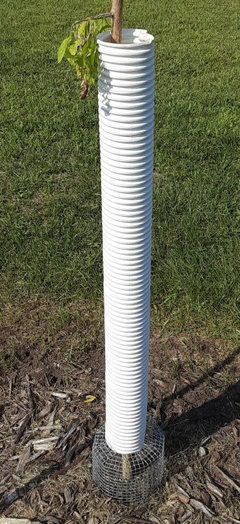
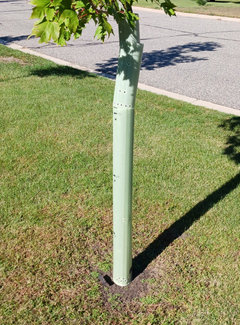
    I left the ventilated ones at the base of the tree with the tree tubes on top, so air can circulate through the tubes so moisture doesn't cause damage. None of the maples had sun scald either last season so the white tubes must help for that.


    Any conifer with winter buds I want protected now gets wire mesh.


  • 7 years ago

    What's a deer? :-) Actually on rare occasion one makes it into town, but I've never seen anything destroyed by one here. Our big pests are the squirrels - they love the loose dirt around new plantings. They drive me absolutely batty. I've contemplated doing terrible things to squirrels...

  • 7 years ago

    I just had this discussion with one of my employees today. Monday I am going to start covering all the deer favorites first. Quaking aspen and willow followed by lilac. Last year I didn't start early enough and paid the price.

  • 7 years ago

    Liliacs? Really? I wouldn't have thought that deer really care for lilacs. Although, in the spring, I've had young deer eat the bloom buds off, so no flowers after that. I don't think I've ever noticed any leaf damage.

    Of coarse, now I have such a large lilac hedge, it wouldn't be that noticeable.

  • 7 years ago

    I had an oak sapling literally shredded last week by a buck.

  • 7 years ago

    "Liliacs? Really? I wouldn't have thought that deer really care for lilacs."


    Single stem Japanese lilacs. Must feel particularly nice when they rub their antlers on them. :-)

  • 7 years ago

    Ah, tree lilacs.

  • 7 years ago

    Biggest devastator of my conifers is the neighbor's cat. He loves to burn up the side of everything peeing on it. GRRRR.

  • 7 years ago

    HMFE, I posted this 7 days ago!

  • 7 years ago

    Been here all along. I take it you haven't been able to see it?

  • 6 years ago

    I know this is early for many of you but I'll be pretty busy in October so started getting ready for winter.

    This tree is near big enough as to not worry about mice and rabbits but could be a candidate for sun scald and possibly a buck rub so why take a chance?


  • 6 years ago

    If deer or anything else eats the buds of a conifer, does that mean it won't grow?

  • 6 years ago

    I'm pretty sure a deer will continue to grow. Not 100% sure about that. :p

  • 6 years ago

    Not to early! Just started today with my lot pine trees that but up to farm fields.


    Since I last looked at my redbuds and paperback maple a month ago either a rabbit or rodent JACKED the bark on my paperbark and two of the redbuds!


    I‘m moving to the permanent black mesh for the trees out towards the lot lines.


    Thanks for for the reminder! I’Ve had buck rub the sht out of trees in early to mid sept.

  • 6 years ago

    The last few years the rabbits gnawed smaller pine and spruce bark, down by the root crown as early as July, they killed a pine at the place across the street.

    Rabbits seem to be in decline here as of late winter. The one under my one shed vanished plus I found another acting weird then almost dead, within a day, by the other shed and a smaller bunny dead out in the alley with no apparent wounds. I think we're experiencing a Tularemia outbreak in the rabbits.


    I'm noticing some feral cats roaming the area quite frequently, year round which is a welcome sight.

    I'm only protecting a few Maples and several new seedlings this year, my Black ash and most of my Spruce & Pines are of a size less worry some when it comes to mice and rabbits.


    kitasei,

    Deer cleaned the buds off some smaller white pine over at the park a year or two ago, I don't think that killed the trees but it's a set back. The trees use energy to make more buds, which takes time and the new buds are smaller than the originals and many times the tree becomes a multi leader/branched. Some may like that effect.


    We haven't seen buck rubs in town but it's not that it couldn't happen, just not likely.

  • 6 years ago

    Feral Cats = terrible birdkillers.

  • 6 years ago

    Just the slow and the weak.

    Good way to thin them out.

  • 6 years ago

    Don't have to worry anymore as buck rubs, wet soil & late frosts finally killed my concolor fir at the far end of my lot (where the deer frequent).

  • 5 years ago

    Almost that time of year again. :-)


    I'm beginning to have problems protecting several of my trees that have been in the ground a few years. They're don't have the symmetrical, straight lined, slender trunk, like when they were planted. While increasing in size, the slight bends at the base and root flares are changing too. Making my tree protectors and tubes a little too small to completely cover the trunks all the way to the ground.


    My trees will probably be large enough in another year or two, where they'll need no protection, but I dread the thought of the trees getting girdled or rubbed just a year or two before they would be wholly on their own.

    BTW: we just lost a 40 yo apple tree, 4" dia. with 1/4" thick bark to girdling by voles last winter.


    Quercus macrocarpa (Bur Oak). Has a hooked 'club' at the bottom. Too big for my 3-3/4" dia. protectors only bc of the curve.


    Even more concerning are my Acer rubrum & Acer saccharum. Thin bark and a favorite to wildlife.


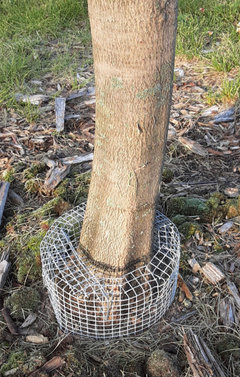
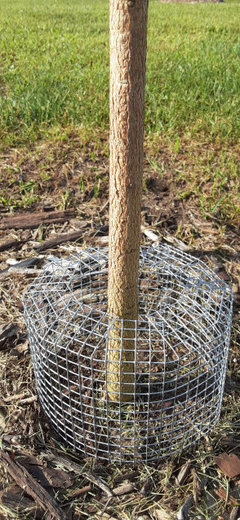
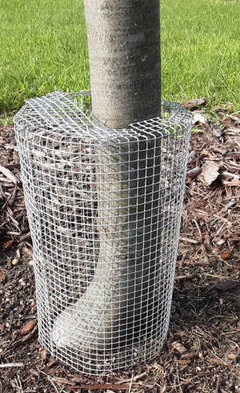
    Not wanting to buy new tree wraps, I used 1/4" square, hardware cloth.

    Easily cut with snips or side cutters. I just calculate the diameter I want for each tree, cut to length and width, leaving 'flaps' to bend over the top, preventing animals from entering the enclosure. That way, I can bypass the misproportioned part of the tree and add the tree tube higher up the trunk.

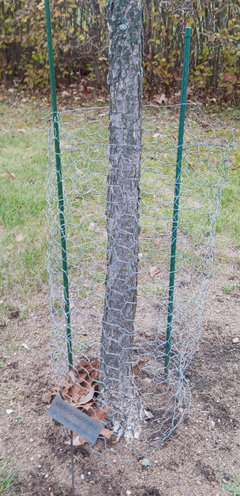
    Here's an example. 5-6" dia. Cage is anchored in the ground with 2 HM wire staples to prevent unwanted movement.


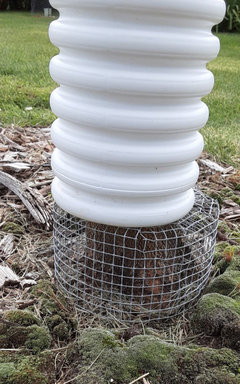
    Then I can place any size of tree tube or protector on the mesh, to any height and it fits nice and tight on the mesh. An added benefit: if the weather warms unseasonably after the tree tubes are on, the venting at the bottom ensures air circulation avoiding moisture buildup.

    Just thought I'd share. :-)

  • 5 years ago

    Hell yeah you should make those and sell em! I'll place your first order for 20 or so.


    The wraps work better to help with that lower flared section but not always so that is a good idea.

  • 5 years ago
    last modified: 5 years ago

    If I didn't already have so many tubes, wraps would be my choice.

    The mesh is really easy to work with but it is time consuming and the mesh cages have to be 'fit' to each tree when installing them.

    With rabbits bothering here by mid summer, I end up putting tubes on when the weather is still way too warm, so the venting is important.

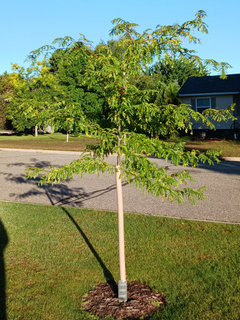
    I'm using one on my second year Hackberry Whip with 2" dia. tubes.


    I'll be adding a second 2 ft. long tube to this one as soon as the tree goes dormant to remove the lower branches. Hopefully will avoid another 'deer chomp' to the trunk like I had with my Honeylocust last year.


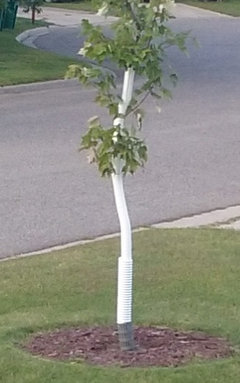
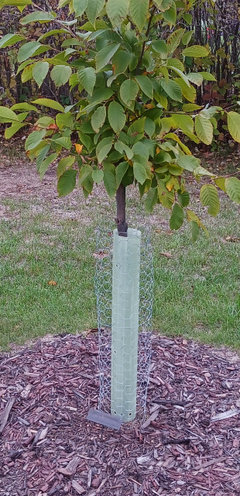
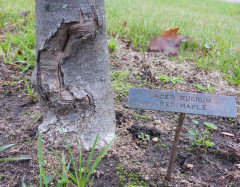
    Here's my red maple in the front yard. Just to show the need for 'custom fit' on individual trees. It's taller to accommodate the curve but could've been a couple inches shorter. I'll use 3" dia. tubes on this one.


  • 3 years ago
    last modified: 3 years ago

    9-22-2022

    I know it's plenty early to think about these things, but I wanted to give an update about the screens shown above.

    They all worked great except for the one in the last picture above. I think it was too tall and exposed too much trunk.

    Even though we had a lot of snow, the very bottom of the red maple suffered an area of sun scald. It must've happened after the snow melted in late winter.

    The tree is encapsulating the wound, which is less than 3" long, so a lesson learned but not a real catastrophe so that's good.


    ETA: It's getting to the point; I don't have many trees to protect anymore. And I haven't seen a buck rub in the ten years of living here, not that it's impossible. And rabbits generally target the smaller, more tender, thin-skinned stuff.

    My biggest concern is for my maples. Sunscald is very likely in my area and there are many examples off it all over the neighborhood, some of them were fairly large trees when it happened (> 3" dia) and one of them should really be removed.

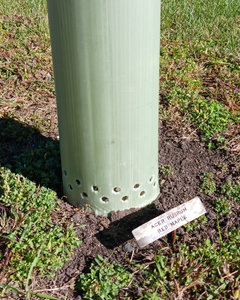
    This year the red maple shown above is getting protection all the way to the ground with some left over 'tree grow tubes'. They have a green tint and don't stand out as bad as those white corrugated tubes (note the venting at the bottom). And they're large enough to cover wide root flares.


    Tree tubes also double as deer rub and rabbit protectors.

    My smaller trees still get the smaller tubes. I lucked out and found some brown/tan 4 ft. Again be sure there is venting during the warmer weather. Once winter arrives, venting is not as important.

    Gleditsia Triacanthos:

    :^)

  • 3 years ago
    last modified: 3 years ago

    Yes, an old thread, but nonetheless important. Bucks get going w/their rut in Oct here, earlier in colder areas. And there's rabbit and deer chewing damage I have to think about before the first snow,

  • 3 years ago

    I just received the local paper and they're showing pictures of deer bucks with bare antlers, claiming they've already rubbed the velvet off. Hopefully, it was on a wild tree in the woods and not somebody's apple tree or expensive yard tree. :-/

  • 3 years ago

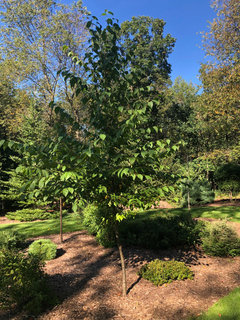
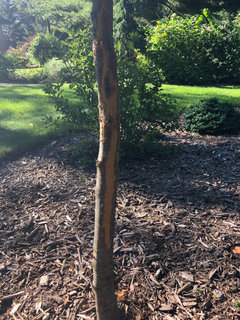
    I’ve already experienced some damage. We’ve got a group of four bucks that visit regularly. I knew I needed to protect the young trees, but didn’t get to this Sweet Birch in time. This happened on the first day of fall. The New Yorker cartoon perfectly captures my sentiment.


  • 3 years ago

    I've seen worse. I know that's no consolation but it's more of a recoverable wound, then if a more dominant buck had been there. The larger the buck, the greater the damage and generally the larger the tree they choose. It should encapsulate and recover quite well, figuring no further damage comes.

  • 3 years ago

    Agreed. It's a fairly broad area, but not very deep. It should be okay.

    Will, it's nice to hear from you.

  • 3 years ago
    last modified: 3 years ago

    maackia, nice to see you've got a cherry birch. Very rare to see a lawn specimen, prb'ly only ever seen one or two. That damage isn't good, but I've seen alot worse (they'll keep coming back).

  • 3 years ago
    last modified: 3 years ago

    Nice to hear from you @whaas_5a! We just need Winconsin Tom to come back and start posting again.

  • 3 years ago

    Beng, I don't think I've ever seen B. lenta used as a lawn specimen. I decided to try one after seeing a specimen at UW arboretum. The fall color can be an amazing gold -- maybe better than Ginkgo. I sure hope it works out, but the deer hit is a setback.

  • 3 years ago
    last modified: 3 years ago

    Yes, the cherry birches on the mountains near me always shine bright yellow in fall. They're able to keep branches/leaves in the shaded understory so stand out well. Here's one in nearby Rocky Gap MD state park. Alot of dead/dying hemlocks around it.


  • 3 years ago

    8-24-2023:

    Just wanted to update the update from 9-22-2022 showing the sunscald on the red maple.

    After one more season, it is almost entirely encapsulated and maybe all the way by end of Sept.

    ;-)

  • 2 years ago
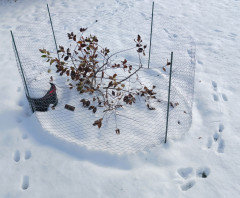
    9-30-2023:

    Just resurrecting this thread for another Fall season coming up.


    After a full season of using milorganite in containers, many places around my yard and the fact that many of my trees are getting mature enough that my concern about them is diminishing more every year. I'll report on what I'm doing this season.


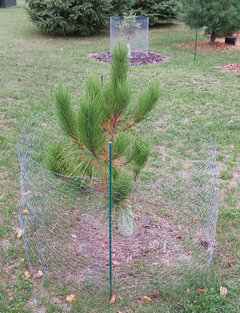
    I still have some spruce/pines young enough to be subject to Buck deer rubbing.

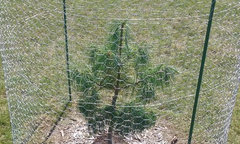
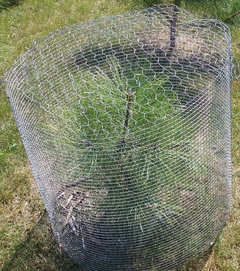
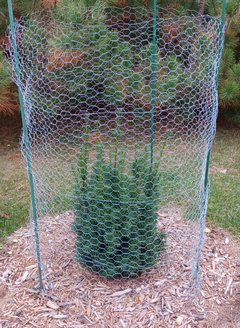
    Young spruce/pines are too branchy for tubes so anything that falls into that category gets a surround of two-foot-high chicken wire. IME: Deer will not contend with anything around the tree like chicken wire. I still use a short 'varmint tube' at the base of some trees. And that's because with my ground freeze winters, voles and mice tend to travel on top of the ground so when they hit inedible material, they change direction and go elsewhere because they can't dig ice. I've noticed a layer of mulch is also a detriment, unless it's full of weeds, grass or something edible.

    It winters are long or tough enough, animals will eat almost anything to survive.


    For trees with trunks that don't sunscald, I only use a narrow surround of chicken wire.

    This bur oak is nearing 3" caliper and will probably be the last season I'll protect it.


    For trees that do sunscald, tree tubes are in order.

    The tree doesn't need CW too, but I have so much of this in storage that I just dropped the tube on yesterday leaving the CW, because I don't need it for anything else. (A note on this particular tree, the deer have left the lower branches alone for the first time all this season. I'm attributing this to the milorganite in several locations, all around the yard and a sock with milorganite hanging on the tree).


    For things small enough that I don't want any browsing done at all. They get surrounded by the 4 ft. chicken wire, like this 3 ft. Hicksii yew. This will also get sunshade applied later next month.


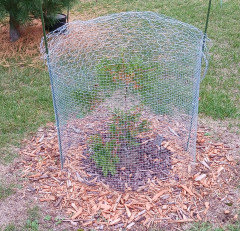
    If it's small enough, I use 2ft. CW and put CW on top to prevent deer reaching in and nibbling. This young Thuja o. has had a tough life and doesn't need any more harassment this winter.


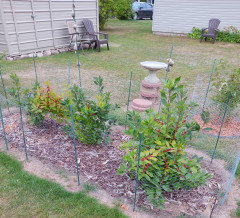
    I still have shrubs that don't need rabbits chewing on so they get the 2 ft. CW. The deer have not browsed these at all this season, again milorganite, and the plants should be hardened off enough to take some branch tip browsing by deer. We'll see about that. :0)


    Again, using milorganite in enough quantities, in pails and socks (something like 27 socks and eleven pails around the front and back yard) all season, has greatly reduced the deer problems to almost negligible. The rabbits are still coming and eating around the yard and from what I understand, milorganite doesn't repel rabbits at all and that appears to be a correct statement, ime, ymmv).

    So, I hope this helps someone not acquainted with wildlife feeding habits, it's extremely frustrating to work and grow things all season, thinking everything is done in the Fall, only to find in the spring, things chewed off or severely damaged which are generally setbacks that take time to recover from, if they do at all.


    bill

    p.s. The maple shown in the previous post above, is looking better but has not completely encapsulated the sunscald wound. But it's getting close. ;-)


  • 2 years ago
    OMG, I almost had completely forgotten about this annual rite of passage for trees. I don't do it anymore. Almost every tree I ever put in over the years got rubbed..., Southern Magnolias, Atlas Cedar, Gingko, Ficus carica (fig tree). They seem to pick on the newly planted ones most. Most trees seem good at recuperating from this damage. But mostly my yard is filled with Southern Magnolias and Metasequoias and both of those have a natural defense against the RUB. The Dawn Redwoods have those low branches that seem to discourage the deer and the M. grandifloras I do not limb up, and their branches are also very low to the ground, so deer can't get near the trunk.

  • 2 years ago
    last modified: 2 years ago

    10-21-2023:

    Just for the record,

    I replenished the milorganite that was originally put in the pails and socks, back in February 2022 and the next few months afterwards.

    You could tell that the new milorganite was a bit more pungent than the old stuff. ;-)

    10 pails and 20 socks went out today with the pails more or less surrounding the perimeter of the yard. And we put the socks a bit closer to the plants needing protection, filling the 'gaps'.

    I also spread some of the old stuff, that was collected, along the ROW and middle of the yard where no plants exist. And will do it again this winter, if needed.

    In my silty/sand the added OM can only help.

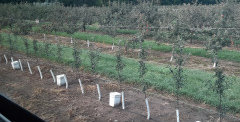
    Some might question if this is overdoing it but when you think about what they used at the orchard, just to keep deer off of one row of new apple trees, I knew it would take quite a few stations (pails), just scaled down for my smaller 200'x100' yard.

    Picture at the orchard: They had a pail (7 gal?) every 12 ft. or so (notice the rabbit/rodent tubes still present).

    My pails are nowhere near this close together, so I fill in with the socks and spreading on the ground to make the yard as deer unfriendly as needed. ;-)


    Again, almost negligible deer browse showing in the yard since using this method and in a year or two, will by then be superfluous.

  • 2 years ago

    The reason for the mesh becomes apparent once snow covers the ground.


  • 2 years ago

    Those buggers!

  • 2 years ago

    It appears we're on the upswing with rabbits again.

    Been seeing them regularly and have had a few, earlier this season, that tried to dig a home under my deck.

    Of course, that all makes the predators happy so there's always an upside. ;-)

  • 2 years ago

    I was too late. Something already got my new apple and crabapple.

  • 2 years ago

    That's too bad. I used to wrap the trunk on my new fruit trees with HD aluminum foil. That kept the voles off and if the snow didn't get too deep, rabbits too.

  • 2 years ago
    last modified: 2 years ago

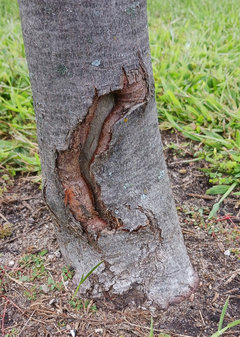
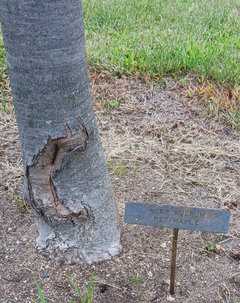
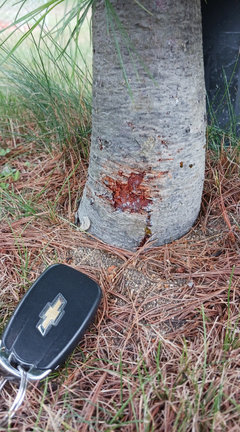
    Here is an 8 ft. tall P. strobus with around a 3-1/2" caliper above the base. I don't do anything to protect this tree anymore but in August I noticed some kind of rodent decided to manicure its teeth. Not a big deal but goes to show you rodent damage is not just during the winter. A smaller tree would not have fared so well.


  • 2 years ago

    Likely borer damage - hit it with an incenticide drench ealry spring

  • 2 years ago
    last modified: 2 years ago

    Leftontheinside:


    Not likely borer damage. I already inspected things thoroughly.

    One should never recommend insecticides of any kind unless there is positive identification of the problem. 'Likely' is no reason for spreading poison around willy nilly.

    Especially a drench.

  • 2 years ago

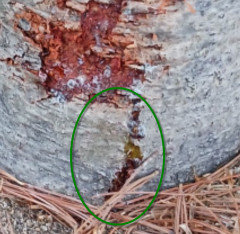
    You'd be the best judge. The location, timing and thin vertical damage bottom right is exceptionally indicative of borer damage. There are other patterns to the left that also indicate borer damage. Pinus strobus doesn't attract pollinators so limited risk associated with insecticide. Peace brother

  • 2 years ago

    The big chunks of bark evident on the ground indicate that something chewed the bark.

    I don't mean to be rude but you sure have made quite a complete analysis from one blurry cropped up picture shown above.

    Pine borers don't remove the bark like that anyways but bore between the outer bark and the phloem layer which they feed, showing round exit holes in the outer bark.

    And using any kind of pesticide that is not necessary is just wrong whether there are pollinators present or not.

  • 2 years ago

    Agree 100% you don't throw don't insecticide for the hell of it.


    You had a solid pic and its indicative of borer damage. They lay eggs and you likely had multiple little grubbers eating away - the bark just comes off at that point.


  • 2 years ago

    A little sap leaking from a bark wound is not indicative of borer damage!


    The only thing shown here is your backwardness and illiteracy in horticulture and disregard for anyone else but yourself.


    If you haven't realized by now that you're wrong, it's another indication of this.


    Sorry bud but you stuck your nose into the wrong thread and bullying people with more of your pseudo expert comments isn't making you look any better at all.


    I'm done with dealing with you so further comments to me are pointless.

  • 2 years ago

    What's up with the personal attack? I'm seeing serrated edges around the vertical from the base to the larger damaged area. The image is actually fairly clear when you click on it and zoom in. If that is not the case just relax I'm going off the context of the image. Trying to help a fellow gardener with potential blinders. Peace brother