Software
Houzz Logo Print
pj_muller2

Help please! Need some garden section ideas.

8 years ago
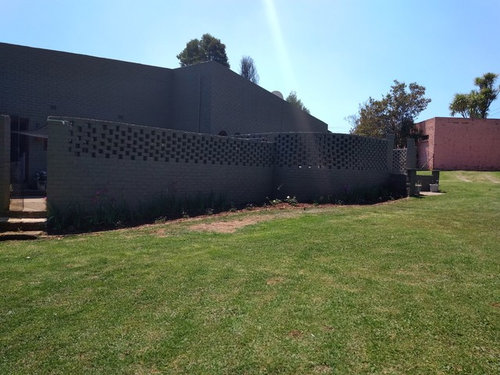
Hello All,


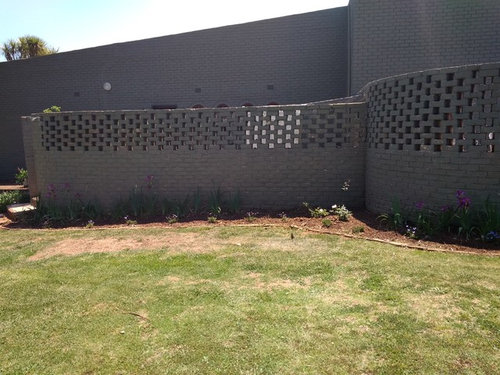
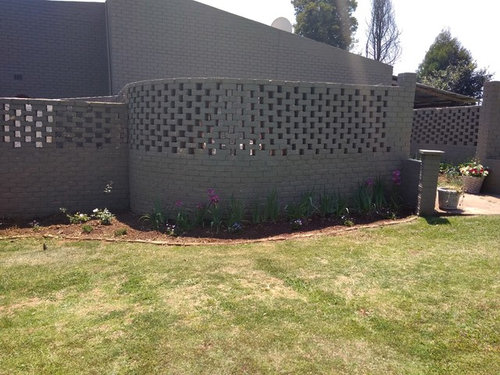
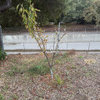
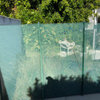
I'm pretty new to gardening, about a year now. I have a very big garden, but have decided to section by section. All and any advise will be greatly appreciated. This is my first project. As you can see, its a wall against the house, it looks so sad :( at the moment I have irises against the wall, with dailies in the center and blue daisies in the front. In the center are iceberg roses big and knee height. On the top section wall, I have a baby granadilla vine growing on the opposite side (inside the courtyard) so it should maybe cover the top section wall. Is there anybody that is willing to give me some ideas please? Thank you!


Comments (9)

  • PRO
    8 years ago

    Without you saying them, no one can predict your long term goals. However, it seems that you are already gardening without giving your house the benefit of landscaping. Landscaping is the creation of a setting for, and integration of, the house into its surroundings. Gardening is planting on your property whatever you want, wherever you want, without particular regard to the architectural features or site or necessarily the creation of an overall, artistically unified, utilitarian theme. Regardless of which way you go, it would be beneficial to, first, create a landscape PLAN. If you have a plan for the whole property, you cannot go wrong in that what you install will correspond with what you've planned. Even if you take 20 years to install the plan, you'll still end up with the vision that was planned. If instead, you plan each part separately, right before installing it, there can be no assurance that it will flow well or that some things will not need to be undone or changed and the vision becomes more thought out. Your chances of having it end up nicely will be much improved by doing all the planning before doing any of the actual work.

    Many plant-loving gardeners compromise by creating a landscape plan, but instead of using typical landscape plants, use plants which they covet for whatever reason. Also, instead of sticking to landscape basics, they may have more expanded and extensive beds so that there is room for more plants. Since your yard is large, you'd have no problem adding as many beds as you have time to care for. Still, in order for the finished product to also satisfy landscape goals, gardeners must observe some landscape "rules." Instead of planting one of this and one of that (which many gardeners do,) those who are also landscaping may choose to have blocks of this and blocks of that. The shapes and location of the blocks would coordinate with the overall art. They would also have some trees and shrubs at right locations.


    PJ Muller thanked Yardvaark
  • 8 years ago

    Hello @yardvaark! Thanks for your comment. I totally agree with you. I'm just stuck! I live in South Africa on the rural side so I don't really have access to landscapers or lots of garden goodies. The only landscape plan I have is that I want alot of green as my backbone with a feel of English and cottage design. I've only focused on this section as I planted a hedge around the border for more privacy and just waiting for it to grow before I look at that sections. I am pretty new at this so I was just asking for some layout and plant options. I would love to work with room or blocks but I'm not very creative and again I am stuck with this. Thanks for your input.

  • PRO
    8 years ago

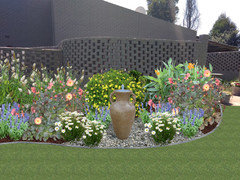
    some ideas using dahlias, cannas, shasta daisy, bush daisy, blue salvia, dwarf buddleia:


  • 8 years ago

    Hello Doug! I really like your visual idea! Thank you!

  • PRO
    8 years ago

    PJ, I'm only trying to impress on you the need for site organization. If you don't have professionals you can rely on in order to create it, it's more incumbent on you to do it. Creating a base plan is within the skills of anyone who can measure and draw a straight line. You can get help/feedback here with all phases of the design process, but you have to take the initiative to perform the work of each piece.

    It would begin with the creation of a base plan, which is a "map" of your property drawn to scale. Many homeowners have a plot plan with came with their home at the purchase. It can be enlarged and the key information (major elements which will remain -- house, drive, walks, outbuildings, tree trunks, wooded area outlines, etc.) drawn in to-scale. The base plan shows how much property you have and its placement relative to the house and other site features. It's important to keep the drawing as simple and clean as possible, showing no extra or unnecessary detail. (No shading or hatching.) If you don't have a plot plan, it's possible to create it from an enlargement of your property from Google Earth.


    One explores ideas (layouts, placements, schemes, styles, etc) by drawing them on tracing paper over the base plan. Or, one makes copies of the base plan and draws directly on them. It is through this process of exploration through drawing that ideas finally begin to gel and get refined. If you get started, you can get help at any point by asking questions and posting your work here.

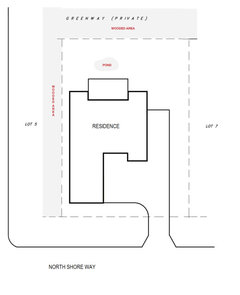
    Here's a sample that came from another thread of what a base plan might look like...

    (Except don't use shading.)


  • 8 years ago

    Maybe hire somebody there in your service area to view the site in person, discuss it with and help you make decisions. Including preparing planting plans.

  • 8 years ago

    One thing that I did a lot of when I first started gardening was look at a lot of site plans done by qualified garden designers, perused library books with photos of actual gardens, and visited actual gardens: public gardens and friends’ gardens and private gardens on open days. Now there is also the internet, but as with all things internet, consider the source since not all internet materials come with equal quality. Look at gardens with a critical eye, considering silhouettes and masses and foliage texture, not just the pretty flowers which tend to be brief. Consider paths, sculpture, patios, decks, and other hardscape. Think about sun and shade and how you want to use the space - kids’ play spaces or a pool or a veggie garden or seating areas or wildlife food, water, and shelter or a screened area because the bugs are awful or a storage building or . . .

    As Yardvaark said, you need a plan that lays out where you will put the aspects you want for the outdoor areas of your home so that you won’t be unhappy with the results or need to move things around in a few years to accommodate things you didn’t consider early on.

    PJ Muller thanked NHBabs z4b-5a NH
  • 8 years ago

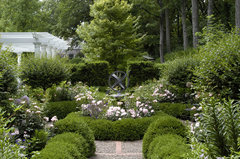
    The English write a lot of gardening books, which can be frustrating when you live in a climate where their idea of "hardy" covers a lot of plants that can't survive in your climate. What you can look at is structure. The first thing you want in your garden is a rhythm of heights. Here's an example of a garden with a lot of height variance. It's symmetrical, which is probably not what you want, given that your wall isn't.


    Informal Garden, Winnetka, Illinois · More Info


    Here's another example of height variance. Again, a pretty formal garden.

    College Crescent · More Info

    Gardens with not much color make it easier to focus on form.

    Then you want to look at color. Once you have a tree or two and how many shrubs, perennials of what sizes and colors, you can start to find plants that fit. So, you can take a photo of a great English garden suited to a climate nothing like your own and turn it into a guide for a garden with native S.A. plants that will thrive in your zone with little care.

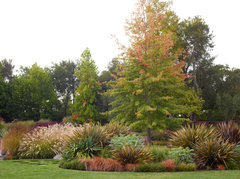
    Here you have curved beds, varying size shrubs, a focus on foliage rather than flowers and probably some plants that would work for you. This could be adapted to your site easily. Put a tree (probably a smaller one) in the corner between the curve and the straight part, pull the bed by the curved part of the wall out and fill in with plants of the right height, put grasses along the straight part of the wall.

    South African Style in Woodside, California · More Info

    You also want to consider what look you want: formal/informal, cottage/modern, lush/architectural, etc.

    Another consideration is views. Adjusting plans so that your garden is framed well in your windows is always nice.

    For plants that will thrive, go to botanical gardens, look at your neighbors, and look at what's growing in the wild. I find a lot of interesting plants in the wild spaces in my property. The English cultivated a lot of garden plants and the Asians did a bunch, too. That doesn't mean that those of us not in Asia or the UK don't have beautiful plants. The Native movement is just getting started in the US. If you do this, you do want to pay attention to make sure you're not going to stick a weed that will take over everything in your garden. Of course, nursery plants can be weeds, too.

    I'm assuming you want to have a garden that screens your wall. This is probably something you'll have in any whole yard landscaping plan. Although, if you want shade, you should start with shade trees in your yard.

    PJ Muller thanked Sigrid
Sponsored
Wannemacher Interiors
Average rating: 5 out of 5 stars26 Reviews
Customized Award-Winning Interior Design Solutions in Franklin Cnty OH