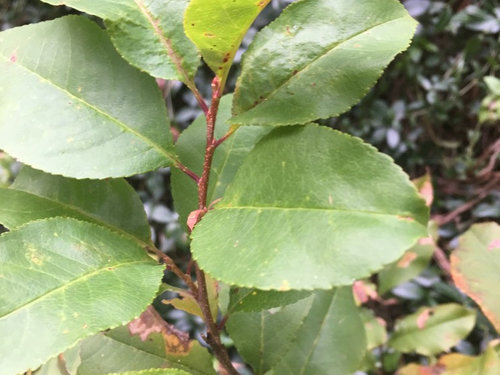
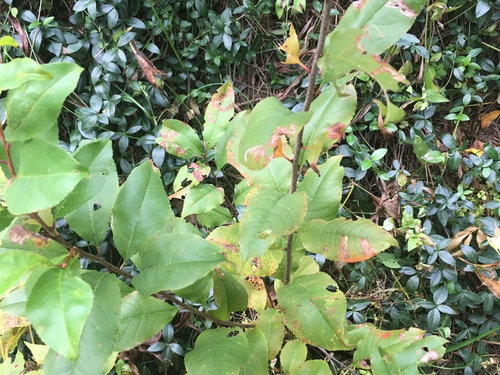
Software
Houzz Logo Print

Comments (15)

  • 7 years ago

    I’m in the northeast USA. I don’t really see any other cherry trees in my area

  • 7 years ago
    last modified: 7 years ago

    Prunus virginiana occurs all over the NE US. I have both P. serotina and P. virginiana growing here in central NH. P. virginiana is a much smaller tree than P. Serotina.

    Mali Hart thanked NHBabs z4b-5a NH
  • 7 years ago

    One surefire way that has helped me to distinguish between serotina and virginiana, which can look quite similar when small or in low light situations, is this: the underside of the serotina leaf has some very fine orange fuzz alongside the lower end of the midrib. If you see this (In the Northeast anyway) it is definitely serotina. No evidence of this, and it is probably virginiana.

    Mali Hart thanked nmfruit
  • 7 years ago
    last modified: 7 years ago

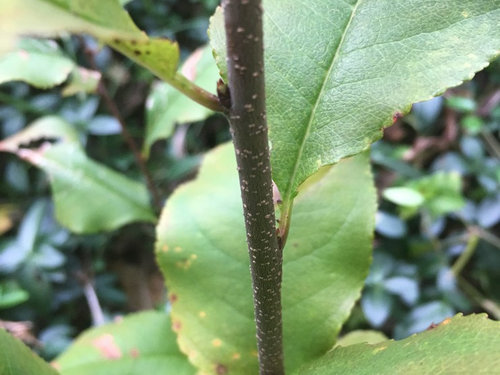
    When I see white speckles on young bark, I usually check for Pyrus species in the area. See if Pyrus calleryana fits.

    Mali Hart thanked jekeesl (south-central Arkansas)
  • 7 years ago

    Prunus avium is also widely naturalized in the northeast, although the leaves certainly don't look like that.

    Mali Hart thanked sah_upstate4 (zone 5b - NY)
  • 7 years ago

    I’m in the northeast USA. I don’t really see any other cherry trees in my area


    But the birds....they know where the all cherry trees are and leave the pits every place they go including your yard. Completely agree that the leaves are not a good match for P. serotina.

    Mali Hart thanked fatamorgana2121
  • 7 years ago

    Maybe salix rather than prunus? But I won't even try to guess what species

    Mali Hart thanked Huggorm
  • 7 years ago
    last modified: 7 years ago
    Mali Hart thanked Embothrium
  • 7 years ago

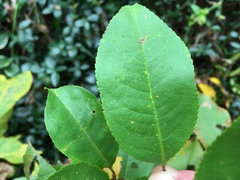
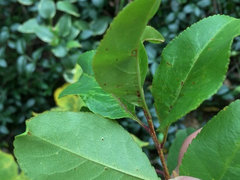
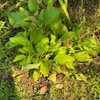
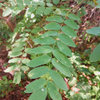
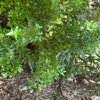
    I took more pics of the leaves


    topside:


    Underside:


  • 7 years ago
    last modified: 7 years ago

    That could be an apple or a crabapple (Malus sp for both) and those look more likely than Prunus, Pyrus, or Salix/willow based on the last set of photos. Malus, Pyrus, and Prunus are spread by birds and other critters, and Salix by wind and so occur at distance from the tree which originated the seed.

    Mali Hart thanked NHBabs z4b-5a NH
  • 7 years ago
    last modified: 7 years ago

    Absolutely not a willow.

    Look at the leaf shapes here:

    https://www.amazon.com/Black-Cherry-Prunus-serotina-seedlings/dp/B0089O0OBO

    (And compare your plants with the foliage details for each species mentioned in the key on the page I linked to above. Which starts off with Prunus serotina, is written for your general vicinity)

    Mali Hart thanked Embothrium
  • 7 years ago

    From Ladybird Johnson Wildflower site , Prunus serotina

    https://www.wildflower.org/plants/result.php?id_plant=prse2

    Aromatic tree; crushed foliage and bark have distinctive cherry-like odor and bitter taste, owing to the same cyanide-forming toxic compounds, such as amygdalin, found in the wood and leaves of some other woody members of the Rosaceae. Fall foliage is yellow.

    Mali Hart thanked carol23_gw
  • 7 years ago
    last modified: 7 years ago

    The seedling is definitely a Prunus, although I am not prepared to be specific about which one. Neither Salix, Pyrus or Malus are inclined to produce the very obvious bark lenticels at that very early age.

    Mali Hart thanked gardengal48 (PNW Z8/9)
  • 7 years ago

    It clearly lacks that orange fuzz along the midvein beneath that I mentioned, so it is unlikely to be Prunus serotina (though not impossible), if it really is a wild plant, I would bet on P. virginiana. The leaf shape, leaf margins, and dull rather than lustrous look suggest that too.

    Mali Hart thanked nmfruit