Software
Houzz Logo Print
bill_mn_z3b

I need help on unusual, for my area, tree.

6 days ago
last modified: 6 days ago
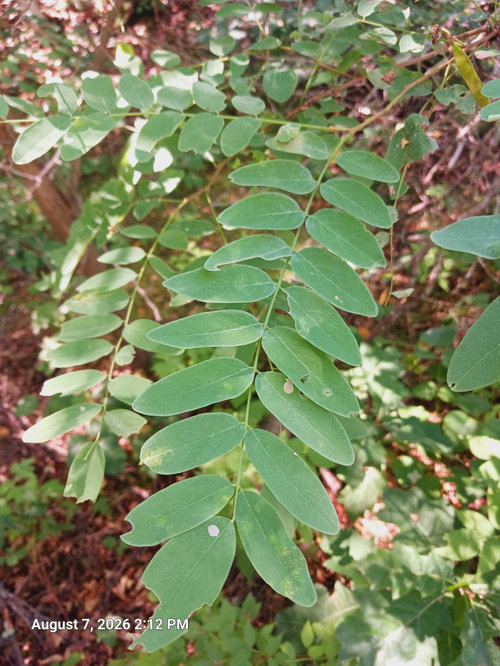
Last year, along a bike trail, north of Brainerd MN, I noticed a tree I couldn't identify and have never seen before. And I've been around the north woods in many different areas of MN.

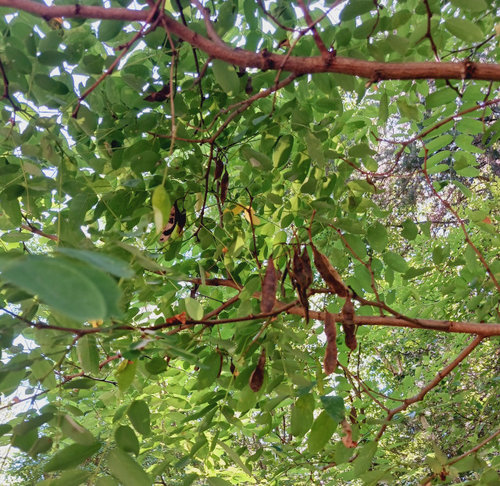
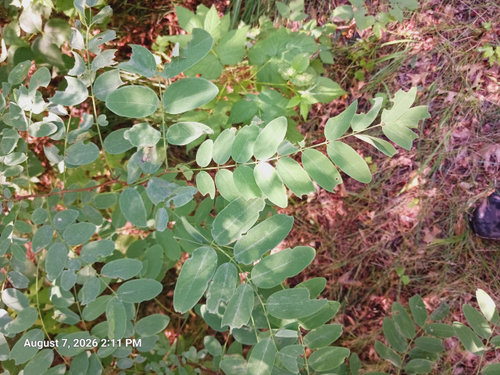
It had pinnately compound leaves. There were short, 2" long bean like seed pods that weren't fully developed and still pretty green (Edit: it was July 17 so only 3 weeks earlier last year).

This tree existed only along a short stretch of the trail, maybe 25-yard-long stretch along the trail, on only one side of the trail, which led me to believe it was introduced (planted) by someone.

Today I was on the same trail and took some time to collect more information. What is it?

Leaves about 8" total length: Fabaceae?


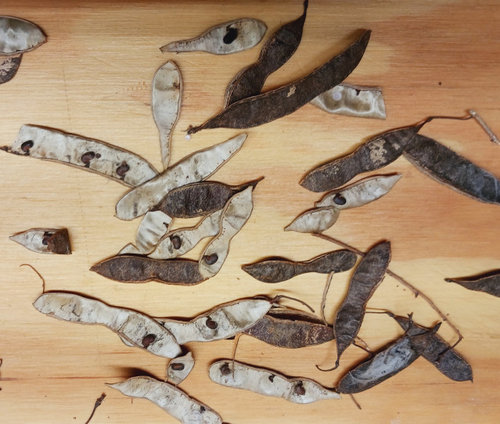
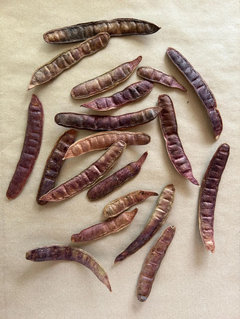
The only seed pods I could find were dead, brown, partially split open with very few seeds inside.

I wondered if these could be from last season? But nothing new, unripe or mature which was odd for early August.


They just don't seem like new crop to me idk.


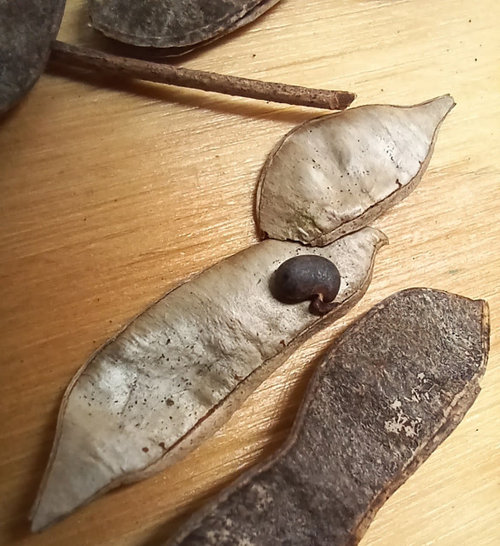
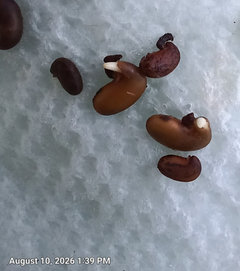
Closeup of seed:


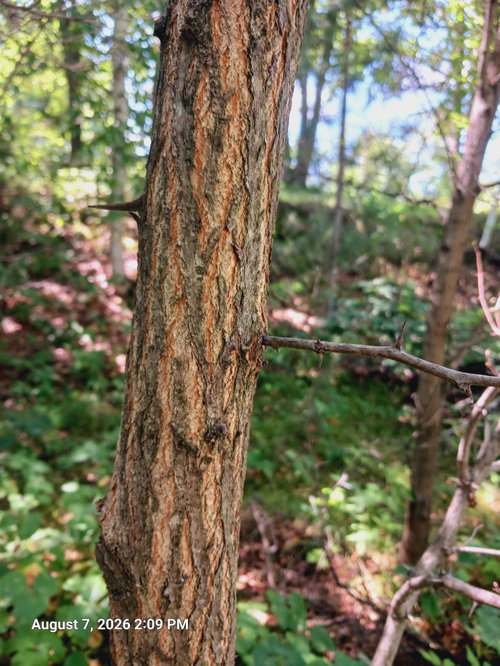
There were some thorns, 1/2" long, but not terribly abundant, on some of the branches and the smaller trunks (stalk in center of photo, a little blurry).


Photo of bark: I presume this is the parent plant bc it's the biggest of all.


Smaller trunks: note thorn.


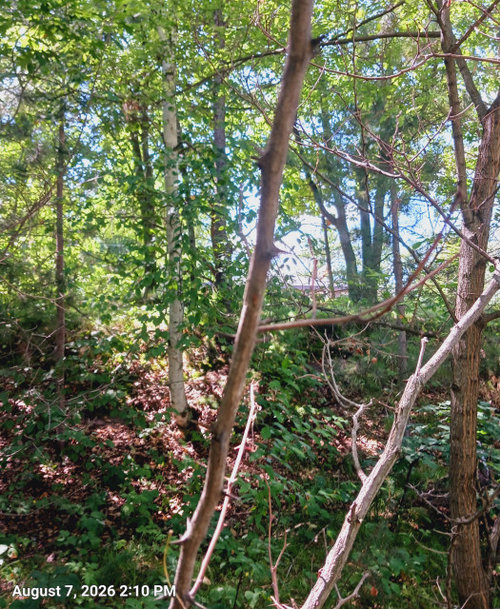
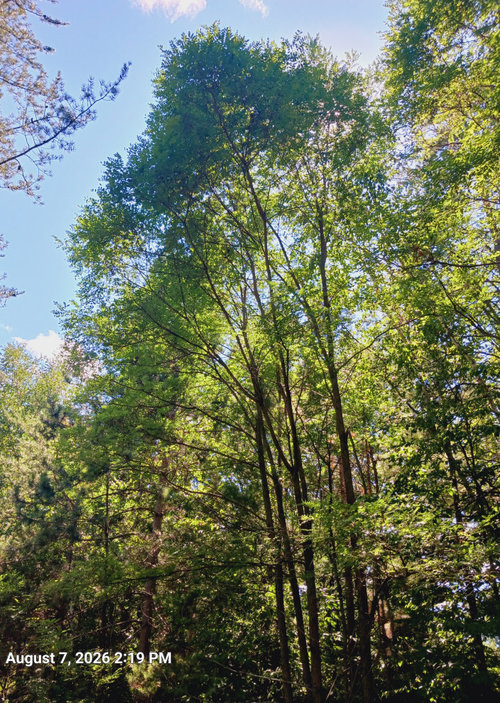
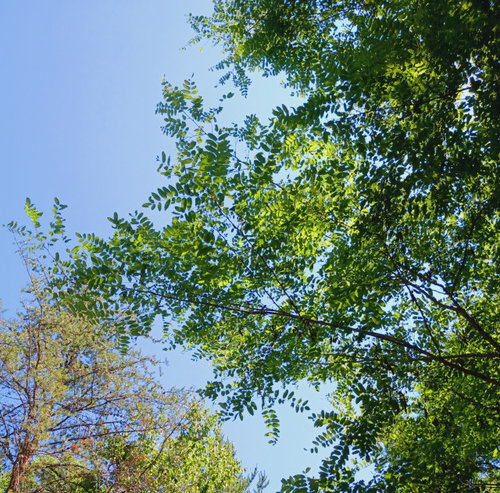
View upwards: whole parent trees, over 30ft. tall?


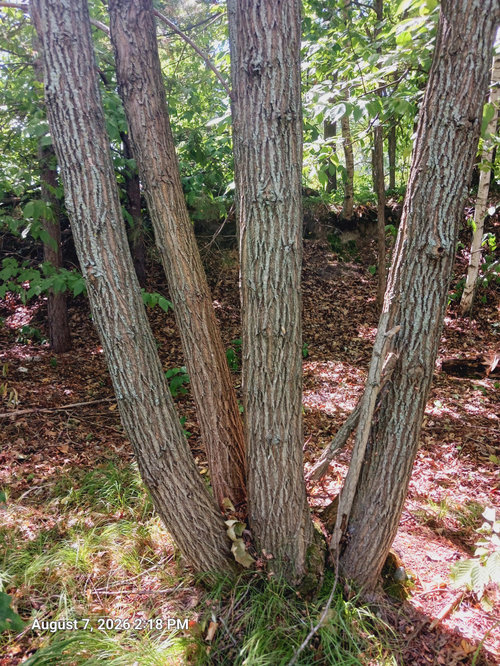
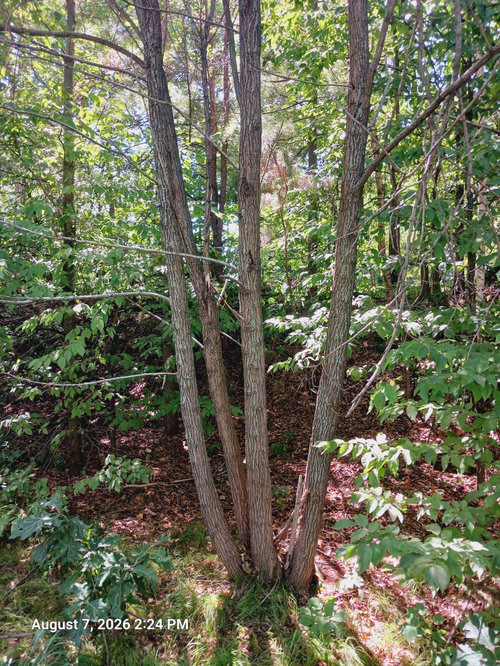
Same trunks a little closer:


Lots of seedlings, most south of the parent plant.


It would be something if a non native tree, that I've never seen before, could survive this far north.


TIA

Comments (21)

  • 5 days ago

    I think you're right floral.

    Being its native range is so far south me; I was surprised that Robina p. was hardiness rated to -37df. And then to find out, it was introduced to Minnesota ~166 years ago for noble purposes (I won't be starting any of them here).

    If they only started from seeds, it wouldn't be bad, but those suckers were the main reason for this one spreading profusely and forming a thicket.

    This was along a wooded side of a lake, north of Nisswa.

    Thanks again!

  • 5 days ago
    last modified: 5 days ago

    Looks like a dead ringer for black locust, but the seed pod looks alittle odd -- a bit wider than the usual. But there will be variance of seed pods, and I can't think of any other pea-family tree that it could be in your area. Typical, more narrow seed-pods below.

    PS Your specimen looks like sprouts from a stump.

    BillMN-z4a thanked bengz6westmd
  • 4 days ago
    last modified: 4 days ago

    The seed pods looked dilapidated like from the previous season, which is said to be right for this tree, retaining old seed pods.

    I think if this parent tree would've been from a cut stump, there would've been more trees same size as the parent tree, from suckers of the tree that was cut.

    The only thing that has kept these trees in check is that it's so heavily wooded around it and I've read they don't do well in shady areas.


    I'm thinking this was one of the lake cabin owners from the twin cities who brought one up from down there. Why? I have no idea.

  • 4 days ago

    The native range may be south of you but this tree has naturalized across most of the country so not at all surprising to see one in your area. It does not necessarily mean it was planted by human hands.

    btw, I agree it is a Robinia.......no doubt at all.


    BillMN-z4a thanked gardengal48 (PNW Z8/9)
  • 4 days ago

    It was a little weird.

    Ride on the bike trail 12 miles and all of a sudden, robina c. branching overhead with smaller trees stretching 20-30 yards along the trail. Heavy woods both sides of the trail.

    Almost all of the propagation was south of the larger parent, sunny side of the tree.

    Possible when they paved the bike trail, it opened up the woods to the east of the tree and allowed it to spread even further.

    This is all speculation of course.


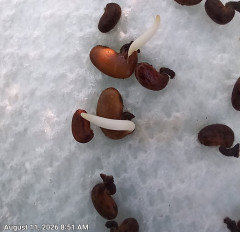
    I put several seeds I collected in water over night and was astounded on how many were swelling the next day. So, I put them in a wet folded paper towel just to see if they germinate.


    Also, pulled a small sucker which broke the root and wrapped it in a paper napkin and stuck it in a half full plastic water bottle that I had cut the top off.

    The top several inches sticking out above the bottle whipped around for 6 miles and when I got back to the parking lot, the top was all wilted and bent over.


    I got home and planted it a small pot with 5-1-1 and put it in a plastic bag. The next day it appeared to have perked up some, but I'll keep it for a few days just to see what happens, but I'll destroy the seeds and plant once I see what happens.


    How come the nastiest plants are also the most cold hardy and tough?


  • 3 days ago
    last modified: 3 days ago

    I'd be wary planting them, they sucker quite readily. There are millions of 'em everywhere you go around here except in crowded, established forests. They put on a good flower-show in late spring here some yrs & make good honey. They get attacked by alot of pests -- borers, leaf-miners....

    I'd agree w/GG, saw of bunch of them in the Napa Valley wine region in Californy. I think they're established in Europe too.

    BillMN-z4a thanked bengz6westmd
  • 3 days ago

    No problem. What I have will be destroyed when I'm finished 'experimenting'. muwahahaha! (mad scientist laugh)🤪

  • 3 days ago

    Barely a day in the wet paper towel.....and no stratification.


  • 3 days ago
    last modified: 3 days ago

    Excellent firewood, high heat content. Wood is durable for outdoor projects.

    The cultivar 'Frisia' is lovely and worthy of use in the garden. It's gold, but not too gold, very refined. I had one in my garden in Rochester MN.

    BillMN-z4a thanked artinnaturez8b
  • 3 days ago

    I can see people in this area, cursing my name for decades, once they learn I was one that planted a robina pseudoacacia here in my yard and it's finally, years after I'm gone, taking over the neighborhood.

    No thanks.

  • 3 days ago

    After a lot of consideration and research, I planted a R. p.'Frisia' in a former garden. I couldn't resist that color and it doesn't sucker like the species does. Wonderful tree - I wouldn't hesitate to plant another if I had room

    There's a fair number of Frisias planted as street trees in a nearby neighborhood.

    BillMN-z4a thanked gardengal48 (PNW Z8/9)
  • 2 days ago

    Thanks for the suggestion, Art.

    Although, in my mind, I'll always be inclined to planting new trees, the phase I'm in now is to 'Finish up' with what I have that thrives here and getting rid of the problem children.

    Space is at a premium too. But you never know what next season will bring. 😉

  • 2 days ago

    One question, would the seeds from Robina pseudoacacia 'Frisia' produce the dreaded root suckering species?

  • 2 days ago

    "R. p.'Frisia' ... doesn't sucker like the species does" I believe Frisia is generally grafted on species root stock, and does indeed have the potential to sucker.

    "would the seeds from Robina pseudoacacia 'Frisia' produce the dreaded root suckering species?" I'd have to assume that the answer is yes.

    BillMN-z4a thanked arbordave (SE MI)
  • yesterday

    Hadn't been mentioned yet, but black locusts are one of the rather rare nitrogen-fixing trees -- adding nitrogen-compounds to the soil.

    BillMN-z4a thanked bengz6westmd
  • yesterday

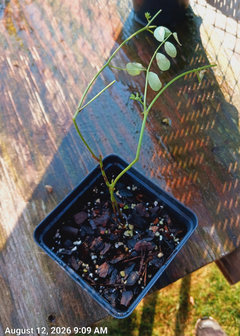
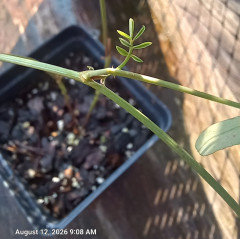
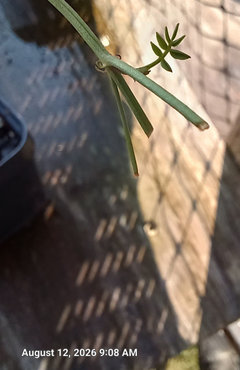
    I checked the root sucker thatI ripped out and put in a pot.

    Some of the wilted leaves recovered and the half dead plant is sending out new shoots, after going from high RH to open sunlight.

    Appears I'll have to take the 'Burnz-O-matic' to this one.


    Here's those seeds shown above less than a day later from the previous photo.

    I've already smashed them all and let them dry in the hot sun before garbage depositing.

    This will be my last encounter with anything related to Robina Pseudoacacia. 🤔

  • yesterday

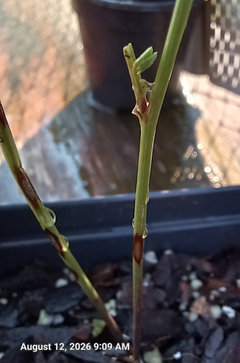
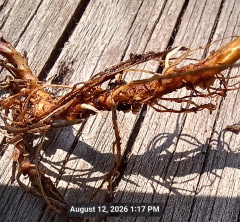
    One last photo.

    When I uprooted the stem from the pot, I could already see two new roots coming out of the 1" L. chunk of root I had ripped off the main root in the ground.

    No wonder it's so invasive. Less than 5 days to regenerate itself. That's aggressive!

    I cooked it pretty well with the torch.

  • 18 hours ago

    I've read that shipmast black locust doesn't sucker as much as the straight species. It's an old selection.

    https://www.edibleacres.org/purchase/shipmast-locust


    BillMN-z4a thanked bengz6westmd
  • 5 hours ago
    last modified: 5 hours ago

    >>would the seeds from Robina pseudoacacia 'Frisia' produce the dreaded root suckering species?

    Needs to be researched, you know, for science! You must plant one and find out ;-)

    BillMN-z4a thanked artinnaturez8b
  • 4 hours ago

    Klark,

    I knew enough not to depend on propagation from seeds to deliver a clone of the parent plant. And that the diversity would most likely create a throw back.

    Enough for me to stay away for reasons I mentioned above. 😉

Sponsored
Peabody Landscape Group
Average rating: 3.5 out of 5 stars8 Reviews
Franklin County's Reliable Landscape Design & Contracting