

Difference between $800 and $3,600+ gas range?
I'm not really sure what the extra $2,800 would get me over the $800 gas range found in any big box store. The $800 gas range has more features than the $3,600+ "high-end" one, but I know the $800 is a disposable unit that will have to be tossed out in 5-8 years.
The math: Replacing an $800 gas range every 5 years will take 22.5 years to reach $3,600 spent. Will the $3,600 gas range last me 22.5 years?
I know the picture is more complicated due to other factors such as functionality, reliability, ease of cleanup, and aesthetics.
I'm wondering if there is information out there about how the stoves are designed and built, comparing an $800 unit to a $3,600+ unit. Is the $3,600 unit built to last for decades? Does it use better parts? Does it not cut corners? Does it avoid using motherboards? Where is that extra $2,800 going? Does it merit that amount of money, and if so, why? Specifically.
When I visit the websites for these higher-end gas ranges, they don't answer these questions very well. They are not really marketing to me; I guess I'm in a niche. They are marketing to people seeking chef-level cooking capabilities in their own home kitchen, but that isn't what I'm seeking. I'm looking for reliability (will not need service for at least 10 years) and quality of build (just flat out made better), with the ability to cook delicious meals that are simple and healthy rather than fancy. I do a lot of roasting, stir-fry, occasional wok, searing, and some baking. I use lots of cast iron cookware.
I'd prefer to spend $1,500 or less to get what I'm looking for, but after weeks of searching in that price range, everything looks disposable and I just have not felt comfortable with anything I've looked at.
Comments (47)
 7 years ago
Go to the store and get your hands on live units if possible. It sounds to me like you would be very happy with a cheaper range. Try one of those and see if you are missing out on anything. There is a chance the cheaper range may last longer then the more expensive one since it has fewer features. We can't guess what is important to you aside from the cost of owning the range. By testing some ranges out yourself you'll get a feel for what matters aside from cost. Good luck.
 7 years ago
What features do you want/need? Do you want convection? Do you want two ovens or will one suffice? How many burners—4, 5, 6, 8? What brands/models have you looked at? Like anything else, you really have to compare specific products. Have you looked at Consumer Reports?
Related Professionals
Madison Kitchen & Bathroom Designers · Joplin Kitchen & Bathroom Designers · Fort Wayne Kitchen & Bathroom Designers · Bismarck Kitchen & Bathroom Designers · Gainesville Bathroom Remodelers · New London Bathroom Remodelers · Portland Bathroom Remodelers · Chico Bathroom Remodelers · Kalispell Bathroom Remodelers · Ashland Kitchen Remodelers · Frederick Kitchen Remodelers · Oklahoma City Kitchen Remodelers · Des Moines Kitchen Remodelers · Kalamazoo Kitchen Remodelers · Omaha Kitchen Remodelers 7 years agolast modified: 7 years ago
Why would a $800 range need tossed in 5-8 years? That's ridiculous.
> They are marketing to people seeking chef-level cooking capabilities in their own home kitchen,
No. They are marketing to wealthy people who want to create the illusion that chef level cooking can be accomplished in their kitchen. They are eye candy.
If you want reliable, probably need to look for ranges that have no electronic parts on them, aside from ignition. These will be the entry level ones around $450-500.
- 7 years ago
You are using extremes which really have no relevance in terms of reliability or even functions.
There are features that increase user functionality such as sealed burners for ease of cleanup. You don't need to spend $3600 for that.
Some people prefer dual fuel stoves which add to the cost because they prefer an electric oven.
On the other hand, there are a lot of people who have moved over to induction cooking from gas and now prefer it.
If what you are seeking is reliability, there are many gas stoves in the mid range - i.e. $1500 to $2000 which would last more than six years and probably as long as a $3600 range.
I just finished a complete remodel of my kitchen and from my research, stoves - especially gas stoves - aren't the weak link in terms of appliance reliability. It seems to be refrigerators which have more complex innards than a gas stove. A Subzero is going to last longer than a Whirlpool but it has a completely different construction - and also people are willing to spend the money to repair their SubZero refrigerators because it's worth $1000 whereas no one is going to spend $1000 to fix a regular refrigerator.
I would suggest going to a really good appliance store in your area and taking the time to explore what is available at different price points. When I was shopping for appliances, these kinds of stores tend to have salespeople who are knowledgeable and were able to tell me what the differences were and actually steered me away from certain ones and explained why they were recommending these.
Before going into the store, use the internet to learn about the various options and get a feel for functions, reviews and prices. Sites like AJ Madison are great in terms of researching because they have a broad range of products and contain the spec sheets for those products which enables one to compare features.  7 years ago
No different than anything else. Any car will get you from point A to point B, although the experience will be completely different. Spend what you're willing to spend. period.
 7 years ago
Homey-bird, induction heats by the same mechanism and copper coils today as it did 50 years ago. Induction is a physical law of the universe. It is rapidly vibrating magnetic fields which cause eddy currents and hysteresis losses.
A high end gas range does not produce the same results as a low end one even though they both use gas to cook. There are differences in BTUs and ease of control for starters. If you believe that a Blue Star range is equivalent to a low end Home Depot special, then buy the cheapest range and you are good to go. The rest of us will carry on enjoying our overpriced appliances, ‘cause we like wasting money, don’t ya know.
- 7 years ago
I wish an appliance repair person would chime in here. I, too, would pay more for quality but don't need six burners and numerous oven settings. I still have my 29 year old gas cooktop but am on my third electric convection single wall oven. None of them were low end. The electric boards failed. The part is costly plus adding in service = too much to repair a seven year old oven. If you can live with all gas, I would go that route for reliability. I do like the electric wall oven, though, and would love to know if there is one that outlasts the average 7 year death or costly repair. I cook at least 6 days a week, so it's not just eye candy for some of us. I love every pan, knife, and serving piece, and get great joy from my kitchen. Upgrading would be a real daily pleasure for me. If money were no object, I would like a good looking 48" gas rangetop with griddle and reliable electric double wall ovens. Some basic ranges are really bad. A relative has a cheap gas range that gets ridiculously hot all around the appliance when the oven is on. It's a daily downer to use.
- 7 years ago
When I was shopping for a new range, the salesperson in a real appliance store where I've shopped for years asked my my price range, and I told him upper middle. I told him what features I wanted. He then showed me a few in the $1500 - $2000 area. He said that the Bosch I eventually chose was not the same stove that the big box stores sell, which are actually made by Frigidaire. He said that the more costly ones have "True European Convection." This means that instead of just a fan, there is a separate burner (not the right word, I know), and the hot air gets circulated from all of the heat sources. He said the top is porcelain, not painted steel. Also, more expensive stoves are better insulated than the cheaper models we put into our apartments. Love the stove. Hope this helps.
- 7 years ago
TBL from MA, you may want to consider a Bosch wall oven. I have ovens from their sister company and they are truly excellent. Many people on the forums here are very fond of their Bosch ranges, cooktops and ovens, as well as their D/W and W/D actually. I think that company is a great value. You can get their cheapest offering and still get a solid performer. If you Google Bosch oven reviews and GardenWeb or Houzz you should have a good amount of user feedback.
- 7 years ago
Zalco, if you go back and re-read my post, nowhere did I say that a bluestar range produces the same results as a low end one. What I said was that the high end gas ranges use the same fuel and same mechanism (i.e. gas burns to produce heat to cook). I did address BTU difference and other items, which in my view are "bells and whistles". Now, let's just say we might have different opinions on what are bells and whistles versus necessities.
- 7 years agolast modified: 7 years ago
Here are a couple of recommended inexpensive ranges reasonably well-rated (but not top-rated) by Consumer Reports and with lots of consumer reviews on Home Depot: Samsung NX58H5600SS ($660), NX58K3310SS ($550).
- 7 years ago
Be sure to read the 1 star reviews on a Samsung 5600SS on Home Depot and AJMadison. Peeling finishes, plastic knobs breaking and not covered under an extended warranty beyond the one year Samsung warranty are some problems mentioned. Repairmen who don't have truck space to carry all the parts they'd need to fix Samsung appliances.
swiss_chard_fanatic thanked dan1888 - 7 years ago
Here is your answer homey,
"I did address BTU difference and other items, which in my view are "bells and whistles".
I agree with some of the posters above, buy a Bosch, most likely the lowest level will suffice.
There are some advantages to some of the higher end, prostyle appliances but you might have to cook on them to appreciate them. They may not be on every range. I think the price differential is ridiculous. There are some lower price prostyle ranges. My experience has been that I always cooked with lower end ranges but wanted a 6 burner 36" range so started looking at more expensive ranges. My first set of appliances(36 DF range and wall oven) was Dacor but due to a unique way the oven was programmed to work, it didn't, so after 9 mos of "fixing" they bought them back. I ended up with a Wolf DF range. It was great until it wasn't. The blue liner chipped at 4.5 years and it was an exhorbitant unknown price to fix it and no guarantees on it past a year. Some people were having failures on multiple ovens so we did not fix it. I just can't use it except with covered dishes and no convection. I have a wall oven though.
These are still the advantages to look for and a few disadvantages to be aware of.- I like that you have greater depth front to back on prostyle appliances. I don't have to cram pots and pans on the range. I can fit a huge(23x15) overlay griddle on mine.
-I like the control through the range of heat. My burners have two burners stacked With very fine control.
-There can be heavier materials, nice fit and finish, great insulation. The knobs are heavy cast metal on the Wolf, but they were very cheap plastic on the Dacor. My Wolf oven was a huge disappointment. The blue liner started chipping and that has been a problem for 10 years for the company. Burner grates are heavy and are across the whole surface.
-You have a big choice in burners. With most inexpensive burners, the higher you turn up the burner, the more flare of the flame you get. The BS star burner and American Performer have very unique designs to keep the heat dispersed more evenly and to the middle of the pan compared to a ring burner. This is helpful in wok cooking. With the burner ports arranged along the rays of the star, it provides better distribution of heat which is good if you like cast iron cookware of any type, steel or stainless steel and size the pan to the burner. If you have heavy aluminum or copper pans, this will not be as big of an advantage. With the burner ports on the side of the rays, as you turn the heat up, the heat stays under the pan. There are no burner caps so heat goes straight up. The burner tray is open with BS so that it disassembles for cleaning. It is cast iron so will season over time. The Performer is semi sealed. It has a big black enameled tray that is close to the burner but lifts off for cleaning.
-more BTUs and because of construction of the burners, the heat is to the middle of the pan.
-you can have thermostatically controlled built in griddles. Wolf has about the best in gas because it has an infrared element heating a griddle made of 1/2" rolled steel.
-built in grills
-French tops
-Ranges with gas ovens have very different broilers. The typical gas broiler with the blue flames loses a lot of heat as it goes up. Most prostyle ranges have infrared broilers but they may be smaller. They are very hot.-Some of the less expensive gas ranges have a third element in back, called European or true convection, but it can be used in many ways depending on the brand. You have to read the manual to see.
-High end electric ovens use computer boards to control the direction of heat and the fan(s) to produce certain environments in the oven to produce specific effects. Combi ovens give control over humidity. It can be really hard to get all of this right. Too much linear airflow from the fans can produce hot spots. Manufacturers use baffles, reversing fans and dual fans to try to overcome this. A few have multiple speed fans.
I have a mid priced Electrolux wall oven, 10 years old that has more functions than my Wolf oven in my range and I love the way it bakes but it has been giving me an error code intermittantly. The code can mean a problem with the connections or it needs a new board. I took a small hammer and tapped all around the control panel and it hasn't flashed the error code for about 10 days now. It also had issues with chipping blue enamel but was fixed under extended warranty. I go back and forth between getting another one or going with the Bosch 800 series or Gaggenau($$$$).
- 7 years ago
RITA, thanks for the info on the Bosch wall ovens. I will consider them top choices for my next oven. I have Bosch mid range dishwasher that I love and would buy it again without looking at another brand. Let's hope their quality continues.
- 7 years agoI just completed a remodel and got the Bosch Side opening wall oven and I am delighted with it.
Per my earlier comment, Gaggenau is a sister company to Bosch and they have an equivalent model that is much more expensive but didn’t seem to provide me with increased functionality or reliability. I think the same is true of ranges as well once you are in the upper mid level brands. swiss_chard_fanatic
Original Author7 years agolast modified: 7 years agoI think the whole issue boils down to this:
- Basic (few features) vs "professional" (many features)
- Cheaply and poorly made vs very well made and well designed (think of the appliance that just won't die)
My niche is that I want something that is basic (few features) but very well made, whereas the majority of the market seems to cater to only basic and poorly/cheaply made, vs many features and hopefully-but-we-really-dont-know-for-sure better made.
So far, the consensus seems to be that I need to purchase a basic gas range, and that I need to stay away from motherboards. However, when I look at what is available for basic gas ranges, I am seeing only options that are poorly made (knobs that fall off/crack, stainless steel that actually peels up or chips off and/or rusts, black enamel that is only painted black in a very thin layer on the surface, so that when it scratches it is extremely obvious, etc. I won't tolerate any of these problems.
To me, these are signs of cutting corners and basically means the stove is junk and was made to be eye candy.
I'm not interested in eye candy. Sure, I don't want an ugly stove either, but quality of design and build is much more important to me than eye candy.
swiss_chard_fanatic
Original Author7 years agolast modified: 7 years agohomey_bird,
"I love to cook and am a passionate cook. At the risk of sounding like bragging, I cooked fabulous phenomenal food with my old range, have had numerous family & friends who have been entertained with food cooked on this range, and results were stellar. When things were messed up, they were because of me and not the range :-)"
If I were you, I'd be terrified to give up an old range that you could do so well with, and that was so reliable. Regarding your comment about vanity, I'm in the lower-to-medium vanity range. To me it's more important to have something I can rely on and that I can produce "fabulous phenomenal food" with, as you mentioned. But as far as fabulous and phenomenal goes when it comes to my cooking, I don't do anything fancy. I think the fanciest I get is Thanksgiving cornbread dressing (which takes 3 days to prepare and 2 hours to cook).
I did look at BlueStar, among many other brands, but my question would be, is it capable of producing the same "fabulous, phenomenal food" as your old range, and is it truly designed and built better, compared to a $600-$1,000 gas range? I would have the following questions for any gas range manufacturer, but especially the "higher-end" ones:- Would it last 20 years without a major repair?
- Are the knobs all metal? Do they overheat? Have you had any customer complaints regarding your knobs?
- Does it insulate better, instead of bellowing heat out into the kitchen and heating up the kitchen?
- What grade is the stainless steel? Will it rust? How thick is the sheet metal?
- What happens if the colored enamel chips? How deep does the color go?
- Is the temperature mostly accurate?
I actually asked those questions to one manufacturer and they refused to respond. And so the search continues.swiss_chard_fanatic
Original Author7 years agowekick,
Thank you for sharing that info about your experiences. In my opinion, when you spend $3,000+, you should never have to worry about an oven not working, knobs that are plastic, multiple failures, and on and on. It's just absolutely unacceptable. This is what makes me hesitate, even on the "high-end" ones. You would think that "high-end" would preclude all of these problems, but shockingly, that doesn't seem to be the case here.- 7 years ago
High end appliances are a lot like high end euro luxury cars. They are very pretty. Have lots of features. And when working properly are a dream.
But at the end of the day, a 25 year old Toyota Camry will still be on the road while a 10 year old German luxury car is already at the end of it's lifespan because maintenance/repair costs more than the car is worth. swiss_chard_fanatic
Original Author7 years agolast modified: 7 years agosambah006, it's funny you mention Toyota. I was thinking about that during this discussion. Toyota is a trusted name in autos, but I don't see the equivalent in gas range appliances. I don't need the luxury, I need the quality.
- 7 years ago
Do look at Lacanche- it's very old fashioned and solid. I have one and can attest it is built like a tank. Mine is not very old, so no feedback on longevity- three years old. No computers on board.
- 7 years agolast modified: 7 years ago
Lacanche . Those look expensive! (If you have to ask how much, then you cannot afford it)
- 7 years ago
"Does it insulate better, instead of bellowing heat out into the kitchen"
With a gas oven, you have a lot more ventilation so it vents all the products of combustion. They could do better on the sides and doors though.
I thought after my my issues with Dacor, Wolf would be a safe bet because of their supposed great service. - 7 years ago
ALL ovens (unless they're vented to the outdoors) release the heat of baking into the kitchen. Gas ovens release it at faster rate due to the airflow required for combustion and dispersal of the moisture generated by it. Electric ovens don't need as much airflow so the heat dissipates at a slower rate.
- 7 years ago
Swiss Chard, FWIW, my brother's box store 'bargain' that gets ridiculously hot is a basic GE gas range - older model. Can't imagine they have improved. Things seem to get more and more cheaply made over time. However, that bad range is still cooking after ten years! I would hate it every day, though. Seriously, you can't put anything near the top when the oven is on, and using the burners at that same time is like a game of chicken, waiting to scald your hand.
If you are willing to investigate some more costly ranges, try contacting Bosch. After Rita mentioned their wall ovens, I checked on the ranges. Unfortunately, it appears that the entry one is just over 2K. You might learn something from them, though. When my Bosch dishwasher was installed, I was not happy, - the top shelf utensil rack was filled with wet silverware after each load. I can't remember if I called or emailed, but they were quickly responsive and instructed me to do some programming with the buttons to raise the final rinse temp which would aid in drying (also MUST use rinse aid - these DWs do not have a heated drying cycle). At any rate, their excellent customer service gave me confidence in the brand.  7 years ago
I like Yale Appliance's buying guides - check out the one they have on gas ranges: https://blog.yaleappliance.com/free-gas-cooking-buying-guide
 7 years ago
Some things to consider for a gas range;
Burner BTU's - 15-18k is enough for most things. However, some cooking methods like Sauté, Wok and some pan frying need more. Or a lot more. Food that needs only 15k will likely not notice the difference between an expensive flame and a less expensive flame. The low end of BTU's is also important - can it produce a low enough simmer?
Burner Dispersion - Does the burner produce fairly even heat across the bottom of the pan? Does it have problematic hot spots? Does throw a lot of heat to the sides of the pan (thus burning food to the sides) and in to the face of the cook? Generally a star or multi-ring open burner like Bluestar is much better than a sealed burner like Wolf or others.
Burner Cleaning - How important is this to you? If you're a clean freak then you need to consider this more than some others of us and from what I can tell opinions are about evenly split.
Griddle - Ideally you want even heat across the entire surface, you want it to remain even over time, and you want enough mass that it doesn't loose a lot of heat and take a long time to recover when food is added.
Among consumer ranges Wolf is the best I'm aware of. Bluestar is less even across its surface, has wider temp swings over time and looses a lot more heat when food is added. We use our griddle a lot as a griddle and as a flat top so performance is important and why we'll likely forego the better burners on Bluestar for the much better griddle on Wolf.
Oven - Similar to a griddle, how even is the heat throughout the cavity and how wide of temp swings will it allow. I believe Bluestar RNB and Wolf AG are about the same. Bluestar Platinum does not perform as well. How well insulated is the oven? Does the door work well? Handles get hot? Is it large enough for the sheets and items you want to cook in it?
A friend who's a chef can make a great meal in anyone's kitchen. What he can make though depends on the kitchen. With a lessor range he'll not make meals that require high heat cooking methods. If he'll have only a 4 burner gas range then he'll not be able to make as many sauces as he can when he has a griddle to keep 6 different sauces ready. If he'll not have a good simmer burner then no glazed chocolate. If he suspects the oven produces uneven heat then he'll not make items that require more exacting temps.
- 7 years agoopaone, can you describe the cleaning of the Wolf griddle? It seems like such a convenient feature, but only if the clean up is swift. Thanks.
Your post was very helpful. - 7 years ago
opaone-"Does the burner produce fairly even heat across the bottom of the pan?
Generally a star or multi-ring open burner like Bluestar is much better than a sealed burner like Wolf or others"
The goal in many cases is to provide even heat to the food you are cooking. You have three ways to do that.
The burner is one. The BS and AP burners have greater dispersal of heat, and the way the burner is designed with the ports on the sides of the rays, it keeps the flame in a specific area as the heat is turned up. The burner also does not have a cap so this allows the heat to go straight up. If you are interested in high heat cooking with a wok, an uncapped burner is probably one of the most important considerations. This is the BS burner as you turn the heat up.
Thermador also has a star burner but is capped so as you turn the heat up, you get more flare.
This is Thermador
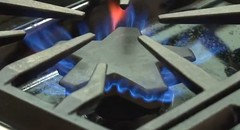
Ring burners sold today are mostly capped as well so have more flare as you turn them up. This can work well if you typically use high heat wider pans but depends on how they are engineered.
The second chance you have to provide even heat to your food is the interface with the heat source, the cookware. even BS/AP burners while they are pretty good at providing even heat have limitations. In order to take advantage of the burner configuration, you must match the pan size to the burner. If you put a big skillet on the burner, you can have all the heat in the middle. Most people that are concerned about even heat look at the pan because it covers a multitude of shortcomings in the burner. You are stuck with your choice of burners but you can change pans easily. This often gets overlooked in an appliance forum, but there are many websites dedicated to this, and this is one of the most thorough and best, IMO.https://www.centurylife.org/how-to-choose-cookware/
The third chance to even the heat is cook whatever you are cooking in a liquid.
A comment on cleaning and the term "open" burner. All burners used to be open. The capped burner and sealed burner tray were developed in the '80s to keep food out of the burner ports and inner workings of the range. Viking was the first "prostyle" range in the '90s to be sold and it touted an "open" burner which referred to the burner tray only.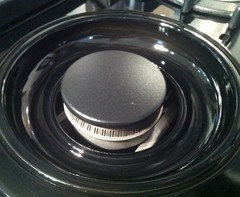
BS came out with an open burner tray. They added a star shaped, uncapped, higher BTU burner which are aspects that truly changed performance. Wolf had what they called a semi open burner. It was still capped so it did not move in the same direction as BS in the way of performance but did break down for cleaning.
opaone griddles-"Among consumer ranges Wolf is the best I'm aware of. Bluestar is less even across its surface, has wider temp swings over time and looses a lot more heat when food is added. "As you mentioned above there are two aspects of eveness of heat that you might look at in a griddle.
The first is the eveness in temperature across the cooking surface. It doesn't get quite as much discussion as Wolf and BS do but Thermador uses aluminum as the metal for the griddle which has much faster heat transfer and the heating element is electric and zig zagged across the griddle. It might beat the Wolf. It would be interesting to see temperature mapping on all three to make a comparison or at least cook pancakes on all three.
The second aspect of eveness is the ability of the surface to maintain temperature. Wolf takes the approach of using 1/2" steel to provide a reservoir of heat. Thermador takes the approach of using aluminum so that if you place something cold on the griddle, the faster heat transfer allows the heat to rewarm the cold spot and the griddle cools slightly to trigger the heating element to come on. a side note isvtgst tge Wolf will take much longer to preheat or turn the temperature up or down. To determine temperature swing, it would be helpful to know what the parameters are for the thermostats you are comparing, but you would also need temperature mapping to see what happens with the surface. You mentioned Wolf is better than BS on temp swings. Do you have the parameters for the temp swings on BS and Wolf?
In in any discussion of griddles, you need to talk about add on or even separate plug in griddles. While a built in thermostatically controlled griddle gives you the convenience of being able to easily dial in a reproducible setting, many people with a 30" or 36" range are not going to dedicate 2 burners to a built in griddle. If they want a thermostatically controlled griddle you can buy a separate plug in and some do pretty well. You can also buy add on griddles which have their own set of advantages.-you have the flexibility of burners or griddle, whatever you need
-You can have aluminum, steel, cast iron or multiply cooking surfaces, whatever is best for the type of cooking you are doing.
-bare surface or nonstick and they are easily replaced if need be.
-they can provide almost 50% more cooking area on 2 burners if you get someting like Royal Industries aluminum griddle
-Most built in griddles are limited to 15K BTUs over 2 burners. Some people complain about that. An add on can have whatever is underneath them, potentially 3 times as much heat
-Because you have two burners, you can have two different zones of heat.
So many choices. - 7 years agolast modified: 7 years ago
"You mentioned Wolf is better than BS on temp swings. Do you have the parameters for the temp swings on BS and Wolf?"
IIRC, our Wolf (36" gas w/ 12" griddle - circa 2001) has about a 60° difference (measured in the middle) with about -40 to +30 @ 350°. BS is about an 100° difference but I can't remember the over/under.
-you have the flexibility of burners or griddle, whatever you need
There are actually few things that a burner can do that a griddle cannot so there is actually very little trade-off. Even with all of the entertaining that we do and with some fairly complicated menu's there have been few times that we've needed/wanted more than four burners and would have needed to pull out a countertop plug-in induction.
A thermostatic griddle acting as a flat-top can actually provide greater capability. For example, since more than just two sauciers can be placed on it and it maintains a much more even temp than burners or burners with a griddle plate will.
This is why we are going with a 24" griddle + 4 burners in our new kitchen. The extra 12" of griddle will provide much greater flexibility than 2 extra burners.
-You can have aluminum, steel, cast iron or multiply cooking surfaces, whatever is best for the type of cooking you are doing.
Do you have examples of when one is better than the other for things done on a griddle. Or perhaps more importantly, when would you want anything other than steel.
-bare surface or nonstick and they are easily replaced if need be.
A properly cared for steel griddle is quite nonstick. I'm not aware of thermostatic griddles needing to be replaced. I'm sure there have been cases of that but I've never heard of it.
-Most built in griddles are limited to 15K BTUs over 2 burners. Some people complain about that. An add on can have whatever is underneath them, potentially 3 times as much heat
-Because you have two burners, you can have two different zones of heat.
True (but it is often very uneven heat across the surface and across time). I have though often wished that the 12" griddle on our Wolf had separate front and back controls. The 24" on our new range will have two zones and I'd guess there may be times that I'll wish it had four.
-----
What you don't mention is that it is almost impossible to maintain any semblance of even heat on a burner top griddle. A thermostatic griddle on a consumer Wolf/BS turns on/off about once every 70 seconds in order to maintain the rather wide range that they do. To accomplish this with a burner top you'd need someone to monitor it with a IR temp gun and turn the burners on/off to maintain the temp. Short of that you'll have much wider temp swings that make use for many things difficult or impossible.
------
Good point about a countertop plug-in griddle. The last time I checked there was not an affordable one available that could do what we'd want it to. I've not checked lately so perhaps something has become available. Are you aware of anything?
OTOH there are a plethora of single and dual burner countertop induction cooktops in both 120v and 240v. So, much easier to add countertop burners than countertop thermostatic griddle. We're installing a 240v outlet by our range just for this.
- 7 years ago
I bought a ~$800 Maytag range to replace an 60-year old Jen-air electric stovetop and couldn't be happier. I don't know about longevity yet, but I did know that I didn't want to spend exorbitant amounts on repairs (if needed down the line) and most of the high-end ranges didn't have a warranty that was any better than the Maytag. They wanted me to spend thousands on something that they won't warranty for more than a year? No, thanks.
- 7 years agolast modified: 7 years ago
Swiss_chard, regarding your question on Blue Star longevity: I have always heard (on these forums) -- that Blue Star are very well made, sturdy ranges. That said, it was never a part of my consideration, because, I have several constraints that I am working within: first, one large oven is too large for me, for my family size. I have no desire to remodel the whole kitchen for the sake of a range. I simply do not have the space to get a range and separate wall ovens (I have a small kitchen in an old house) - and therefore, the range with two small ovens was attractive to me. Sadly Wolfs and Blue Stars do not come with these features. Dual fuel is out of question due to the need to rewire electrical. I also prefer gas over electric. I know that Electric ranges are very very close to gas in terms of versatility but I'm just old-fashioned.
Also, I am painfully aware that a new range will not last as long as my current one. If my old range was perfect, then I would never switch, but my old range had limitations -- such as a limited BTU, non working & large oven, which took forever to preheat. As a matter of fact, my de-facto family oven is a Breville countertop toaster oven that also has convection. That should tell you how much I bake :-)
Now, because of all this, I could never bake cookies or cupcakes for my kids' class. Baking in multiple batches was something I never had the time to do, and so the old range made me miss out on a few fun experiences. So, if I were to put a price tag on these fun experiences, my range did cost me. I think that the new range will last less but will offer more during that time.
Still, 80% of my work with a range is cooking daily dinners. That was done well by my old range, and hopefully will be done well by my new range as well. The rest 20% was what impacted the "experience" part. So my movement has been from a pure function, to function plus bells and whistles. I am painfully aware that the new range will not last as much -- but at this point, that seems like the best thing to do.
Anyway -- the reason I decided to share all this is simply to illustrate that these decisions are complex. It's not just about counting how many boxes each item checks out. It's about overall "experience" and "gut feeling" that cannot be exactly defined.
- 7 years agolast modified: 7 years ago
"Also, I am painfully aware that a new range will not last as long as my current one."
How long has your current range lasted? I would expect a Wolf or BS or many other all gas ranges to last 40 or many more years.
swiss_chard_fanatic
Original Author7 years agoopaone,
You expect a Wolf or BlueStar or other brands in that price range to last 40 years. On what are you basing this?
I wish there was a repair tech here who could explain differences in design and construction, ongoing parts availability, customer service experiences, common failures, longevity expectations.- 7 years ago
A 3 year old DCS 6 burner gas range came with the home we bought 2 years ago. The oven doesn't seem to cook as evenly as our previous builder grade wall ovens and the burners are fussy about igniters working but the most irritating problem for us is the cooling fan. It is loud and continues after the oven is turned off for over an hour making a pleasant conversation during the meal in the open floor plan impossible. Any recommendations for a 36" range without the fan issues? A lovely "Pro" on another Houzz forum wrote, "Cooling fans are loud. Get over it" to a similar question. Can you guess what my response would have been to her?
- 7 years ago
If you pick an all-gas model, preferably a model that doesn't have too many electronics, then you stand a better chance that the range won't have a dedicated cooling fan for the oven. More traditional old-school designs don't typically need this extra fan. My Bluestar would be a good example, but I am not sure you are willing to spend that much money. The Bluestar is absolutely awesome. But everything considered, you seem to be happy with your current stove (barring the fan), so you probably wouldn't really get your money's worth on that particular upgrade. I am sure there are other all-gas ranges that would meet your needs, though. Not everything has a ton of electronics that requires careful cooling.
Alternatively, I find that while my combination steam oven does have fans (it's about as full of electronics as it gets!), it is actually pretty quiet. Maybe, that's because it has a smaller cavity and that makes it easier to sound proof the appliance? Turns out, the cavity size is actually quite convenient for my needs.
So, instead of replacing your range, you could consider getting a nicer-quality wall oven. Just make sure you can try it out somewhere first. While I think the fan is pretty quiet, you might think that it's still too loud for you. Everybody's sound perception is different. - 7 years ago
Swiss chard, there are posts that deal with those things, if you search this forum. BS is probably the closest to what you are looking for. The parts seem to be more generic and the design is based on Julia Child's range, a Garland.
Second, I would look at Bosch. My DIL had about $1800 to spend and she bought an Bosch AG. I think they have gone up a little, but you might find a deal on one somewhere. I have to say opaone, my Wolf lasted 4.5 years and they only claim 20 years on their website. Subzero bought them and "residentialized" them in 2000.
Sisterwitch, It is sad but with all the electronics on ranges, they seem to need a lot of air moving and no one seems to be rating the noise in decibles like they do dishwashers. It is a little bit hard to rely on subjective viewpoints as one person’s quiet might be another person’s loud.
opaone here are responses to your comments.Note, instead of being repetitive in explanation of the differences in steel and aluminum, note this * means see above discussion and link, also previous posts or links to articles on cookware metals or google anything relating to the physical properties of various metals used in cookware and you will get an explanation in great detail. Feel free to add any supporting data to your contention that steel heats more evenly than aluminum.
"There are actually few things that a burner can do that a griddle cannot so there is actually very little trade-off"Do you mean a pan on a burner? Interesting thought. I just find myself needing containment for things that involve liquids and like the control of an individual burner to the pan. Go figure. Most of the time I do not need all of the real estate on a griddle. Seems to be a waste to heat it up to make a couple of portions of something. I do understand that it works for you.
"there have been few times that we've needed/wanted more than four burners”But it you have a 48" range and most people don't. I understand how you use your burners but consider that there are people who cook differently than you do or only have 4 burners to begin with.
"Do you have examples of when one is better than the other for things done on a griddle. Or perhaps more importantly, when would you want anything other than steel."Of course I do and I know we have discussed this exact thing many times before. *
I have posted this before too but here it is again.
http://www.cookingforengineers.com/article/120/Common-Materials-of-Cookware
Look at the charts, especially for thermal diffusivity.
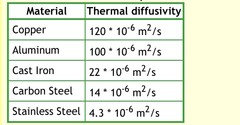
In looking at the chart above,
Why do you think they put layers of copper and/or aluminum in stainless cookware?
Why did Julia use thick French copper?
Do you cook with steel pans all the time? Why or why not?
Wolf even says on their website that even with the infrared burner, their surface does not heat evenly.
I use a heavy aluminum griddle over my ring burner whenever I need a more even temperature across the surface, which is when I am cooking something starchy like potato pancakes, grilled sandwiches, toasting buns or English muffins, pancakes or even hamburgers.
I also use it when I want quick response up or down. I cook a lot of things that I might start at one temperature but need to turn down to finish, some sandwiches, hamburgers or I might cook one thing and switch to something else and I don't want to wait for 1/2" of steel to change temperatures. I use steel or cast iron when I don't care about hot spots or even want them to build heat for rapid sears. I do this with steaks, shrimp or scallops, but use a big pan instead of a griddle. I do understand that you like your built in steel griddle for all situations although I find it odd that as much as you seem to value even temperatures across the surface, you don’t see where aluminum would be beneficial in spite of the very clear physical properties.
"Because you have two burners, you can have two different zones of heat.""True (but it is often very uneven heat across the surface and across time."
True with steel, but aluminum *
As far as even heat over time, a flame is a constant flow of heat at a given setting vs cycling on and off with a +/- 30-40F. Both work, but if you are discussing actual differences in fluctuation of heat, the constant flame is well, constant.
This is how it works in actual cooking. I start my pan/griddle and preheat a little hotter than is needed. I get a little heat loss a when I add food and it brings it down to where I want it. I might stay with that or if I do need an adjustment, I make that adjustment and it quickly happens and through the whole griddle due to the excellent heat transfer properties of aluminum.
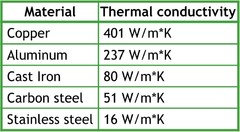
Maybe it is is hard to understand how aluminum works if you have not used it or maybe you have only used thin aluminum.
”A thermostatic griddle acting as a flat-top can actually provide greater capability. For example, since more than just two sauciers can be placed on it and it maintains a much more even temp than burners or burners with a griddle plate will.”
Even temps *. How many sauciers can you fit on a 2 or 4 burner griddle? Consider that the area available is much bigger on a griddle like Royal Industries aluminum 2 burner overlay than a Wolf 2 burner built in.
Royal Industries 23x15, cooking area 22.5x14.5= 326 sq inches
Wolf 2 burner built in, on a 48” range, cooking area 18x10.5= 189 sq inchesWolf 4 burner built in cooking area. 18x23= 414 sq inches
How many more pots will fit on 326 sq inches vs 189? With the 4 burner you are only getting 88 sq inches more than the Royal Industries aluminum griddle.
"What you don't mention is that it is almost impossible to maintain any semblance of even heat on a burner top griddle"I didn’t mention it, because it’s not impossible or even hard. *
" To accomplish this with a burner top you'd need someone to monitor it with a IR temp gun and turn the burners on/off to maintain the temp. Short of that you'll have much wider temp swings that make use for many things difficult or impossible."The object for me is to obtain a temperature that does what I want to the food, not maintain a given temperature. I go by sight, sound and smell. When you cook with a pan, do you turn it on and off and monitor it with an infrared temperature gun? No wonder you prefer a griddle and don’t see the benefit of pans. I would be surprised that you could use 4 pans that way. I’m thinking you would be better off with induction that you could dial in.
Once the burner is at the right setting with aluminum, I rarely need to touch it except if I want to change temperatures.
"A properly cared for steel griddle is quite nonstick. I'm not aware of thermostatic griddles needing to be replaced. "Yes, I agree it is, built in or add on. A nice nontoxic way to have nonstick.
Thermador as mentioned above is an example of a thermostatically controlled griddle that needs replacing from time to time. It is sort of a lift off though so it can be done easily."I've not checked lately so perhaps something has become available. Are you aware of anything?"
My kids have an inexpensive aluminum one. It works great on pancakes.
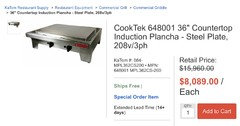
This may be the answer for you. An 36” induction plancha with a steel surface.
Sure it is $8,089, but some combi ovens cost that much. It would be interesting to check it out and then you could get a 30” BS range to go next to it.
- 7 years ago
@wekick is correct that the thermal conductivity coefficient for copper and aluminum is favorable over carbon steel or, God forbid, cast iron. On the other hand, the emmisitivity coefficient of cast iron and carbon steel is much better than for copper and aluminum. It affects how easily you can brown foods on this particular cooking surface. Turns out, carbon steel is somewhere in the middle for both of these coefficients. It isn't perfect for 100% even heat distribution, and it isn't perfect for browning, but it's a great compromise.
Combine it with burners that cook evenly, and you'll love carbon steel. It's the reason why I wouldn't ever want to trade in my steel skillet when cooking on the Bluestar. But when cooking on the Viking in the in-law unit, I keep cursing its uneven burners and wish for better thermal conductivity (but even then, I prefer steel over aluminum, YMMV).
The last factor is the specific heat, or better known as the ability to retain heat. This is particularly high with aluminum, but all in the same ballpark for copper, steel, and cast iron. The upside is that aluminum won't cool down as quickly when adding ingredients. And that's also the downside, it takes longer to adjust to intentional temperature changes (both up and down). If you have lower-powered burners, you might like this. If you have high-powered burners, you probably prefer the fast responsiveness of copper and of carbon steel (cast iron pots are often thicker, so they also take longer to adjust). - 7 years ago
"On the other hand, the emmisitivity coefficient of cast iron and carbon steel is much better than for copper and aluminum. It affects how easily you can brown foods on this particular cooking surface."
There are a few issues in looking at emissivity in cookware as it relates to cooking. Thermoworks makes this comment about it's emissivity table."The accuracy of the following figures is almost impossible to guarantee as the emissivity of a surface will not only alter with regard to texture and colour but also with its actual temperature at the time of measurement."
Note the values for copper, polished vs oxidized or aluminum polished vs anodized.
https://www.thermoworks.com/emissivity_table
Emissivity doesn't really become much of a factor though in cooking until the temperatures are pretty high. Most heat is transferred by conduction at normal cooking temperatures. You can demonstrate this yourself by holding meat about 1/32” over a hot skillet. It won’t cook until you drop it.Coatings like tin or nonstick can effect emissivity. The Century Life link above has quite a bit on the subject. .
"The last factor is the specific heat""The upside is that aluminum won't cool down as quickly when adding ingredients. And that's also the downside, it takes longer to adjust to intentional temperature changes (both up and down)"
thermal diffusivity =thermal conductivity divided by the unit heat capacity (specific heat x density)
The chart is posted above and here.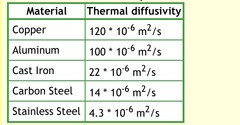
It is a more useful way to look at these numbers and how they work together. You can get into some very complex calculations past that. It can be misleading to look at just the specific heat. The time it takes to turn the griddle up and down will depend on all three numbers. The mass of a steel griddle is a lot more typically than an aluminum one so it will take longer to adjust unless you have a 3/4" aluminum and 1/16 steel.
I have a couple of DeBuyer Mineral B pans. They make a nice alternative for cast iron. They actually work well on my burners but I move them around as I am cooking so they get a little more evenly heated I guess. I like to start something on high heat and then put it in the oven. I'm not a big fan of the long handle so was thinking of getting something with loop handles. Mine are well seasoned and nonstick which I like. My copper pans have a lot more control for things like candy or sauces though and I like my aluminum 14” frying pans. It would be nice to have them in 3mm copper but then I couldn’t lift them.
There is a cookware forum on chowhound that has a lot of very knowledgeable people and they have some interesting discussions on the thermodynamics of cookware. swiss_chard_fanatic
Original Author7 years agolast modified: 7 years agoI'm not overly concerned about the thermodynamics of cooking as much. But I have just made a discovery: commercial 30" gas ranges cost roughly $2,500 give or take. I'd quickly jump on board with that, except for these concerns:
- I don't need the extremely high BTUs of a commercial range; I would never need to use that much, and I'd be afraid for my pots and pans.
- If they can go to such extremely high BTUs, they probably can't go low enough to simmer a sauce, and I make sauces on a regular basis.
- I don't want open burners; I am always spilling food and I don't want to have to disassemble the stove to clean it. It seems that all commercial gas ranges have open burners.
But this raises an important question: if a commercial restaurant 30" gas range, which is more powerful and built to take a beating, can cost about $2,500 roughly, then why should I pay more for a residential high end one? What's the high end residential one got that the commercial doesn't?- 7 years ago
I'm confused why you even posted this question when you already had your mind made up? I don't think it would have mattered what anyone said about high end ranges. If you don't need the high btus of a commercial range then don't buy one.
Pots and pans are fine with high btus. Yes they can go low enough to simmer sauces. Not all high end ranges have open burners. I have a Bluestar and cleaning with open burners is simple. Not sure what you mean by disassembling the stove to clean. I simply lift off grate to clean and anything that fell through there is a slide out that has trays in it that you just wipe out.
- 7 years ago“What's the high end residential one got that the commercial doesn't?”
Insulation.
Built and Certified for residential use.
Nicer decorative panels. swiss_chard_fanatic
Original Author4 years agolast modified: 4 years agoUltimately, 3 years ago, I decided to continue using my cheap big-box store gas range that came with my house until it broke down. It has now broken down.
Years ago, several people recommended I buy a Bosch gas range since it was mid-price range, but since that time, the Bosch gas ranges have become more expensive.
And, I still cannot bring myself to spend $4k-$5k on a Wolf.
I have looked at the newer, mid-price range Zline brand, and I see that they are having a lot of problems, so I'm not considering that brand.
But, before I go and get another base model throwaway big box store gas range--if anyone knows of a mid-price gas range built to last (the toyota of gas ranges), please let me know.
An interesting mid-price brand I've noticed is "Unique", but I need a 30" size gas range, and they seem to have discontinued their 30" stainless model, and now the only 30" size they have is a classic retro one, which is not really my style. And I'm not sure about their longevity or performance.


homey_bird