Software
Houzz Logo Print
jerry2726

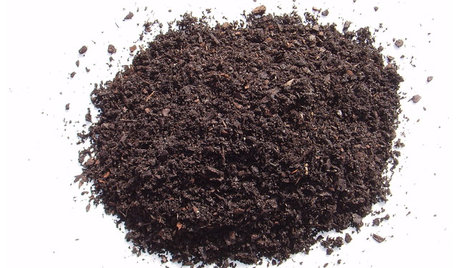
planting vegetables in almost pure compost

7 years ago

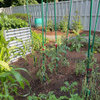
have a small raised bed garden and have it covered with about 9in. of black compost from the town compost facility. the soil below is mixed soil and compost from years before. would it be ok to just turn it over and rake it smooth and plant the vegetables?

Comments (19)

  • 7 years ago

    Sure.

    jerry thanked callirhoe123
  • 7 years ago

    Many people do plant in straight compost and claim good results but I'd personally try to incorporate some of the native soil beneath the compost into it if possible. Some plant roots have a tendency to not penetrate into a different soil strata when encountered and instead grow sideways at the horizon.

    jerry thanked LoneJack Zn 6a, KC
  • 7 years ago

    So after turning it over, you have an organic-rich soil mix. Can't see a problem there. What you're asking is whether it is OK to plant in soil that has a lot of compost in it? The compost in the lower layer from years before likely doesn't exist anymore, anyway. When compost degrades thoroughly, it's gone. All that carbon volatilizes into CO2. As noted, by the time your season is done, your bed won't be raised very much.

    jerry thanked daninthedirt (USDA 9a, HZ9, CentTX, Sunset z30, Cfa)
  • 7 years ago

    "Compost contains a lot of nutrients in low amounts but it lacks the
    mineral component that real soil provides and that will assist and
    promote healthy plant growth."

    Vital point. Make sure you note it. Minerals are just as vital for plant health. Also plan to supplement the nutrients provided by the low-dose compost.

    Dave

    jerry thanked digdirt2
  • 7 years ago

    so what should I do? I can put 3'' to 4'' in.of what the garden center calls nutra-soil which is half top soil and half compost mix on top. or just 3'' to 4'' of rich top soil.

  • 7 years ago

    You don't need any nursery soil or even "rich" topsoil....just plain old ordinary bagged topsoil will suffice if none of your garden soil is available.

    jerry thanked gardengal48 (PNW Z8/9)
  • 7 years ago

    Again, if you're turning the compost into the soil underneath, you've GOT the soil. As I said, that soil underneath probably doesn't have a lot of compost in it anymore. So when you turn in the compost, you've got a mixture of mineral soil and compost. You're done! Don't make it harder than it has to be.

    jerry thanked daninthedirt (USDA 9a, HZ9, CentTX, Sunset z30, Cfa)
  • 7 years ago

    you should have good results planting directly in the compost.

    jerry thanked randy41_1
  • 7 years ago
    last modified: 7 years ago

    Planting straight in a thick layer of compost laying on top of soil is a poor strategy. As noted above, not enough nutrients are available to support quality maturation of the plants. Pure compost doesn't hold water well, and will dry out fast. Compost is soft, and a poor foundation material, so plants will have a hard time staying standing straight up. Also, if the soil below is not cultivated, root penetration will be poor. Yes, plants CAN grow in pure compost. Just not very well.

    Turn the mix with a fork and blend the compost into the soil below.

    jerry thanked daninthedirt (USDA 9a, HZ9, CentTX, Sunset z30, Cfa)
  • 7 years ago

    That depends on the soil underneath. I have made beds with aged cow manure on top of clay. I've had no problems at all, and my veggies have been fabulous!

    Linda

    jerry thanked Labradors
  • 7 years ago

    Linda - "aged cow manure" and compost (in the normal sense of the term) are not the same thing, not comparable to "black compost from the town compost facility". And as repeatedly noted above planting in nothing but a thick layer of compost is well documented as problematic and inadvisable for many different reasons already discussed. Plus I don't think anyone has mention the ponding (especially with clay) and water drainage problems that result from layering different materials. Ideal soil mixes for growing plants are just that - MIXES - of soil and compost.

    So turning/mixing that compost in with the native soil that is already there solves the problems listed and other than some primary nutrient supplements later on, nothing more is needed.

    Jerry - if you want to try a really informative experiment, split your bed in half. In one half layer your compost on top of the soil as originally proposed and plant. In the other half, turn the soil in the ground under the bed and mix it in well with the compost you add. Then note the differences in the plant performance over time. Sometimes that is the best way we learn what really works.

    Dave


    jerry thanked digdirt2
  • 7 years ago

    what would you say about planting directly into mushroom compost? I'm working with a 1/4 acre of very sandy soil. I'm building my 50' rows and started by adding around a yard or more of compost and tilling it in. I end up with very tall rows after all of that but it doesn't take long for it to begin to leech and shrink down.


    Soooooooo, my new strategy has been to just lay it down and not till it in. I actually recently saw a video about a farm in Florida that does it this way. Combined with more frequent but less duration watering.


    Will see how it goes but always curious what others have experienced.


    Regards

    jerry thanked csoftx
  • 7 years ago
    last modified: 7 years ago

    Kinda depends on the thickness of the compost layer. If it's thin, you're good to go. You've got compost mulch. You don't like very tall rows? Those are called raised beds. Raised beds shrink down because of compression and organic degradation. Not leaching.

    No question that stuff will grow in a thick layer of compost. We're just saying it'll grow better if you till it in.

    jerry thanked daninthedirt (USDA 9a, HZ9, CentTX, Sunset z30, Cfa)
  • 7 years ago
    last modified: 7 years ago

    Appreciate the snarky feedback

    jerry thanked csoftx
  • 7 years ago

    I had a similar problem. I had no base layer of soil in a new raised bed. But my neighbor had an entire truckload of mushroom compost. So the entire box was mushroom compost. I thought I *should* add in some soil, and did. The gnat problem I had afterwards actually killed all of my plants and led me to give up soil altogether for new plants. (see more about what happened with the gnat infestation - Why I Don't Use Potting Soil Anymore But my neighbor only used straight mushroom compost and was fine.


    From then on, I only buy mushroom compost (not cow manure compost) as my growing medium. I've grown healthy plants, flowers, vegetables, and more. It is more expensive if you have to buy it by the bag and can't get a large shipment from a nearby mushroom farm. But if you can go to a local farm, it's as good as gold. I always followed the rule of never planting in straight compost until this experience. Then I took a chance and haven't had issues since then. Of course, if you have decent soil already in the ground to work with, it's best to keep freshening up the growing medium. But if you have to buy soil to bring in, this might be a problem.

  • 7 years ago
    last modified: 7 years ago

    Snark? None intended. You asked for advice. I gave you some. But I'm glad you appreciated it.

    jerry thanked daninthedirt (USDA 9a, HZ9, CentTX, Sunset z30, Cfa)
  • 7 years ago

    ...... didn't read all the comments, but: If you built the raised bed because the substrate beneath the bed is clay, you should avoid tilling the compost into the substrate. Reason: you'll be creating the bathtub effect, a bowl-shaped depression into which water will move laterally when it rains or you irrigate heavily. How limiting this is would then depend on the percolation rate of the unamended/undisturbed clay surrounding the bowl. This effect also occurs naturally when you build a raised bed over clay. Soil life gradually increases the permeability of the soil in a bowl shape under the bed, and the variation in soil porosity causes water to collect in the bowl - no sense in helping it along by tilling it in.

    If the percolation rate of theundisturbedsoil under the beds is adequate - no problem with tilling it into the soil under the bed; or, if you have a way to direct water out of the bowl, like a tile or ditch with the end open to ground that slopes away from the planted area, you'd have no concerns.

    Al

  • 7 years ago
    last modified: 7 years ago

    If you till compost into clay, no matter the size of the area you dig, you're creating a bowl. I've been creating and growing in bowls of clay all my life. You can do pretty good growing in bowls. I have a bowl 11x14''and a bowl about 12'x16' with additionally a fruit tree on both ends. And I have a third bowl about 6"x12' with a peach tree on one end. Oh, I almost forgot the round bowls with some more fruit trees in them.

    I don't use raised beds, I just grow in these bowls. I have at least a couple feet of clay and somewhere down there a solid sheet of shale.