Software
Houzz Logo Print
webuser_512714

Why grow organically and where to start?

7 years ago

If I were totally new to growing tomatoes and wanted to grow them organically, what would you tell me to convince me that that is the to go. And if I said okay, what suggestions would you have assuming that I had already done a soil test and found that my soil was 23% organic material and had a pH of 7 and a cation exchange capacity of 19. I had been adding lots of compost to my soil and using chemical fertilizers. Organic growing takes knowing more about a lot of different products and looks like it might be more expensive.

Comments (31)

  • 7 years ago

    I don't grow "organically", but I grow "healthy". Whatever you put on your plants and your soil take the trouble to check the MSDS, and use, or don't use, accordingly. Those are the results of concerted health testing. I'm afraid of poisons, but I'm not afraid of chemical symbols and or factories.

  • 7 years ago

    Growing organically and having a high percentage of organic material in your soil are not the same thing. People who are strictly organic gardeners use only organic soil amendments and pesticides, which carry an OMRI label. Like daninthedirt, I read labels and don't put things on my plants that could kill beneficial insects and make things worse. Sometimes I use chemicals, but as a last resort.

    I think you're overthinking the whole process. You can grow good tomatoes without knowing the cation exchange capacity of your soil. You might want to lower the pH a bit. If your soil can hold onto moisture but still drain well, and you throw some organic fertilizer on from time to time, the weather will have more influence over your crop than most other factors. Keep an eye out for pests and hose them off as soon as your see them.

  • 7 years ago

    I try to grow somewhat organically. I start my own seeds in Pro Mix, pot up with Pro-mix for Veggies, then plant them in my veggie garden which has been amended with aged cow manure. I put home made compost and some Tomato Tone in the planting hole, and I water from a large fish pond.

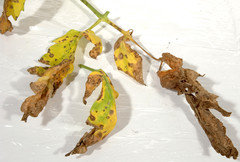
    Every year we get hit with Early Blight and Septoria which seem to blow in on the wind and rain. I refuse to spray my plants and manage the fungal diseases by keeping the lower leaves trimmed up to a foot off the ground (to stop splash back) and my removing yellowed leaves all season. I mulch with pond weed, grass clippings, and sometimes black plastic (which may not be all that organic, but it does a great job of keeping moisture in and weeds out). My plants usually last the season and continue to produce fruit, even if they don't look so great at the end. I rotate the garden end to end every three years.

    Linda

  • 7 years ago
    last modified: 7 years ago

    It is well understood that while compost provides nutrients (not a lot), it is not a fertilizer. That's because it breaks down into nutrients very slowly. So you get a small amount of nutrients released very slowly. That's not fertilizer. As a result, adding real fertilizers is smart, if you're trying for optimum production.

    By the way, the nutrients that compost eventually releases are certainly soluble, and will run off into groundwater as well. But yes, there isn't much there to run off, so you're unlikely to get algal blooms and anaerobic conditions. That being said, there is a city composting operation a mile away from where I live, that is next to a small lake. Thousands of yards of compost, right over a lake. Know what's in the lake? Algal bloom city.

  • 7 years ago

    Okay. My soil is pretty much balanced as far as calcium, magnesium, potassium and sodium. My phosphorus is a little low, I am not really sure what the target level should be for potassium, maybe 4 or 5%. My boron level is 1 ppm, which is probably low. I am thinking is should be more like 3 ppm. Any of you using target values for levels of elements?

  • 7 years ago

    Most soil tests will tell you what looks low and what looks high. I wouldn't worry about boron, unless you're going to grow beets. I would not bother with "target values". Be concerned about what is seriously deficient. If you can't find anything that is seriously deficient, then you're good to go.

  • 7 years ago

    Thanks Dan. I am trying to grow a big tomato and saw what all was being said at sites like the Big pumpkin .com Tomato Growing forum and there are lots of soil opinions there that point toward doing more rather than less. There is talk of "the limiting factor." And ratios between magnesium, potassium and sulphur and phosphorus, And references to Solomon and Albrecht and someone named McKibben and their balanced soil techniques,

  • 7 years ago
    last modified: 7 years ago

    organic gardening is really not that complicated as you might think. for fruiting plants, i would buy something that is for that purpose. a fish hydrolysate would be a good start and perhaps seaweed for a boost in micronutrients. 5-1-1 fish emulsion at half strength with seaweed extract would also work pretty well.

    There are other formulated organic dry fertilizers you can also find such as Jobes tomato fertilizer, Espoma tomato tone, and Dr Earth which are all fortified with beneficial soil microbes. walmart/lowes/etc. all carry 8-10lb bags for around $8. i sometimes go late fall and early spring when they put them on clearance. a few months ago i found 2 lb bags of Dr Earths for 50 cents a bag at home depot. anything that has kelp/seaweed/fish/alfalfa is generally a quality fertilizer, none of which should break the bank. you can buy Alfalfa feed pellets at the feed store for like $20 for a 50lb bag. Alfalfa is an amazing organic fertilizer to use and great for teas as well, it does much more than feed horses ;-) I believe you can buy fish hydro at feed store for very cheap too. my tractor supply had 1 gal for like $20.

    heck, if you really want to "live off the land" and spend almost no money to grow organically, go fishing! make your own fish fertilizer. tons of videos how to do it and it's super easy.. in short, throw fish in bucket, add some sugar/molasses and wait a month or so..

    I switched to organic gardening about 6 years ago and haven't looked back. these days, there is really no reason not to. for one, cost is no longer a huge factor. often, if you browse the local garden/nurseries, the organic fertilizes are generally about the same price. sure you will get more mileage out of a box of MG, but with organic fertilizer less is also more.

    I also believe organic is much simpler and if you're a new gardener, you'll likely run into less of a problem such a overfeeding and killing plants. something new gardeners inevitably become all too familiar with. while you most definitely can still over-do growing organically, it's much more forgiving for plants.

    keep in mind that it improves the soil and keeps it in healthy state long term as well. fish/seaweed and alfalfa are superb when it comes to conditioning the soil. there are several other benefits such as helping combat plant diseases,etc by promoting good soil organisms. if you want more reason, do some searching because there are plenty of other good reasons to grow organic if you can.

    for me, the biggest reason to grow organic is the ability for the soil to sustain itself year to year with hardly any maintenance between each season. the soil actually improves over time.

    when you grow organically, the soil tends to balance itself out due to abundance in soil microbes "maintaining" it.. who takes soil tests and maintains the soil in lush green forests? that's organic growing at its finest. if you're planting in a new area and want to check things out, by all means, have a soil test done. I personally believe they are a waste of time and money if you stick to organic.. and by the way, by "organic" i'm referring to something that actually was alive at one point or another (plant or animal) and not necessarily that it actually be certified organic.

  • 7 years ago
    last modified: 7 years ago

    If you look at the price of organic fertilizers, you wouldn't say that organic gardening is cheaper.

    Soil improvement has NOTHING to do with organic gardening. Soil microbes are very happy with chemical fertilizers. It is true that nitrate fertilizers do lower the fungal load, somewhat, however. The idea that gardening inorganically makes your soil worse is just nuts. Bacteria can't tell the difference between nitrates from a factory and nitrates from manure.

    No one takes soil tests in lush green forest, because lush green forests are growing what grows well there. How many tomatoes do you see growing in lush green forests?

    As I said, you can garden smartly. For me, that's the most important thing. I don't want to demean organic gardening. I respect the emotions that lead one to do it. But let's not make things up out of whole cloth.

  • 7 years ago
    last modified: 7 years ago

    Organic fertilizers decompose and that process attracts vasts amounts of organisms and that decaying process improves soil structure..

    go dump some Miracle grow in a pile of clay for a few years, and compare to pile of clay that has been amended with nothing but alfalfa pellets.. and while alfalfa shouldn't be considered a complete fertilizer on its own, you sure as heck can grow some pretty good tomatoes using nothing but a $20 50lb bag of Alfalfa.

    as for organic fertilizers being cheaper, I simple stated that the prices are comparable. $5-6 for a box of MG vs a bottle of fish for $6-7.. and again, there are cheap organic gardening by visiting a feed store.

    $20 for 1 gallon of high quality cold pressed fish at TC..

    https://www.tractorsupply.com/tsc/product/just-scentsational-tridents-pride-liquid-fish-fertilizer-1-gal?cm_vc=-10005

    lasts me 3 years.. it won't grow tomatoes in the forest, but fish is also a great soil conditioner and again, helps improve soil health/structure over time.

  • 7 years ago
    last modified: 7 years ago

    Aw c'mon. You're dumping organics into a bed. EVERYONE puts organics in their bed, whether or not they are doing organic gardening. It's called compost. Please don't confuse compost with organic gardening. Compost is a soil structure amendment and, frankly, there is nothing that comes out of a factory that is a good soil structure amendment. Miracle Gro is a fertilizer for nutrition. Alfalfa pellets are soil amendment for improving soil structure. Different things, for different purposes.

    A bottle of fish doesn't have anywhere near the NPK that a box of MG has. Not even close.

    As I say, I appreciate the intent of organic gardening in trying to deemphasize the role of what might be poisons in soil, but to me, poisons are defined by MSDS, and not whether they come from a factory.

  • 7 years ago
    last modified: 7 years ago

    If your garden bed runs off into a body of water, I'd say you'd better not add fertilizers. Even organic fertilizers. Algal blooms don't care if the fertilizer is organic or artificial. I know of a lake that was putrid and filled with algae. Yep, it was right next to a municipal compost pile. No fertilizer I use is "petroleum based". Whazzat?

    Got anything better?

    Now, in the Haber process for making ammonium nitrate, nitrogen is combined with hydrogen, and those hydrogens can come from natural gas which can be petroleum based (but usually isn't). CO2 is produced as a residual. But VASTLY more CO2 comes from degrading organics. Yep, your compost pile is churning out loads of CO2 as we speak.

  • 7 years ago

    I really don't think it's more expensive, certainly not anymore. If you buy in bigger bags (like 25kg), you are really getting cheaper stuff, even compared npk vs npk. In an actual garden with a decent soil there's really no point in not doing organic or mostly organic.

    Organic besides NPK will add a certain amount of organic matter to the soil which remains there, like humic acids (very important for nice growth). And in theory will not add unwanted stuff to your soil (here it's more complicated, most organic fertilizer contain pesticide traces).

  • 7 years ago
    last modified: 7 years ago

    I can buy 50 lbs of urea (50-0-0) for ten bucks. Beat that with organic fertilizer. I can get close to that with ammonium nitrate (25-0-0). Big bags of non-organic stuff are pretty cheap as well.

    As to adding organic matter to soil, again, that's not about fertilizer or nutrients. That's about adding soil amendments that repair soil structure. Everyone adds compost, if they can. I can't think of any popular inorganic soil amendment that repairs soil structure. Why? Because compost is so cheap and easily available. Compost is an important part of organic gardening, and it also happens to be an important part of non-organic gardening.

    What is "unwanted stuff"? You mean, like things that have icky chemical names or come from factories? Pesticides are a different issue entirely. Best just to look at MSDSs for those pesticides and be careful.

    Let me say once again that the spirit of organic gardening, which is to keep poisons and environmentally harmful things out of our gardens, is admirable, and I subscribe to that spirit completely. But doing that by staying away from icky chemical names and things that come from factories is just kind of silly.

  • 7 years ago

    You could put a couple cubic yards of horse manure in your pickup truck for free. Unless you're in NY I bet you could find a barn/farm that's boarding horses within maybe 20 miles of your garden. In my experience they always give it away free for the hauling.

    I'm certain that you can grow a nice tomato with nothing but the sand or clay soil you have, some manure, and water. If your first tomato has a big black spot on the bottom add some lime to your soil.

    Gardening isn't hard, you don't need a biology degree to get started. You have a soil test which I've never done. Yours looks great to me, in fact I can't believe your organic material was at 23%. Plant some tomatoes this year and don't add fertilizer of any kind. Don't spray anything. The only thing I've sprayed on my veggie garden for years was a copper spray for blight and I didn't spray it after my tomatoes developed and I quit because that doesn't work. I grow in the dirt and think the most important thing to prevent problems is rotating crops.

  • 7 years ago
    last modified: 7 years ago

    I too am certain that you can grow a nice tomato that way. But I'm not at all certain that you can grow a bunch of nice tomatoes that way. One thing that people don't appreciate about fertilization is that it is NOT important to add fertilizer to get product. It's just important if you want to get a lot of product. You just need to ask yourself what your metric for success is.

    Note that raw manure is not necessarily a smart choice. While it is loaded with nutrients, in principle, it also can be loaded with pathogens, is pretty smelly, and can actually injure plants (ammonia burn). Farmers have the experience to apply it with care.

  • 7 years ago

    I'm thinking about the lawn that's been treated for years by the chemical company, The owner wants a beautiful lawn. It's big, but he uses a push mower, a mulching push mower. When he mows his mower drops the clippings along the edge of the mower and the wheels run over it creating a brown streak thru his lawn. One brown streak for each pass he makes. His problem is that since he applies all those chemicals his lawn is dead. There are no microbes to eat the grass clippings.

    Switching back to veggie gardens you get the same effect. You have 23% "organic material". You don't need to add anything. Let the garden rest a year. I assume it's been sitting idle over the winter. This spring don't dump those bags in the garden, don't spray anything. You have a jump start on getting some life in your soil. Plant your tomatoes this spring. That 23% organic material will, hopefully, start to break down and feed the tomatoes.

    Build a compost pile, put your kitchen scraps, and the leaves from your spring cleanup in it. Don't buy or build a frame for it. Just a pile, it'll work.

    Dan

    I had more than one tomato, I had 22 plants, a yellow pear, a Kellogg's Breakfast yellow tomato and 10 different beefsteaks. I saved seed from all the varieties which I'll plant this year.

  • 7 years ago
    last modified: 7 years ago

    False. Depending on what chemical was dropped on the lawn, microbes in soil have no dependence on it. In fact, for nitrate-rich fertilizers, which are commonly used for greening lawns, microbes love the stuff. For urea, which produces ammonia, nitrate fixing bacteria are essential for converting it into plant-usable nitrates. Yes, you don't need a biology degree to do gardening, but some biological common sense is helpful.

    The common myth among "organic" folks that chemicals (eeek!!! chemicals!!!) are bad. Some chemicals are. Many are not. Some organic stuff is bad. Much is not.

  • 7 years ago

    The man's lawn was full of brown tracks, each week he changed the pattern the tracks changed direction. The droppings were brown because they included the clippings dropped previously. I spray my clippings, in a day or two they are gone.

    I'm not going to argue with you. I posted my opinion, you obviously think I have no common sense. Somehow I've managed to grow crops for my 74 years of life without common sense.

    OP you can grow free crops organically, you can grow nice healthy food without bags of fertilizer, without bug sprays, without fungicides. I am the proof. I grow the hardest to grow tomatoes without any outside input. I don't know why I don't have problems with every bug known to man, and every disease there is. I have had problems with blight but have found the answer is to rotate crops... before you get the problem. The bugs might be because I don't kill the bugs that eat the bugs that'd destroy my crops. I try to grow only heirloom veggies because I want to be able to save seed, and because I give up immunity to what I don't have for the best tasting varieties.

    I'm growing some of my veggies from seed I saved from the previous years crops. I no longer buy seedlings so that I don't import problems. And I've learned you HAVE TO rotate crops.

  • 7 years ago

    How often do you rotate crops John D?


  • 7 years ago
    last modified: 7 years ago

    People used to grow their crops for millenia without biological common sense, and ended up doing so in highly non-sustainable ways, with minimal production. OP you can grow free crops non-"organically", you can grow nice healthy food with bags of fertilizer, with bug sprays, with fungicides. I guess I am the proof. But I do so carefully, and paying close attention to real, as opposed to imagined, health hazards and environmental protection.

    Most residential gardeners don't have the space or the flexibility to rotate crops. I don't.

  • 7 years ago

    Labradors

    I'm still developing my rotate methods. I've been getting one of the blights and tried growing Caliente 199 mustard with mixed results. Since my garden was too small to rotate crops, I started a small new test plot. I grew 4 tomatoes there without problems. So the next year I started another, the third, new plot between a peach and an apple tree. That also was blight free, the following year the blight started up in the third plot. The second plot didn't have problems till the third year.

    So I'm working this year on a large 34x74' fenced garden. I won't be able to plant up the entire plot. In the first year I hope to plant potatoes, 24 tomatoes, and some pole beans. I may get some fall crops in later. In the second year, hopefully I'll get some land dug up to move the tomatoes and the potatoes to new spots. In the meanwhile I plan to just mow what's not ready to plant. In short I'm thinking 3 years to dig up this garden and then rotate on a 3 year cycle.

    I have 10 posts cut in the woods, one still needs hauled. It's a white oak 14 foot long and 5 to 6 inches on the bottom and 4 or 5" on the top. I have it up off the ground, hopefully it'll dry a little. I'm going to try a 2 wheel dolly tied to the bottom.

  • 7 years ago

    I grow some of the best tomato's in my area and I do it organic. I have access to just about anything I need like animal manures and such. I have an 40 x 80 foot veggie garden. I dig holes about 2 feet deep and space them every 4 feet. When I go fishing I go to the fish cleaning station and get the buckets of fish guts and skins from under the cleaning station. I take these and bury them in these holes. I plant the tomato's above the fish . Probably 1 foot of soil between the fish and the root ball. I like to wait a month after the burial or longer before I plant. By doing it this way The plants need no more fertilizer . I have 35 years in this garden so all of the truck loads of various manures and compost have made the ground very rich. Remember to rotate your planting of the Nightshade family!!!! This includes peppers,'tomato's and potatoes. Every 5 years or you will develop problems with disease and nematodes. I hunt and fish a lot so all this goes into the ground...

  • 7 years ago

    I've grown my tomatoes in the same location for twenty years. No problems. In fact, they do great. Of course, if there is a problem with fungal infection, I'll have no choice but to move them. The rule that you MUST rotate is, sadly, a myth. Lots of myths in this biz. As I said, most residential gardeners don't have the space to allow for flexibility with rotation. My whole yard is 40x80. But if you have the space, then sure, why not rotate?

  • 7 years ago
    last modified: 7 years ago

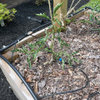
    A picture of a "myth".

  • 7 years ago

    Once I learned about crop rotation I saw the light! Dan you are very lucky! Your point about residential and space is spot on! But you can still keep track of what you grow and move it to a different location each growing season. My neighbor can't grow tomato's anymore because of the nematodes that he developed for lack of knowledge. I gave him some resistant varieties to try but they still were stunted from the nematodes. The residential problem I see most is people attempting to put to much into to small of an area. I don't know why but I can't get it in their heads that this won't work. I bring them over and show them my set up and they see the difference. I tell them all to read the Rodale books on gardening . Everything takes some educating in order to be successful .

  • 7 years ago
    last modified: 7 years ago

    My point is that "Remember to rotate your planting of the Nightshade family!!!!" may apply to you, but it is not necessarily relevant to others. Yes, I'm probably a bit lucky. I like your picture of the "myth". I can show you a picture of a huge, healthy tomato plant growing where they have grown for a few decades. I'm not saying that has to be the case for everyone, but it is a myth that EVERYONE has to ALWAYS rotate. A more general myth is that whatever I always need to do, everyone else always needs to do. If you can do it, rotation can be smart. If you can't, it's not smart.

  • 7 years ago

    I never said anything about 'eeky chemicals', a term you seem very fond of. I am talking about purity of those eeky chemicals. The cheaper you go, the more the purity goes down. And they are not in the MSDS. I have access to all of these substances in 'super pure' laboratory use, where they have to list absolutely everything they contain, and you'd be surprised how much heavy metals are in there. I can only imagine what the cheap stuff has.

    Complete NPK is not cheaper than organic, even dried pelleted, at least not in Europe (15 euro for 55 lb of 4-4-4 in Germany, omri dry chicken manure), and you need to be complete to be 'sustainable' for many years (certain elements will be depleted from the soil after many years if you only add some). If you make your own from bulk sizes of nitrates, sulfates, chelates, etc, I am pretty sure you can end up cheaper.

    I still think for a garden with decent soil, using organic smartly is the way to go. But it isn't quite as convenient. Adding mid season it sure is a lot more work with organic since you kinda have to incorporate partly, to avoid smells and to speed up the process, then just dissolving some stuff in the water.

  • 7 years ago
    last modified: 7 years ago

    Any gardening product I buy in the store that is a mix of chemicals, I have MSDS's for. Never seen a product for which I couldn't pull one up. I don't think I would use a product for which the health and environmental impact hadn't been researched.

    I think the "smartness" of organic gardening is something a little dated. In the days before we had easily accessible factual information about the health and environmental impact of additives, organic gardening was an easy way to try to stay safe. If it came from nature, it had been around for a while, and we'd know if it would hurt us. No reading required! But if you can read, and if you can go online, you can now get carefully researched information about these additives, and make your own smart judgements. We are a lot smarter now than we used to be about garden chemicals. Of course, if you simply don't trust careful research, then you're on your own!

    15 euro for 55 lb of 4-4-4? That's pricey, per N, P, or K, even compared to Miracle-Gro.

    Sorry about the "eek". I was just repeating what several of my friends say, who happen to be terrified of anything with a chemical name. And yes, they are "organic" gardeners.