Software
Houzz Logo Print
bostonbull

Controlled Release Fertilizer (CRF) - Which?

I've read a lot and sometimes it is conflicting, or muddy. Few questions regarding CRF...

  1. If I water with Foliage Pro at each watering (1/4tsp per gal.), do I need to add a CRF to my 511?
  2. If the above is a yes, at what qty per gallon of 511 should the CRF be added?
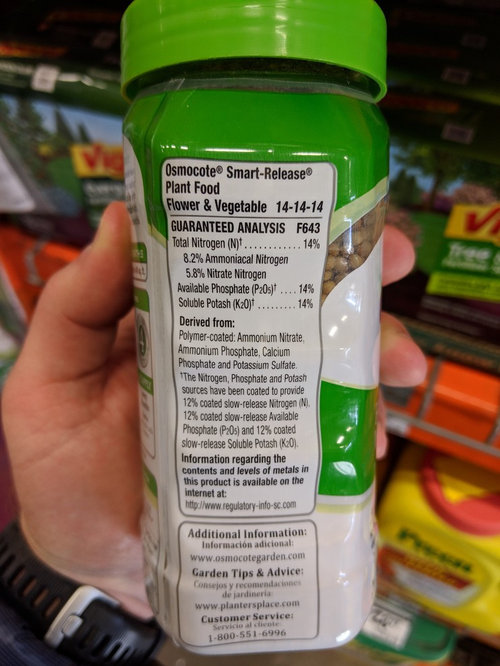
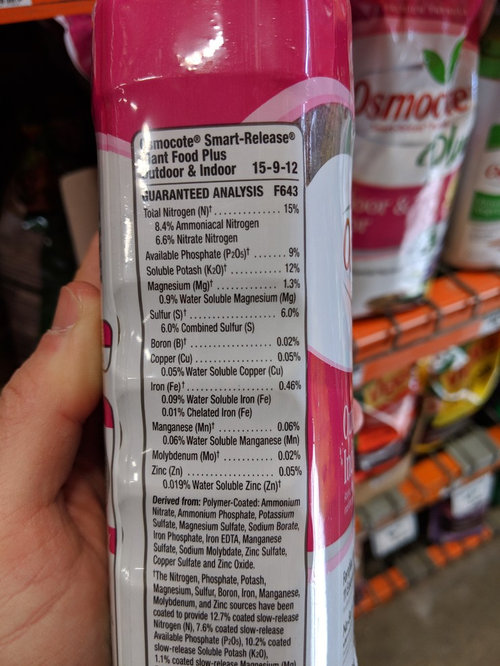
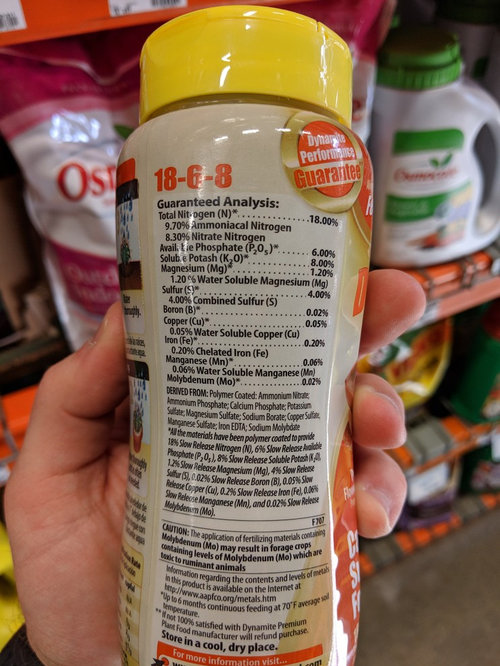
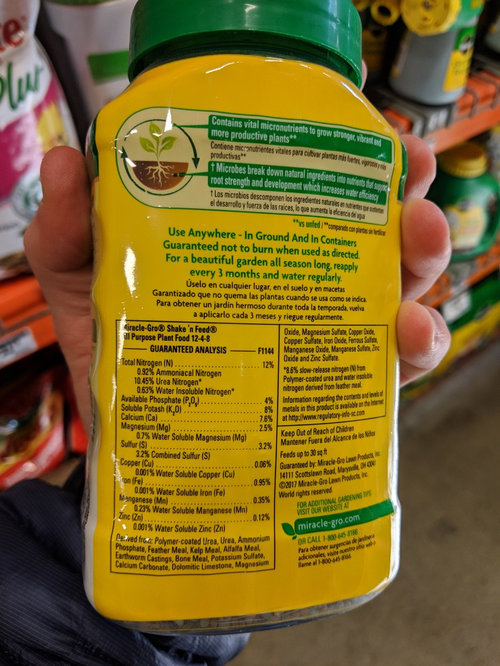
  3. See attached photos of the myriad of CRF mentioned in various threads. These are what my local BBS carry, if these are optimal, what do you suggest?

Comments (12)

  • 7 years ago
    last modified: 7 years ago

    Yes, it can be confusing. Also be careful what you read, not everything out there is accurate.

    I'm w/ GardenGal on this. It's really one or the other as to fertilizing w/ watering OR using time release. But only one way pls or you'd essentially be double fertilizing & I'm sure that would cause its own problems.

    I've used Osmocote & Nutricote (both time release), as my group was buying it bulk & repackaging it for members. These days I'm using Foliage Pro w/ my watering once in a while when I remember. Maybe in Spring I'll go back to time release to be more consistent w/ fertilizer.

    Also don't know if you're thinking Houseplants or C&S, but w/ C&S, some growers fertilize little if at all, so one would always aim to underfertilize them to be safe.

  • 7 years ago
    Good stuff, thanks!

    I'll stick with using fp at each watering, it doesn't take much more time and the plants seem happier than the fish emulsion I was using.
  • 7 years ago

    Lots of container growers use a CRF as a safety net in case they forget to fertilize regularly or lose track of when they last did. I do use CRFs, but not often. My largest concern pivots on the fact that the release rate of CRFs is temperature controlled, so in the dog days of summer with soil temps hovering near the century mark and plants in a temperature-induced state of consequential dormancy, the last thing I want is maximum release of nutrients for plants already struggling to take up enough water to meet respiration needs. When these conditions prevail, the plant needs little in the way of nutrients, and the higher the level of nutrients in the soil solution, the more difficulty the plant has staying hydrated. Soluble fertilizers like MG & Foliage-Pro allow nearly instant and complete control over how much plants get in the way of nutrition and when they get it. I like that degree of control.

    Of the CRF products you provided images of, my choice would be the MG 12-4-8, which is brand new to me - first I've seen it. I'll probably start buying that if it comes in bulk, rather than the Osmocote plus that I get in 50 lb bags.

    Note: It's easy to set yourself up for an instant case of fertilizer burn by mixing your CRF into the soil when you make it, unless you use it all to create plantings right away. I used to make 5:1:1 by the cu yd and store what I didn't use in 4 cu ft mesh bags. After storing one of the bags for 2 years, I was going to use it but discovered all the CRF prills were empty of fertilizer, which meant it went into the soil. I fixed that by combining it with my next large batch of soil, but it would have been a serious problem had I assigned more than a little value to the plants that might have gone into it - assuming the amount I added, in total, would have been enough to seriously limit the osmotic process.

    Al

  • 7 years ago
    What makes you like that specific MG the best?

    My new Osmanthus fragrans I bought at logees has some type of CRF on it. Odd as they say these plants hate fertilizer.

    Al, what are your thoughts on Ted Steven's and his view of plants, soils, the use of lime, and how he grows Osmanthus? Pretty interesting guy from what I've read!
  • 7 years ago

    I bet the MG 12-4-8 is the Shake n Feed stuff. It is a slow release fertilizer. Unlike Osmocote they are not coated similarly with a polymer. They have a coarse sand like texture of particles of different colors. There are also blue spherical balls which I suspect is one of the sources of Nitrogen. I also think they slowly dissolve over a 3 month stated period. By the looks of it it does not seem like they have temperature dependent release cycle - rather they slowly dissolve with each watering. I do use them a lot of my potted annuals. And sometimes as a light top dressing for various other plants. I do use Dynamite All purpose 15-5-9 at about half strength for my potted tropicals and make up the rest with Foliage Pro. It has a 9 month release profile.

  • 7 years ago
    last modified: 7 years ago

    What makes you like that specific MG the best? The MG product contains Ca, where the other products don't. It would save me the step of adding gypsum (CaSO4) to the gritty mix as a Ca source. A small thing, but enough of a consideration to make me reconsider the Osmocote plus I currently use.

    I don't know Ted or know of him, so I can't really offer much. I did a very quick search and saw that someone described him as an advocate for use of lime or liming for calcifugous plants, but details were less than scant - didn't even mention if his comments centered on containerized or field-grown plants. Certainly calcifugal plants need all the same nutrients other plants need - just that they may require acidic soils. The fact that different species of plants tend to grow in different types of soil does not mean that one needs more of a certain nutrient than the other, it just means that the plants have made adaptations to certain conditions.

    Acid-loving plants have adapted to acid soils, but their need for calcium is still roughly the same as any other plant, and their nutritional requirements do not differ much from plants that thrive in alkaline soils. The problem for acid-loving plants is that they have not developed a method to limit their calcium uptake, and will absorb too much of it when available, resulting in cellular pH-values that can rise above ideal ranges. Some acid-loving plants also have difficulties absorbing iron, which is tightly bound in alkaline soils, another reason why they thrive in low pH soils. This all pertains to the plants ability to handle nutrients, not to the actual nutrient needs of the plant.

    If you have links to anything Ted has written, I'd appreciate it if you'd share so I can see if there is anything he offers that differs from conventional thinking. I always find people who aren't bound by convention to be interesting and informative.

    Al


  • 7 years ago
    Toc - I think that's what this was!


    Al - let me see what I can find. I've had some good chats on the phone with the folks down there, and others who have heard him speak. He's sort of the Indians Jones of the plant world, exploring and importing. Largely responsible for Osmanthus and other species in the USA, and a huge advocate for lime in all soils. He did some tests with blueberries, you know how much they love acid!, and the results when lime was added were staggering. Bigger healthier plants with more abundant yields. Obviously a lot of fatltes come in here and if they are in SC clay soil, like NEEDS to be added, period. Like you, folks who rock the boat a bit, and back up what they say with science, grab my attention.
  • 7 years ago

    Was good friends with Ted back in the 80s and 90s when I was very active in the SC nursery industry. We often spoke at the same conferences and industry conventions and he was never stingy with his time, his observations, and his great passion for his work. He's considered one of the great plantsmen of his generation.....and I'm not aware of a new generation coming up to replace these men.


  • 7 years ago
    last modified: 7 years ago

    I have an article from a recent talk Ted gave about Lime and plants if anyone wants it message me. Or call Nurseries Caroliniana and ask them to email it to you.

    He seems like a true plant geek, and someone I would love to cross paths with!

  • 7 years ago

    Ted sure likes Osmanthis fragrans. I've got quite bit of them from his nursery including the one with the largest flowers of all cultivars. Not only that, the color of flowers seem to change throughout the year... white, yellow, orange. That was pretty odd.

  • 7 years ago

    Nurseries Caroliniana is my go to plant source here in Augusta, GA. We only have to drive across the Savannah River into SC to reach him, his brother Gerald and their excellent nursery.

Sponsored
Mary Shipley Interiors
Average rating: 4.8 out of 5 stars34 Reviews
Columbus OH Premier Interior Designer 10x Best of Houzz