Software
Houzz Logo Print
holly_stockley

Releasing an overgrown appletree

7 years ago
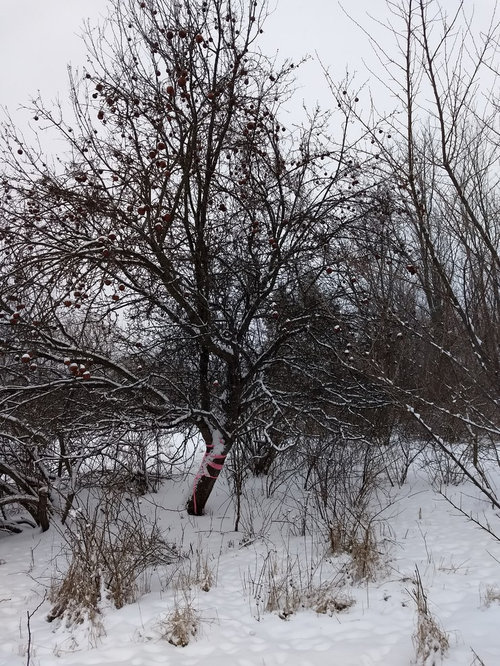
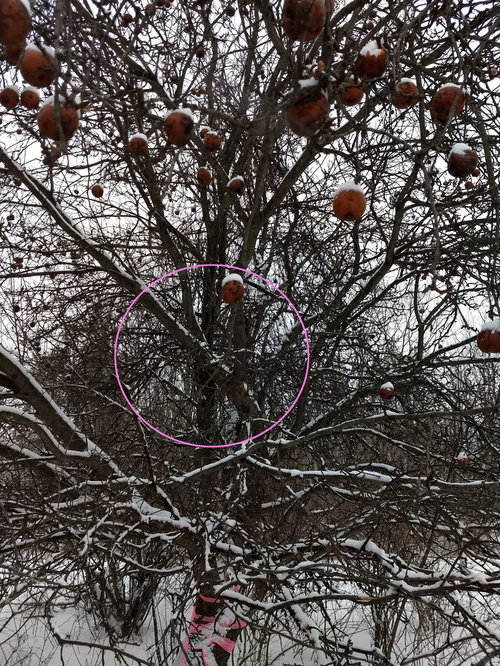
My husband and I bought a 10 acre parcel that has sat neglected for the better part of 30 years. We're getting ready to build a house on it, and then to gradually tame it. One of the more interesting discoveries was a mature apple tree. It's out of the way enough to be saved, and central enough to be the first thing you see when you pull in the driveway (which will the curve toward the house and not get close to the tree).


It puts out a nice crop of decent apples (or has for the two seasons I've been able to watch it). I can't find evidence of a graft on the trunk. So I suspect it's a volunteer of some sort, but one worth saving. However, it's so overgrown, I'm not sure where to start the process of pruning. I'm thinking this is going to be about a 5 year process. Here is the tree:


And here is a close up. The two large central branches are much to close to each other. They don't quite touch - but only about 1" gap. How do I go about deciding which stays and which goes? Do I make this my first adjustment? Or start with something less dramatic? The photo below is a close up, with the crossed branches in the pink circle:


Comments (14)

  • 7 years ago

    Thank you, Jean, that's an excellent resource.

  • PRO
    7 years ago

    I use to rent an old farm house (as opposed to a modern farmhouse) (but I guess it was modern shortly after the Civil War) in an 80 acre fruit farm. The oldest block of apple trees were planted in 1920. We use to sit out in the back yard on a quiet summer evening and listen to the cracking of the branches falling off due to their own weight and age. Cheap entertainment.

  • 7 years ago

    If the tree is older and has large caliper trunk it can be impossible to find the graft because it has blended in so well over time. Doesn't really matter though as you long as you like the fruit you have a winner.

  • 7 years ago

    I have to do the same thing this spring. Bought a country property with a small orchard. Every time I look at them, I am not sure where to start. I managed to trim one in the middle of a circular driveway, made it into a round tree top like a rose tree. More to go in the spring.

  • 7 years ago

    I would cut the vertical growing limb of the two that are crossing. But I would do that well above the crossing point. I'd cut where the three top most limbs split. I'd do that cut before the new growth starts. So you can see what you're doing and so you don't do as much damage. I think I'd make those three cuts and clean it up and wait for the tree to recover till next winter. Then cut the bigger limb till you get it below the crossing point.Over a few years I'd try to cut out all that high growth.

    I have a battery powered pole saw which doesn't have near the power of a gas saw, but it gets the job done as long as the battery has some life to it. It's hard to judge the height in a picture. The saw will get precariously up to about 12 feet high. And it will cut a 7" or so log.

  • 7 years ago

    Are you intending to prune for a fruit crop, summersrhythm? Because if so you need to research pruning specifically for rehabbing apple trees. If you just want a particular shape that's fine but cutting a fruit tree into an ornamental round top won't get you apples.

  • 7 years ago

    Floral beat me to the punch on this one but unless you are experienced with fruit trees and how to prune them, you might want to look into a couple of classes. Many independent retail nurseries offer free pruning classes at this time of year.

    Pruning fruit trees to be productive is quite different from pruning most anything else. And nearly impossible to convey the correct techniques and information online or via YouTube (most of which is grossly inaccurate anyway)!! This really is a hands-on process. And needs to be accomplished over an extended period. Renovation pruning of a mature but neglected fruit trees is typically a 3-5 year process.

    If local nurseries do not offer classes, check with extension service or local fruit growing or home orchard societies. They also offer pruning workshops.

  • 7 years ago

    Pretty pic of the snow covered apples, the local squirrels here won't give our apples a chance to turn red before stripping the tree bare.

  • 7 years ago
    last modified: 7 years ago

    Thanks for letting me know. You two saved the other fruit trees! :-) I will learn more before touching the other trees.

    Squirrels? I had thousands of brown, green and red pears last fall, but I didn't get any. By the time I remember to pick them, they were all gone, not even one left. Pretty strange. It must be some kind of animals.........

  • 7 years ago

    It's possible that the squirrels are too sated by the 3 - 1/2 acres of black walnuts to be bothered with one measly apple tree, I'm not sure. They're actually decent apples, although quite "old fashioned" looking. Light and dark green striped with a red blush where the sun hits, and a small degree of russeting. Rather tart, and might make a good pie. We'll see.

    I think John has a good plan. I did run the situation past Dad, who has some experience with mature trees. He had a few suggestions, although was largely teasing me about being a bit hesitant. "You can take out more than one branch, you're not going to hurt it." And, yes, the basic plan is to take off quite a bit of the height (it's pushing 30'), and open up the center of the tree. So I'll start with the central leader, and maybe another more lateral branch that mostly goes straight UP and has some damage from last year's ice storm. Then see how it does this summer before planning next year's pruning. Hopefully it won't throw up too many water sprouts.

  • 7 years ago

    Something else to consider: pruning in the springtime can promote growth.

    https://www.arborday.org/trees/tips/when-to-prune.cfm

  • 7 years ago

    I did a major trimming job on a Yellow Transparent apple tree. My neighbor told me you took too much off and it probably won't produce apples next year. Well she was right, but she was wrong. That variety of apple is biennial so it produces apples every other year normally. But that tree is fine now, It's 12 feet tall and produced about 8 waterspouts which I can reach to trim. Waterspouts are another thing to worry about and I'm not concerned about the amount. That tree produces 100's of apples in the good year. When they get ripe they fall. Overnight the tree is totally void of apples. I'm bringing this up because some here are blaming the critters and it might be a similar issue.

    I also made major trimming on what I think is an Orange Pippin apple tree. That tree is fine afterward except that it's in so much shade that it produces only a few apples per year. It's the only apple that DW and I both agreed we liked.

    But the recommendation is to not do major trimming in one year and that's why I suggested doing it over 3 years.

    I have an idea which I'm bringing up as a question. I'm not saying this'll work: If you trim a tree and leave a small upright branch to serve as a leader; will that make the tree happy so that it doesn't go berserk sending up waterspouts. I'm thinking a one year old shoot at the top, easy to trim in the future.

  • 7 years ago

    I could have sworn there was a post in here asking about rehabbing things like the fungal issues old trees can have. Summershythm, was that you? The comment is currently missing.

    BUT - I did get a chance to visit my parents this weekend and pick Dad's brain a bit. Keep in mind that Mom was into organic gardening long before it was "cool" (Or rather, the first time it was "cool.") So she limits his use of any pesticides, etc. So, his advice was - dormant oil spray soon. As soon as I'm getting days at around 40 degrees, and can plan on about 24 hours without wind or rain. Then a schedule at silver tip, early pink, petal fall, and about 7-10 days after petal fall with a solution of neem oil, fish emulsion, and a "mother culture" of microbes plus some molasses. Application rate varies with each spraying. It's complicated, but I recommend "Holistic Orchard Management" by Michael Phillips for all the detail.

    He did also remark that getting the center of the tree opened up so that the sun can dry off the dew early in the day and the breeze can keep things dry will do more to prevent fungal issues than any spraying. And to check around the tree and make sure there are no other plants that are displaying fungal disease symptoms. He has had luck combating powdery mildew and a few other fungi with a 1:10 solution of milk:water on the foliage.