Software
Houzz Logo Print
ajkriv

should I remove the tree?

7 years ago
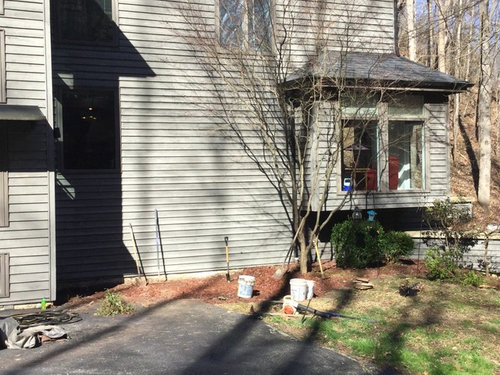
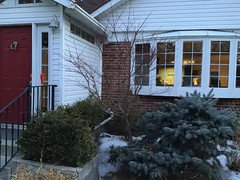
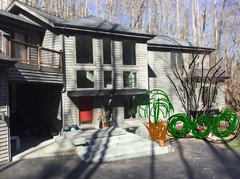
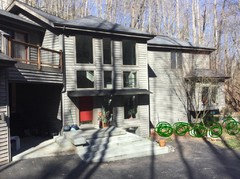
I removed red lava rock and some bushes. Need ideas on what to do to replace those, and should I remove the tree?

Comments (64)

  • 7 years ago

    Leave a tree there; your architecture calls for a vertical there.

  • 7 years ago

    Yes, your area needs work but the tree is not the problem. Please get professional design done to highlight your beautiful tree. Implement the plan as you can do the work or afford to hire a professional.

  • 7 years ago

    How close to the house is the Japanese maple? It looks less that a foot away. If that tree is that close to the house I have to wonder if it is a seedling tree let go or the root stock of a weeping form that took over after the graft died. Not even a dummy would plant a tree form JM so close to a bay window like that.


    If that tree is that close to the house it has to go. Buy a new one. Plenty to be had for much less than $800, even less than $100

  • PRO
    7 years ago
    last modified: 7 years ago

    The tree looks too large for the spot. That looks like a good spot for a SMALL tree (one made out of shrub that won't get taller than 10', planted at least 4' from house.) I would relocate or it or give it the ax.

  • 7 years ago

    Yew for you: "Taunton yews are shade-loving plants / relatively slow-growing and can be left unpruned / best yews for severe winters because they are resistant to winter burn. These shrubs grow about 3 to 4 feet tall and have a similar spread. The plants require a soil with good drainage. Taunton yews are hardy to zone 4."


  • 7 years ago

    "While evergreen shrubs (including shrubs with golden foliage) undeniably add visual interest to winter landscapes, so do many other plants, such as red osier dogwoods. Reaching a height of 6'-10', the spread of red osier dogwoods is 5'-10'. A patch of fiery red osier dogwood against a backdrop of pristine snow makes for an unforgettable winter scene."

    https://www.thespruce.com/popular-plants-ideas-for-winter-landscapes-2131219


  • 7 years ago
    The tree is 4 to 5 feet from the house but not the bump out. Some branches are touching the house.
  • 7 years ago
    I also need some ideas on what else to plant in the area. Any help is appreciated.
  • 7 years ago

    That is too close to the house and definitely too close to the bump out for the tree to be allowed to have a proper shape. You don't want a tree rubbing on the house in the wind. While the JM is a great tree, not a real danger there and can be pruned to make it fit better, they are not so rare and precious that this one can't be tossed.


    Your tree shadows tell me this side of the house is facing predominantly south. The forest tells me this is not going to be a full sun location anyway. I'll think on what to plant there knowing you are just over the mountains from me. Is there any kind of a look you are wanting?

  • 7 years ago
    Somewhat natural,landscapes. Not formal because it is a more natural neighborhood with deer. My dog keeps them away for the most part but when we vacation, and she is gone, they come over. They eat the hosta , I love hosta, but it is hard to have. I thought about incorporating ornamental grass, I will probably get a new Japanese maple and locate it a little further from the house. Any other ideas are welcome and thoughts on the grasses.
  • 7 years ago

    Grasses need full day sun or they don't grow well and tend to get floppy and not look so good. I doubt you have enough sun for them there. Go look at these Witch Hazels as a possible specimen shrub for this bed.

    https://www.houzz.com/discussions/witch-hazels-on-a-warm-february-day-dsvw-vd~5608360


    I'll ponder what else to plant and get back with you tomorrow.

  • 7 years ago
    Thanks !
  • 7 years ago
    I agree that the tree is not planted in the proper location, but JM are beautiful trees and at that age I would try to keep it. I would hire someone to come take a look at it and the area and at least get their opinion before I did anything to it. That’s what I would do anyway.
  • 7 years ago
    last modified: 7 years ago

    I wouldn't remove the only decent-size plant that you have left. Yes, you could plant another small one but it will take years for it to grow to that size. If a branch is touching the house, just remove that branch.

  • 7 years ago

    If you keep the tree, figure out something aesthetically pleasing if possible, to place between the house and the tree. A tree, rubbing on a house, is never good. If you take the tree to move, it might work just fine?...make certain the root ball is REMOVED too, and remove all possible torn off roots in the soil at that time. The favorite path for a termite colony into a house is in the cellulose of that dead tree root in the ground, or by air from dead or dying trees in nearby woodlands.. Get educated on termites online/youtube, and than decide if your extermination program is strong enough. Wet/sunshine/not cold days......termites swarm. They have been found in November in places you would not THINK they would be active....

    I like Rose of Sharon flowering shrubs/sort of a Soft Crepe myrtle type landscape plant I suppose?(if they work in your zone?), but really, keep the woody plants and shrubs away from a house. It just makes maintenance and exterminator work SO MUCH easier. Do some islands in your lawn of perhaps ornamental evergreens and annuals that bloom and bulbs also good for your area. Good luck. Protect the house. It's the biggest investment and you do not want to experience the pests and mold/moisture problems that heavy shrubbery and woody bushes can gift a home with that is tooo near the foundation/walls. Park benches, potted flowers, nice natural ground cover that does not hold moisture, native grasses, a bird bath? or lawn ornaments.....those are things that would look very pretty nearer your beautiful home. I also love Mirror balls, accent lighting, windchimes and statues of gnomes and stakes of pretty fanciful butterflies, or dragon flies in beds near homes. You might enjoy a sundial amongst a shrubbery and flowering middle size bushes in the island of plants in your yard, if you create one?

  • 7 years ago

    I would not plant a rose of sharon there. They leaf out late and so you will have bare twigs into relatively late spring. They are not particularly ornamental at any time except when in bloom in late summer; a green blob most of the growing season and a lump of undistinguished twigs in winter. Unless you get a sterile one, they can seed into wild and garden areas. I have grown them, but wouldn’t want one in such a featured spot. I would be considering something that like the Japanese maple is ornamental in all 4 seasons. Look at evergreens, especially flowering ones, plants with nice winter structure or ornamental berries or branches as well as good appeal during the growing season.

    I don’t know where redsilver is, bit I have never had termite issues, so unless that is of concern in your area, don’t worry about it.

    An evergreen groundcover that I really like is Veronica ‘Georgia Blue’. It has foliage that is green in summer and in sunny areas takes on mahogany hues in cold weather. It has stunning bright blue flowers in spring and then throws a few random blooms during the season. Mine has grown densely in sun and a bit more loosely in shade, and hasn’t been overly aggressive with neighboring plants, growing around them rather than over them. Many Veronica are somewhat deer resistant, but my deer prefer to hang out further from people, so I can’t be sure if this one is.

    One strategy would be to spray Liquid Fence, DeerOff, or similar before leaving for vacation to discourage the deer when your dog isn’t here. Since deer are often creatures of habit, if they view your yard as dangerous or as having unpalatable plants, they are more likely to go elsewhere.

    For specific plant suggestions, knowing what direction the house faces and how shaded it is by trees and the house itself, and during what times of day there is sun and shade is Important. Also look up your growing zone since depending where you are in Kentucky, here are different things that can be grown.

    https://planthardiness.ars.usda.gov/phzmweb/interactivemap.aspx

  • 7 years ago

    Some smaller shrubs to consider:

    Evergreens - Leucothoe or Cephalotaxus harringtonia 'Prostrata'

    Deciduous - Hydrangea arborescens cultivars ie 'Annabelle' and the Spirea japonica cultivars

    Cinnamon fern would give you the upright form of the grasses and the geranium groundcovers should do well there.


    I do like my Witch Hazels and that would look fab as the larger specimen shrub and focal point seeing it from inside your bay window. Make the bed as big as it needs to be for your purposes. The grass patch isn't worth much consideration.

  • 7 years ago
    Nhbabs one concern I have with ground cover is copperhead snakes. We have them around. My dog was bitten last year. We just moved here not that long a go.
  • 7 years ago
    The tree is in perfect scale with your 2 storey house. If it is a Red leaf, it probably looks stunning against your siding. It needs to be pruned to open it up into airy horizontal layers. This is very easy to do. I like hakonecloa grass with red j maples. This small mounding grass also know as Japanese forest grass is very shade tolerant. Comes in bright chartreuse, or variegated green and white. They can be planted in the ground, but are beautiful in pots as well.
  • 7 years ago

    A vased shaped Japanese maple (one with upward directed branches that spread out slightly at the canopy apex) cannot be opened into "airy horizontal layers' - they just don't grow that way!

    Not all Japanese maples will have the same form or growth habit. That one appears rather well-suited for its proximity to the house. And nothing I have read from other posters is indicative of a need to remove it.

    Your tree, your choice :-) But if it was mine or belonged to one of my clients, I would be inclined to keep it.

  • 7 years ago

    I would be wary of the roots causing some damage to the house foundation. It seems just a bit too close to the house, in my estimation.

    It looks like it would also have the possibility of wearing and banging against the siding and the glass of the windows.

  • 7 years ago

    It's a gross misunderstanding about tree roots and foundations. If a foundation is structurally sound - no cracks or fissures - then it is perfectly safe from tree roots. Tree roots are seldom ever the cause of foundation damage. That is due primarily to soil subsidence (swelling and shrinkage). And Japanese maple roots in particular are very non-aggressive. They are unlikely to invade even a compromised foundation! JM's are very frequently planted in close proximity to structures and all manner of paving....as trees go, they are one of the better choices for that situation.

    Some careful pruning can avoid conflict with branches and the side of the house or any windows, if that is even an issue. It is by no means a deal breaker!

    For those of you who are scared of trees in close proximity to houses and other structures, I would suggest NOT visiting the PNW :-) Here, they are the rule, not the exception. And not just petite, little well-behaved Japanese maples but giant, behemoth native conifers and others. And 95% of the time, they are a non-issue.

  • 7 years ago

    Angie--Gardengal is the resident expert on Japanese Maples. I would follow her advice.

  • 7 years ago

    gardengal, you're so right about all the trees in the PNW. I'm always especially in awe of all the beautiful JM's when we visit the Seattle area. They're not so abundant here in SoCal for obvious reasons. Ours have done well in filtered light from oak trees. I'm like a mama bear with her cubs when it comes to those trees.

  • 7 years ago

    I can understand not wanting groundcover if one has poisonous snakes. Use an organ ic mulch that will pack down well such as shredded bark mulch instead of groundcover. This will help keep weeds down (though some weeding will still be needed) where bare soil will need regular frequent weeding.

    we still need your growing zone ( see the link in my previous post to look it up) and some idea of sun and shade to make useful suggestions for plants.

  • 7 years ago
    Your JM is a beauty and works so well with your home. I am not one so listening to the experts online and here is the best advice I can give. I hear what people are saying and agree that this lovely planting should stay if possible. As far as what else to do for this area, I picture dark hardwood mulch as the ground cover for evergreen plantings that have some height but that won't get out of control, can take the partial shade and provide year-round interest here. One example is the Nandina, a hearty broadleaf evergreen shrub reaching maybe 4-8' even in partial shade that also flowers, then has red berries for all of winter and spring. It would bring a substantial beautiful year-round feature alongside your house and that Japanese Maple. Smaller evergreens could also fill in the lower space, perhaps ask your experts! Then you can go in and add the perennials you like to fill in as seasonally lively plantings like Japanese or other Iris and Japanese fern, Autumn fern or anything else that you choose and experiment with. Best of luck to you!
  • 7 years ago

    I have a rather large Bloodgood JM in close proximity to my home: it gets pruned every couple of years to keep it from rubbing on the siding while maintaining a graceful form. My termite guy says no wood mulch in foundation beds. River rocks, gravel, ground cover or bare soil. Since you're concerned about snakes, I'd choose a low groundcover like dwarf mondo grass, creeping jenny or ajuga to under plant the JM. Several large pots (nice ones, not plastic cheapies) to accent your architecture grouped by the entrance would be lovely also.

  • 7 years ago

    Angie can you post a closer picture of the JM showing how close it is to the house and bay window. On the east coast, JMs are best suited to zones 7 to 9. In zone 6 like SE Kentucky, JMs are highly susceptible to freeze damage because the growing season is not long enough for them. Early freezes in the fall will cook the leaves before they have a chance to get color. Late freezes in the spring after they have broken dormancy, which they tend to do on the early side, can cause major to catastrophic damage. Spring damage to JMs happens a lot in zone 6.


    The particularly poor placement of this one and the number of severe freeze damage events I have seen here in the last decade really makes me wonder if it is a root stock growth or a seedling let go. It is quite possible this is not a selected cultivar of JM.


    Other than that, Japanese maples are as common as dirt. Lovely dirt mind you.

  • 7 years ago
    last modified: 7 years ago

    Christopher, I am not sure you are correct in your assessment of the hardiness of Japanese maples. They are grown all over the east coast and into the midwest. Most are fully hardy to at least zone 6 and a good many to zone 5. There are even a few brave souls that grow them successfully in zone 4.

    Even late spring freezes seldom permanently damage a JM. They are able to releaf several times a season and a late freeze that damages foliage is typically only a temporary setback.

    And I also disagree about the "poor placement".....that is a subjective assessment at best!!

  • 7 years ago

    following >>>

  • 7 years ago

    Gardengal I can only tell you what I have seen with my own two eyes. With the huge numbers of JMs I do not doubt some are more hardy than others. I am seeing that hardiness variability in my own garden with the five I have, two seedlings, two grafts and one rootstock (the graft killed dead by a freeze). Yes they do and have regrown many springs from losing the first flush of leaves to a freeze. That is not always the case. The Great Easter Freeze of 2007 killed to the ground fully mature JMs that had to have been in the 25 to 40 year old range. This one in Kentucky north of me might have survived that since it is pressed so close to the house.


    What has been happening is we are getting freak warm spells in January and February causing them to break dormancy followed by a return to winter in March. The damage this is causing is highly variable from place to place and all over the map from minor to that maple Is toast.


    One client most likely lost four Coral Bark JMs last year. The cambium layer on the lower two feet of the trunks was damaged most likely from a freeze and all the bark split and sloughed off. The cambium has tried to reconnect itself from above and below. One totally died and is gone. The other three have this spring to show that they survived and have a remaining connection to the roots.


    Two years ago a client lost a large mature, red leafed Acer palmatum to the same kind of damage to the cambium layer of the main trunk. In the same garden a Kousa Dogwood is still trying to recover from the same thing.


    My experience with JMs in zone 6 is that you are taking some risk. It has not stopped me from planting them.

  • 7 years ago

    "One client most likely lost four Coral Bark JMs last year."


    Now that would really upset me. We just have one Coral Bark...one of my favorite varieties.

  • 7 years ago

    It is very upsetting chloebud, As the gardener I have to explain what went wrong. These four Coral Barks are in two different gardens. One of them is in a super prominent location and if it has to be replaced I'm not sure I will plant another JM there.

  • 7 years ago
    I am in zone 6b or 7a according to the latest map. So 7a May be more accurate by the 2012 map.
  • 7 years ago
    I do have a bunch of pots for the porch. They are in for the winter.
  • 7 years ago

    Here in SW Ontario (Canadian hardiness zone 6b....so US zone 5b I think??), most JMs grow perfectly happily as long as they aren't exposed to extreme winter winds. Urban sites are generally fine, and some residential streets can boast a Bloodgood or similar in almost every front yard. Cutleaf varieties are a lot more prone to failure however.

  • 7 years ago
    last modified: 7 years ago

    Christopher's experiences and observations are all valid parts of a discussion about whether or not to plant a JM in a given garden. However, this particular thread concerns "keeping" an already planted and seemingly mature tree in Angie's yard. If the tree is in good health with out damage to the bark then I see no reason to remove it because it "might" be affected by the conditions Christopher is describing.

    Angie--there is no reason you can't add another JM further away from the the house especially if you can find one for a reasonable price. Then if you end up removing the 1st one later on, you will already have the new one in place.

  • 7 years ago

    Coral bark maples ('Sango Kaku') and other JM's with highly colored bark ('Japanese Sunrise', 'Bihou', 'Beni Kawa', etc.) seem to be genetically predisposed to winter cold damage and subsequent dieback from bacterial blight. I would not recommend them for situations or locations that experience that warming-then-freezing climate pattern. They are just not as robust or hardy as most other cultivars. Even here - in about the most conducive climate for growing Japanese maples outside of Japan - these can have issues.

    OTOH, the dwarf laceleaf forms (dissectums) are both very cold and heat/sun tolerant and grow without overt concern just about anywhere one can grow JM's. The only issue they have is with heavy snowloads that can crush or break branches.

  • 7 years ago
    last modified: 7 years ago

    I still think Angie's JM is too close to the house and I still think it is possible that it is the rootstock growing. I can totally see planting a weeping form there, a tree form no.

    A picture of the graft union, if it remains at all, would tell much. A picture of exactly how close to the house it really is would also be helpful. It's not like I think this situation is completely horrible. I just think if she is going to redo the bed, then redo it right. It is not any harder to replace a JM than the majority of other landscape plants.

    Sadly I must report that the Coral Bark in the super prominent location is completely girdled. It is toast. Thanks gardengal for letting me know these in particular are very bad with winter cold damage. The two others have decent connections, but they are growing shrooms in the exposed dead wood.


    Added: It feels like I have landed in a pit of Japanese Maple Junkies -

    It's a joke.

  • 7 years ago

    Guilty as charged. My Coral Bark Sangu Kaku is my very favorite plant, no contest. The red bark is beautiful all year but especially in winter, the summer leaves are a delicious acid green, and the gold leaves in fall are spectacular with the red.

    Some years ago we had a very cold winter and I thought it had died - I was bereft! But only one branch died and the remainder finally emerged very very late (mid-June). I too live in South Ontario (Toronto).

  • 7 years ago
    last modified: 7 years ago

    " It feels like I have landed in a pit of Japanese Maple Junkies -"

    Also guilty as charged :-) Japanese maples are a plant type I have focused on and specialized in for many years. Have grown many dfferent kinds over my gardening career, including a spectacular coral bark in my old garden, but oddly very few red leafed forms. I currently have about 20 now, all grown in containers so I can take them with me when/if I need to move.

    It is rare that there is not at least one JM (usually more than one) in my designs.

  • 7 years ago
    I have consulted a local expert that thinks the tree should be removed. Too close to house and not a healthy root system. So we will remove it and I will replace with some sort of upright, probably a JM. I really appreciate your help here from all of you. I will post some new pics later with measurements . An ideas for what to replant are appreciated and your suggestions here. Thank you very much.
  • 7 years ago
    last modified: 7 years ago

    Outdoor lighting makes such a difference. Don't let the 'corners' edges of bumpout look shadowed/ dark ... as you said, an expert needed!

  • 7 years ago
    Hi again, now I will be curious about the outcome once this tree is moved out. Have you gotten ideas for the plantings from your expert there? I imagine a lot of people can suggest things here but again, I am not expert just love nature and architecture.That area definitely will be calling for some interesting evergreen plantings to last throughout the year as well as maybe that new JM. Thanks for sharing this. I would love to be re-working some of my landscaped areas so will be following you for a bit! Good luck!
  • 7 years ago
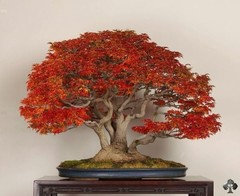
    Here's how easy it is to train/cut a j maple to conform to the shape or size you want - Reduced to 1/3 size and doing fine.
  • 7 years ago
    What about the root system on this j bonsai?
  • 7 years ago
    I'd put 3 small april snow rhodos, or 5-7 boxwoods in front of the maple.
  • 7 years ago

    And plant a few bulbs like daffodils, intersperced with coneflower, rudbeckia or other taller plants behind the boxwood which i would keep low.

  • 7 years ago
    Debbie, I would be open to any suggestions. I have not started anything yet. Plants are just arriving in the area at nursery stores. I have the deer to contend with also. In eastern Kentucky on border with Virginia.
  • 7 years ago

    Personally, I would not remove it, I’d try pruning first, if you have no clue how, hire a professional gardener. I would personslly not plant boxwood, it doesn’t go with the J maple in any way at all, and here they are a PIA with the diseases they get. Hakone grass or similar pair well, as do dwarf evergreens (this might include things like azalea and daphne). I think Rose of Sharon was mentioned, agree, not a very good feature plant, plus they can look scrubby, leaf out late and reseed insanely, on the upside, they are tough and provide late season bloom. A better feature shrub would be something like a viburnum, flowers in the Spring, berries in the fall, fall leaf colour. If you are set on replacing the J maple, consider shrubs with fragrance, or what times you look out the window, what seasons you most want to emphasize.