Software
Houzz Logo Print
socks12345

Speed Queen drain hose question, top load

7 years ago

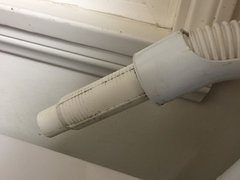
We are having trouble with the washer leaking periodically. When checking the drain hose to see if that's where it's leaking, I noticed that it looks like a normal (to me) drain hose, but the very end of it becomes narrower. In other words it narrows close to the end of the hose where the water comes out into the drain. Anyone know about this? Seems to me that could cause a water backup.


Comments (32)

  • 7 years ago
    last modified: 7 years ago

    Last time I checked the online version of the user manual of a Speed Queen top loader, the maximum drain rate was much lower than the 16 to 17 gallons per minute that is typical of residential washers sold by other domestic brands like GE, Frigidaire, etc. Based on this, my first guess would be that a Speed Queen would be slower to create a draining drama leak scenario based only on the design of the drain hose.

    How easy is it to remove the front panel to take a look? If you are not ready to do that, you could slide a large piece or cardboard under the machine to get an approximate location of where the water is dripping before it hits the floor.

  • 7 years ago

    I have a seven YO SQ TL with a drain hose that narrows just as you described. No leaking problems.


    If the hose drains into a standpipe, too much suds could cause the stand pipe to overflow or belch suds which could explain why the problem is intermittent.

  • 7 years ago

    A narrowed end on the drain hose shouldn't have any relation to leaking. If anything, it may lessen the chance of spillover from the drain standpipe by slightly *reducing* the pump-out flow rate.

    You didn't specify the age/model of the machine. SQ toploaders prior to 2018 had the pump driven by the main motor that runs the transmission and spin. 2018 and later (unless it's a commercial model) have a separate electric pump.

    In any case, it's easy enough to watch the drain during pump-out through a full cycle to catch if it's overflowing from there. If so, then perhaps there's an obstruction in the drain plumbing.

  • 7 years ago

  • 7 years ago
    last modified: 7 years ago

    We have had the drain run out to the mainline twice. Speed Queen repairman came, ran three full loads (no laundry, just water) and no leak!

    Could suds cause a backup enough to flow water out on the floor?

    I'm suspecting it's the heavy loads of towels/bedding is when it leaks but will have to verify that. Maybe that eco setting with just spin rinse isn't clearing out the detergent enough, so when I wash again and add detergent, it's too much.

    We will definitely try the cardboard idea. Thank you all.

    The machine was purchased in 2015.

  • 7 years ago

    I put cardboard under the machine. Wrapped the drain hose/standpipe with a dry rag. At the end of the cycle, the rag was wet and suds were oozing up out the standpipe. The cardboard was wet where it was pushed up to the wall.

    My husband thinks I'm using too much detergent, but I believe I use a minimal amount. Tide has 5 levels on the measuring cup. I use level 2.

    The manual says use a low sudsing "HE" detergent. The Tide and the All I use are HE but not sure about low sudsing.

    Apparently the machine isn't leaking and it's either a drainage or detergent problem.

  • 7 years ago

    What diameter is your standpipe?


    The old standard 1 1/2" diameter is too small for most washers anymore because the washers discharge the drain water a lot faster than old washers.


    I have a 1 1/2" standpipe and have to drain my washer into an adjacent laundry tub/ sink. A 2" diameter standpipe is the new standard size so, if you have anything smaller, that's the likely cause.


    socks thanked ci_lantro
  • 7 years ago

    I’ll have to check with DH but I think 1-1/2” so you may have figured it out. Thank you.

  • 7 years ago

    I have a 2016 SQ TL and I have problems with suds coming out the drain pipe if I am not careful, and lots of time when I am careful. Members here suggested I get an item that Speed Queen has (the name is escaping me) that basically 'plugs' or 'caps' the drain pipe and hose (siphon?). I don't have this item myself. I can't find the thread where this was discussed which is unfortunate because if I remember right, someone on either that thread or another had listed the part name or number. Ugh. Anyhow, I called my dealer and he claims there is no such thing. Speed Queen, when I called them, claimed to have never heard of this issue and said I was using too much detergent (which I am not). What I've done in the meantime is to wrap a washcloth around where the hose enters the drain pipe and pin it in place with a clamp. I normally change out the wash cloth every month or so because it gets musty being wet with suds. I've been known to hang over the washer and dryer with a dry towel to catch and absorb the suds during the final rinse spin (this is when it happens for me). The last cloth change I did, I got the positioning just right so as to cut off whatever the circumstance is that allows the suds out and up the pipe. It's been dry for months and I hope hope hope no one accidentally knocks it off it's perfect position because it is a hassle to climb over the machines and wrap and pin the wash cloth just so.


    For note, I use powder detergent most of the time and cut the recommended dosage by half. When I use liquid, I also down dose or else I will have the bubble issue out the drain pipe. I noticed some marking on my floor under the washer and it's the suds coming out the pipe. Tide liquids are the worst for this problem as is liquid Cheer, which I love, but...The liquid ALL from Costco suds the least for me (and cleans very well) and I lean on this detergent more and more often. I can almost dose as stated on the directions.


    socks thanked SEA SEA
  • 7 years ago

    Cilantro and SeaSea---Thanks to you both for your comments and suggestions


    The standpipe is actually 2", but DH says it narrows to 1.5" at the wall and then back up to the 2" drain, so the problem may be the restriction of the 1.5". We will remodel that area later this year and can upgrade the pipes then. He said he would also open the cleanout outside and thought that might help.


    SeaSea--OMG I had to laugh at your post because we are going through the same issue. I crawled on and off the washer 6-7 times today as I did practice loads. My knees are sore and I'm tired! The rags which I wrapped around the hose were quite wet on 2 of the 3 loads. For the third load I added 1/2 C vinegar (internet tip) and the rag was dry. I don't really believe this is a fix even tho' it worked once.


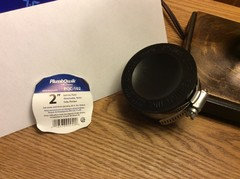
    Speed Queen mentioned to DH to get a rubber cap and make a hole in it for the drain hose to put on the standpipe. I'll put a photo of what he found, but I think he's going to have a tough time making a hole in it because the rubber is thick and hard. He says he's going to make an "X" in the center.

  • 7 years ago

  • 7 years ago

    I will definitely share that helpful link with DH. Maybe he thinks opening the cleanout will prevent siphoning.


  • 7 years ago

    Glad you got a chuckle...the things we do :) Anyhow, with the upcoming remodel and clean out, hopefully that will solve the issue. My spouse is not handy and I have had to put the kabosh on him doing any further DIY actions as it ruins what was otherwise just an annoyance, so I muddle along with my wash cloth fix in the meantime. I wouldn't have dh assinged to the rubber lid job, sorry to say. Please post back here after your home improvements and let us know if you were able to cure the problem.


    Our generation of Speed Queen washers have an enthusiast pump. I've noticed that the pump is still blowing air with vigor out the drain pipe after all the water has been sent down the drain. This continues until the washer has completed the entire final rinse cycle/spin. In my unprofessional observations (while I am hanging over the washer with my catch the suds dry towels), I see that the pump is blowing bubbles through the hose and pipe and *this* is where the issue lies. My rinse water (I lift the lid to see how well rinsing went since I have soft water) and the rinse water can appear to be clear, so I don't understand where the froth of suds comes from. But like I said above, with my latest and greatest wash cloth positioning, I am at this time not having this problem.


    Best of luck with this.

    socks thanked SEA SEA
  • 7 years ago

    For sure that section of 1.5" pipe isn't helping matters. Hopefully replacing that when you remodel takes care of the problem. When my SQ drains, the water looks like it's getting shot out of a fire hose! Which seems to make the suds problem worse because I see a lot more suds in the laundry sink than was ever in the machine during the wash or rinse cycle.

  • 7 years ago

    Maybe that fast draining in newer machines causes more sudsing, agitation of that soapy drain water. Another good thought.

  • 7 years ago

    New (2018 and later) SQ toploaders may drain slower than older units. The design changed, they now have a separate electric pump. Prior to 2018 the pump was either mounted directly to the main motor or driven from it via belt.

    socks thanked dadoes
  • 7 years ago

    I put a very porous piece of fabric (organza) between the hose and the pipe on mine and it blocks the suds but lets air through.

    socks thanked socalgal_gw Zone USDA 10b Sunset 24
  • 7 years ago

    ^^ Be SURE the fabric is SECURELY anchored so it doesn't drop off into the standpipe.

    socks thanked dadoes
  • 7 years ago

    Thanks for the advice! It is very securely attached with a zip tie on the outside.

  • 7 years ago

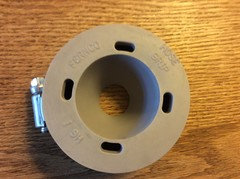
    Found this at a plumbing store. We won’t attach it yet but will see if having the cleanout open helps first.

  • 7 years ago

    Is that the cap/lid thing for the suds coming out the drain pipe I mentioned upthread?

  • 7 years ago
    last modified: 7 years ago

    Yes. You can do a search of Fernco Hose Grip and they come up. I thought they might interfere with the pumping action on the machine, but DH doesn't think so. Matter of opinion I guess.

  • 7 years ago

    I found this review on Lowe's site:


    Whoever invented this thing should be a multi millionaire. If you have an H.E. washing machine and a 1 1/2 inch drain line like most of America pre year 2000, instead of the new required 2 inch drain line, this thing will prevent the initial backup when your machine drains. Older machines worked fine with 1 1/2 inch, but these new machines drain too fast (hence high efficiency) for that size pipe to handle. Works like a charm. I have an 1 1/2 inch line all the way to my cesspool. No problems ever.


    Thank you socks! I'm going to get one of these and see it I can use my 1 1/2" stand pipe instead of draining into the laundry tub.


    I didn't mind the laundry tub drain too much because I knew our sewer line was a little dicey. Draining into the tub, I could use a sock over the washer drain to catch a lot of the lint and dog hair before it went into the drain. Replaced the sewer line last fall so maybe I don't have to be so diligent with what goes down the drain anymore.


    (I think those holes in the top of the fitting are for admitting air so the the pipe will drain properly.)

  • 7 years ago

    Thank you! A name, helpful.

  • 7 years ago

    DH paid $7 at the plumbing store. Lowes looks to be under $4.

  • 7 years ago

    "Older machines worked fine with 1 1/2 inch, but these new machines
    drain too fast (hence high efficiency) for that size pipe to handle."

    That doesn't ring true to me. HE toploaders and frontloaders (which have a small, separate electric pump) typically drain at a slower rate than non-HE machines, and there's less total volume of water to be drained. Whirlpool direct-drives (early 1980s to late 2000s) with the pump attached directly to the main drive motor drain very fast ... they can empty a full tub (much as 24 to 27 gals) in less than 2 mins.

    SQ toploaders are not HE in terms of water usage and fill level for the *wash*. They reduce water usage on the Normal/Eco cycle by running a shower spin-spray rinse instead of a deep-fill agitated rinse. All other cycles run a regular agitated rinse, assuming the programming hasn't changed. 2018 and later residential SQ toploaders are redesigned with an electric pump. 2017 and prior have the pump driven by the main motor that runs agitation and spin.

    socks thanked dadoes
  • 7 years ago

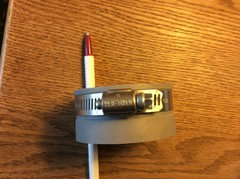
    Just to follow up on this issue: We put that rubber "thingy" on top of the standpipe, but the suds flow out of the breathing holes on the top, enough that it dripped down to the floor. Having the drain cleanout open outside does not help either. I'm resorting to SeaSea's low-tech fix of a rag wrapped around the drain hose/standpipe connection--because it works.

  • 7 years ago
    last modified: 7 years ago

    I'm sorry to read that the 'thingy' did not fix your issue, along with the cleanout being left open.

    Assuming your mainline is clear of roots/debris, then it has to be the powerful pump on the SQ. (it really does blow air out the pipe until the machine completes it's final spin, and powerfully at that)

    I did have my mainline rotor-rootered when the SQ was new as it was suggested I had at least a partial blockage causing the issue. My mainline was declared to be clear at the time. However, a few months later, I had a complete mainline blockage where the plumber dredged out pine roots. I have to assume I did have a partial blockage that was not detected. A week later another root blockage and another line clearing treatment. Anyhow, the suds out the drain pipe was an ongoing issue with nearly every wash load the whole time--before, during and long after. As you know from above posts, I'm doing okay now with the wash cloth method, whereas before, I had partial success with the wash cloth; it was more a means of suds control than abatement.

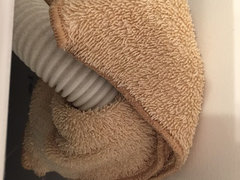
    I'm going to upload a photo I just took of my perfect wash cloth placement to help guide you to getting it right from the get-go since I had positioned the wash cloth prior in not quite the perfect manner every month or two which didn't cure the issue, only helped. Note that the wash cloth is still dry!!!! Yippee!!

    The photo uploaded sideways (sorry), but you can see the paint on my drywall puckering from the ongoing suds issue. To orient you to the top to bottom of the photo, the puckering is on the right hand side of the photo if it had uploaded not sideways. I'm lucky I don't have rot/mold/mildew going on.

    My past cloth placements always had one thing in common, and that was at the top, where I put the clamp, there was a tiny opening, or air gap if you will in the wash cloth. I couldn't get it 'just so', and I suspect the powerful SQ pump had that air channel to work with and I could see the suds coming through the tiny gap, running up my wall, then down my wall and onto my floor.

    On this current wash cloth placement, you can see I have NO gap, and the clamp is still in the top of the pipe position like I've done each time. My stroke of luck was that the way I wrapped the cloth around, it flopped over the clamp and blocked the air channel. A lot words for a simple fix, but I'm hoping this will help you get some relief like it has done for me. Until this issue is an every time you do laundry problem, a person doesn't realize how much of a bummer this is, and the serious issues it can leave you with. I used to think, great (not), now I've got this washer that is finally getting our laundry clean but I'm going to have a ruined wall! &%$# What the h3ll?!


    fyi, after the 2nd root blockage in my mainline the plumber told me to get copper sulphate crystals to flush down the line once a month during the growing season to discourage pine roots from infiltrating our sewer line until we can afford to have the mainline replaced. Knock wood, we haven't had a root blockage since. This does not mean we aren't due for another calamity soon, but we make the best of things as best we can. We live in an older neighborhood within a pine forest, so we all have problems with roots in the pipes. It just a matter of "who's turn is it this time".


    Sorry for the Moby Dick size post.

  • 7 years ago

    Whirlpool direct-drives (early 1980s to late 2000s) with the pump attached directly to the main drive motor drain very fast ... they can empty a full tub (much as 24 to 27 gals) in less than 2 mins.


    True. I had a couple top load Whirlpool washers before the Speed Queen and both had to empty into the laundry sink because the 1.5" standpipe could not handle the rate of drain from the Whirlpools either. Late '80's model and a replacement when that that one died--early 2000's??

  • 7 years ago

    Seasea….all our drains are clear. I like that wrap-up you did! I've been using a smaller rag and binder clips to hold it on, but I think I'll take a tip from a professional and use something bigger.

Sponsored
Buckeye Basements, Inc.
Average rating: 5 out of 5 stars42 Reviews
Central Ohio's Basement Finishing ExpertsBest Of Houzz '13-'21