Software
Houzz Logo Print
d205

AUREA Divine Quartz Cracked!

7 years ago
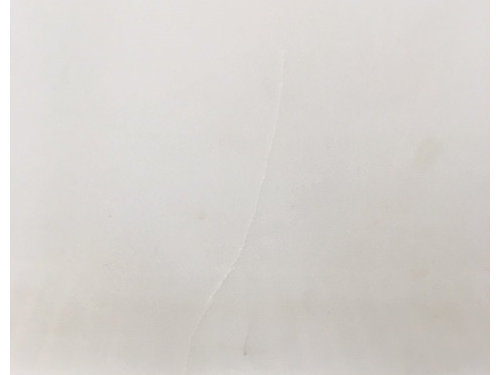
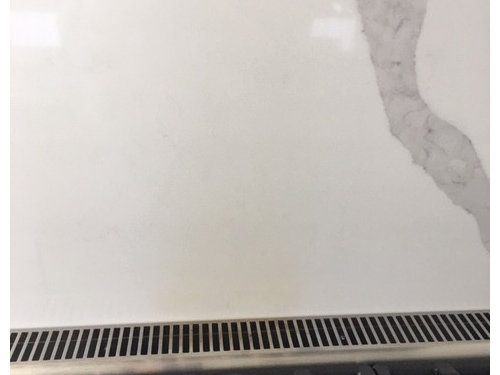
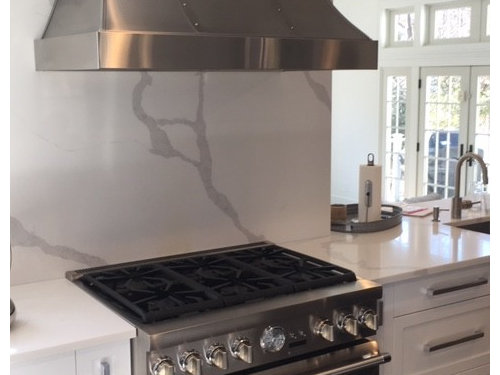
Please HELP? My 6month old gorgeous Aurea Divine Quartz cracked and turned yellow from using the broiler for the first ! It is behind my range and was installed only 6months ago! Please help, we spent a fortune on our kitchen counters and purchased 4 slabs for countertops and walls.


Why is this happening?! How could this happen? I am so upset.


Comments (30)

  • 7 years ago

    I'm sorry that happened. Maybe you can put a sheet of stainless steel over it?

    (It is, unfortunately, due to using the wrong backsplash material and the wrong trim on the range. )

  • PRO
    7 years ago
    last modified: 7 years ago

    Sudden changes in temperature can cause quartz to crack, it is rare but they do warn about heat resistance in product descriptions.

  • 7 years ago
    last modified: 7 years ago

    Quartz is well-known for staining from heat, and being unable to withstand heat. It is not stone. This issue has been discussed many times on this forum. You should have done the Quartz backsplash everywhere, except for behind the range, where a stainless steel panel would work.

    You can choose to cut the section out, and replace it with a stainless steel panel. Or some people just leave it there and shrug. We’ve seen both on this forum.

  • 7 years ago

    How can that happen? It happened because quartz never should have been used in that application. I think your best option is what Fori said and use stainless over it.

  • 7 years ago
    last modified: 7 years ago

    It looks like from some other threads about Thermador (which it appears you have), you’re supposed to use the Thermador backguard if your backsplash is not non-combustible. Perhaps look into buying the Thermador backguard.

  • 7 years ago
    Did you install the quartz yourself? One would think the salesperson/retailer would caution you about using it as a backsplash behind your range?! I can only imagine the expletives and tears I would have released in your situation. The bright side is that stainless steel backsplashes are much less expensive than replacing your cracked quartz with another high end material.
  • 7 years ago

    You almost certainly have to keep 6" clearance between your range and the backsplash, if you install the island trim. The manufacturer's installation instructions should have told you, and your general contractor should have noticed.

    Even with a taller trim, quartz is a poor choice for a backsplash. It's essentially plastic with some stone dust mixed into it. The resin that holds the material together isn't heat resistant. It'll yellow or even scorch. And as you found out, it also can crack. That's the same reason why you can't set hot pots directly on quartz.

    Mounting a stainless steel sheet onto the backsplash isn't up to code. The heat will travel through the sheet metal and keep damaging the wall. And as both quartz and wooden studs are considered combustible for purposes of the building code, you find yourself with unpermitted work that could eventually pose a problem for your home owner's insurance. Or in the worst case, it could start a fire (but that would require extended high heat cooking).

    Your safest bet would be contacting the stove manufacturer and checking if there is a tall stainless backsplash that mounts on the stove in place of the island trim. Unlike a simple sheet of metal, it actually is made up of two or more layers of steel with air in-between. That provides the fireproof insulation that you need.

  • 7 years ago
    last modified: 7 years ago

    M - you may not have seen my mention above about the OP’s Thermador range needing a backguard. There are several threads on this, here is one:

    [https://www.houzz.com/discussions/thermador-range-top-do-i-need-a-backguard-dsvw-vd~5333987[(https://www.houzz.com/discussions/thermador-range-top-do-i-need-a-backguard-dsvw-vd~5333987)

    Here is a link to a page of Thermador backguards. They look like they come in 7”, 9”, and 12” heights.

    https://www.abt.com/category/380/Stove-Range-Accessories.html

  • 7 years ago

    My very same feelings. Never pictured with back-guard, never displayed with backguard and too late to buy a different stove when you are installing. Misleading. Dishonest. More than disappointed in Thermador; marketing material, website, educating their appliance vendors and finally consumers. I would have never bought this stove!

  • PRO
    7 years ago

    Sorry ND, you don't get to blame Thermador or ADQ for you and/or your designer's failure to read PAGE 1 of Thermador's installation instructions.


    I do a fair amount of these repairs and can't stand it when customers and/or the air conditioned pencil pushers try to blame manufacturers and installers for their illiteracy.

  • 7 years ago

    Am I missing something. Shouldn't an installer read page 1 as well?

  • 7 years ago
    last modified: 7 years ago

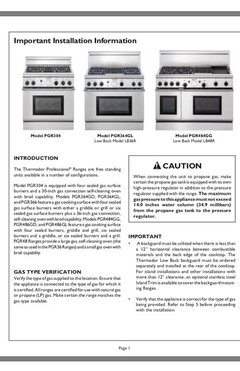
    For those who don’t want to go to the link, Page 1 of the Installation Instructions manual says:

    “IMPORTANT

    A backguard must be utilized when there is less than a 12” horizontal clearance between combustible materials and the back edge of the cooktop. The Thermador Low Back backguard must be ordered separately and installed at the rear of the cooktop.”


  • PRO
    7 years ago

    pigeen:


    You have an unrealistic idea of how this works. Few installers have the guts to tell a homeowner or designer "No, we're not doing it like that." (I have never suffered this problem.) Imagine telling the homeowner/designer that you'll not install their quartz splash until the cabinets are pulled a foot from the wall. That will be the end of your days as a reliable sub, believe me. No designer wants her shortcomings exposed by a lowly tradesperson. They will find someone stupid enough to install a combustible (and yes even tile is considered combustible when installed on a combustible wall) splash.


    The installer is screwed. If he stands up to the homeowner/designer, the relationship is in jeopardy. If he installs the splash, it fails and he gets the blame.

  • 7 years ago
    last modified: 7 years ago

    @Joseph Corlett - I am not sure I agree. If I am a homeowner putting in an expensive new kitchen, and my installer shows me the prominent instructions on Page 1 of the manual, and tells me what will happen if I do not install the backguard (the alternative to the 12" distance), I would agree to install it as the manual says, or, I would take on that risk of discoloration/cracking. By you saying nothing, you are not even giving the homeowner a chance. Most homeowners are not like the TKO members of this forum who read the installation manuals.

  • PRO
    7 years ago
    last modified: 7 years ago

    Stone installers don’t read appliance installation manuals and coordinate conflicting clearance issues. Often, appliances aren’t even there when templates happen. They don’t have the big picture of the whole design. And they aren’t hired to have that big picture overview. They’re hired to fabricate and drop stone.

    Coordinating conflicting specifications is what your Kitchen Designer and General Contractor do. Or, should do. This is always a design failure.

    It’s also on appliance sellers who don’t read the manuals either and push things that violate installation requirements. They are afraid of killing their sale if they tell people that back guards, proper ventilation, and make up air is a requirement for that pro style cooking appliance.

    The difference between hiring a professional and just paying a retailer is that a professional has an ethical duty to your best interests and well being, even if it costs them money.

  • 7 years ago
    last modified: 7 years ago

    A quick perusal of the kitchens posted on Houzz reveals very quickly that many, many, many KD's, GC's, etc. aren't abiding by Thermador's instruction manual in regards to installing the "required" backguard :/

    To the OP, I'm sorry this happened to you. How high up does the discoloration and crack go? Would the required Thermador backguard cover it up if installed now?

  • PRO
    7 years ago

    @ Joseph I don't agree that this isn't partially on Thermador. They never advertise with a photo that shows that back guard. Homeowners see it photographed on their website and say "well they show it like this so I am going to do it". This is just like a few refrigerators that show photos of fully integrated panel ready with no air gap, but then you read the spec and it is suppose to have 1" above and 1/2" on each side.

  • 7 years ago

    As a point of curiosity for future recommendations, is the OP limited (from a practical point of view) to installing the backguard and then either having the stove protrude farther out from the counters, or having the plastic "stone" routed out along with some depth of the wall to embed the backguard? (The second option assumes that the backguard doesn't depend on passive ventilation through its sides or top.)

  • 7 years ago

    While I do agree that the manufacturers are dishonest, things are a little more subtle. It is absolutely possible to install a range so that it moves that close to the stone backsplash. It also is possible to install a built-in fridge without visible air vents.


    But in order to do the former, you'll have to built the wall with metal studs and install inorganic backsplash material (i.e. marble or granite, but not quartz).


    And in order to do the later, you might need to build a custom cabinet with a vent chase in the back of the cabinet.


    Both things are of course entirely doable, and that's what the manufacturers will tell you, when you push back hard enough. But it is also something that requires serious customization; most homeowners will find that it is outside of their budget. And it certainly isn't spelled out very well in the installation manuals.

  • 7 years ago

    I do not see how Thermador is responsible for this at all. Because they want to make their ads look pretty? This is the point of having a knowledgeable kitchen designer, and if not, the reason these manuals are both in print and available online. I have a Thermador range, and chose the island trim- have had zero issues with the ceramic tile behind it. I had the riser on my last range, chosen because there was painted drywall behind that one. For what it’s worth- the riser is ugly and I didn’t want it again. I fully understand why it is not featured in their ads. Unfortunately, the rules of the range and those of the quartz were not followed- quartz and heat do not mix.

  • 7 years ago

    Unless you installed metal studs, what you're doing is a code violation, and it puts you at (slightly) higher risk of setting your house on fire. And if that happened, your insurance would be more likely to put up a fight and/or outright refuse to pay.

    That's why people get upset at Thermador. The manufacturer makes it look as if you can install island trim in this configuration. And in the vast majority of houses, that's simply not true. I stand by my statement that the advertising is highly misleading.

  • 7 years ago

    Metal studs are not the only solution. We have cement board on the wall beneath the tile, which is noncombustable. My kitchen was inspected and passed for code.

    ALL advertising is misleading.

  • PRO
    7 years ago
    last modified: 7 years ago

    Sorry johnsoro25, if you've got wood studs, you've got a combustible wall, no matter the noncombustible covering. Not according to me, according to the National Fire Protection Association.


    ND has a fire hazard whether the inspector wrote a red tag or not.

  • 7 years ago

    Joseph, thanks for the heads up. I will let my kitchen contractor know as well.

  • 7 years ago

    Joseph, just for my knowledge as well as the OP and anyone else building. Wouldn’t metal studs be required with all ranges abutting a wall? even if you had the riser? Stainless steel riser would conduct heat as much as ceramic tile and cement board. If heat, not the flame itself. is the issue, how is a stainless steel sheet or riser a better protector as a backsplash?

  • 7 years ago

    kaseki- thanks!!

  • 7 years ago

    The air gap behind a backguard is what makes that work.