Software
Houzz Logo Print
erasmus_gw

Cuttings from new bare roots

7 years ago

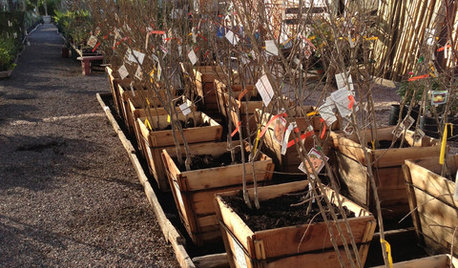
I got six bare root plants from Palatine in November. In their directions for planting it said to reduce the number of canes or shorten some. I did that and stuck what I cut off in sand, hoping they'd root.

I left them outside all winter through some freezes and a lot of cold. It was a somewhat mild winter but we had temps in the teens. I already know that one variety failed but I have potted up rooted cuttings of a couple of them. I can tell another is well rooted and ready to pot up.


I've also taken a lot of other winter cuttings that mostly are looking good. I had them in more sun than I usually keep them in in warm weather. They overheat if left in too much sun in summer. I'm thinking that winter cuttings might be a little easier because the cuttings don't respire as much..many don't have leaves...so the rooting medium doesn't need to stay as moist. They rot in too much moisture. And they can take more sun. It can be trickier in hot weather to get enough sun and water but not too much.


Looking around I found one rose propagator who advises that winter is the best time to take cuttings. I think that guy is in TX. Makes sense it might be too hot for spring/ summer cuttings where he is. I didn't take any woody looking brown cuttings. They are all fresh and green looking , from last year's growth. They really don't look much different than cuttings taken in spring though they might be a little more hardened, which might mean less likely to rot.


Comments (17)

  • 7 years ago

    I am in zone 8, AL and yes, it is better down here in the hot climate to propagate roses outside by cutings in the full.. About 50%-60% take over the winter down here compred to 20% in the summer..

    What did you ordered from Palantine? My favorite place to shop for roses : )

  • 7 years ago

    That is so cool. I did have success with rooting boxwood cuttings, but not roses. Maybe I will try this winter.

  • 7 years ago

    Yes, I've been said my best was in fall. Summer is to hot with no misting set up.

  • 7 years ago

    erasmus, my mouth is still hanging open after viewing your cuttings. You're good to go to open your very own nursery!

  • 7 years ago

    I also get the best results in rooting roses in late fall/winter. I take cuttings starting in mid October, trim them, dip them in rooting hormone, then stick them around existing mature rose plants. I find that I have fewer problems with wandering night animals disturbing them. I hand water them until the rains begin. I check them weekly and water if the soil gets too dry. We have had a good rainy winter and early spring, so I have not had to do too much hand watering. In mid March, I dig out the rooted cuttings and transplant them into rototilled soil that has been treated with pre-emergent herbicde. I used to plant them in pots, but found out that I can grow way better plants to a much larger size and with much less effort, by planting them into the ground; also, we don't lose as many plants as we used to when growing them in containers. I am using 5 foot wide beds and plant 2 rows that are in the center of the bed that are around 14 or so inches apart. I plant the rooted cuttings 12 inches apart, so I can plant 200 on each 100 foot long bed. I put in a drip irrigation system that has 1/4 inch drip line with embedded drippers. We have connected the drip system to a battery-powered timer, so they are taken care of when we leave on vacation. The plants can easily be dug in the fall/winter to transplant into the garden. The cuttings that I started in fall of 2017 have grown into plants from 18 inches tall to up to 5 feet by fall 2018. We are using these plants to re-landscape a planter we put in 8 years ago.

  • 7 years ago
    last modified: 7 years ago

    John, I don't think I've ever tried the old method of sticking them around the mother plants. Seems like it would be simple. Sand works pretty well, and I can lift up the pot to work with on a table. It's interesting that your plants get so much bigger in the ground. My usual practice is to grow plants in pots until the roots are a pretty good size because I think they can then make it better in the ground. But for you they take off when small. Of course your climate is different than mine.


  • 7 years ago

    Wow that is impressive, erasmus! Thanks for the tips. I thought you did have your own nursery? LAR?

    John, I don't have a lot of space for pots so I may try your method.

    Is there a minimum number of leaf sets I should have on the cutting?

  • 7 years ago

    I think you are correct, totoro. Diane

  • 7 years ago

    Totoro, I usually take cuttings that have 5 to 7 'nodes' or sets of leaves. The cuttings are usually 5 to 8 inches long. I trim all the leaves off except for the top 2 or 3. I trim the cuttings at the bottom at a 45 degree angle, then scrape 2 inch-long strips of the green layer at the bottom of the cutting. Finally, I dip it into the rooting hormone and 'stick' the cutting so that the bottom of the cutting is around 2 to 3 inches deep in well-draining silty/sandy soil. It is important to firm the soil up around the cutting, so there is good contact between the cutting and the soil.

  • 7 years ago

    Thank you!

  • 7 years ago

    erasmus, I have rooted cuttings in my rooting bed, then transplanted them into pots of different sizes. I may put 3 rooted cuttings of variety A in three 5 gallon pots and 3 of the same variety in three 1 gallon pots. I have done this across many different varieties. At the end of the summer, the plants in the 5 gallon pots are always the largest. It may have something to do with the relationship of the growth rate to the volume of soil the roots are able to occupy. When I plant the rooted cuttings from my rooting bed into the ground of my growing plot, they seem to grow even faster than in the larger pots.

  • 7 years ago

    John, maybe the roots can tell when they have room to expand. Somewhere I read that crowding cuttings in one rooting pot works better because the cuttings sense that there are other cuttings in the pot and somehow that signals to them to go ahead and root. I don't know.

    Totoro, thank you, and yes, I do have LAR, a small one person own-root rose nursery. A long time ago, especially when Spike was in charge, it was forbidden to make any mention of any connection to a plant business. I still don't intend to do that.

  • 7 years ago

    Great information, folks! Thank you, John. My DH, who know about such things, always tells me to use bigger pots for exactly the reason you mention. However, I resist as I've found here in such a rainy climate they can get water-logged and rot the roots more easily. I did up the drainage and lighten the mix on my rooted cuttings and they seem to have survived a little better, but required more futzing over the winter as I worried they would dry. It's always something. : ))

    Erasmus, I see where you are coming from, but I always pay particular attention to your comments as I know your livelihood depends on knowledge. Also, sometimes when you have problems with something, I don't feel so bad myself! LOL! Of course, you're in a different zone, but similar in some ways.Thanks for contributing.

  • 7 years ago
    I really enjoy reading these types of informative posts. I find it very educational and technical. But thank goodness for other people growing stuff, because I would much rather buy the ready to go potted plants! Mind you if I had a larger piece of land it would be fun to experiment too. I just don't have the space or climate for it.
  • 7 years ago
    last modified: 7 years ago

    I stuck some cuttings in the ground this January of a bourbon and a floribunda and they don’t budge when I lightly pull so I figure they have started to root. I’ve had some succes with ramblers in the past by sticking them in the ground in a shady area.

  • 7 years ago
    last modified: 7 years ago

    Hi garden nut,

    I like to wait til I see some growth on the cuttings before I transplant them either into pots or into a growing area. I had to move some cuttings that I stuck in January that were just at the callus stage or when roots are just beginning to form from the callus tissue. Using as sturdy trowel, I dig out a huge dirt clod that is around 3 inches across and 4 inches deep and transplant this ensemble into my growing bed, ensuring that the soil around the bottom of the barely-rooted cutting is not disturbed. This seems to work well.