Software
Houzz Logo Print
mookie31973

Blueberry Bushes

7 years ago
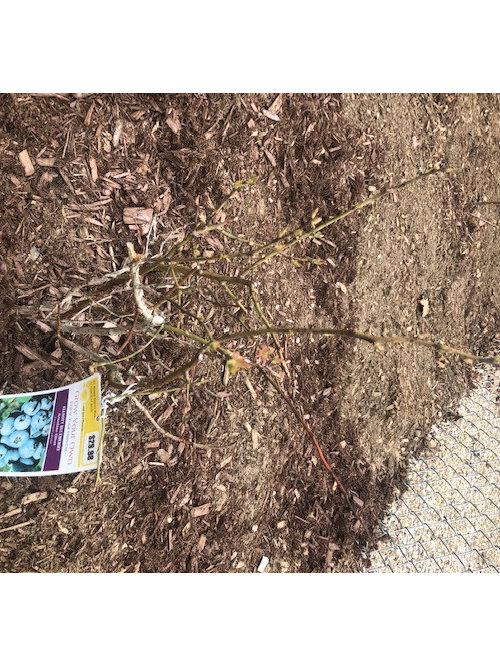
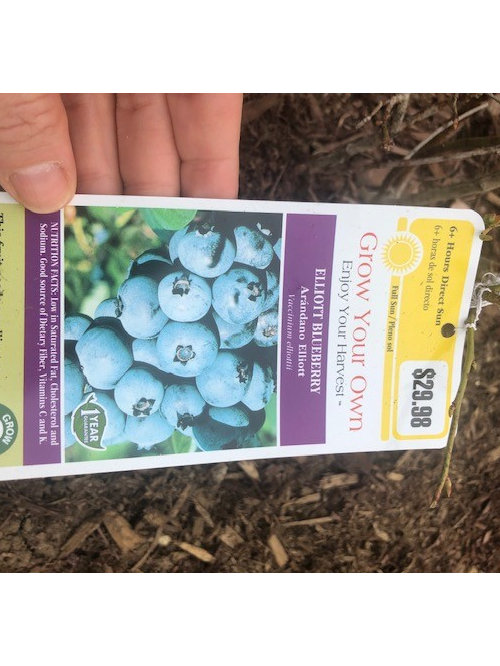
Hi, I would like to grow blueberries and I planted a bush last year with some other varieties (please don't ask me what they were) and it appears as though the others are dead (don't know what I am doing). However one is doing okay (has blooms on it). I am attaching a picture of the variety it is but I don't know and can't seem to get much help at a lowes figuring out what variety to plan with them. They are called "Elliott". Also I am getting different advice as far as how far apart to plant. Some places indicate as close as 2.5 feet and others say as far as 8 feet. I am in Newburyport, MA which is 45 minutes north of Boston.


Anyway, help and guidance appreciated! Molly

Comments (8)

  • 7 years ago

    Re other varieties: The tag says "This fruit needs a pollinator. See back for details." Have you looked on the back of the tag?

    Re spacing: a general search about blueberry spacing revealed:

    Spacing: Blueberries can be planted as close as 2 - 2½ feet apart to form solid hedgerows or spaced up to 6 feet apart and grown individually. If planted in rows, allow 8 to 10 feet between the rows depending on equipment used for mowing or cultivating.

  • 7 years ago

    Technically, blueberries are self-fertile so don't require a pollination partner ;-) But you will always get better and heavier fruit production if you have one!

  • 7 years ago

    Lets take a step back here, there are 4 major varieties of blueberries, Low Bush Blueberries (these are generally wild blueberries), northern high bush blueberries (Elliot is a northern highbush variety), there are also Rabbit Eye Blueberries, and Southern Highbush blueberries. Low bush blueberries are typically only found in the northern most parts of the US, and eastern Canada. Northern Highbush dominate the north eastern part of the US, Rabbit Eye varities are native the the south eastern US and are grown from the Carolinas across through Missouri and east Texas. Southern Highbush are primarily grown in central Florida, though some are also grown in north Florida and along the gulf coast. Of these varieties rabbit eye grow the largest and have the longest life expectancy often getting to be over 7 ft tall and at least that wide when mature.


    When it comes to growing blueberries, you need very acidic soil, blueberries may tolerate a soil with a pH of 6.0, but they will be much more happy at somewhere around 4.5 - 5.0 (some varieties as low as 4.0 or others up to 5.5). The other big thing to know about blueberries, is NEVER use nitrate based fertilizer, only use Ammonium based Nitrogen sources. Blueberry roots lack the ability to uptake Nitrates. If you satisfy these two conditions, and provide appropriate watering, you should be successful growing blueberries.

  • 7 years ago

    The above is a bit of an over generalization :-) There are NO blueberry varieties native to the PNW, most of which is a very mild hardiness zone, and yet ALL types are grown here!! In fact, the PNW grows more blueberries commercially (both the fruit and the plants) than anywhere else in the country !! It is entirely likely that the plant you purchase at your local nusery or box store started life in the fields of a PNW wholesale grower. The largest wholesale supplier of blueberries for both the US and for international sales is located in this area.

    What that means is that where you live does not necessarily limit what knd of blueberries you can grow. HIgh chill varieties are obviously not very suitable for very mild climates but other than that, plant what you can find and what you like.

    Also the need for highly acidic soil is overstated. Blueberries will grow and be extremely productive with a soil pH of 6.0 or less. There is nowhere in WA state that has a pH lower than 5.5 and most is in the 6.0 to 6.3 range and yet more blueberries are grown here than anywhere else in the US. And the soil in commercial growing fields is not amended to be lower....that is neither a practical or even reasonable consideration.

    For home gardeners, fertilizing blueberries is pretty simple - they do not require a lot. In fact, the concerns about nitrates are not because the roots cannot process it - the plants just react poorly to any overfertilization. Mulching annually with compost is often sufficient or any organic fertilizer can be used. Or a fertilizer recommended for acid loving plants.

    Growing blueberries successfully has developed some myths associated with it that are really quite unfounded. Plant them in a sufficiently (but nor extremely) acidic soil that is organically enriched and well draining and in plenty of sun, provide plenty of water during the growing season and fertilize lightly.

  • 7 years ago
    last modified: 7 years ago

    I agree with some of that, the less than 5.5 pH rule is a good goal, but is certainly not a cut off point, I have two 30+ year old rabbit eye blueberry bushes that sat completely neglected for well over a decade and survived in soil with a native pH of 5.8 here in Louisiana, they were in desperate need of attention (thinning and old wood removal to force new more productive growth). Also different varieties of blueberries are more or less tolerant of growing conditions, in my region rabbit eye varieties will typically thrive or at least survive without artificial irrigation, by comparison southern highbush are far more susceptible to dry soil conditions and will often die without irrigation in dryer years. I am no expert on growing blueberries in the PNW, but here is some of what the University of Oregon has to say about it https://catalog.extension.oregonstate.edu/sites/catalog/files/project/pdf/em9179.pdf


    ps I have to wonder how many of the commercial growers in the PNW use acidic fertigation to offset higher pH soils

  • 7 years ago

    I do not know what your soil is like where you live -- you probably have a Master Gardener program as part of your county's extension service, or associated with a local college or university with an agriculture program -- ask there.

    If you planted these blueberries in the fall, they perhaps didn't have enough time to establish before winter, or didn't get enough water (if you had a dry spell) before then.

    Here in central Ohio, I have about 8 different blueberry plants, some of which are going on 8 years or older, all are doing well and productive. They were planted in a mix of peat moss, chopped leaves and a little sandy compost, in 5 to 20 gallon containers. Blueberries struggled and failed when I tried to plant them in-ground here. The pots are clustered fairly close together (as in, inches apart!) to make it easy to hang netting over them (because the wildlife would eat them all if I didn't net.)

    You can look up varieties of blueberries on line and see if the ones available to you locally suit your situation in terms of space and harvest time. Some are small and compact, others like my 'Pink Lemonade' and another whose tag is long gone reach nearly 6 ft. tall and 4 ft wide -- but maybe could be pruned smaller, IDK.


  • 7 years ago

    "ps I have to wonder how many of the commercial growers in the PNW use acidic fertigation to offset higher pH soils"

    None that I am aware of. Few fertilize at all. And none of the local ones even irrigate or do so only in our driest periods (most are grown in high water table areas).