Software
Houzz Logo Print
rouge21_gw

Castor bean in a container?

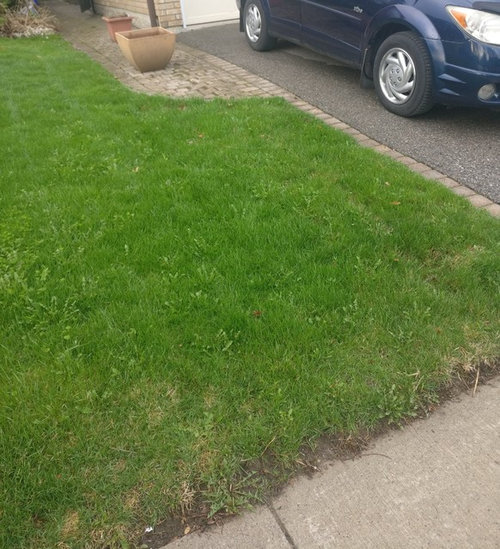
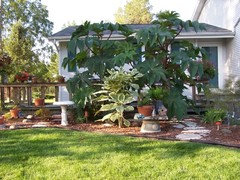
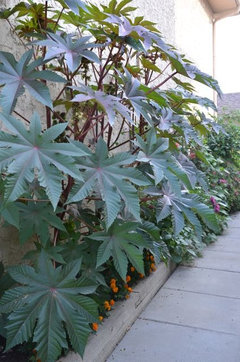
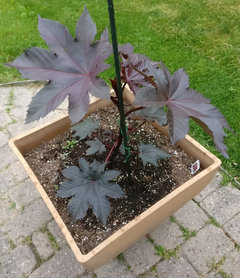
I am always impressed when I see this plant in all its glory. I don't have room in ground for one but I do have this 19" by 19" by 14" container that you see in this picture.

I would love to know your experiences growing CB in a pot. (I do realize that it is very toxic).

Comments (53)

  • 7 years ago

    I guess it will be an experiment!

  • 7 years ago

    Be sure to post photos!! Are you going for a red leafed form?

  • 7 years ago

    Are you going for a red leafed form?


    I dont recall seeing a great selection of CB plants at nurseries but then again it is only now that I am interested in it ;). (So I can see me picking up the first CB I come across).

  • 7 years ago
    last modified: 7 years ago

    I've never seen it sold as a plant - it's an annual and grows rapidly from seed.

    https://www.selectseeds.com/rare-annuals/castor_oil_bean_new_zealand_purple_seeds.aspx

    In Canada, Richters lists the Carmencita Red cultivar.

  • 7 years ago

    It's only an annual in colder zones. In areas where native, it is an evergreen, semi-woody plant that can grow into tree-like proportions....as much as 40'!

    But that is in a frost-free climate :-)

  • 7 years ago
    last modified: 7 years ago

    I have seen it as a plant in nurseries in our area, an annual as you say.

    In Canada, Richters lists the Carmencita Red cultivar.

    Thanks for that Paul as I live not far too far from Richters.

    (If I directly sowed such a seed soon, I wouldn't be too late to be able to enjoy it for this season?)

    Btw, your specimen is spectacular!

  • 7 years ago
    last modified: 7 years ago

    (If I directly sowed such a seed soon, I wouldn't be too late to be able to enjoy it for this season?)

    Direct sowing should be late, maybe two weeks after the last frost. It requires warmth. (It doesn't, however, require extreme heat. English gardeners grow it to suggest a tropical setting.)

    The photo is from Select Seeds.

    As for the rapid growth: although many translations say "gourd," Ricinus communis, the castor bean plant, has been suggested as the correct translation of kikayon in the book of Jonah.

    rouge21_gw (CDN Z5b/6a) thanked Paul NY 5b-6a
  • 7 years ago

    You can sow seed indoors and plant it out after the danger of frost is past. Thats how it's done over here.

  • 7 years ago

    and i am sure you are all set with info on its toxicity??? ... pretty sure you dont have kids around.. [attractive nuisance] .....so you should be all set ... it has ricin right in the name ....


    knowledge is power ... im sure most of us.. arent out grazing the yard .. and sticking it in our mouths.. without a bit of research ... aka .. knowledge ...


    ken

  • 7 years ago

    Ken_a, the last 'bit' in my original post makes mention of its toxicity. There are similar posts each year re a similarly poisonous plant...Monkshood.


    If you look at the picture the pot is about 20 feet in from the sidewalk and right next to our neighbours who have a dog (that is almost never out on the abutting front lawn).


    I figure that because the CB isnt as showy/flowery like Monkshood it wouldnt attract as much attention from children who might be passing by on the sidewalk.

  • 7 years ago

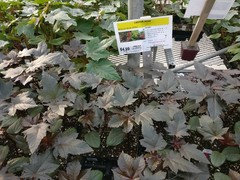
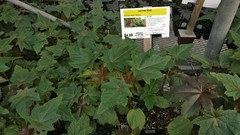
    This morning at a well stock independent nursery:


    I picked up one and have it now in the house in a locked room (two cats in the house) until it is warmer outdoors.

  • 7 years ago

    i didnt see the last comment after the picture.. go figure ...


    never hurts to mention toxicity .. especially with something called a bean plant .. and all these new age peeps insisting on eating everything they run across ...


    frankly ... as a stay at home.. i never limited plant selection based on toxicity.. i just took the time to teach the kids what to eat.. and what to leave alone ... or deseeded them before it became an issue ...


    i mean.. really ... if you eat a lawnmower bag full of mowed lawn.. i presume.. there will be some side effects ... when you boil it down .. everything can be troublesome.. one way or another ....


    ken

  • 7 years ago

    never hurts to mention toxicity


    So to be on the safe side given that the pot will face the street, should I place a marker in the container with a warning inscription of some sort?


  • 7 years ago

    It can't hurt. And could absolve you of any liability should some yoyo complain or worse, sample (the world is filled with idiots!!)

  • 7 years ago

    If I grew ricinus on the street side of my house, I would consider removing the beans as they form, and destroying them, or perhaps just deadheading the flowers.

    rouge21_gw (CDN Z5b/6a) thanked Paul NY 5b-6a
  • 7 years ago

    I will do just that Paul.

  • 7 years ago

    (the world is filled with idiots!!


    ==>>> and i think i met most of them.. lol ...


    ok ... so you are down to a sign.. pruning.. deseeding [actually touching the damn plant..]... and your cant find some alternative??


    crikey dude ... find something else ...


    get a pond pot.. no drain holes.. put it in the.. and grow the purple taro ... its poi ... edible.. though i dont know if there is a purple exception ... if you cant beat them.. join them ... lol ..


    ken

    check out the purple one: https://duckduckgo.com/?q=Colocasia+esculenta&t=ffcm&ia=images&iax=images


    https://duckduckgo.com/?q=Colocasia+esculenta+purple&t=ffcm&iar=images&iax=images&ia=images

  • 7 years ago

    The size is significantly reduced by container culture.

    Al

  • 7 years ago

    Of course a containerized CB will be "significantly reduced" in size. The important question is by how much. As mentioned earlier in this thread it will be an "experiment".

  • 7 years ago

    I tried starting castor bean inside and also winter sowing but they never got more than a foot high all summer. Now I’m thinking of retrying but wondering why I’m failing here in 6b..

    rouge21_gw (CDN Z5b/6a) thanked kitasei
  • 7 years ago
    last modified: 7 years ago

    I planted CB in a container last year. It reached 6' with zero attention from me. I bought it at a nursery. It's a great plant.

    rouge21_gw (CDN Z5b/6a) thanked ctgardenguy (Zone 6)
  • 7 years ago

    So good to hear ctgardenguy.


    How large was the container? Did you need to stake it? Are you doing similarly this season?


    Any pictures?

  • 7 years ago

    The container was probably 12" x 12". I staked it because I had the plant on my patio which gets strong winds.

    I don't have pictures from last year but I never removed it from the pot so I can take one when I get home from work.

    I bought seeds this year, but I haven't planted them yet.

    I am so far behind on my garden chores!

  • 7 years ago
    last modified: 7 years ago

    Of course a containerized CB will be "significantly reduced" in size. The important question is by how much. As mentioned earlier in this thread it will be an "experiment".

    No one can answer that question, but I can tell you how large it gets, or if it survives, will depend on your efficacy as a container grower.

    Al

  • 7 years ago

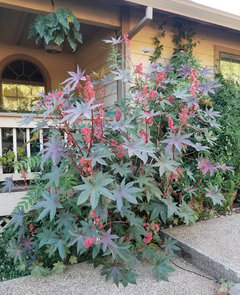
    Here is my container castor bean from last year:


    It is a durable plant because I abused it. Very spotty with the watering and feeding. Hope this helps.

  • 7 years ago

    if it survives, will depend on your efficacy as a container grower.


    Yikes Al that is too much pressure on me.

  • 7 years ago


  • 7 years ago

    In a 3.5-gallon container, my Impala castor beans have been limited to about 3 feet or so. I found it very difficult to keep up with the watering, and the castor bean would wilt almost daily.

    Josh

  • 7 years ago

    My mom always grows them in a large pot, maybe 18" diameter placed directly on the ground. But she has no kids or pets. Hers always end up being 6-8 feet tall. Nothing like Tapla's but 8' is a good amount of growth from a seed! They do add a real tropical feel.

    rouge21_gw (CDN Z5b/6a) thanked popmama (Colorado, USDA z5)
  • 7 years ago

    If castor beans are happy with its location, it will thrive and grow huge. I have been growing three plants at the side of my house for the last several years (bought seeds at first and then started my own from saved seeds subsequent years). Three plants take up the entire length of the raised bed (5-6 ft spread each) and grows to 10-12 feet tall. It's pretty impressive. The flowers and seed pods are very interesting and are way up on the plant; they won't develop into ripe seeds if you have a short season.

    rouge21_gw (CDN Z5b/6a) thanked donna_in_sask
  • 7 years ago

    if you have a short season


    "donna" I would have thought that a Saskatchewanian such as yourself would be one to regularly experience a short season!


    (Any pictures of your happy CB plants in all their glory?)

  • 7 years ago

    Hmmmm......this discussion has really got me interested in growing one of these :-) And I love that deep reddish foliage some can get. But I have never seen them for sale around here. And this is in PNW nurseries that sell the widest range of plants imaginable! I'm guessing they are concerned about liability....or the demand is so low.

    If I can find seeds do you think there is enough time to get one going this season?

  • 7 years ago

    Gardengal, plenty of time I'd say.

  • 7 years ago

    I've lost track of your address, Pam, but if you provide it, I'll get some beans out to you right away. You'll have to settle for beans from the species plant, though. Ideal time to plant outdoors would be as soon as soil temps are >55*.


    Al

  • 7 years ago

    Great, Josh, thanks. And to you as well, Al, you dear soul........I have sent you an email :-)

    I just love online friends!!

  • 7 years ago

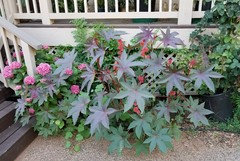
    Here's a pic from last summer, Rouge.


    rouge21_gw (CDN Z5b/6a) thanked donna_in_sask
  • 7 years ago

    Was visiting my sister yesterday. The Castor beans have volunteered all over, and several overwintered just fine. These are in the ground.

    rouge21_gw (CDN Z5b/6a) thanked greenman28 NorCal 7b/8a
  • 7 years ago

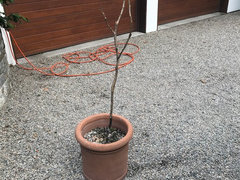
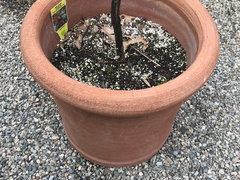
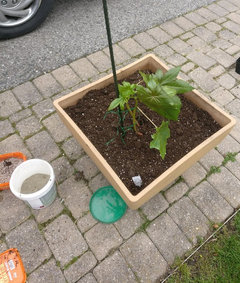
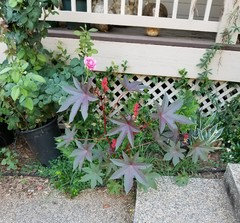
    The one in the picture wasted away to nothing (maybe the extra cold late May wasn't good). So I replanted in early June and 3 weeks later the replacement plant has finally shown lots of growth in the past week:


    How are your CB plants doing ladies and gents?

  • 7 years ago

    They're doing great, lots of volunteer seedlings.

  • 7 years ago

    Here's a pic from last summer, Rouge.


    Amazing 'Donna'. (Can I assume you have some in the ground for 2019?)


    (I have a relative in Saskatoon who has planted at least one CB plant for this season).

  • 7 years ago

    Hmmmm......this discussion has really got me interested in growing one of these


    gg, did you find time this spring to start one?


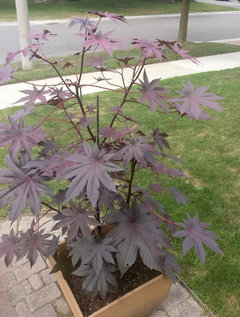
    Here is ours today.


    It seems healthy enough but it seems to be growing more in terms of width than in height these days. And if it does grow taller it wont be long till I cant easily stake it :(.


  • 7 years ago
    last modified: 7 years ago

    About a month later the actual plant is now over 4 feet in height and healthy:


  • 7 years ago

    Dh bought and planted one of those several years ago and planted it.When i found out it was poisonous,i had him get rid of it,as we had small gk's around at the time.Just about 2 weeks ago i found one coming up in a pot on the lower level of the backyard,so i'm just letting it grow again.It's the burgandy leafed one.No small kids to go in that part of the yard any longer.

    kathi

  • 7 years ago

    Of course a containerized CB will be "significantly reduced" in size. The important question is by how much.


    Of course a CB in the ground grows huge (several of you have posted pictures of their specimens...amazing).


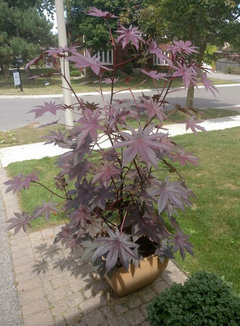
    But my experience in 2019 with our one plant in a container has got me hooked to have it be a regular potted annual going forward.


    Here it is as of today. It is about 5.5. feet tall and I have no doubt it will reach 6 feet before the start of September.


  • 7 years ago

    You guys do know that in addition to the species plant, there are many cultivars of R communis that have notable impact on how large the plant can get? The mature leaves on the species plants I posted upthread on 5/18/9 are more than 4 ft across.

  • 7 years ago

    I just cut down and out the above potted specimen.


    Can this plant be safely composted ie seeds included? Better w'o seeds?


    I do my best to always compost or at the least lay Fall "cleanup" under and around plants as mulch but for the CB Is there any evidence of allelopathy ?

  • 7 years ago

    All toxins will eventually be broken down to the degree there would be no conspicuous effect on living organisms after the plant parts have been exposed to air, moisture, and bacteria for a sufficient interval.

    Does the plant synthesize toxins that induce allelopathy in the immediate vicinity of living or decomposing plants? Best answer would have to be 'maybe'. It would depend on whether or not nearby plants would be susceptible to the toxin being produced, and whether or not the level of said toxin would be high enough to cause a reaction in nearby plants.

    Al

  • 6 years ago

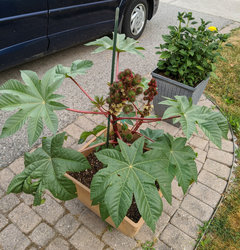
    UPDATE (July 16/2020):

    After very much enjoying this plant last year I did similarly this spring ie planted another one in the same container (but this time not the "bronzy" foliage one ie 'just' green.

    It is healthy but hasnt been nearly as vigorous as last years in terms of growth. And it is "flowering" much earlier than I saw last year with the other plant. Will removing the flowers now help it in any way in terms of growth?

  • 6 years ago

    Yes. Where a plant sends energy is called an 'energy sink'. There is a definite pecking order that determines what plant parts get first dibs on energy. Prioritization/order of sinks goes like: Primary allocation is to respiratory function, i.e. to maintenance of living tissues, then, to production of fine roots, followed by flower and seed/fruit production, then primary growth (extension of both roots and shoots), then secondary growth (thickening), and finally, the synthesis of defensive chemicals.


    Since the reproductive parts are a higher priority than primary and secondary growth as well as the plant's natural defenses, removing reproductive parts frees up energy which will be allocated to the 3 sinks mentioned, this paragraph. It will increase growth rate and the plant should be better able to defend itself against disease and insects.


    Al

    rouge21_gw (CDN Z5b/6a) thanked tapla (mid-Michigan, USDA z5b-6a)
  • 5 years ago

    donna_in_sask are the castor beans in your picture in ground or in a container. Also, are they in a well protected area. I'm trying to find a more protected area in my yard as my castor bean last year faced west but got beat up by the north west winds. I was thinking of putting them in a container facing south. I live in Sask. as well.