Software
Houzz Logo Print
vaporvac

Am I Rosa multiflora?

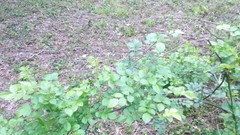
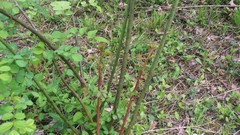
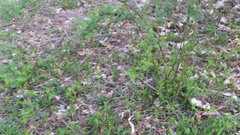
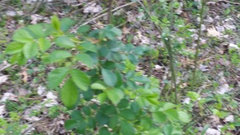
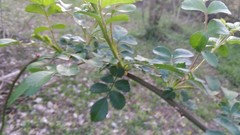
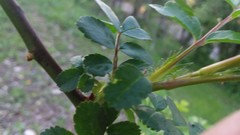
This is been growing in my backyard. I live in a very old house that had many mature plantings and things pop up when I take out weeds are overgrown trees. There was another one that mirrored it but it accidentally got killed. Definitely has multiflora and its ancestry but wondering if there's anything that definitively defines it as Rosa multiflora as opposed to a hybrid. Hopefully I can snap a pic when it blooms but if the deer break down the fence again all bets are off!. Picture heavy. Warning.

Comments (20)

  • 7 years ago
    last modified: 7 years ago

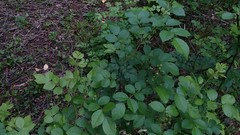
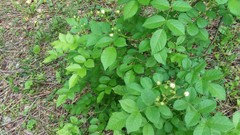
    Please excuse the bush shots. It's very hard to photograph them next to the surrounding Vine. Click to see full picture.


  • 7 years ago
    last modified: 7 years ago


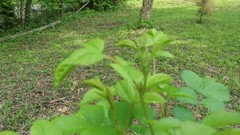
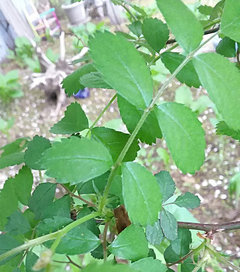
    Here is a close up of the foliage of r. multiflora. Notice the stipules as well.

    Vaporvac Z6-OhioRiverValley thanked altorama Ray
  • 7 years ago

    out in a bit and compare the foliage. Thank you for that picture. It's very hard for me to photograph for some reason.

  • 7 years ago

    Given that there are garden selections of pure multiflora, without flowers I don't know what you can possibly figure out.

    Vaporvac Z6-OhioRiverValley thanked mad_gallica (z5 Eastern NY)
  • 7 years ago
    last modified: 7 years ago

    I know that there are no flowers. However I often find other things can help identify a rose such as sepals. I also want to erase these pictures from my phone. This is a hundred year old house that had extensive plantings. I have many of the original old roses and there were two of these in a mirror image so I'm wondering if they were planted here on purpose and if so what they are. I know from old pictures from the 1920s there were roses in this area. I am not sure that I 100% follow your comment mad i e the pure Garden selection.

  • 7 years ago

    Yes, to it being multiflora. (Several years ago I was called to do a rose ID at a victorian house....the rose had been planted just after the house was built.....I had dreams of it being a long lost.......well, never mind... it was a huge multiflora. This was before Rose Rosette became established in that county.)


    The sepals match, the multiple leaflets per compound leaf match, the angle that new branches take off match, and the only thing that's kept that from being a yard eater is probably the shade.

    Vaporvac Z6-OhioRiverValley thanked stillanntn6b
  • 7 years ago

    Should I take it out? Fart just use it to try to learn ra Should be graftingfting?

  • 7 years ago

    The question is, can you positively state that this is R. multiflora, and not something like R. multiflora carnea, de la Grifferaie, Veilchenblau, or some other early multiflora hybrid? I've seen enough variation in wild multiflora to wonder.

    Vaporvac Z6-OhioRiverValley thanked mad_gallica (z5 Eastern NY)
  • 7 years ago

    . That was my question so we will just have to wait for the flower and maybe we can figure it out. Thank you I know you all have a lot of experience with this but I don't at all.

  • 7 years ago

    OMG! Please excuse my post above. Who is does not allow me to type on my phone so I have to use voice recognition and then I cannot edit my post. I meant to ask if it is multiflora should I take it out or can I just use it to learn how to graft.?

  • 7 years ago

    An oh, that is very funny and is just my luck too. At least I have some pretty Polly anthes and my new dawn was put in shortly after it was available. There was an old ones Bloomer but I somehow managed to kill it.

  • 7 years ago

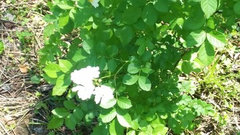
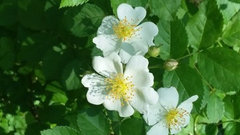
    So it bloomed! I think it's multiflora. What do you think? It has a soft scent too bad it's invasive cuz it's really pretty! I'm not sure I'll take it out though but I will cut off so it doesn't go to seed.


  • 7 years ago
    last modified: 7 years ago

    Yes, its R. multiflora. It can be grown as a perfectly lovely cascading shrub/climber if you desire. There's nothing wrong with growing the species, at least until it becomes a haven for the mites that spread Rose Rosette Disease, and then you may want to eliminate it.

  • 7 years ago

    Thank you everyone for your comments. I'm glad you have an ID on this one at least. Paul I have read that multiflora is no more susceptible to rrd than other roses. Is this not so? I think I will plant it somewhere else though where it's arching habit can be more fully appreciated.

  • 7 years ago

    Vaporvac, it's my understanding that although R. multiflora and Knock Outs have been hard hit by RRD, their statistical misfortunes are due to their dense populations, their minimal to nonexistent horticultural oversight and the fact that their nigh shoulder to shoulder stands create pathways for pathogens. There are breeders working on resistant rose cultivars, but as far as I know, all roses are equally at risk for RRD infection when grown in identical conditions. Somewhere in a past thread, StillAnn listed some conditions which put plants at a higher risk.


    I think the R. multiflora situation goes something like this: Both intentional plantings of R. multiflora (from back in the day) plus plants which have reproduced through seeds or rooted through layering have created an unmanageable, invasive hot mess. Now, vast swathes of R. multiflora flourish and run rampant through untended areas where they can contract RRD when they are ambushed by the gazillions of tiny, windblown vector mites. No one is the wiser except the few, horrified rosarians who spot weird frankengrowth rising above the tangled canes in nearby fields or discover disturbing signs in their own gardens and track down culprit carriers in the wild beyond the garden fence. The sprangly hot mess of R. multiflora isn't singularly susceptible (or evil) in nature, but it houses and accelerates the spread of RRD because there are intrastate and interstate "highways" of plant material across which RRD can travel and spread unchecked.


    Anyway, that's my understanding in a wordy nutshell. However, there are some real experts on the forum, and if they say otherwise, I'd go with their answers. R. multiflora is a pretty thing and the ancestor of some of my favorite cultivars! Carol

    Vaporvac Z6-OhioRiverValley thanked portlandmysteryrose
  • 7 years ago
    last modified: 7 years ago

    In case you didn't know, Ohio is the epicenter of the the rosa multiflora invasion.

    Scroll down to: Another Richland County Epicenter

    https://www.richlandsource.com/area_history/richland-invasives-a-tale-of-hope/article_568557f6-0eb8-11e5-a1fe-d7f746d91032.html

    Vaporvac Z6-OhioRiverValley thanked I.A. Lokin
  • 7 years ago
    last modified: 7 years ago
    • I.A. Lokin, it's really hard to "like" your post. : ((( I believe it, but thinks it's being supplanted by bush honeysuckle. Uggh. I hate it! I'm thinking of keeping this as I really want to learn grafting and chip-budding and can use the long canes if I get ambitious and try to do a standard! : )) Oddly, I always hear that multiflora doesn't like basic soil, but it seems to be doing well in my yard. I will definitely clean the flowers to prevent hips. Does it sucker? Maybe I should just keep it potted for cuttings? Thoughts anyone?
  • 7 years ago

    That's a delightful bloom! It's like a strawberry bush and a dogwood tree had a baby. Weird couple, charming baby. Heehee .

    Vaporvac Z6-OhioRiverValley thanked suncoastflowers
  • 7 years ago

    I applaud your grafting attempts! Kim Rupert has posted really helpful instructions on the internet. Your R multiflora might sucker a little bit, but my experience is that spreading mostly happens through seeds and layering. If R. multiflora is well cared for like it will be in your garden, I wouldn't sweat it. Just deadhead to prevent seeds or, if you want to breed it, cover the flowers to prevent unwanted pollination and creatures from gobbling and dispersing seeds from the hips. If you want to try grafting cultivars onto multiflora stock but don't want a new garden plant, potting up the rootstock can be useful. :-) I've got Huey growing in my driveway for just that purpose. He showed no disease for awhile. So I waited. And waited. Unfortunately, he's now showing signs of RMV. I think ALL the Huey in the US has RMV. Sigh. I may try grafting on multiflora, too. It grows well here. Carol