Software
Houzz Logo Print
melissaaipapa

Making a garden

Sheila has returned from her Italian trip and posted photos of the garden of Ninfa, and they have set my brain on fire. I knew Ninfa was beautiful, and have seen pictures of it before, but it's wonderful to be reminded. From what I've seen from photos, it is a place of perfect beauty. I don't say that about many gardens.

Also like Sheila, these photos are a reminder of what a garden can be and a spur to make our own gardens more nearly perfect. It ought to be clear as the sun that I don't mean that my garden will ever be a Ninfa. But I can make it beautiful in its own way, a way that's adapted to our very different conditions.

Ninfa, in common with many less miraculous gardens photos of which I see posted here on the forum, has three elements my garden mostly lacks: trees, flat ground, water. Well, not everyone has water, and certainly not water like at Ninfa. But I marvel at other gardeners' trees and flat ground. The big garden has no trees. It had no trees. In 2007, early in our serious work on this section, we planted several Italian cypresses, which turned out to love our conditions, and have continued to plant them. Their needle forms provide a much-needed definition and height. We also planted early on Italian pines, which don't do nearly as well, and oaks and flowering ashes and Leyland cypresses and fruit trees. Some died, some languished, some grew, but slowly. Flowering ashes are relatively rapid in their growth, and are good native trees, though even they can wait several years before getting above knee high and beginning serious growth. Oaks are even slower: it will be decades before we have tree-sized oaks in the garden, though there are a couple of gangly pre-pubescent specimens that have been in place for several years.

Trees are important because they change the character of a garden. A piece of ground as large as the big garden--it's a couple of acres or so--needs plants in scale. It needs height. It needs sturdy vegetable mass. It needs visual structure. Trees do all this. In additional to these visual considerations, trees alter a garden biologically. They provide shade, shelter from winds, which howl through the big garden amazingly, organic litter. Deciduous trees discourage grass, allowing room for delicate small plants and offering habitat for shade lovers like cyclamen and hellebores. They anchor the ground: important on our slide-prone land. Trees are also a sign that the the soil has changed, and become hospitable to their growth.

The big garden started out as poor meadow, so poor in places that even grass didn't grow. Getting grass to grow, shrubs to grow, trees to grow, has been a job. We're getting there. We've dug and amended hundreds, probably thousands of holes to plants shrubs and trees. The shrubs are fundamental: tough enough to grow in the holes we can make for them, then producing in their turn conditions that allow trees to grow. If you want an oak, plant a shrub. They offer many of the same biological benefits of trees, but on a smaller, more achievable scale. Visually, planted as hedges, they define sections of the garden. They too anchor the ground, particularly securing the borders of the two drainage ditches that cross the big garden. (Did I say we have no water? The ditches are seasonal, certainly, but I'm hoping that over time they'll become less like ditches and more like natural drainages.)

The grass has gotten better: higher, thicker, with more wildflowers. DH helps by scattering clover seed in all the bald spots in the paths: it grows! We have our awful weeds, particularly rich in disturbed ground. Mowing in spring is huge, and I have a world of shearing to do in the beds where the grass has gotten thigh-high, waist-high, and then fallen over. Patience. Grass makes the garden grow: it's our fertilizer, our virtuous spiral. I do pin my hopes to an extent on the trees: that as they mature, we'll have a bit less grass. But for now, the garden is simply in the grass phase, and we have to suffer through it.

We have several more years of basic planting ahead, even if all goes well: DH, still doughtily pushing the motor scythe, is in his eighties; I'm older; there are all the adversities of the weather, particularly drought and water availability. We don't irrigate otherwise, but watering the first year is simply essential. I'm planning on another four or five years of foundation planting: hedges, roses, trees, subshrubs; with all the maintenance of what's currently here. Should we finish the planting, I'll be doing maintenance and dabbling for the rest of my life, and watching the garden grow. It might reach an early maturity about fifteen years from now. Well, we'll just keep on doing what we can.

Comments (25)

  • 7 years ago

    One of my favorite things about this forum is (besides the pics) reading about people’s relationships with their gardens. Their trials and evolutions.

    Even talking about soil and organic matter adds a richness to the conversation...just like in the garden :)


    It’s a reminder that having a garden isn’t just about getting that particular look or flower, it’s about all the layers accumulated over time. I just love it.

  • 7 years ago

    Loved what you wrote. I always love to look at pictures of your beautiful garden and will continue as it gets even more beautiful (is that possible?) every year.

  • 7 years ago

    Thank you for this, Melissa. I was struck by the glorious trees in Ninfa and the beauty of a more mature garden. We are with you in attempting to move in that direction in spite of our limitations. I think growing your garden"hard" in the naturalistic style will make it much more survivable in the long run. I agree with you that all our weeds can contribute organic matter and will help build our soil health. I do prefer the more mature look of roses, wisteria and trees. We are going to have to keep at it our whole lives to get there. One comment the guide made at Ninfa was that a lot of energy was put forth to contain their bamboo. This seemed to be the only mistake I could see was planting something that required so much maintenance over time. We don't have the water for that thankfully.


  • 7 years ago

    As many others, I can relate to this post, but living in a very wet place, containment is key for natives as well as invasive plants. Sheila, I have running bamboo and it is a nightmare. I'm finally getting a handle on it, but one can't blink! I wish it were the clumping variety. My neighbor has that and it's minimal yearly upkeep. I wonder what varieties they have at Ninfa. Melissa, your post has made me rethink removing some of my large trees that shade areas where I want roses.... I wanted to plant it as it was years ago, but now I'm pondering how to move forward in my lowest level. Your recent pictures were amazing.

  • 7 years ago

    Thank you for this, Melissa. You remind me that gardening, like any sort of art, is more about the practice than the product. Each of our gardens is a personal philosophy put into practice.

  • 7 years ago

    So much wisdom and beauty in what you write, Melissa, and in what others have written in return. Other than the crape myrtles, my efforts with trees and shrubs have been less than stellar. The buddleias are gone because I did not know to prune them every year and they became a tangled and unwieldy mess. The cypresses and junipers (the latter planted too close to the house) are fire hazards, which wasn't something generally discussed when I planted them in cooler and wetter times. Our efforts were more focused on taking out trees, like the palm tree that is a favored home for roof rats by the back door and the tree in the front yard that would have eventually buckled the house foundation (both planted by the previous owners). The giant African tree they planted in the back of the house now arches over the roof, and cutting down that segment will be unsightly and expensive. We have recently done one useful thing, putting in irrigation to all the trees on the hillside (other than the pepper trees, which don't need it) so they won't be dried-out fodder for the flames of future wildfires. One tries to do the right thing but in the perilous times we live in what is right is often a question without answers. Gardening organically and using companion plants that benefit the birds and the bees are the only things I know how to do at this point.

  • 7 years ago

    Melissa, your journey is fascinating, and I agree with the others, your writing is so engaging. I think the scale that you are gardening on is so daunting and your efforts so admirable! I love being able to ”watch” it unfold with you. We’re all cheering you on!

    You said once you finish planting, you’ll just be maintaining. That really resonated with me, as my DH are in the same place, and I keep trying to encourage him on with that very idea.

    Bart, I love what you said about the weeds. Once I understood how plants work, I started to look at my weeds much more differently. I now make weed soup out of my weeds and rainwater, or snip off the leafy parts of weeds to compost. My DH laughs at me because while doing so I will often tell the weeds, “now you will have the opportunity to give back to us what you have stolen.” :-)

  • 7 years ago

    Vapor, my Ninfa book by Charles Quest-Ritson says Duchess Ada brought bamboos to Ninfa from her estate in Fogliano on the Italian coast. No variety listed. They were towering. Their Fogliano home started in 1877 and a garden followed there. Ninfa garden started 1920 ish.

  • 7 years ago

    Vap, I have seen so many bamboos that grow here and you are right it is called clumping ( spelling ) the rest all will spread.

    Perma, I agree with you about the weeds but you did it so cute. It will make anyone smiles esp seeing you scolding at the weeds. Too cute :)

    I really enjoy Shiela's thread. The trees, the stone wall castle , lake......
    Shiela was it windy where you were at bamboos. I love the music it plays as it dances in the wind.

    Melissa, great thread. I agree that everything has to be at equilibrium but here I am trying to remove some trees. I have to weight it differently Bec of safety issues, Hurricanes. But I still agree with you guys maybe something in smaller scale and farther away from the house.
    I can't wait to maintained my garden like anyone else. Just that I still got long ways to go.
    jin

  • 7 years ago

    Are those your bamboo g I think they are one of my favorite things and you named the exact thing I love about them the sound they make when the wind blows through them . in?

  • 7 years ago

    Thanks to all for these lovely replies: I've really enjoyed them. You've all made this thread beautiful. Bart, could I come and see your garden one day? The problem is, of course, to see it in its glory, I'd have to leave my garden when it's in ITS glory. I'm way behind in grooming, too, and this without health problems, so I understand your difficulties at least somewhat. I spent all day yesterday shearing the Dutch Bed, and got less than half done. Ha. I've been thinking about battery-powered tools recently.

    Sheila, I agree that growing the garden hard makes it more resilient. The big garden breezed through 2017, and that was a tough year. Good luck with your own garden! Did seeing Ninfa alter your ideas in any way?

    Perma, actually, I said I'd be maintaining and dabbling. The garden will never be completed, even if I live to be a hundred, gardening all the while: the next several years I just hope to finish the foundation planting. In our current, grass phase, as I call it, small plants aren't an option, as they get choked or shaded out by the grass, and the ground is still too poor for many things. I think that will change as the years pass. And, of course, I'll continue to get new ideas. I have a fecund mind when it comes to gardening, and a thousand projects I haven't found the opportunity to carry out.

    Trees aren't an unconditional good, as Ingrid and Jin have pointed out, but we definitely need them. They grow very slowly in our climate with its dry summers, and very few people locally think about planting or taking care of them. When we bought our property, an entire small farm, it hardly had a good tree on it. Planting them is a lifelong task.

    I have to go! Jin, I like your photograph.

  • 7 years ago

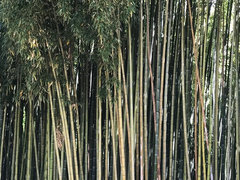
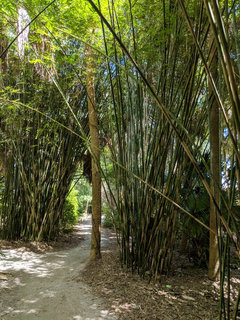
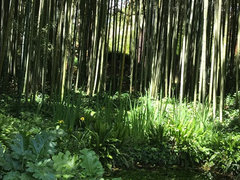
    Vap, the bamboos were my favorite spot. It definitely chimes. The sound was so great that is soothes anyone .
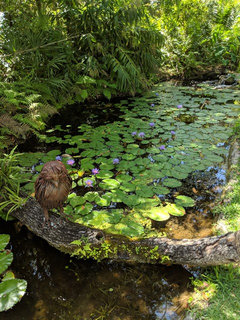
    Another spot was a pond that runs all over like a stream. That is rare to see in any garden ( here in FL) due to mosquitoes breeding but it was running over pebbles , logs and rocks with beautiful water lilies and you can hear the sounds of water. It is very relaxing and I am looking for a small fountain for my small backyard.
    I try to look for fishes but they must be really deep or hidden...lol
    Both were my favorite. Music to ears :)

    jin

  • 7 years ago

    Better Ninfa bamboo shot.


  • 7 years ago

    Melissa, I so yearned for more age in my garden to give it more craggy trunks and canes on plants that I love. I also think less is more could help me not over plant. There were open spaces galore in Ninfa that really added to the serenity. I also thought I needed more clematis. They do have more water there in rainfall and the river, so clematis love it there. Here, I have a great well, but the emitters can give out and be less reliable than rain. Ninfa agreed with my no pruning or chemicals approach. Everything was grown naturally and allowed to be it's healthiest best. I loved that look. I love the wild naturalistic look that I know you and Bart among others are striving for.

  • 7 years ago
    Shiela, that is the best pic . Holly Molly !! It looks SO BEAUTIFUL like an art. Love the bamboos and how the sun reflects through them .
    That pic needs to be in landscaping mag that Marlorena shows us every now and then.
    Perfect !!! Great photography :)
    jin
  • 7 years ago

    Sheila, I'm really glad to hear of Ninfa's naturalistic approach to garden maintenance: a garden that's healthy as well as beautiful! It'is a garden that allows its elements to speak for themselves.

    Gardens do need open spaces, of course, and, like you, I tend to overplant. The larger the garden, the larger the open spaces need to be, just as there need to be larger plants then. The problem in places like the big garden is that, when summer comes, in those treeless open spaces, you die. In the horribly hot summer of 2017, I literally didn't go in the big garden for months. This is where trees come in again: there can be space in their shade. Also after summer 2017 I paid more attention to pergolas and treed allees, which would allow me to pass from place to place in the garden while remaining mostly in the shade. These are still growing, more idea than realisation, but I feel better just for having started them.

    I've never yet figured out exactly what clematis want, but have some straggling survivors that live amongst the weeds and bloom every year, with no care whatever. Apparently our usually generous annual rainfall (about 40"/1 meter) together with heavy soil is good enough for them. How much rain do you get? I agree irrigation isn't the same thing. Have you tried any of the herbaceous or shrub clematis?

  • 7 years ago
    last modified: 7 years ago

    Average rainfall here is about 18.35 inches per year, Melissa. I think clematis love water. I have tried the herbaceous clematis and liked them, but I love the vining ones more. They can be so graceful. I stick to the type 3 pruning group here except Roguchi and Juuli. More rain would be nice here. Irrigation is essential. You are right to keep working on trees. We had some mature oaks when we moved here thankfully. We are starting to water a struggling Douglas Fir. I hope it isn't too late.

  • 7 years ago

    Treasure those trees, Sheila! Perhaps in fifty years we'll have mature oaks here, but DH and I won't be around to see them. But at least we get to start them off.

    By the way, can you grow the cold-climate old roses? Gallicas and so on? One of the most opulent effects I know of is to grow a suckering rose in a bounded area, where it can spread out but still has limits, such as those imposed by mowing or pavements. I have a couple of roses in this situation, and am looking forward to their bloom.

  • 7 years ago
    last modified: 7 years ago

    Yes, Melissa, cold climate roses are great here too. This climate works for them too. I have about every class of roses. I am thrilled I can grow all the "classics" I read about in my English gardening books along with the Teas, Chinas and Noisettes.

  • 7 years ago

    Sheila, you really have the best of both worlds, as Melissa does also, and both of you have enough land to accommodate it all. Molto bene!

  • 7 years ago

    I am lucky, as Ingrid says. Sheila's not only fortunate in her climate and space, she takes good photos. Today we're in the first of what's forecast to be three days of rain. This has been a cool, wet May, and while it's hard on the flowers of the warm climate roses, and though we ran out of firewood in April, taking it all together, I'm all for it. This is one of those springs we occasionally get that really encourage plant growth. I've noticed some youngish hazelnuts starting to crowd their neighbors, and am hoping for a full second spring flush of the warm climate roses, with some of the pruning I didn't get around to last winter taking place in between. And, no more need to worry about running out of water this summer, which I was fretting about back in late winter and spring when it was so unseasonally dry. May really is the most beautiful month of the year. And even though when the summer drought comes it will lay the luxuriant grass low and foster a crop of weeds, still, the tree and shrub growth of spring will have happened, and will remain.

  • 7 years ago

    It's uber-rainy here, too,and I'm happy about it as well, though it does compromise the flowering. It's like an "investment year"; the plants will become fortified for the future. February and March were so frighteningly dry; I just want to be grateful that at least now it is raining abundantly. Of course this does mean I can't get out there ,because even if it's just occaisional showers predicted, there's no real shelter other than my car,but if it was dry, I'd have to be spending most of my time and energy on worrying about providing water,and I can't water my garden the way Heaven does, lol!!!

    In between trying to catch up on clean-up and pruning, I am trying to create some open spaces as well; specifically spaces that will be destined for seating,resting,observation and contemplation. This is so challenging for land that has basically no true flat areas and is so exposed to the sun,so I have to think carefully. I want to try to make a simple pergola , too,but out of rebar and such, not wood. This, too, is challenging since there is basically no area of my garden that has evenly deep soil.

    Planting trees is so important, but this requires a lot of thought. The land is exposed to the southwest, and slopes drammatically down in that direction, so in order to shade the garden I have to plant trees judiciously in the hope of blocking some of that wicked summer afternoon sun. However, the view in that direction is so beautiful , and I don't want to block that completely either!!! Cypresses are a great choice, of course. But I also have a Paulownia; they grow so fast and ought to provide deep shade. I have a baby one as well-have to think carefully about placing this one...

  • 7 years ago

    Bart! This all sounds so familiar!

  • 7 years ago

    ...worse yet, I keep on getting new ideas, lol! Like maybe making concrete steps for the main paths that slope so much, and installing railings as well...So much to do!

Sponsored
AIS Renovations
Average rating: 4.5 out of 5 stars15 Reviews
Custom Craftsmanship & Construction Solutions in Franklin County, Ohio