Software
Houzz Logo Print
laura_g_young

Colorado Pollinator Gardening

7 years ago
last modified: 7 years ago

Above my little rock garden and in the herb and tea 4x4' beds, I've planted things over the last few years for the local bee, bird and butterfly population. If anyone's into this sort of thing, feel free to add to my list of plants* that have been proven to attract pollinators to your yard.

Pollinator Garden Plants:

Scarlet Runner beans -- bumblebees and hummingbirds

Creeping Hummingbird Trumpet -- hummingbirds

Arugula -- small native bees

Tithonia “Torch” (Mexican Sunflower) -- all bees and butterflies, especially swallowtails and monarchs

Borage -- Big time bee and bumblebee favourite, painted lady butterflies

Salvia "May Night" -- all bees, esp bumblebees

Butterfly bush -- all bees and butterflies, esp. Western Tiger and Two-tail Swallowtails

Heritage raspberries -- all bees (plus praying mantises!)

Hyssop “Blue Fortune” -- bees and bumblebees

Ice plants -- small native bees

Narrow leaf coneflower -- most bees and butterlies

Sedum "Autumn Joy" -- Skipper, Hairstreaks, Red Admiral, Fritillary butterflies

Raspberry Wine beebalm -- Swallowtails, blues and other butterflies. This is my best hummingbird plant, bar none.

Blue Flax -- small native bees

Rudbeckia -- most bees and butterflies

Honeysuckle “Major Wheeler” and “Scarlet Dropmore” -- Hummingbirds

Blue Mist Spirea “Blue Knight” -- All bees love this one very much

Strawberries -- bees, fruit-eating butterflies

Alpine strawberries “Mignonette” -- ditto

Various mint cultivars -- whites, skippers, hairstreaks, blues, and all bees

Lemon Balm -- ditto

Roman and German Chamomile -- all bees

Munstead Lavender -- all bees

English Thyme -- small native bees

Lemon Thyme -- small native bees

Chives -- all bees, but a BIG favorite of bumblebees

Kale “Red Bohr” and “Red Russian/Ragged Jack” -- checkered white, sulfur and related butterflies

Fern-leaf Dill -- Black swallowtail, anise swallowtail
Columbine “Denver Gold” -- hummingbirds, bumblebees

Cashmere Sage -- all bees
Oso Easy Paprika Rose bushes -- all bees

Morden's Sunrise Rose bushes -- all bees
Rocky Mountain Penstemon -- bumblebee favorite

Weeds I allow in limited amounts:

Common Nettles -- Comma, Red Admiral and Tortoiseshell butterflies

Alfalfa -- blues, checkered white, sulfur and related butterflies

Red Clover -- all bees, blues and checkered white, sulfur and related butterflies

Wild sunflowers -- all bees and most butterflies. A real favorite!

Dandelions -- all bees, painted ladies, skippers

Mallow -- small native bees, skippers, hairstreak butterflies, painted lady butterflies

Lambs' quarters -- skippers and moths

Buckwheat -- all bees, most butterflies

New to the garden this year (will keep notes):

Liatris "Blazing Star"

Engleman's daisy

Hummingbird Agastache

Creeping zinnia

Lantana no-ID

Hardy Aster “Monch”

Gallardia “Goblin”

Chocolate flower

Mexican Hat

Nasturtiums: “Alaska Mix” and “Empress of India”

Serviceberry bushes

Mexican Tarragon

Planting out later:
Marigolds -- most small native bees, bees, whites, skippers

Zinnias -- most bees, butterflies

Also: I've tried a couple of times to grow common milkweed for monarch caterpillars, but it failed to thrive. I suspect it likes a less crowded bed, or more water, or some other conditions that aren't being met. I might try it again in a container, just as an experiment...

*Sorry I don't have time to put in the scientific Latin names; I may do this later. I also hope to sort out the larval host plants from the nectar plants.

Comments (10)

  • 7 years ago

    I tried Asclepias tuberosa, as well. It just sort of gave up the ghost by July. Now that I think about it, it wasn't the healthiest specimen to begin with (had been in its pot way too long) so maybe I'll try it again. Bee plants are spectacular, but I don't currently have enough room for a good stand of 'em. (Maybe a shorter cultivar in a container?)


    Today I had a Red Admiral butterfly unexpectedly land on my shirt as I was checking on the plants. He's apparently set up shop in the nettle patch, and is guarding his territory very intently! Really gorgeous little fella.


    This is the first week that we've really had much insect activity in the garden; I'm hoping the last few cold snaps didn't set them back too much. I seriously haven't seen a single honeybee this season, which is unusual. At least there's been a few little green sweat bees, and one confused bumble.


    I recently learned that Colorado has 946+ bee species in 66 genera -- that's a lotta bees! :)


  • 7 years ago

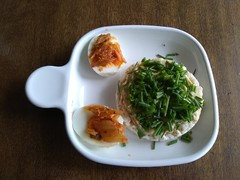
    We've had alot of honey bees, a fair number of bumble bees and the usual wasps but not as many wasps as normal due to the cold weather. I've had trouble cutting my morning chives because they are in flower and the honey bees are enjoying themselves. I've really been enjoying a whole heap of chives on hummus and rice cake drizzled with olive oil. Love starting out the day with chives from the kitchen garden. Yum!


  • 7 years ago

    Good list, Laura. Bees go nuts over my Little Trudy catmint.

  • 7 years ago

    Thanks Laura, I have lots of spaces to fill in the coming years and want to make sure I keep pollinators in mind.

    A few things I have that the bees seem to love:

    Catmint

    Lambs ear

    Burning bush (tiny flowers in the spring)

    Thornless honey locust tree - not a "plant" but if anyone wants a cool tree I would highly suggest this one. There are so many bees on it at times it almost sounds like a hive.

    Rose of Sharon - I wouldn't necessarily suggest this but it was here when I bought my house and can probably never eradicate it but I swear bees are addicted. The amount of pollen is insane and at times I'm amazed bees can still fly being so loaded down.

    I would like to get my hands on some borage, for some reason I never seem to come across any seeds or plants.

    I do have some showy milkweed in a corner of my yard but I've yet to see a monarch let alone caterpillars, lots of earwigs though (gross). It grows on its own, not watered other than rain, not much sun (~4 hours), again here when I bought the place. I keep it around just in case but it seems to grow well here.

  • 7 years ago
    last modified: 7 years ago


    Oooh, these are great additions to the list! Keep 'em coming...


    Nicole -- That's a good point about the Rose of Sharon pollen. When I initially started out planting for pollinators, I was only vaguely aware that bees would prefer some plants for nectar, but others for pollen, and some for both. Here's an interesting list from Wikipedia: https://en.wikipedia.org/wiki/List_of_pollen_sources


    The borage I have is from Botanical Interests. I planted a couple seed packets about nine years ago, and it STILL faithfully reseeds itself without fail every year on both the east and west sides of the fenced backyard. It seems to like the warm rock mulch especially, so I end up transplanting a bunch of seedlings every spring back into the beds.


    Deb -- Yeah, they really do love the catmint, don't they? I was a little worried mine had cross pollinated with the true catnip this past season, but the flowers just opened this week and they're still that pretty Walker's blue. (My catnip has white blooms.)


    Recent sightings: Mostly small local bees, Painted Admiral butterfly, Painted Lady, Field Checkerspot, a White Striped Black (new to the list) and some variety of cutworm caterpillar (future miller moth...?) that was relocated away from the herb garden seedlings.


    Oh, and not a pollinator but I also came across the largest jumping spider I've ever seen on the raspberry canes. About the size of my thumb!


    Still no honey bees in the yard, though. It's really weird...

  • 7 years ago

    Bees are crazy for Blue crane's bill in my yard and it's a very reliable plant. It is very well behaved, grows in one nice clump unlike the pink bloody crane's bill that I refer to as the garden thug.

  • 7 years ago

    Haha I have a "garden thug" pink cranesbill geranium. Have NO idea where it came from.

    Blue cranesbill would be nice.


    Speaking of blue: yesterday I saw something interesting -- a beautiful Variegated Frillitary butterfly -- and it was laying eggs on the blue flax! I'd no idea this was a host plant for their caterpillars. How cool is that? Good thing I've got a lot of new flax plantlets coming up in case this one gets over-grazed...

  • 7 years ago

    I’ve not seen nearly as many insects in my yard as usual this year. Because of the cold spring?

    I do see quite a few honeybees but two years ago I could stand still in my yard and hear the buzzing without even bending down. Now it’s nowhere near that. Last year I didn’t have as many bees, but had TONS of wasps. I’m happy to have fewer of them this year. Also many fewer ladybugs this year, which is sad; the aphids seem to be doing fine.

  • 7 years ago

    I'm happy to see fewer wasps this year as well, Faith. But they are still here. I have a bee swarm trap in my yard trying to catch a swarm and the only thing I have is a wasp nest. Grrr.

    That pink crane's bill aka "thug" would be great for someone how needs a creeping ground cover. It's very easy to dig portions and give them away. I have given away chunks of it.