Software
Houzz Logo Print
heruga

Some perennial ID please

7 years ago
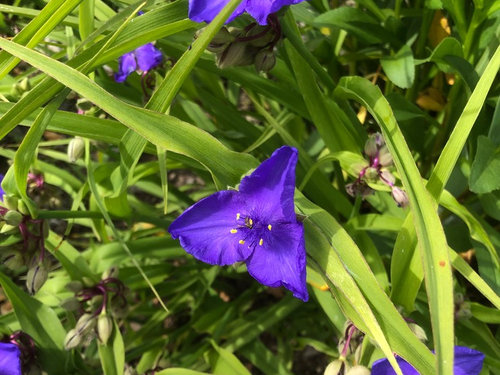


Last 2 was referred to as wildflowers. Not sure if They are native but they are naturalized in a wild setting.

Comments (85)

  • 7 years ago

    Turns out it was dianthus carthusianorum. The supplier said they will send me some free dianthus superbus to me so that’s good.

  • 7 years ago

    That's good news and for me too! (just in case lol)

  • 7 years ago
    last modified: 7 years ago

    Heruga Sanguisorba tenuifolia would have small dangling white flowers. I think yours is S. o. Here is an interesting article https://www.researchgate.net/figure/Basipetal-anthesis-in-the-inflorescence-in-Sanguisorba-officinalis-See-description-in_fig4_322117927

    I grow different species and have found them to be highly promiscuous. I have had seedlings that look like S. t. but with upright red flowers.

  • 7 years ago
    last modified: 7 years ago

    Isn’t that a cultivar called ‘alba’? I think it’s natural flower color is pinkish red which describes the color of the one I have. S.o also shouldn’t be 6+ft and should only stay to 4 ft max according to sources. Flower itself was also longer than my other s.o.

  • 7 years ago
    last modified: 7 years ago

    What is this? I’m pretty sure it’s a native


  • 7 years ago

    Lythrum species.

  • 7 years ago

    I don't believe it's a native Lythrum, probably one of the eurasian hybrids that are considered dangerous to wetlands. It's certainly not my native L. alatum.

  • 7 years ago

    Ok well upon my research the species might be lythrum salicaria. Looks like its an invasive in my state

  • 7 years ago

    Salicaria yes, and invasive. No known eurasian hybrids here, but salicaria has hybridised with our native L. alatum.

  • 7 years ago
    last modified: 7 years ago

    What’s this that looks like something in the lamiaceae family? And then is this a spore seedling of an athyrium nipponicum? I had one close by until 2 years ago I gave it away so if it is I don’t know why the spores germinated now


  • 7 years ago
    last modified: 7 years ago

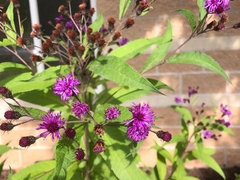
    Heruga. Your plant is an iron weed, Vernonia, looks like Vernonia noveboracensis.. They are in Asteraceae. Very good pollinator plants. I don't know what's up with your ferns, but the more the merrier.

    Heruga (7a NJ) thanked Jay 6a Chicago
  • 7 years ago
    last modified: 7 years ago

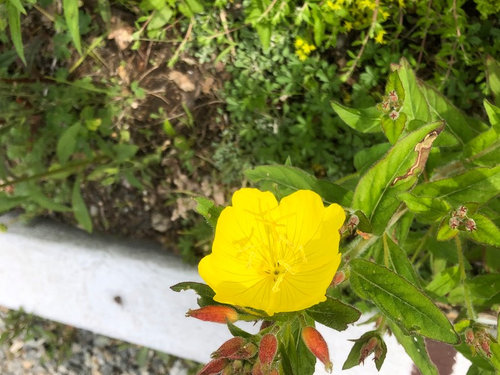
    What’s this?


  • 7 years ago
    last modified: 7 years ago

    Common evening-primose - Oenothera biennis.

    Do you have a good wildflower field guide? You seem very knowledgable about many obscure and rare Asian plants, but unfamiliar with some common ones that are native to your area...a field guide could really come in handy for that.

  • 7 years ago

    Oh so that was also an oenothera. It looks different than the one in the pic I first posted. That one wasn't as tall and did not have woody stems. It also bloomed much earlier. A different species of this genera? Yes I study and research a lot of East Asian temperate plants since I'm most interested in those but you're right, I should be more familiar with more native plants as well. All of these pics I take are located at my workplace and we use a lot of native plants here. This is where I get some of my knowledge and experience with native plants(European plants too)

  • 7 years ago

    There are lots of Oenotheras. But even the common O biennis is variable depending on growing conditions. Plants don't always conform to a standard model.

  • 7 years ago

    Heruga thank you for reminding me that my Sanguisorba tenuifolia was 'Alba'. I have grown it for so long I had forgotten it was a cv. Old gardeners forget things sometimes!

  • 7 years ago

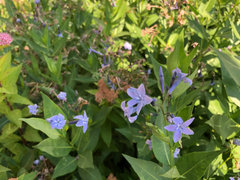
    Whats this? I see a lot of it and blooming now.


  • 7 years ago
    last modified: 7 years ago

    Heruga, that one is Lobelia syphilitica, great blue lobelia.

    https://www.illinoiswildflowers.info/wetland/plants/gb_lobeliax.htm

  • 6 years ago

    What is the purple flowered one and the on the left, an early blooming shasta? Also in the second pic, the Red double flowered ranunculus like flower in the front? I know the other red are primulas


  • 6 years ago

    Shasta daisy looks right.

    Purple flowered plant in top photo appears to be Sisyrinchium, blue-eyed grass

    Red (pink) flowers in foreground of bottom photo are Bellis perennis, aka lawn daisies

  • 6 years ago

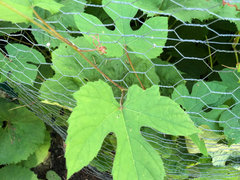
    Looks like I can comment here again. 2 plants. What vitis species is this and is the second plant a disporum? If so what species? I never planted that so it must have self sown


  • 6 years ago

    Don’t know about the vine but the second picture is Epipactis helleborine which you asked about last year.

  • 6 years ago

    Is this artemisia? if so what species?


  • 6 years ago

    Yes, perhaps Artemisia ludoviciana 'Valerie Finnis'

  • 6 years ago

    Oh right, I remember I asked about the epipactis. Couldn’t remember how it looked. Gotcha on the artemisia.

  • 6 years ago

    What is this shrub


  • 6 years ago

    Heruga, it's Philidelphicus. I'm leaning toward P. inodorus.

  • 6 years ago

    Jay generously gave you some bonus letters. Philadelphus rather than Philidelphicus. Does it have a sweet scent? If it does that would eliminate P inodorus.

  • 6 years ago
    last modified: 6 years ago

    Thanks floral. I've heard that inodorus can be fragrant. Damn autocorrect! What's in a name?

    https://gobotany.nativeplanttrust.org/species/philadelphus/inodorus/

  • 6 years ago

    there are some mock orange.. that will knock your socks off with fragrance from 50 feet away ...


    and others that are not worth the space they take up.. which can be massive ...


    ken

  • 6 years ago
    last modified: 6 years ago

    So that’s a philadelphus. Heard of the name but never seen it in person. It Was there in one of my open house showings so I just took a pic. Didn’t smell it close up but did not notice any fragrance from a distance.

  • 6 years ago

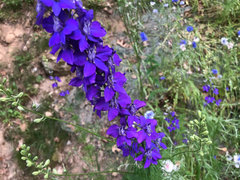
    What is this? I think it’s some kind of annual but seed was sown last fall


  • 6 years ago
    last modified: 6 years ago

    Consolida regalis? Ranunculaceae, closely related to Delphinium. an annual , larkspur, it will seed everywhere if not deadheaded.

  • 6 years ago

    Is this amsonia tabernaemontana?


  • 6 years ago

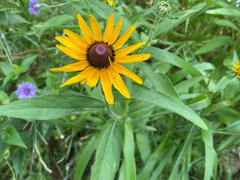
    2 things. What is this magnolia and this rudbeckia looking plant? It was in one of the ’wildflower’ mix sowed last fall.


  • 6 years ago

    Yes it's Amsonia tabernaemontana, and Calycanyhus floridus, and Rudbeckia hirta. Doitashimashite Heruga 😁

    Heruga (7a NJ) thanked Jay 6a Chicago
  • 6 years ago

    What may this be? It’s naturalized. Looks very much like something that would have a milky sap but not sure what it is. White flowers


  • 6 years ago
    last modified: 6 years ago

    Apocynum, dogbane. Could be 1 of 2 species, androsaemifolium, or cannibinum.

  • 6 years ago

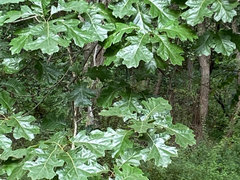
    More of confirmation than ID but here are 4 plants that grow naturally in my area. 1) A vernonia, as you told me last year jay? 2) A cherry of some sort? 3) Solidago? What species ? 4) A bur oak?


  • 6 years ago
    last modified: 6 years ago

    What tree is this? Also nevermind the last pics, I discovered they are ragweed and solidago not vernonia


  • 6 years ago

    One of the shrubby Loniceras. Very likely one of the invasive ones.


    Btw not seeing any Ragweed in the preceding pix. First pic looks like Solidago with Aster

    Yellows disease.

  • 6 years ago
    last modified: 6 years ago

    Isn’t the 3rd pic ragweed(ambrosia artemisifolia)? Has a very strong mum like smell

  • 6 years ago

    No it’s not. It’s an Artemisia species

  • 6 years ago

    Then probably artemisia vulgaris. I grow A. Princeps and they look nothing alike. Btw may I ask how you are able to distinguish this artemisia and ambrosia? They look very similar and I thought it was just ambrosia because it’s native to where I live, although I probably have never seen it if these are all artemisias.

  • 6 years ago

    What is this vine? Thought it was English ivy at first but when I went closer it looks different.


  • 6 years ago

    Those are the mature leaves of English Ivy.

  • 6 years ago

    Hedera helix leaves are very variable, even before they reach the top of their support and go into the arborescent phase.


  • 6 years ago

    Ty.

  • 6 years ago

    Heruga, could you possibly start a new thread for your id questions? This one has got very long and it takes a while to find the latest query right at the end. Some people might not even bother, thinking it’s an old post.

Sponsored
Peabody Landscape Group
Average rating: 3.5 out of 5 stars8 Reviews
Columbus' Reliable Landscape Design & Contracting