Software
Houzz Logo Print
rosie1949_gw

Baking Soda & Mildew

7 years ago

Found this tip (where else???) in Pinterest. Anybody heard of it? Tried it? Was it successful?

There was also a way to "test" soil for acidity or alkalinity, don't know if that would be useful for violets/gesneriads. Rosie

https://homehacks.co/baking-soda-uses-garden

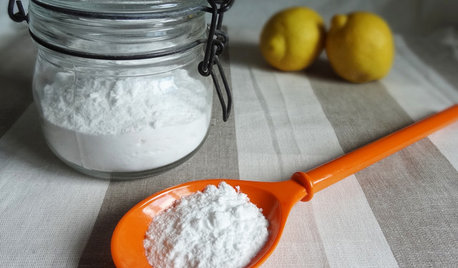
Apply it to your plants to get rid of mildew.

Just like the tip about fungus, baking soda can also kill off mildew that can rot your plants (fruits and vegetables in particular). All you have to do is mix a tablespoon of baking soda with two and a half tablespoons of horticultural oil in a gallon of water. Put it in a bottle and spray it on your plants to give them a protective layer against mildew.

Comments (21)

  • 7 years ago

    That sounds like a goopy mess to be spraying on violets. I have to believe such a spray would destroy the flowers so you would need to disbud before spraying.


    I've had a running battle with powdery mildew for several years. On my plants it has affected mostly the flowers and left the leaves alone. At first I followed advice to spray with a solution using Spectracide Immunox, disbudding the affected plants first. So of course, when the plant flowered again, the powdery mildew came right back. Then I got 2 room air circulators and ran them 24/7. For a year, that seemed to do the trick. Then the powdery mildew came back on the flowers. I tried spraying with a Neem oil solution, leaving the flowers on the plants. Some flowers were fine with it, but others looked bad after the spraying, and the powdery mildew came back anyway. So the latest thing I've tried is treating with sulphur. I ordered a one pound bag of Greenway Biotech brand on Amazon. It comes in a heavy duty plastic bag. I wasn't sure how best to apply it, but I discovered that if I opened the bag and then quickly pressed the top sides together, a very faint dusting of sulphur would emerge. So I placed my plants in a position to get this faint dusting of sulphur as I pressed the top of the bag together. It doesn't show up on the plant, the flowers are fine, and so far it seems to be working!!! I recommend to practice a few times on a table away from anything else, so you don't make a mess. If this doesn't continue to work, I don't know what I'll do.

    Rosie1949 thanked judy musicant
  • 7 years ago

    Thanks Judy! Rosie

  • 7 years ago

    This year if very mlidewy... inside and outside...

    Regarding baking soda - there is a product on the market - Green Cure - it is similar to the baking soda - but with potassium bicarbonate instead of sodium bicarbonate. Potassium is a fertilizer - sodium is actually bad for the plants.


    It is a very mild preventative - and you can make a solution and spray once a week - it is not going to spoil. I only can say how it worked with roses - if you make it a weekly routine - it works. If your plants are heavily diseased - it won't.


    So no matter what you use - this year is a challenge for all of us and one time treatment is not going to help. Probably anything helps - if you do it on schedule.


    My peonies bushes are white... first time THAT BAD.

  • 7 years ago

    Good info! Thanks Irina! Rosie

  • 7 years ago

    Probably will work lovely as a prevention and absolutely non-poisonous.

  • 7 years ago
    last modified: 7 years ago

    irina_co

    "Probably will work lovely as a prevention and absolutely non-poisonous."


    Unless you're a fungus. :-) Can work well with seedlings which are prone to damping off. ( And you can always relax with a cup while your at it.)


    A tincture of cinnamon is also highly effective --- unfortunately a cinnamon tincture will stain pretty much ANYTHING. (Not always a big deal on leaves if a type of plant which will replace leaves regularly or if veggie plants wherein aethetics isn't a big deal, but on flowers, clothing, painted surfaces .....)

  • 7 years ago
    last modified: 7 years ago

    Judy, Do you live in a wet climate? Sometimes the fungus or mold gets into the house structure and will keep coming back on your plants. Air circulation might be helpful. Maybe supplementing window light with extra hours of artificial light will help.

    Have you had success with growing AV before the problems with mold started? Did you repot and scrub pots? Do you use plastic pots, not clay? Plastic can be sterilized and works better than clay.

    Joan

  • 7 years ago

    Thanks Joan. I'm in NJ which does get humid during the summer. The humidity in the sunroom with the plants (see below), is currently between 40 and 50% - just right, I would say. I have no way to supplement with artificial light. Also, I have 2 room air circulators running 24/7. The powdery mildew issue started about a year ago. In any event, since I treated my plants with sulphur as described in my post above, I haven't had any problems.


  • 6 years ago

    An old man gave me that tip back in 1990. I've just used baking soda in water. I was using it to get rid of white powdery mildew on Crepe Myrtles. It worked teasl well.

  • 6 years ago

    6 months solution. Go to eBay and search for fungicide Topaz or Topas. Syngenta makes this powdery mildew specific systemic fungicide and sells it in Europe. The solution for spraying should be 5 ml per 10 litres, or 2 ml per gallon - whatever you find. It is sells in plastic non-resealable pouches - so probably smaller dose makes sense. For 6 months your collection will be powdery mildew free, guaranteed. Next spring - do it again. So buy at least 2 doses.

    I understand that some growers prefer not to use serious fungicides and pesticides... But with the level of frustration because of PM coming back over and over again - please consider this. Modern fungicides and pesticides are not even nearly as horribly poisonous as they were in the time of DDT. This thing is approved to use on edibles - in Europe. So people spray their cukes and zukes. Anyway - if you can take your plants outside for spraying, take the precaution to cover your eyes and do breath it - glasses and dust mask... you minimize the exposure. Yeah - and no smoking and eating while spraying.


    Irina, finally sprayed mine.


    Rosie1949 thanked irina_co
  • 6 years ago

    Thanks for the info, Irina. One question, does the spray adversely affect the flowers, or would you deflower/disbud your plants before spraying?

  • 6 years ago

    I didn't see any spots. Liquid is transparent. I just made sure that I sprayed in the evening so there would be no light and the plants will dry in a dark. My biggest powdery mildew magnet was Smithiantha laui and a couple of Sinningias. Sinningia conspicua catches it ... and spreads it to everything.

  • 6 years ago
    last modified: 6 years ago

    Milk works good. Last year I saved one of my favorite rex begonia by this method. You need to do it once or twice a week. I did not see any bad effects on plant. I tried it several times on different plants.

  • 6 years ago

    Irina, on your advice I purchased Topas on Ebay (quite inexpensive, even imported from Europe). It seems to be working quite well. One question - because I have relatively few plants (around 40), I only mixed up a quart of solution, and use very little of it at one time. Do you know how long it remains effective when mixed with water? A few days? weeks? months? Thanks for any thoughts.

    Judy

  • 6 years ago

    Usually these mixes are to be used in a next day or so. I find that the treatment lasts for 6 months - so I am thinking - spray your plants several times - and flush it. Next time you need to make a solution - probably before the spring temperature fluctuations start. If you have a plant friend - share the solution. If your treatment happens in summer - and you have outside plants - use the leftovers on garden plants susceptible to PM. Zinnias or something. It is graded to be used on edible plants - but you need to do it way before you harvest.

  • 6 years ago

    Hi Iriina, Hi All, most people do not know what 5 ml is. It is about a teaspoon. A litre is smaller than a quart. Canada has gone metric, but when I bake, I still use Imperial measures.


    Just saying,

    Yolanda

  • 6 years ago

    Thanks. Good advice.

  • 6 years ago

    Quart is smaller than a liter...946ml. Not that I can remember anything for more than 15 minutes... my brain extension is called Google. Sometimes they are correct - and sometimes it is garbage - but better than an old cluttered attic I cannot find anything anymore.

    The good part - we mostly need to have a correct proportion for cooking - so if we measure it with cups, grams, liters, buckets - somebody already tried it - and tweaked the proportion. And if our flour is on a dry side - we can put too much of it measuring by grams - but nobody gets poisoned if the cake comes a bit off.

    Talking about baking... my oven/range died.... yesterday... grandchildren are coming ... no place to cook and to bake...MEANS I CAN TAKE IT EASY!

  • 6 years ago

    Hi Irina, I think my father said that a quart was bigger than a litre. He knew all that. I cannot ask him any more. I know, since my youngest daughter was born 11 weeks early, that 5 ml is about a tablespoon. When the hospital first started feeding her, she was given 5 ml, and eventually 15 ml. Now she is 29 and nobody cares how much she eats. Life moved on.


    Enjoy your grandchildren. Our grandchild lives north of International Falls. It is a two day drive from Toronto to Kenora. That is where they are staying for Christmas. Our daughter and granddaughter were here in November. It was good to see both of them.


    Have a good Holiday, whatever you do.

    Yolanda

  • 6 years ago

    Thank You - and Good Times to All!

Sponsored
Bella Casa LLC
Average rating: 5 out of 5 stars17 Reviews
The Leading Interior Design Studio in Franklin County