Software
Houzz Logo Print
dinner_s

How does soggy soil affect garden production?

7 years ago

This is my third year of planting a vegetable garden in this location in North AL. The soil is very unusual--it holds onto so much water but crumbles into fine sand if a dry clump is smashed with a trowel. It's not typical red clay--it's very dark and playdoh-like when wet, but whitish when dry.


During spring rains, if I dig a hole, water pours into it from the sides like a well filling up. I dug 3 trenches and bucketed out over 100 gallons this spring before connecting the trenches into a river that drained downhill from the garden. The lawn also stays so boggy in places that it's impossible to mow completely with a riding mower until June.


I've also had trouble with production from the veggie plants. They grow slowly and eventually do produce fruit, but it's not abundant. Foliage is there but doesn't seem especially lush. I planted 15 cucumber plants and have had 3 or 4 cucumbers so far this year. One tomato is ripening (it's late July) out of 20+ plants. Even green beans this year, out of probably 8-10 plants, I would get 7 green beans at a time. Potatoes and onions rot in the soil unless I put them just the right place.

The garden does not get full sun for the entire day, but does get pretty direct sun from about 10 am till 2 or 3 pm in midsummer and then some tall oaks filter it after that. I might call it partial shade, but it's not like there's a solid house shadow over it, and the tree branches aren't directly over the garden.


The plants that have done okay are zinnias, bell peppers, jalapenos, okra, mint, and basil. I got a few bok choy plants to grow decently this year. Plants that have done poorly are tomatoes (low yield), radishes (they don't expand into radishes), arugula, spinach, green beans, parsley, cilantro, zucchini. I did start most of these from seed myself. Is there any link between what has done badly that would help me pinpoint a problem?


From what I've said, would you think this is a sun problem or a dirt/drainage problem or a weak-seedling problem? I do use Miracle Gro fertilizer every 3-4 weeks. (When I use it up I'd like to look for something a little more organic.) Last year it seemed to help some, but this year things are just so. slow. (And I feel like the drainage has gotten worse every year.)


I had other issues with my previous garden in typical southeastern red clay, but things are behaving SO differently here that I don't think it's just me being lazy or not taking care!


Thanks for any suggestions you have!

Comments (25)

  • 7 years ago

    lgteacher, Location didn't seem to make a huge difference. I kind of interplant different things together, and it seems like the same plants do better or worse no matter where they are. I just read https://www.houzz.com/discussions/1449607/vegetable-gardening-with-only-2-hours-of-sun-it-can-be-done and wonder if some kind of reflective material could help?

    We have slightly raised beds right now, but haven't introduced any other dirt. We may just have to go this route.

    Thanks!

  • 7 years ago
    last modified: 7 years ago

    It sounds like your soil is seriously lacking in organic material. Organic material would dramatically improve drainage, and help root production. That would explain your poor growth. Add a lot of compost and till deeply.

    You can get by with 4-5 hours of sunlight, in that your plants will live and could even thrive, but production will be poor, like what you're seeing. That would explain your poor productivity.

    I'd also suggest getting a soil test. Even the mineral component of your soil sounds unusual.

    dinner_s thanked daninthedirt (USDA 9a, HZ9, CentTX, Sunset z30, Cfa)
  • 7 years ago

    daninthedirt, But how do you know how much to add? I've dug in bag after bag of storebought amendments, a barrel of my own compost, and inches of leaves. Is this not enough? It seems to stay in patches--I'll find a layer of black stuff I tried to dig in last year that hasn't infiltrated the yucky swamp dirt at all. It's maybe **marginally** better than what I remember it being last year.

    I need to figure out how to do the soil test. Thanks.

  • 7 years ago

    direct sun from about 10 am till 2 or 3 pm in midsummer and then some tall oaks filter it after that.


    ==>>>


    generally.. 8 or more hours is considered full sun .. and a farmer will tell you that production crops require all day sun ...which might be 12 to 16 hours ....


    more sun would probably also dry your soil a bit better ...


    have you ever considered growing veg in containers ... there is a container forum ...


    i also believe there is one or 2 compost and soil forums ...


    have you ever spoken to your COUNTY extension or Ag office .... they would be better able to tell you about your soil.. off the cuff ... and provide you with local guidance ....


    are there any farms in your general area .. that might tell us something about your soil ...


    could you.. or would you consider removing a few trees for more sun??? ... how big is you property ????


    ken

    dinner_s thanked ken_adrian Adrian MI cold Z5
  • 7 years ago

    and to be clear.... i meant pots you could place in more sun ....

  • 7 years ago

    Ken, I have considered containers but assumed there was no where to put them that's much sunnier than where the garden is. Maybe that's not actually true, so I'll try to think through all the options. I'll check the soil forums too--thanks!

    I have not asked the extension office about our dirt specifically. I feel like it's kind of unique to our little neighborhood and not county-wide. Worth a shot, though!

    Farms grow the typical--wheat, soybeans, cotton, corn. We have all the regular southeast produce at farmers markets--corn, tomatoes, okra, purple hull peas, cukes, peppers, peaches.

    I feel like removing trees is last-resort. And even if we took some of ours, neighbor trees would still be in the way.

  • 7 years ago
    last modified: 7 years ago

    You never said that you were digging in lots of amendments. If those amendments are organic (e.g. compost, peat, etc. NOT "topsoil") I guess you haven't dug in enough. Properly amended soil should not behave that way. Don't know the size of your bed, but you're talking about a lot of plants. A barrel of compost isn't much for such a large number of plants. Now, understand that organics DO disappear as they degrade. So this isn't a one-time fix. You'll have to amend with organics every year or your bed will slowly degrade to the way it started out.

    The amount of compost to use depends on a few things, but you won't be wrong if your mix was 20-30% compost. That might mean a few inches of compost on the soil surface before being dug in.

    For economical soil analysis in Alabama, you want

    https://ssl.acesag.auburn.edu/anr/soillab/forms/documents/plant-tissue-nutrient-analysis-form-2019.pdf

    You need to get in touch with them for sample collection instructions. The P1 test will tell you most of what you need to know. Nitrogen is important, but it is so variable, tests are next to useless. Carbon is not a nutrient, and mainly measures the amount of organic material. If you don't do any serious nutrient admendation, one analysis will be valid for many years.

    dinner_s thanked daninthedirt (USDA 9a, HZ9, CentTX, Sunset z30, Cfa)
  • 7 years ago

    Well, hmph! I know I typed out what I had dug in, but I guess in my editing I took that out and forgot to replace it!

    I have three beds, maybe 12’ long and 4’ wide. There’s a lot of planting area. My second year I dug in a 2” layer of bagged garden soil, manure, and compost in every bed. This year I dug in at least 3” of oak leaves plus what felt like quite a bit more bagged soil/compost. And still the dirt is like a sponge. I think you could wring it out.


    Thank you for the soil test link!

  • 7 years ago
    last modified: 7 years ago

    I would forget about "garden soil", which is just diluted compost. But keep doing manure and compost. Oak leaves are fine, but several inches of unground oak leaves isn't much. I make compost almost exclusively out of oak leaves, and I thoroughly mow a big pile of them before composting. A HUGE pile of leaves grinds down to a pretty paltry pile of compost.

    Soil testing is to assess nutrients, and to make sure you're not missing something really important. Won't help with soil structure.

    Now, sunlight is another matter. Again, your plants will more or less grow fine there, but you need to reduce expectations about productivity.

    dinner_s thanked daninthedirt (USDA 9a, HZ9, CentTX, Sunset z30, Cfa)
  • 7 years ago

    Thanks, Dan. When you "mow" the oak leaves, do you mean you use a lawnmower to mulch them? Does the mulching help them break down faster? I'd love to find a use for the leaves we get every fall. We probably have 50 oak trees on our property.

  • 7 years ago
    last modified: 7 years ago

    Yes and yes. I make a big pile, and run the lawn mower over them until they are ground up. Ground up leaves compost MUCH faster than whole leaves, which can take years to compost properly. Now, leaves are low in nitrogen, so won't compost that quickly, but just throw a handful of lawn fertilizer on the pile (ammonium nitrate), and that will speed things up. Keep the pile moist. I don't think mulching necessarily helps to break things down faster, but mulch is great. Uncomposted leaves make fine mulch.

    That being said, you can even just dig ground up fallen leaves directly into the bed, and let them compost in situ over the winter.

    If you have loads of oak leaves, you're going to be in great shape, compost-wise.

    I should add that if you're fighting not enough sun, might want to reconsider what you're trying to grow. Leafy vegetables will do well.

    dinner_s thanked daninthedirt (USDA 9a, HZ9, CentTX, Sunset z30, Cfa)
  • 7 years ago

    Dan, great! Thanks so much. I will definitely be doing that this fall!

    Leafy vegetables aren't nearly as delicious as tomatoes and okra... :/

  • 7 years ago

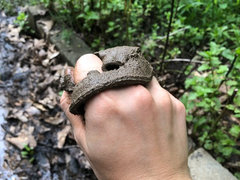
    Dinner_s, I’m wondering if you have a vein of water-insoluble clay.... like they make pots from. We had a vein of that in Ohio and forget planting anything in it. We finally were able to dig out most of it since it was rather shallow. I would really recommend building raised beds for beds as big as yours are. I grow all the veggies I want in huge pots because I have no yard in which to plant a garden in our adobe soil, but that’s not likely to solve a sun problem. Good luck with your investigation.

    dinner_s thanked CA Kate z9
  • 7 years ago

    That's a fair point about clay, but there is no reason that amending that clay soil with lots of organics won't make a good planting mix. I've seen it done. But if so, we're talking 50% organics. Consider also adding slower-composting material like wood chips, and ideally some sand, decomposed granite, expanded shale, or gypsum. There are good instructions online for fixing clay soil. Just Google "amend" and "clay soil". MIght take a few years to get it in satisfactory shape.

    Otherwise you're talking about trucking in loads and loads of non-clay soil.

    dinner_s thanked daninthedirt (USDA 9a, HZ9, CentTX, Sunset z30, Cfa)
  • 7 years ago

    I would investigate why:

    "The soil is very unusual--it holds onto so much water but crumbles into
    fine sand if a dry clump is smashed with a trowel. It's not typical red
    clay--it's very dark and playdoh-like when wet, but whitish when dry. "

    It seems contradictory to me that it's both playdoh like but crumbles into fine sand when smashed. I don't have an answer but the contradiction is interesting. I think I would build another raised bed and fill it with nothing but local soil, some sand, manure and compost. Maybe some peat if you're out of compost. Eliminate the stuff in bags, who knows what's in there.

    And why is it very dark when wet but white when dry.


    My choices here are to grow in partial sun, or not grow at all. I doubt I get more sun than you. I resort to putting in more plants so that I get more than I need.

    dinner_s thanked John D Zn6a PIT Pa
  • 7 years ago
    last modified: 7 years ago

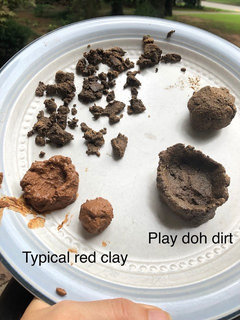
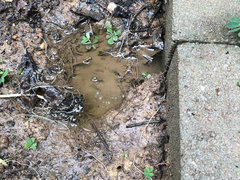
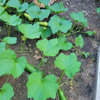
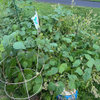
    CA Kate-i’ve actually made that comparison before myself! “It’s like you could put it on a potter’s wheel.” Here are a few photos. The small puddle is an example of how water just sits for days. I’ll update when the small clods on the plate dry out and crumble one for you.


  • 7 years ago

    Kate, what did you put in instead of the clay you dug out? In digging down to seat our fence poles, we did hit a layer of really hard stuff (maybe the more typical red clay?) underneath this grayish-brown stuff. It was maybe 6" thick max, and once we got past it in each hole, digging was a little easier again. So I know it's not this stuff all the way down. I am not sure removing all of this is feasible though.

    Dan, I think you're right we'd have to be at 50% or more amendments to make a noticeable difference.

    John, it honestly took me awhile to figure out that the dark stuff during wet and the light stuff during dry were the same dirt. The dark stuff is gritty. But if it dries in a lump, it's like a rock--kind of like a lump of sugar that looks hard and you can pick it up, but if you squish it, it crumbles apart. Also, I think I've ended up doing the same thing--planting more to make up for lower yields. I see these people who have two cucumber plants and have made their year's supply of pickles and have more to give away (ok, I'm exaggerating) and last year I had 12 and we barely had enough to eat and one jar of refrigerator pickles! I'm glad to know it's a valid strategy, because our situation is like that too--use the partial sun or not at all. Deer are such a big problem here and there's no where else I can put a 7' fence that's attractive.

  • 7 years ago
    last modified: 7 years ago

    Glad I found this article as I think I can really help as I have the exact opposite problems, severe Gulf Coast Sand. 1st, you get enough light, dappled light deep in the south is good. Direct sunlight down here just fries stuff. The problems your having are drainage related. Vine ripening vegtables "think tomatoe is more of a semi perinneal vegtable myself more so than a fruit", have a harder time without the light. You have that white swamp clay but it is usually VERY nutrient dense. Usually you need to figure out how to make that soluable to plants. How deep have you dug? I am guessing that 2 1/2 foot down you have a hardpan of clay, so the water doesn't really run off but its more like a swimming pool and that is likely 99% of your problem, but again its just a theoretical guess without being able to dig. The use of double wide "plantings back up to each other and a slightly wider path" traditional rows is every bit as effective as the new raised bed craze. I've done every kind of bed you can think of, I have reversed double wide rows where you plant on the low point to retain moisture because of wind/sandy soil. You should consider planting water loving vegtables and could probably really excel at winter vegtables like purple top, radishes, brussel sprouts, cabbage, lettuce, onion, leeks, etc. You would have a hard time with carrots, garlic, deep roots and or meteraniean climate. I also want to say what have you tried to grow. Tomatoes should never be the standard of a garden in the south. Ex I grow some tomatoes and they do well minus our infestations of hornworms "when they come its not worth the fight, but I let them eat "kill them manually", then what I did this week right before August is cut the tomatoe down to the base rather than pull because of the root structure. I've already gotten spring tomatoes but the tomatoes are already about 2 foot after looking like crap the last two months. I would rather have your soil than mine to boot, yes you heard that correctly. I might as well be in Arizona with salt spray off the Gulf. So you adapt, palms, kale, radishes, turnips, cover crops, sugarcane, peppers, lemongrass, in areas where I get bay salinity flooding. Yous should think of the oppostie, what needs H20. DON"T ADD SAND, you would likely make concrete, in fact if your thinking about that, try a very small spot like 2x2 first. ALWAYS do that when considering extreme measures. Mulch won't help you much because it will just keep stuff cool/damp/wet. I almost NEVER say that. I would try pontomac and a couple other Potatoe varities but I have NO doubt you would EXCEL at growing sweet potatoes because you can root the shoots in water. They grow in straight water like 10x faster than in ground. You seem to be on the right track of trying to get things many gardeners recommend like "just add compost bull and everything is okay". You don't likely need much fertilizer as clay soils tend to pack a lot". I would like to finish with use nature against nature. Change your thinking a little bit from the traditional corn and tomatoe, and think why not take advantage of the nutrients and saturated soil to have a semi hydroponic garden in your backyard. There is a guy on ebay right now selling purple sweet potatoe slips, you can get white, beaureguard, etc. and try out jerusalem artichoke. Again I think you might excel with potatoes and they may suck up some of that h20. we plant them alongside ponds in the country for fdeer plots and for us. Best of luck.

  • 7 years ago

    I think your problem is h20 in relation to the clay, not sun. I also wanted to add on my long essay above about using nature to work against itself. EX, your location is a prime candidate spot for a small pond. Why not dig out 4-5 foot deep and 10-20 foot wide at the wettest spot. Plan to add iris, canna, waterlilly and edibles like water celery, chestnut, etc into the bank of your pond. LIner can run about 150 for good quality liner and you can get two quiet one pumps for cheap. If this is at the low point then you can take all that extra soil out and create a couple of small trenches to run to your pond do help with drainage around the pond itself, that will direct the water into one area and also allow you to have all the pond soil to incoporate with organic material and fertlizer mixed in to give you some raised beds off the bat. Then I would take a couple of 4x8, say 3 traditional beds and specilize fertilizer and soil ph etc to custom grow things like tomatoes, brocolli, peas, peppers, etc. Just rotate them out. You can get more out of 3 well thought out raised beds, a couple of 50 foot ish traditional double dug rows, and a small 10x15 pond than some farmers do on 20 acres if done right. You should see my father in law, he has 9 10 foot rows, some rows up against his house, uses racing horse manure, fish heads, and shrimp/crab shells etc and he grows so much produce its insane. Also wanted to add bury your turkey, chicken carcasses 2-3 foot deep will help turn over that clay if you save bags of leaves add them in that too, should help some. A lot of people with that white ash swamp clay give up but it can be done. If I can grow in salt spray ,15 hours a day full sun, sand, and constant breeze without irrigation it can be done. <-if you get lazy with raised beds a black lowes/hd rubber maid tote x3 with holes drilled 2 inches off the sides not bottom make excellent tomatoe/pepper pots at 8$ on sale. I'll be adding 5 more next year and eventually will have them on drip irrigation.

    dinner_s thanked Brad Edwards
  • 6 years ago

    Brad, thank you so much for all the info! You gave me lots to think about, and I have.


    Update:


    1) We're fairly sure we have a layer of hardpan on the side of our house where the garden is. It seems to be keeping the water from draining away. During August of this year our area finally had a drought, and this is when the garden actually started to produce.

    2) The dirt itself is like a sponge. We have been prepping for a building on the other side of the house, and so we've been able to see how the dirt responds without the same hardpan. It is sticky goo when wet--it makes sense that roots would suffocate in there.

    3) Found out this year that several of our neighbors have had underground springs pop up in their property. I discussed this possibility on another forum with someone, and it seems like we are located in a place where the water table is high and unpredictable.


    What we're trying next:

    1) Annual rye: We have some annual rye sowed on the hardpan side of the house to see if it can help break up that layer and punch drainage holes into it.

    2) Even more organic matter into the topsoil. I'm going to try the leaf mulch that Dan mentioned above, and try 3 different methods of raising the beds. I'll do a modified hugel mound in one bed, raise another bed by adding another layer of block around the outside and non-native dirt, and the third is undecided.

    3) I'm also going to dig some drainage trenches and holes through the beds. Not sure yet if I'll fill with gravel or leaves or keep them open.

    4) I have a friend who keeps horses. I'll contact her about getting manure in bulk.


    Thanks everyone, for your help! I'm closer to being tempted to just give up than I've ever been in over 10 years of gardening. But I know that in March, when everything's greening up, I'm not going to be able to keep my hands out of the dirt. It's just too important to being a well-rounded human :)

  • 6 years ago

    When you want to plant a seed or seedling, just make a tall mound with the native soil around the chosen spot, and plant at the center of a mound. You can mix in some compost as you do this. When you want to plant a row, make a ridge. Raised beds filled with native soil mixed with some compost will also work. The depressed areas around the mounds/ridges/raised beds serve as natural footpaths and drainage ditches.


    Breaking your hard pan with rye could take years. Instead, you can just double-dig the area. During double-digging, the hardened subsoil is broken up and mixed with compost so it will remain loose. This solves the problem in days instead of years.

    dinner_s thanked Seun
  • 6 years ago

    Seun, planting in individual mounds is exactly what I have done, especially with tomatoes! It does help, but not enough--the native soil is such dense clay that it still seems too heavy for the roots. Last year I even dug up some plants that I forgot to mound and mounded them--they had been completely stagnant without the mound.


    I have started trying to amend some of the beds even more--I think what I began is double-digging. I'm glad to know that this can help hardpan! We have quite a bit of lawn with drainage trouble too, so it might be worth it on that larger space. Thanks for your comments!

  • 6 years ago

    WOW, good info here. I agree with Brad dig a pond and let nature work for you in draining the water away from your planting area. we just moved here on Smith lake and have mostly oak trees but our soil is rocky. Hope to have a huge rock garden. With all this nice rain I can finally dig a hole. Deer will be a problem I’m sure but my fur babies love to chase critters.

    josephene

    dinner_s good to meet you

  • 6 years ago
    last modified: 6 years ago

    dinner_s, Drainage in one form and another seems in order. Ridging and water channels might help if tile drainage is not available.

    I have helped good soil [but a little wet in springtime] with fall ridging and I have added close to 3 inches of sand [plus other om] to loosen soil structure and add height. Yeah, I know there is the proverbial knee jerk against sand...OH, concrete...from people who likely never tried it! It has worked well for me from moment one. Your mileage with different soil may be different.

Sponsored
AIS Renovations
Average rating: 4.5 out of 5 stars15 Reviews
Custom Craftsmanship & Construction Solutions in Franklin County, Ohio