Software
Houzz Logo Print
k_lud

Turnips? Mulch?

7 years ago

We are planning to completely overhaul a yard that is mixed turfgrass varieties, crabgrass, and so, so many weeds. Our property was clear cut in a densely wooded area approximately 12-15 years ago. In some areas, particularly those around the house, the topsoil is essentially gone. Our yard is going to be about 0.35 acres, so hauling in 3-4" of topsoil is cost prohibitive. I am trying to come up with creative solutions to restore organic matter in the [mostly clay] soil, build topsoil over time, and allow me to plant a Zoysia yard next spring. Because we have wet winters and I have no soil, it is not practical for me to kill off the existing grass and weeds, which are the only thing preventing a slippery, nasty mess all winter. Because of the size, smothering the yard is not very practical and I don't know how I feel about spraying the large of an area aggressively enough to kill everything.


My ideas at this point are:


1) Deep till existing grass early next spring; rake & level; add 1-2" of leaf mulch; lightly till into 2-3" depth; rake & level; plant (improved Zoysia variety from seed). Be prepared to spray aggressively for weeds.

2) Plant Daikon turnips this fall. Mow. Lightly grade and level where needed. Add 1-2" leaf mulch. Lightly till to 2-3" depth. Plant improved Zoysia variety from seed.


Thoughts on these options or any other ideas? Has anyone used Daikon to improve soil structure / aeration / organic content?

Comments (5)

  • 7 years ago

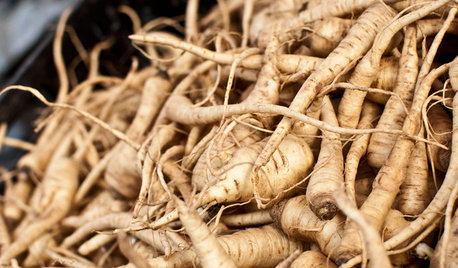
    Daikon are radishes, not turnips. For your purpose, what I've seen recommended is "fodder radishes" which might be tougher than daikons, which are a tender salad radish.

    If you can get a truckload of free wood chips and lay it over the ground as a mulch, it would help build organic matter and topsoil. In your wet-winter climate, the chips would start to decompose well in the winter, and then would protect the soil from drying out so fast in summer. You'll probably have to lay down another load every couple of years. When you want to plant things, you rake aside the chips in the particular place and plant there. When the plant is big enough you rake the chips back in under the sides of the plant.

    I have done it myself on my dry desert barren soil and it does indeed build nicer soil, just as I've read online and in books.

    If you are in the US, it is quite likely that the local power line maintenance crews produce large amounts of wood chips that they need to dispose of and they'd be glad to dump them for free.

  • 7 years ago

    Tilling only a couple of inches of leaf mulch into clay soil with 'no topsoil' is not going to yield a very good soil for a lawn. Here is an slow but inexpensive method to get better soil.

    +1 on the wood chips, but I would add either compost, or compostable materials such as leaves, grass clippings, barn cleanings, manure, spoiled hay, straw, sawdust, food waste, or whatever else you can get, on top of the soil first. Then cover with wood chips. The more compostable stuff underneath will break down first, while the wood chips will help prevent erosion and will give a nice appearance. You can do this in small or large areas, add as you go. By spring, most of the underlayers will be broken down and ready to till in, and the wood chips may be too, or you can rake them off. I would suggest doing it in sections based on available materials and time. Maybe plant part of it each year. I have used this method on small garden beds and areas up to 10x30'. It is work to obtain and lay out the material but after that, nature does the work.

    Not sure where you are, but in places with trees, you can often get free wood chips, possibly even delivered to your place, by utility tree crews. Or shredded yard waste from a city/county operated mulch site.

    All depends on how much time you have and how much organic matter you can get your hands on.

  • 7 years ago

    I essentially concur with Tox. But stuff on top will not improve the soil much, except in the first inch. In fall you can plant some large seeded cover crop (you do not specify your zone). if you are south enough, fava will come up through the wood chips and will die on first mowing in spring. Unlike other legumes, it is tolerant of waterlogged soils and also has a tap root. Not as good a tap root as tillage radish (the plant you mention in your OP), but good enough to work the soil at some depth.


    Next year you can go to smaller seeded cover crops, perhaps rye/ buckwheat/vetch. the buckwheat will die at first frost, and rye/vetch need two mowings in spring to disappear. at this point you will have decent topsoil. In year 3 you could indeed plant radish, if you really wish to get a deep soil. It is a wonderful cover crop.

  • 7 years ago

    I thought the concept with shallow tilling compost in and then repeatedly spreading compost in autumn thereafter was to build a worm / etc. organism population to help pull organic content down into the soil to gradually build on it? I don't want to do rotations of cover cropping because this is a yard... Fava grows something like 4-5' tall if I recall? I'd be more open to something like lightly tilling in cheap compost (aka leaf mulch aged 3+ years) and then planting clover if nitrogen fixing is the feature I need for three years... At least I can walk on that and use my yard for yard things. I'd be open to cover cropping for one winter season if there was thought that there'd be benefit, and ideally if I could plant grass in the spring.

  • 7 years ago

    I'd suggest you see if you can find bulk mushroom compost; also known as mushroom manure in your area. You would find this at bulk garden centers, places that also sell bark, topsoil and maybe nursery stock. This product is manure that has been composted, steamed a couple times, and used to grow a couple crops of mushrooms. This product is an excellent soil improver, as is compost.

    This can be spread an inch thick and not affect the grass in your lawn. The grass will grow thru it in a week or so. You could also use well composted manure, but I'm suggesting that the mushroom manure will give you a much smaller weed problem. The composting, the steaming, and seed germination during the mushroom growing will all reduce the weed problem.

    Another suggestion is if you have leaf cleanup to do in fall to start mowing around the edges with the mower exhaust blocked. On each pass overlap the previous pattern which will pick up the leafs and drop them, mostly, on the exhaust side. Work to the middle. You might repeat this, once, twice. Then go over the middle and bag out the large pieces. When done, you'll be left with a lot of leaf dust which you'll be able to see till it rains. The worms will enjoy the dust till your lawn freezes.

    I wouldn't want to argue which is better, compost or mushroom compost. But I will point out that if you don't have a lot of compost this is better if you can find it. You could repeat this after your grass grows thru it but you may not be able to mow it. So at most I would do this in spring and in fall as soon as your grass is growing well.

    You can cover 324 Square feet of grass with an inch of mushroom compost from 1 cu yard of mushroom compost. If you have any left use it in flower or vegetable beds or volcano beds around trees. It's about $39 a cu yrd in my area and delivery is $35 for a truck load.

    Don't fertilize your lawn if you use this method, you will Not need it and may burn your lawn.