Software
Houzz Logo Print
alyssa_malloy

Stained butcher block disaster please help!

7 years ago
last modified: 7 years ago

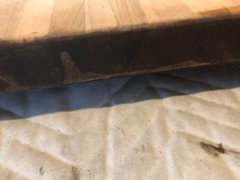
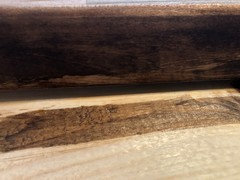
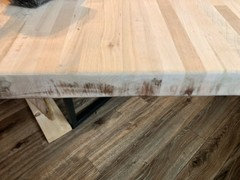
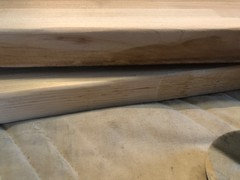
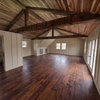
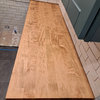
I’m staining my butcher block counter tops with Minwax provincial oil-based stain and sealing them with Watco oil. I started with the bottom to make sure I liked it and to practice however, I accidentally dripped both extra stain and oil onto the front. I’ve sanded these areas to where you could barley see them but they would not sand out completely. I figured it was enough to add stain over since it was the same color and oil was clear anyways. However anywhere the extra was showed through the stain I don’t know how to fix it. I tried mineral oil and hydrogen peroxide didn’t work. Also tried stripper but that just stained the butcher block as well. The first two photos are what it looks like stained over the last is what the stripper looked like.

Comments (26)

  • 7 years ago


  • 7 years ago

    You don’t stain butcher block. It isn’t food safe. You cannot use a stained butcher block as a food prep surface.

  • 7 years ago

    I thought as long as you use a food safe sealer like Watco it’s ok? At least that is what I was told.

  • 7 years ago

    Good to know. I think that’ll be fine for the way I cook. Too late to turn back now. Do you by chance know how the fix the stain problem?

  • 7 years ago

    Buy a new butcher block. Or sand that and keep on sanding. Or plane it. You have to get past the point of penetration. That can be 1/4” deep. Or more.

  • 7 years ago

    The one thing you can use to stain butcher block is concentrate of black tea. Apply, let dry, repeat until it gets to be as dark as you want it to be.

    Gently rub on mineral oil when completely dry.

  • 7 years ago

    There is no finish approved by the FDA as being foodsafe. However, it can be argued that any finish made after 1972 is foodsafe once properly cured. It really depends on your comfort level with that. Mineral oil and beeswax, or blends of the two, are the obvious choices.


    Here are a few links on the topic that might help.

    Fine woodworking has some suggestions:
    https://www.finewoodworking.com/2006/08/01/food-safe-finishes

    Thoughts from Green Home Guide:
    https://www.greenhomeguide.com/know-how/article/can-i-safely-seal-and-waterproof-my-butcher-block-countertops

    A blogger's painful tale of what worked - and what didn't. With lots of links:
    https://www.northstory.ca/adventures-in-staining-butcher-block-what-worked-and-what-did-not/

    Some options from Woodcraft:
    https://www.woodcraft.com/blog_entries/food-safe-finishes

    Waaterlox is pretty widely used:
    https://waterlox.com/waterlox-countertops


    You probably don't really want to stain it, especially with Minwax. I'm not sure how easy it would be to seal it such that those compounds don't leach into food.

    GD is correct about the solution now. Stain has soaked into the end grain of your countertop. You'll have to sand it down or plane it. Stain soaks more deeply into the end grain.


    Alyssa Malloy thanked Holly Stockley
  • PRO
    7 years ago

    You need a hotter solvent than mineral spirits to remove the stain. Try acetone or lacquer thinner please.

  • 7 years ago
    last modified: 7 years ago

    On the Watco Butcher Block Oil & Finish, it says, "Safe for food contact, FDA compliant". Does this not mean that it is approved for food contact or are they playing with word usage?

    What kind of wood is your countertop?

    ETA: that the Watco Butcher Block Oil is essentially Tung oil with a solvent and from one of the sites Holly linked, it sounds like Tung Oil is food safe.

  • 7 years ago
    last modified: 7 years ago

    @daisychain01 the problem is not the Watco finish, it's that the OP used a stain on the butcher block. The stain is not food-safe (and the use of Watco does not create an adequate barrier to make it so)

  • 7 years ago
    last modified: 7 years ago

    Food contact safe just means you can lay bread on the counter to make a sandwich. Not that you can cut that sandwich in half on that surface. Food safe contact and food prep safe are two different things.

    If it is a food prep surface, as in you are going to treat it as a real butcher block cutting surface, you don’t want any finish whatsoever getting on to the knife or in your food. You can eat mineral oil. You can’t eat tung oil varnish. Or any other film forming coating. You don’t want bits of finish in your food. Or bits of finish and stain.

    Tung oil is a nut oil, so should never be used anywhere that someone with a nut allergy would touch. Much less end up with residue from it in your chopped onion.

  • PRO
    7 years ago

    Woods stains absorb into wood. On edge mistake stain absorbed drips, use high grade sand down to sand out the stain area.


    "For heavy sanding and stripping, you need coarse sandpaper measuring 40- to 60-grit; for smoothing surfaces and removing small imperfections, choose 80- to 120-gritsandpaper. For finishing surfaces smoothly, use a super fine sandpaper with 360- to 600-grit. Many jobs require you to “go through the grits.”


    Here's a video on refinishing butcher block.


    https://www.youtube.com/watch?v=T1kJam889sg


  • 7 years ago

    Honestly, if it were me and I wanted a dark butcher block countertop - I'd just replace that with one in black walnut and hit it with one of the beeswax/mineral oil blends.

  • 7 years ago

    Do as Joseph suggested--try acetone or lacquer thinner to remove the stain.


    And, FWIW, your butcher block is maple; maple is notorious for being difficult to stain. Doesn't accept stain evenly, goes blotchy and generally looks like crap. (Dyes & sprayed on toners are use in industrial settings to get acceptable results.)


    If you are going to use butcher block in a kitchen, it is best to get one made in a species of wood that has a natural color that you like. Maple is first choice for BB because of other properties--being close-grained and high Janka (hardness) rating.

  • 7 years ago

    You might try wood bleach. They make a powder that contains oxalic acid, not terribly toxic (do wear gloves though). Dissolve in water, wet the surface and wait. Mix it up more concentrated than usual because of the vertical surface. I used this on an old oak library table after stripping and got some really bad black stains to almost disappear.


  • 7 years ago

    ci-lantro, I believe European beech is harder and more closely grained than maple. Had counters made from it for many many years. Held up beautifully. Don't get black stains from water sitting on it either.

  • 7 years ago

    Black water stains are associated with wood tannins, and are able to be bleached with a carefully applied acidic solution. Chemical dyes and pigments aren’t going to respond to acid bleaching, and it will weaken the fibers.


    Once end grain wood has absorbed a wood stain, it’s not coming out without a power planer. Or, saw off that part with a rail saw.

  • 7 years ago
    last modified: 7 years ago

    Thank you so much for all the help. I can’t start over with new butcher block because I already had this one custom cut and don’t have the $. Had I known what I know now I would have just paid more for a butcher block I liked the color of instead of trying to save money by staining it, a lesson learned i guess. The acetone didn’t work but maybe I didn’t leave it on long enough I’m not sure. I did try power sanding it and that helped a lot. Im just scared to power sand it in the undermount sink cut out and ruin it.

  • PRO
    7 years ago

    You're not going to ruin it by sanding.

  • 7 years ago

    So, just curious, once you get the stain out of the edges, what's the plan? Are you going to try staining the top like the bottom?

  • 7 years ago
    last modified: 7 years ago

    I’m just worried I’ll mess up the nice rounded inside corners. The sander is too big to fit in the curves anyways. Yea, I’ll stain the top and put on the Watco. I already finished another piece of butcher block for the other side of the kitchen so I kind of have to keep going. Then, I guess I’ll make sure to have cutting boards for any food prep I do, which I was planning on anyways so the counter didn’t get too scratched. Maybe in another couple of years I‘ll redo it with something better if it turns out a complete disaster.

  • PRO
    7 years ago

    Mineral oil USP is a pharmacy grade that can be taken internally. Behlen's Salad Bowl finish is safe for eating surfaces, by extrapolation, for prep surfaces.

  • 7 years ago

    I’m interested because I’m in the middle of doing my new maple counters at the lake with the Watco. I’m the opposite in that I love the warm amber/gold colour of the maple with just the Watco on it.

    We also have the same maple on our island at home and it took me trying a couple of different finishes before I settled on the Watco. You’ve probably discovered this but I found it took about four or five coats to get a really lustrous finish.

  • 7 years ago

    Watco has just a bit of varnish in it, not so much that you'd notice after a coat or two, but after several, it's starting to build up a bit of a varnish surface.

  • 5 years ago

    Any idea on how to get the strong smell from Watco Butcher Block Oil to go away??? I have to sleep with windows open after piling my butcher block counters!

Sponsored
AIS Renovations
Average rating: 4.5 out of 5 stars15 Reviews
Custom Craftsmanship & Construction Solutions in Franklin County, Ohio