Software
Houzz Logo Print
dillybeansown

Late summer/fall perennials for hot, dry partial shade

7 years ago
last modified: 7 years ago

I know this is a tall order. Lol. I am having a hard time finding perennials that will provide color in late summer/early fall in something less than full sun. My sunny garden looks great right now. Coreopsis, salvia greggii and other salvias, lavender, rudbeckia hirta, etc. However, it seems that most of the good perennials for this time of year require lots of nice summer sun. A good portion of my beds are intermittent shade and blazing sun. I dare not plant true shade plants such as hostas and heucheras to negotiate away the need for blooms, as they fry in this location. But neither do true sun lovers like my coreopsis and salvias thrive. They peter along, limping out enough blooms to look pitiful. summers are hot and dry here, and although I mulch well and give supplemental water when I can, many Plants still don’t like the conditions.


The only successes in this part shade area so far are tall phlox, chelone, and, later in the season, hardy chrysanthemums. I also have a few foliage plants that like the conditions such as lambs ears and ice dance sedge . I’d like to try late blooming clematis to see how it does.


Any suggestions? What do you do in these areas this time of year? Really trying to avoid anything with orange undertones, but other than that most anything would be welcome.

Comments (15)

  • 7 years ago
    last modified: 7 years ago

    Wow, if phlox and chelone survive you must be giving quite a bit of water.

    Heuchera usually like that area (mostly shady) and drier (but not dry dry)..it's where they grow natively. Needs humidity more than soil wetness. Ie, SW hairdryer winds are not it's friend.

    Probably winter foliage lycoris would give you a bloom boost, if the trees are deciduous, assuming hardiness, you're similar to me, but they're kinda iffy and situation dependent in my/your zone.

    Cyclamen hederifolium and coum would like that environment, given that you can give a little water August and September before nature starts taking over (the plants would be fine..but what is the point if the flowers crisp in the hot wind(hederifolium starts blooming August usually for me)).

    Suppossedly Texas plantings include Scuttelaria ovata for groundcover-flower. I just started growing it this year, and am trying it in more sun than that, so can't give personal information...just a rumour :)


    Dillybeansown (6b in the Ozarks) thanked dbarron
  • 7 years ago

    Salvia koyame is a salvia for shade (can handle some sun) and is coming into bloom now--yellow flowers. It's more of a groundcover for moderate spaces--give a plant plenty of room and be prepared to pull back the rooting runners at the end of the season.

  • 7 years ago

    give a plant plenty of room and be prepared to pull back the rooting runners at the end of the season.


    Thats for sure! It is definitely a vigorous perennial.

  • 7 years ago

    Dbarron, I actually don’t give that much water. The weather has been more temperate than last year (2+ months of no rain with many 100°+ days. It was bad), but I’ve been pleasantly surprised with how they both have done with their conditions. I don’t water more than once a week, max, and I hand water so often it’s spotty. I don’t think the chelone (which is in more shade) has had any supplemental water except what it has leached from a nearby rose bush. The gardens are well mulched 3-6” deep, which I think helps a great deal. But yes, they have surprised me, holding up exceptionally well. I suppose since they are natives that they must be adapted to the conditions for whatever reason.


    I love my heuchera, and have a great deal of it, but it only does well in the shadiest spots of these partly sunny areas. The areas in question still get around 4 hours of sometimes brutal sun, and it doesn't sit well with the heuchs. I need to try more of them planted in the shadow of the rose bushes where it can benefit from shade cast by other plants.


    I also have lycoris, which I agree is a nice pop of color. It does well here, naturalizing nicely. Unfortunately it doesn’t last long at all, having come and gone in my area already.


    I had some cyclamen at the base of an oak, and it did beautifully for a few years until some creature dug it up in the middle of winter and it froze. Grr. I don’t think it would like the sunnier, more exposed spots, but thanks for reminding me about it. I need to reintroduce it.

  • 7 years ago

    Laceyveil, salvia koyamae looks Interesting. I’d never seen that one before! If it’s a vigorous spreader, I’ll definitely consider well before introducing it, though. Lol

  • 7 years ago

    Consider adding some panicled hydrangeas if you have the space. The smallest of them are about 4’ tall and across, but they are fairly tolerant of a range of moisture and pH levels in the soil, though they prefer it drier than most hydrangeas. I think in your area they will be happy with a mix of sun and shade.

    Dillybeansown (6b in the Ozarks) thanked NHBabs z4b-5a NH
  • 7 years ago

    Monarda can handle quite a bit of shade, and M. fistulosa in particular is happy in drier soils. “Claire Grace” is a cultivar that has performed well for me, especially as far as mildew resistance.

  • 7 years ago

    Monarda fistulosa (imo) (though I grow it) is a thug though.

  • 7 years ago

    Lycoris sprengeri, a gorgeous one, is in bloom right now. And though S. koyame is a vigorous spreader, I find it easy to control by pulling the spreading, rooting stems during fall clean up.

    Dillybeansown (6b in the Ozarks) thanked laceyvail 6A, WV
  • 7 years ago

    Dbarron, I confess although I knew there were other lycoris (mine is squamigera), I had never thought to look into getting some of the others! I probly should. Lol. :)


    NHbabs, yes! I do have a Limelight that I need to plant, and I already have an oakleaf that tolerates the spot, although it wilts on the hot days. Perhaps I just need to convert this area to more shrubs.


    Sah, monarda fistulosa blooms much longer here than my new monarda hybrids do. It’s been going for weeks on The roadside. My lovely, brilliant, but all too soon over little dwarf monardas seem to look good for such a short time. I may consider it, even with its thuggishness. Lol

  • 7 years ago

    That's weird, my fistulosa is over very soon...one time bloomer. That being said, I still like it.

  • 7 years ago

    I second the shrub idea. I have a similar situation. In my case, there is a large Hemlock and a large oak anchoring the space that are sucking the moisture out of soil which is not great to begin with. I've only been gardening on this property for a couple of years and the last two summers have been wet. Totally different story this year so I've had to rethink some of my previous choices. Besides Hydrangea paniculata, I'm having good luck with Wiegela and Physocarpus, both bloom earlier than you want but are tough and offer many choices in foliage color which IMO expands their season of interest beyond flowers. Going forward, I plan to experiment with grasses, and add some late blooming daylilies. Thanks for reminding me about Chelone. I've always had good luck growing C. lyonii Hot Lips in difficult sites and have plenty to divide.


  • 7 years ago

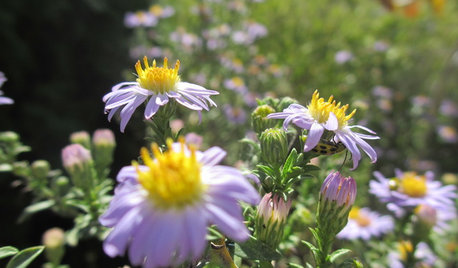
    We've had Symphyotrichum Oblongifolium (Aromatic Aster 'October Skies') on the north side of a fence where it was in sun in the mid-summer months and shade the rest of the year. Seemed to bloom well in spite of being back in shade by then. Might be worth a try.

  • 7 years ago

    Try the Hardy Ageratum--has had it's name changed several time--might now be Conoclimium coelestinum or Eupatorium coelestinum; grows vigorously for me in sun or shade, dry or moist. Can be easily pulled if it pops up where you don't want it. It is the only plant I have ever seen a Monarch on so I encourage it in my garden.