Software
Houzz Logo Print
pvecholane

Mimulus - Sticky Monkey Flower Culture

6 years ago

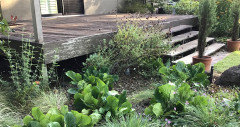
I just succumbed at my local nursery to yet another Sticky Monkey Flower, Mimulus ‘Jelly Bean Betabel’ which has an irresistible deep red flower. I think it’s the 7th or 8th one I’ve bought and only two are still alive and they are barely alive. I’ve planted them in a bed with mostly natives, Salvia ‘Winnifred Gilman’ and ‘Pozo’ in the background, Calamagrostis foliosa as an edging plant, three Bouteloua ‘Blonde Ambition’ and some Bergenias. Everything gets watered lightly twice a week,

The plants look fried, like they’re not getting enough water, yet everything else looks great. What am I doing wrong?

Comments (14)

  • 6 years ago
    last modified: 6 years ago

    Just thought I’d add a photo to my message. The new Monkey Flower is destined for that little empty space in front of the Salvia. The better of the two pre-existing Monkey flowers has an orange flower peeking out in front of the Salvia Pozo on the left, the other pathetic one can’t be seen. I do hope the new one will be happy this time.


  • 6 years ago

    Hi echo. I responded a few hours ago to answer your question but that seems to have disappeared. Did you see my reply show up?

  • 6 years ago
    last modified: 6 years ago

    I do see this one, but not any other. I was having trouble too. I tried to edit my original post because I wanted to add the photo, and I tried it repeatedly, but it kept telling me there was no such page. So I will guess something a little weird is going on.


    i look forward to hearing what you had to say!

  • 6 years ago

    You are certainly correct in your advice as I have heard/read that advice to deeply water repeatedly over my many gardening years. I did leave out the part where I deeply water by hand every week or two depending on temperatures. In California Mimulus have a reputation for being difficult and instructions are to withhold water once established, so while it seems unlikely, I may actually be giving them too much water.


    I confess I have a few decades on you. Like you I have been gardening since I was a child, and so I consider myself a fairly knowledgeable gardener, but i will freely admit to ignorance in growing California natives where their lengthy summer dormancies present difficulties. I have long been attracted to “normal” plants that are actively growing and showing off in summer and need summer water. Unfortunately water prices are so high I am forced to consider the much trickier CA natives whose water requirements are considerably different and considerably more complicated! IOW, I have a lot to learn!

  • 6 years ago

    Wow. I had never heard of Summer dormancies. Have you always lived in California?

  • 6 years ago
    last modified: 6 years ago

    Actually, I had not heard the term summer dormancy, but I did have relatives in Los Angeles many years ago who had oranges and strawberries grow two or three crops per year.

  • 6 years ago
    last modified: 6 years ago

    Almost certainly the oranges and especially strawberries had summer irrigation. Most of California has no rain from roughly mid-April to mid-November and to grow crops and keep lawns and gardens green farmers and gardeners must buy a lot of water. Water has become increasingly expensIve with droughty winters not replenishing reservoirs, etc. i can no longer afford the cost of keeping my garden well watered in summer., it is also a matter of conscience and those twin iincentives have translated in my case to a transition to more native plants in my garden. This will be the last year I will keep my small lawn going.

    I was in my twenties when I left the Midwest where I grew up and where everything was green in summer. Here in the arid west and particularly in most of California it’s the opposite where winter rains green up the state. The native plants have developed strategies for dealing with the absence of summer water by going dormant or semi-dormant. It takes some getting used to. I’m working on it......

  • 6 years ago

    I've typically seen monkey flowers in nature growing in riparian situations where they are likely moist most of the time. I'm not sure they are drought tolerant, if they are it's not while they are establishing.

  • 6 years ago

    I certainly haven't seen every mimulus, but the ones I have seen, I agree with the above poster..usually in seeps (often on rocks).

  • 6 years ago

    Hi, I have tried several mimulus from Annies Annuals and some have just died in less than a month. In particular I had some Jellybean types showing signs of wilting in the first week (yes they were watered). In my case I guess they are very susceptible to soil fungus conditions and transplant shock.

    I have no problem with the straight species like M. aurantiacus red. This type follows the good drainage, minimal summer water when established, partial shade model...

    I grew M. naiandinus in a pot for a year (grew like a weed and grew out the bottom of 14" pot as well), but when I planted it out it was not happy and died. In this case it may have been water related as this species does not have that xeriscape look to it.


    I have had some success (2 years) with M. 'Pamela' in the ground and would recommend it as worth a try.


  • 6 years ago

    I love sticky monkey flower and have them all over my yard. The sticky ones don't take as much water. The hybrids take much more.


  • 6 years ago

    I just bought another hybrid so thanks for the discriminating tip!

  • 6 years ago

    Also I love Annie's Annuals but when I get plants from her I repot them. Her soil mixture seems to dry out quickly.