Software
Houzz Logo Print
daninthedirt

I'd like a tree ID please

7 years ago
last modified: 7 years ago

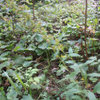
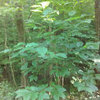
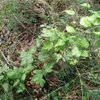
About twenty feet tall. Smooth trunk, oval pointed leaves with green berries.


Comments (15)

  • 7 years ago

    remove that stub on the right ...

  • 7 years ago
    last modified: 7 years ago

    Cherry Laurel, eh? Thank you. That makes some sense. In fact, I believe it is indeed evergreen.

    As to removing the stub, the main issue is whether I remove the tree. Awkward spot, invasive species, and seriously poisonous and allelopathic to boot. But it does attract bees.

  • 7 years ago

    well.... you can remove the stub by cutting it flush to the ground.. and apply a stump killer ... quite effective stub removal ... lol ...

  • 7 years ago

    For the sake of anyone else coming on here they're talking about Prunus caroliniana.

  • 7 years ago

    Thanks. In my part of the world Cherry Laurel is Prunus laurocerasus. It's actually in the Latin ....

  • 7 years ago

    "invasive species, and seriously poisonous and allelopathic to boot."

    Maybe some over-exaggeration here :-) As a native species (and into parts of Texas) Prunus carolinana is not really considered invasive. Not like Prunus laurocerasus (what is usually referred to as English laurel here, floral :-), as that non-native pops up in wooded areas through the PNW frequently. Nor is it 'seriously' poisonous. I wouldn't plant where grazing animals may encounter it but it is no more toxic than any other Prunus species is (and all are to some degree, even fruiting cherries). And allelopathy is probably overstated as well. English laurel hedges are exceedingly common here and there are no shortage of plants that grow perfectly well in close proximity. I see no reference to allelopathy with P. caroliniana at all.

    Of any reason to remove it would be the "awkward spot" or if too close to the house.

  • 7 years ago
    last modified: 7 years ago

    Re poisonous

    http://www.thepoisongarden.co.uk/atoz/prunus_laurocerasus.htm and many others

    Re allelopathic

    http://www.wildflowerfinder.org.uk/Flowers/Z/Z_AllelopathicPlants/Z_AllelopathicPlants.htm

    Re invasive

    https://www.invasiveplantatlas.org/subject.html?sub=14124

    But yes, I'm not going to be munching on the stuff, though pets have been killed by it. As to the allelopathy, it's probably not a lot worse than oaks, and I have loads of oaks. As to invasive, when it's been around long enough, often the invasiveness is deemphasized. I suspect this one was just planted by a bird. Yes, around here, it is now considered at least naturalized. Formally, it is native to southwest Asia and southeast Europe.

  • 7 years ago

    Wrong plant on all 3 counts :-) As was clarified earlier, your tree is Prunus caroliniana, not P. laurocerasus. Also, many plants exhibit some degree of allelopathy - with prunus it is nothing to get excited about.

    I grew up with English laurel, Prunus laurocerasus. We had several massive English laurel hedges in my childhood home (dead common hedge plants in my area) and various named cultivars, like 'Otto Luyken' and 'Schipkaensis' are common garden ornamentals. I have also gardened with pets all my life as well and there is nothing about this plant that would attract them to eat it and I have never heard of any pets - or kids for that matter - being poisoned by this plant. Like all member of this genus, they do have some toxicity but it's a bit of a stretch to consider them "poisonous".

    And Prunus laurocerasus (not P. caroliniana) is the exotic, potentially invasive species......but with a pretty limited spread of invasiveness, limited almost entirely to here in the PNW. I see no sign of it being considered as such in Texas.

  • 7 years ago

    This is a classic example of confusion caused by common names. To ensure you get accurate information on a plant always use the botanical name.

  • 7 years ago
    last modified: 7 years ago

    Points noted. But no one has told me what the difference is between Prunus laurocerasus and Prunus caroliniana. No such clarification was posted. My original question was about identification of a tree. Is there some reason to believe that I have one, rather than the other?

    Relevant info, about Prunus caroliniana, to the extent that's what this is.

    https://homeguides.sfgate.com/carolina-cherry-laurel-harmful-dogs-75202.html

    https://www.wildflower.org/expert/show.php?id=5668&frontpage=true

    With regard to confusion about common names, I agree with that, but the qualities that I'm referring to seem to be common to BOTH of these varieties. No confusion here.

  • 7 years ago

    "But no one has told me what the difference is between Prunus laurocerasus and Prunus caroliniana. No such clarification was posted. My original question was about identification of a tree. Is there some reason to believe that I have one, rather than the other? "


    It was properly identified by botanical name by Embothrium. Prior to that, just one of many common names was used for ID however that common name is often applied to both species.

    Prunus caroliniana is a native species that includes Texas as part of its natural range. It would be very unusual for Prunus laurocerasus to pop up spontaneously in your area but entirely natural for P. caroliniana to do so. It is also more tree-like in habit than Prunus laurocerasus, which is most often grown as a large shrub with no discernible trunk and the leaves present somewhat differently (smooth margins for one and slight serration for the other).

    As to the negative attributes you list, other than the propensity for P. laurocerasus being invasive in specific areas, they are just not serious enough to worry about.

  • 7 years ago

    Both appear together here on this key:

    http://www.efloras.org/florataxon.aspx?flora_id=1&taxon_id=126865

    Clicking on the hyperlinked species names of each in the key leads to full descriptions.

  • 7 years ago

    ' Is there some reason to believe that I have one, rather than the other?'

    Yes, Dan, the reason is that Embo gave you the correct name. Nobody suggested that your tree was P laurocerasus. The use of the common name 'cherry laurel' when you looked for information muddied the waters by turning up info. the wrong species. A quick glance at images of P laurocerasus will show the differences. The leaves are far larger, broader and blunter and the berries are held differently. The two species are not very similar.

  • 7 years ago

    Flowering specimens of Prunus laurocerasus with small leaves and entire margins that otherwise resemble P. caroliniana can be identified by their larger hypanthia and longer petals. In fruit, the stone is much harder in P. laurocerasus and does not split open upon drying; the flesh around the stone is thicker and more succulent.


    http://www.efloras.org/florataxon.aspx?flora_id=1&taxon_id=250100395