Software
Houzz Logo Print
annie1992_gw

Grinding sumac powder

6 years ago

OK, second try, Houzz makes me crazy.


I was reading Mother Earth News, a very dangerous proposition because you never know what I'm going to do. I found an article on foraging/harvesting Staghorn Sumac and grinding it for sumac powder. WHAT???? I've got a thicket full of the stuff growing next to a thicket full of elderberries, and I've never done anything except snatch off a seed head and stick it in a water bottle, add some sweetener and you have the backwoods version of lemonade. But it's similar to the stuff I buy from Penzey's at $8.49 a half cup, used to make Lars' Algerian Chicken? Really? Where are my pruning shears?


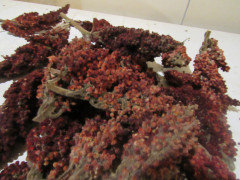
So, out I go to cut a 5 gallon bucket full of seed heads. I stick them in a tub to dry in the garage for "a couple of days", and promptly get busy. That was about a week ago, LOL. Tonight I decided to get them finished up. They've dried out pretty well.


To be continued, since Houzz won't let me post a picture when I start a thread. Grr.....


Annie

Comments (18)

  • 6 years ago

    The seed pods have dried out somewhat, but not completely. That's OK, they are dry enough to "deseed"...

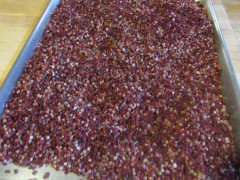
    I rub them between my hands and the fuzzy seeds fall off onto the sheet pan, while flying everywhere. I decide this is a good project to undertake out in the garage, LOL. I managed to get two half sheet pans full, but they weren't dry enough, so I stuck them in the oven at 200F for a couple of hours.

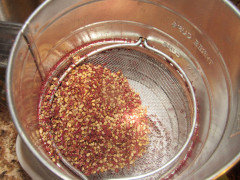
    When they were dry, I put them in the coffee grinder for a few seconds, just enough to knock off the fuzzy stuff around the seeds. That's the part I want, the seeds are too hard to grind up. I dumped the stuff into my flour sifter, worked pretty well to separate the fuzzy coating from the seeds:

    Final product, coming up in the next post, Houzz won't let me put any more pictures on this one...

    Annie


  • 6 years ago

    Looks great! If the sumac has a lemony flavor, that is an indication that it is fresh.

    I guess I should try to grow some sumac myself.

    I store Za'atar in the freezer because I add sesame seeds to it, and they do not keep well at room temperature.

  • 6 years ago

    Never heard of sumac lemonade, nor Lars' Algerian Chicken.... But then I've never had powdered sumac either. Awesome job and tutorial, Annie. I'll be on the lookout for sumac now. :)

  • 6 years ago

    Here's the Algerian Chicken recipe that I use. I got it from a French Algerian chef who also taught at the Cordon Bleu in Pasadena.

    1 whole chicken

    4 cloves of garlic

    1-1/2 tbsp Kosher salt
    1 teaspoon of
    sumac
    1/2 teaspoon of sesame seeds
    1/2 tsp coriander seeds

    1/2 tsp fenugreek

    3/4 tsp cumin

    3 tablespoons of butter, room
    temperature
    1 tbsp minced Thai basil (or 1/2 tsp fennel)

    2 lemons

    1 tbsp extra virgin olive oil

    Freshly ground black pepper

    extra herbs, 1 tsp each minced fresh
    oregano and basil, optional
    4-5 sprigs of thyme


    Start charcoal for outdoor barbecue,
    using large chunks of mesquite wood and charcoal


    Place the chicken in a roasting pan
    with a rack. Slide your fingers under the breasts to separate the
    skin from the meat, turn the chicken over and do the same with the
    thighs.


    Mash the garlic with 1-1/2 tablespoons
    of salt in a mortar and pestle or finely chop the garlic and
    incorporate the salt into it with the side of your knife or back of a
    spoon. Add the sumac, sesame seeds, coriander seeds, fenugreek
    seeds, and cumin and mix to pulverize the seeds. Add butter and basil
    and combine to mix. Tuck pieces of the butter into the "pockets"
    under the skin.

    Squeeze the juice of one lemon all over
    the chicken, drizzle with extra virgin olive oil, sprinkle freshly
    ground black pepper. Season the cavity with pepper, tuck in the lemon
    halves and more herbs into the cavity if desired.


    Place the chicken on the barbecue and
    cover, leaving vents fully open to maintain heat.


    Baste the chicken every 15 minutes
    alternating water and pan drippings.


    Midway through cooking turn the chicken
    90 degrees. Continue frequent basting. The cooking time for a 3-1/2
    pound bird is about 1-1/2 hours, depending on how hot your fire is.
    Cook to an internal temperature of 160°, measured in the thigh.


    Let rest covered about 30 minutes
    before carving. Squeeze fresh lemon juice into the roasting juices,
    and pour into a gravy boat.

  • 6 years ago

    Normally I edit posts like this, in which I have cut and pasted a recipe from a word document that gets warped by Houzz when I post it, with line returns where they should not be.

    The last time I made this, I used Herbs de Provence for the extra herbs.

    The sumac is essential in this recipe, as it gives it a true Algerian flavor. It's rather difficult to find Algerian restaurants, but I have always liked them when I do.

  • 6 years ago

    Lars, I'll try to post that recipe, I've got it saved in my documents. The sumac is very lemon-y flavored, as I said, I assume because it's very fresh. I'm wondering how long it will keep and if the freezer is actually a better option than just on the shelf in a canning jar.

    I don't grill this because I hate to grill and just don't do it, but it would be really good grilled. I also sometimes use chicken pieces in place of the whole chicken, and if I don't have fenugreek, I leave it out, it's still good. This is one of my "go to" chicken recipes, because it's good left over and at room temperature too.

    Algerian Roasted Chicken

    Lars--based on recipe by Chef Farid Zadi

    1 whole chicken
    4 cloves of garlic
    1-1/2 tbsp Kosher salt
    1 teaspoon of sumac
    1/2 teaspoon of sesame seeds
    1/2 tsp coriander seeds
    1/2 tsp fenugreek
    3/4 tsp cumin
    3 tablespoons of butter, room temperature
    1 tbsp minced Thai basil (or 1/2 tsp fennel)
    2 lemons
    1 tbsp extra virgin olive oil
    Freshly ground black pepper
    extra herbs, 1 tsp each minced fresh oregano and basil, optional
    4-5 sprigs of thyme

    Start charcoal for outdoor barbeque, using large chunks of mesquite wood and charcoal. Place the chicken in a roasting pan with a rack. Slide your fingers under the breasts to separate the skin from the meat, turn the chicken over and do the same with the thighs. Mash the garlic with 1-1/2 tablespoons of salt in a mortar and pestle or finely chop the garlic and incorporate the salt into it with the side of your knife or back of a spoon. Add the sumac, sesame seeds, coriander seeds, fenugreek seeds, and cumin and mix to pulverize the seeds. Add butter and basil and combine to mix. Tuck pieces of the butter into the "pockets" under the skin.

    Squeeze the juice of one lemon all over the chicken, drizzle with extra virgin olive oil, sprinkle freshly ground black pepper. Season the cavity with pepper, tuck in the lemon halves and more herbs into the cavity if desired. Place the chicken on the barbeque and cover, leaving vents fully open to maintain heat. Baste the chicken every 15 minutes alternating water and pan drippings. Midway through cooking turn the chicken 90 degrees. Continue frequent basting. The cooking time for a 3-1/2 pound bird is about 1-1/2 hours, depending on how hot your fire is. Cook to an internal temperature of 160°, measured in the thigh. Let rest covered about 30 minutes before carving. Squeeze fresh lemon juice into the roasting juices, and pour into a gravy boat. Add salt, if needed.

    Annie

  • 6 years ago

    Annie, congrats on your haul from the ground cover. :)

    I'm overrun with sumac, too, but because the crew regularly bring in Persian food and they keep giving us enough sumac to float an armada.

    I've never heard of the back country "lemonade", but that sounds good.

    If you come up with more volume applications for your quart, please do share!

  • 6 years ago

    Plllog, I'm working on those "volume applications", LOL. I think anything that would be good with lemon would be good with sumac, because it has that citrus-like edge.

    I'm kind of turning over the possibility of muffins or quick bread in my head. Think, think, think.....

    Annie

  • 6 years ago

    Well, you can start by going Persian. :) It's used at the table, on anything from grilled meats to salads. :) It doesn't take much, though...

  • 6 years ago

    It's interesting to hear about your sumac project. I might try it, too, if I come across some good sumac in the next few weeks in a place where I can harvest. I don't think the neighborhood park is the right place! I've snacked on it many times while out hiking but never done anything beyond that. It may be time......

  • 6 years ago

    naturegirl, it's one of the easier projects I've taken on, but I agree, I don't think I'd "harvest" from the neighborhood park, LOL. I'm assuming there is traffic and exhaust emissions, but I could be wrong and it could be pristine.

    Plllog, I used it on some roasted vegetables for supper and it was very nice. I think it would be with hummus too, and I've found some marinade recipes. I can experiment a LOT. (grin)

    Annie

  • 6 years ago

    Annie, last night I was visiting a neighbor and he had added Sumac to a sauce he was preparing. I did a mental tic, but didn’t interrupt the ongoing conversation to ask about it; then appears this thread. I googled Sumac (not poisonous one) and everything I read intrigued me. Now I have to have some! Thank you for introducing this old cook to something new.

  • 6 years ago
    last modified: 6 years ago

    Kate, I only found out about it when Lars' posted that chicken recipe, and then I had to buy sumac to make it, so it's pretty new to this old cook too. The fact that I can actually make my own was something of a surprise too, although I don't know why.

    If you like lemon or citrus, you'll like sumac, I think.

    Send me an email and I'd be happy to send you some, I'll never be able to use it all!

    Annie

  • 6 years ago

    I asked my DD about this spice and she says its’ pronounced (? Spelling) ‘soma’ in Persian/Eastern cooking, so I have eaten it at her house. She says that if you have a lot or don’t use it very often you should keep it in the ‘fridge.

    Thank you for the offer, but she says she will give me some of hers to try.

  • 6 years ago

    Yes, I thought I might just put the jar in the freezer, I can't imagine using a QUART of the stuff before it loses potency. Of course, next year I could just make some more....

    Annie

  • 6 years ago

    I've always known about Staghorn Sumac lemonade. It was a Native American drink. At one of our PowWows it was sold as one of those shaved ice treats. I have lots of Staghorn Sumac on my place and have made lemonade, but had no idea of using it in other ways. Will have to give it a try.

    Madonna

  • 6 years ago

    So interesting. So staghorn sumac is the same or equivalent to the powdered sumac used in Armenian dishes? I have wondered.

    If anyone is near or passes by the Cambridge - Watertown Border, there are provision stores in an area on Rte 16 (?) — ‘Little Armenia.’ I forgot (for now) the name of the store I go to, but loads of delicious foods and ingredients — all types of feta, lentils and so on. (Store’s name is Massis.) They sell prepared salads, including a lentil salad that I surmise use sumac. They also sell powder mint, and sumac. After enjoying a ptheir lentil salad, I came home and attempted to replicate it. If I find my take on it, I can post it if anyone’s interested.

    I have some staghorn sumac growing nearby. Hmm. Someone told me that black bears will eat the seeds (I guess during lean times).