Software
Houzz Logo Print
veronica_hardgrave

help with west/partial/dappled sun garden bed

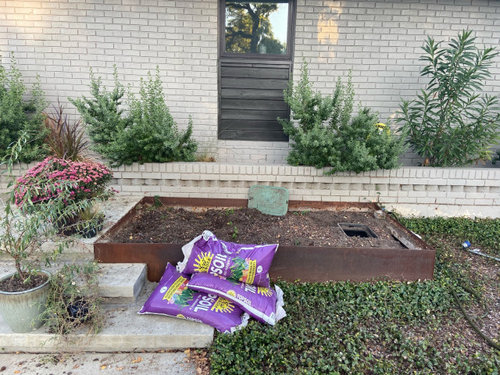
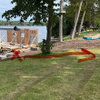
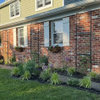
What should I plant here?! It is west facing but dappled/part sun about 4 hours due to cedar elms. The St. John’s wort died bc of western sun and the Mexican feather and pink muhly didn’t look so hot due to lack of sun.

Looking for an evergreen focal point and some perennials that are either xeric or drought tolerant and low maintenance. I’m in Dallas, Tx and the bed is 4x8.

Comments (13)

  • 6 years ago

    what is the buried utility box?


    how deep is the larger area .... some of it looks likes its over the cement pad .... does the rest go into mother earth??


    ken

  • 6 years ago

    the box is a sprinkler valve.


    The whole area is bottomless.

  • 6 years ago
    last modified: 6 years ago

    What about something like 2 rows of Pachysandra around the outside of the planter? It can spread and get out of control planted in the open, but your metal edge box should keep it contained. My mother in Texarkana had a lovely bed of it between her two front entries. The bed was in dappled to full shade all day long, as huge black walnut trees shaded their house. The bed was bordered by sidewalk and metal edging and never got outside the area. Then you could select something colorful for the center as a bed focal point? I can envision a lace-leaf Japanese Maple or a Nandina 'Firepower' in the middle. Either would give you some red and coral color in fall/winter and some lime green to contrast with the dark green Pachysandra in the spring and summer. The maple would lose leaves in winter and come back red in the spring. Nandina is evergeen like the Pachysandra.

  • 6 years ago

    I wouldn't endorse any of the plants previously mentioned. None are particularly drought tolerant (the Japanese maple not at all!!) and if the St. John's wort didn't like that location the pachysandra definitely will not!

    Native plants would be a good place to start but you do not need to be limited to just TX natives......there are many other plants that are adapted to hot, dry conditions, full sun or not. For a centerpiece plant, I'd consider something like Choisya dumosa or one of the many shrubby salvias that thrive in your climate.

    Western sun exposure tends to be pretty intense (especially in a location like Texas) and often a few hours (4+) of western sun can be almost the same as full sun elsewhere. I wouldn't necessarily dismiss the feather grass from the equation. It does perfectly well in less than full sun in my location and I am much farther north as well as with much cooler summers.

    A local garden center should be able to help you. Some plants I'd consider are esperanza (Tecoma stans), firebush (Hamelia patens), sedums, winecups (Callirhoe), penstemon.

  • 6 years ago
    last modified: 6 years ago

    Good ideas. How about Pachysandra (like buttoni suggested) with an artistic, big, round birdbath at ground level (like Jinx suggested)?


    Omar


  • 6 years ago

    Hesperaloe (red yucca) is another good option to consider for north central Texas. Checks off your evergreen, xeric, and low maintenance preferences. Also likely one of the longest blooming choices. A number of the named hybrids/selections grown around Dallas are shown here: Red Yuccas Rule! Something like 'Straight Up Red' might be worth considering for a partial sun location because the flower stalks on the generic plants do tend to lean more towards the light.


    A lot depends on whether you prefer variety throughout the year or a more consistent evergreen look. If you go with perennials like the root hardy lantana Jinx mentioned, you can increase variety by under planting with naturalizing early spring blooming bulbs like daffs or Spanish bluebells which will wind down before the perennials start growing back. Some fall bulbs such as red spider lily (Lycoris) can also work with low growing perennials.

  • 6 years ago
    last modified: 6 years ago

    I love Nandina and nothing kills mine in Houston. They come in regular (up to roof edge if not trimmed) and dwarf sized. I have had a few volunteers come up from seed so they do real well on their own. They grow nice red clusters of berries in the winter and the leaves will tint red with sun. The miniature bamboo look would go well with your modern house but don't use too many, keep them as an accent plant, here and there. I say that because I saw a yard with too many everywhere and they needed half of them removed or relocated, too much of a good thing. Maybe they were the only plants to survive and spread, IDK.

  • 6 years ago
    last modified: 6 years ago

    ^ But those red berries are also what kill some wildlife and make Nandina so damn invasive, though! Seriously, just avoid this exotic invader at all costs!

    Here's what I would suggest. Plant a Texas Persimmon tree in the middle as your centerpiece specimen. It is a great NATIVE, small, strong, evergreen tree that often grows under larger Live Oaks out in the wild and has beautifully-sculpted bark trunks! And then surround it with various irises and wildflowers...

    Or offset it to the right and plant a native, evergreen shrub, Lynn's Legacy Cenizo, to the left of it. And then fill in the remaining blanks with the same assortment of mostly-native flowers...

    Or another native, evergreen shrub you could add is Texas Mountain Laurel...

    There's also actually a Firebush (Hamelia patens) growing on a campus here - that's always looked amazingly healthy (about a ~5'-6' egg shape). I'll have to see how it weathers the winter here, though - before I suggest it as an evergreen or not? But it's definitely not just an annual here at that large size. And so far, it is just as fully-foliated with green leaves as ever, still!

  • 6 years ago
    last modified: 6 years ago

    greek pattern plant coupled with a summer blooming or growing plant like wandering jew and artemisia valery finis. Greek pattern plant disappears when it gets hot. Northern sea oats is a good grass for shade.Salvia greggii, wandering jew coupled with oxalis, salvia penstemonides. echiadea or cragg lilly.Penstemon tennuis, Oakleaf philodendron, spirea , sedum palmerii, Nolina texanna or Nolina lindheimeri

  • 6 years ago

    Blakrab has some good suggestions, as does wantonamara.


    I understand the impulse to suggest japanese maple -- I too think the esthetic might work well, but concur it isn't ideal as it's not very drought tolerant. I might consider one of our redbud trees however as an anchor. I like the interesting architecture of some of the weeping forms, and I believe they are often grafted, so the finished height is relatively pre-defined -- i.e. they are less likely to outgrow the space. 'Traveler' is a weeping cultivar of the Texas redbud, and Ruby Falls has attractive bronze leaves until the temps climb into the 80's that might contrast nicely against your pale brick. Underplantings might include a number of salvias, ornamental grasses, Santa Rita cactus, or other plants that would harmonize with the colors of Redbud. If you are going for a cool palette, consider silver foliage (lamb's ear, provence lavender, artemisias) and bronze foliage (purple fountain grass is probably annual for you.) and pink/mauve lavender blooms of e.g. salvii greggii "mystic purple". Mex. oregano (poliominthes) and native fragrant aster (for fall blooms) would likewise look nice, but might outgrow the space.

  • 6 years ago

    Thanks everyone! I have a lot to think about for the spring! What do you think about an agave (I was thinking artichoke variety) as a focal point?

  • 6 years ago

    i have a square raised bed a little bigger than that in my garden cottage area. I planted a small boxwood in each corner that I keep trimmed, a big obelisk in the center with solor lights on it - the rest is planted in roses, edged in pansies in winter, periwinkles in summer. I wanted a semi-formal look, but you could use the same plan with any other plant. A birdbath in the center would be pretty, or a stone statue. Could throw out zinnia seeds in summer for a colorful look - pansies in winter. Or just do the "backbone" shrubs in the corners and change the look ever year with perennials/annuals.