Software
Houzz Logo Print
hzdeleted_19039753

Open Concept and Taxes

7 years ago

Our assessor came last week -- remeasured our house and asked if we had the same number of rooms as last time. Seems they do this every six years or so (but I don't remember talking to them before).


I do not know the ratio of square footage and number of rooms here determining the value of a house, but would assume the more rooms the higher the assessment.


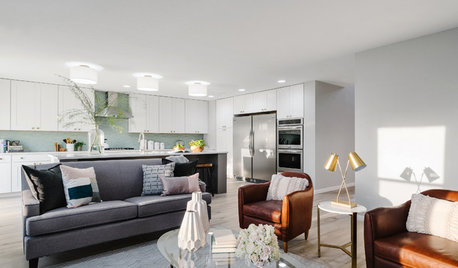
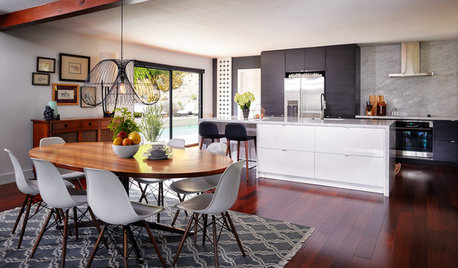
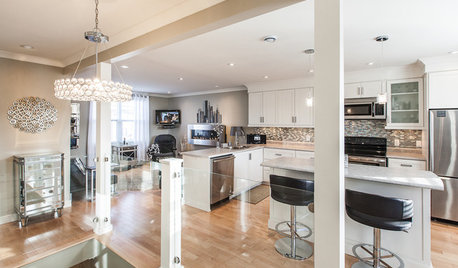
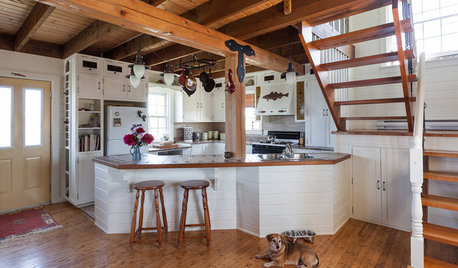
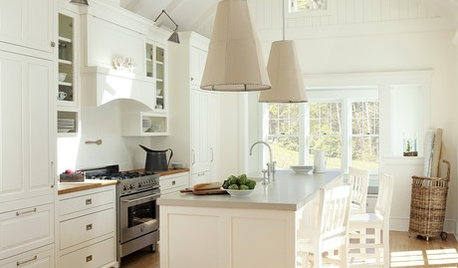
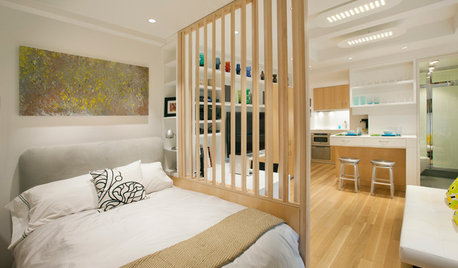
So, with the popularity of open concept and living room, dining room and kitchen all one big room, would that mean that if you had open concept and 2 bedrooms that you would have a 3 room house?


Would assume that a 3 room house would assess at less than a 5 room one?


Thoughts?

Comments (33)

  • 7 years ago

    In my area a house is not assessed on rooms so it wouldn't matter.

  • 7 years ago

    Our assessments state the number of rooms and the total livable square footage. I don't think they would be fooled by a 3000 sq foot home with three rooms. But you never know.

  • 7 years ago

    It mostly goes by sf in my area. I’ve seen some crazy flips where people try to cram four bedrooms into a 1,500 sf house or they close in the garage and do not a/c or insulate or add a closet and try to sell it as another bedroom. That, adds no value.

  • 7 years ago

    This would be a good question to post on the Buying and Selling Homes forum.


  • 7 years ago
    last modified: 7 years ago

    I've been doing tax assessments, valuation protests since 1984. :0) Here, they have a mill levy calculation for each zipcode(based on square footage, # of rooms is listed, but does NOT affect taxes). A mile away the property taxes are double what I pay. It depends on how the streets & utilites were paid for when the area was built. Also if the area uses the city fire department or has it's own.

    I've protested my property valuation 3 times since purchasing my new house. I've lived here one year. The tax assessor claimed my property was worth $260K more than I actually paid. I showed photos of unfinished areas, items that needed fixed. He came by, did a visual inspection and lowered the valuation $360k. Then another employee upped it back to where I started for the following year.

    Open concept does NOT change the number of rooms. Square footage is determined by measuring the footprint of the exterior of a home. So interior walls do not affect it. That's fair.

  • 7 years ago

    If open concept reduced taxes, municipalities would never issue permits to build or remodel to open concept!

    Here is it finished square footage, and whether it is above or below grade. I think number of bathrooms is in there, too.

  • 7 years ago

    Our county assess on different factors. It is about market value. Two identical 20 year old homes that sit next to each other could have different taxes. The one that was maintained would have higher taxes than the identical house that is falling apart, because it would potentially sell for more.

  • 7 years ago

    The OP made me chuckle and brought a memory to mind. Some 60 years ago, my father had to deal with the town assessor's incorrect determination, made from outside the house from his car. The fellow had merely decided because our house was very large, with three chimneys, two full stories, full basement and full-story attic, that it MUST have several fireplaces, and at least two full bathrooms.

    Being a 150-year old farmhouse, it had no fireplaces (all had been closed in long ago for wood-burning stoves, also no longer present) and only one single full bath for the 12-room house (my family of 7 managed somehow!). Dad was able to prove it by having the assessor return and come inside. Made a huge tax difference! =)

  • 7 years ago

    Ours have been determined by the square footage. I know the last house was determined by the footprint. It's also possible that interior areas that are unfinished or are closets may not be included in the final numbers.

  • 7 years ago

    Ours is based on square footage, not the number of rooms although it is included in the written descriptions. Other 'amenities' do increase the taxes - pool, screened porch, number of bathrooms and sinks. Our kitchen had 3 sinks (main sink, prep on the island, and a small bar sink) and I was surprised that there were considered a 'taxable' feature.

  • 7 years ago

    I can't help but I love this topic. Something I never thought of. A mile away in the next county taxes are doubled. Thank goodness we chose to build on this side of the county line road!

  • 7 years ago

    In the3 city north, the state line splits the city in two. As your drive up that State Line road, similar houses are on both sides. The ones on the left (in Kansas) pay way more in taxes than the ones on the right (in Missouri) do . . . And only a road separates the two!

  • 7 years ago
    last modified: 7 years ago

    I think in the vast majority of states, and maybe in most states, property taxes are based on variations of fair market value. Many states have a concept of "assessed value", being some fixed percentage of fair value. In California, there is such a notion at 25% of fair value against which tax rates are assessed but property tax is limited to 1.25% or something like that of full market value. With these silly assessed value ideas at whatever percentage, it's like if you take a number, multiply it by 17, then divide it by 17, you get to the starting point, nothing accomplished.

    Number of rooms, amenities, square footage, etc., may be useful for the assessment operation to try to make minor adjustments to distinguish fairly between similar houses in a given area.

    For those of you who think your property taxes are based on something other than fair market value you should check and you may be surprised by what you learn.

  • 7 years ago
    last modified: 7 years ago

    Our house is assessed by an exterior measurement of square footage of above-ground 'conditioned' space (heated/cooled, but not a screened porch, attic or garage, for instance). There are further factors like the construction material (wood, brick, etc.); number of bathrooms; and size of the basement. (We were initially wrongly assessed as having basement beneath our garage.) The largest part of our assessed value is the land itself, not the 'improvements' *upon* the land. (Remember this when you insure your house!)

    At a former home we effectively lowered our assessment based on an identical home in our 1950's subdivision. Our 'comp' was owned by a clout-heavy retired official in the Cook County government. We had to mount the protest every assessment period (3 years at the time), and we always won without any 'fuss'.

  • 7 years ago

    chisue, this Chicago Trib article describes the process in Illinois. Apparently (as in other places) the tax rate determination can be convoluted but in the end, the rates get applied to assessed value. They can measure and inspect and poke all they want, that's part of the process to determine value.


    Illinois property tax


  • 7 years ago

    Oh, yes, Elmer. The assessed value is only part of what your tax bill will be, but the lower the value, the less to multiply by the tax *rate*. Cook County is notoriously 'cooked' on the assessment end. I believe that is different in Lake County, where we now own. In the 1800's in my town, (largely German) farmers objected to being taxed for the schools that their kids left by age 12 - 14 (to become farm labor). They created a separate township with lower funding for schools. To this day, taxes are somewhat 'adjusted' in that township, although the farms are long gone. Schools are still the largest portion of our area's tax bill.

    The real estate market in my town is *terrible*, especially for the largest homes. Regardless of any lowered 'market value' reflected in assessments, the tax rate is going to have to be HUGE in the future in order to fund services. (I'm not sure how much the rate can legally be increased per year per funded entity.)


  • 7 years ago

    Martha Scott I had not noticed you live in the KC area. I live north of the river but used to live in the Northeast, Westport, and Loose Park areas. You are so right about the taxes being different on both sides of the state line. Also the differences along state line. Those tiny houses in Westwood have similar evaluations as to some of the smaller mansions on the East side of State Line. FYI, State Line is both the state line and the name of the street.

    Here you can go to the county assessor's office and look up square footage and a picture of your house either from the street or air. It also gives the evaluation of the house and a separate land evaluation. There is also a link to a page that gives the basic information such as number of rooms and type of finish to the basement. I suggest that if you can people should go look at the information. You might find some surprises. Not every area has the same amount of access.

    From reading one of the professional magazines my husband received people need to be prepared for more frequent tax evaluations. Missouri has gradually shortened the assessment period and either this year or next will start assessing each year and other governmental agencies will be doing the same if they have not already.


  • 7 years ago
    last modified: 7 years ago

    chisue, when the tax rate (however determined) is applied to a specific property, it's multiplied by the assessed value. Not the square feet, number of windows, or whatever. Those affect value but aren't in the tax calculation. Yes, land and improvements have different valuations (not evaluations) and sometimes different tax rates.

    To keep it simple, within the same jurisdiction, the taxes on a house with an assessment valuation of $700K will be double (2X) the taxes on a house valued at $350K. This is ignoring specific levies and certain per parcel taxes that can be enacted in various places. The taxing jurisdictions go through whatever gyrations they want or need to perform to determine the "rate" per $X thousand dollars of value, but the rate is normally applied uniformly and against the value that, as between different properties, should be fairly determined. If a neighborhood is overvalued by 25%, then for fairness all should be overvalued by 25%. Et cetera. Unless other rules apply, as in California, where residential property values can only be increased by something like 1% per year when ownership hasn't changed (that's our Prop 13 from decades ago).


  • PRO
    7 years ago

    Martha lives in Ft Scott Kansas, not Kansas City. Fort Scott is in Bourbon County Kansas.


    Martha, when did they start coming out to see ones house for assessment in Kansas? That never happened when we lived there, although that was a very long time ago. Perhaps it's changed.


    Every state/county/city has its own, often cumbersome, way of assessing value of a house. I COULD ask for an in-house assessment but would NEVER allow an assessor inside my house! I've gotten building permits whenever they have been required, but their description of my house does not reflect this. In the end, my area bases assessment on local comp sales. This is not good for me as I live in the smallest house on the block and my house has never been as valuable as the other houses. I'm appealed and won a could of times.


    I cannot imagine how room count works where houses today have practically become one room houses plus a few bedrooms. I have a feeling that square footage would at some point come into play here.


  • 7 years ago

    In more than 30 years of homeownership, I have never seen or met a tax assessor. And to my knowledge, neither have any of my neighbors. They do not come door to door here. Assessments are based on square footage and comparable sales in the area to come to a determination of what the assessor's office deems to be "fair market value", which in actuality is some sort of logarithmic application of a real fair market or sales value.

    And assessments can be challenged and often are. I recall my widowed mom living on a fixed income in what is now one of the highest priced residential areas in the immediate vicinity was able to have her property tax bill reduced to almost nothing.

  • 7 years ago

    Thanks for the correction Anglo, Martha Scott mentioned the different in taxes between the two sides of Stateline. I have been to the Fort several times but not recently.

    I hope you and others are aware that most taxing entities have methods to adjust the appraised value. The documents that accompany your property taxes will give you the information.

  • 7 years ago

    "Three room" is not a thing here. They talk about number of BEDROOMS but the other rooms aren't in the description. All homes have kitchen/living room/dining room of some sort. I think market value on cost per square foot is a factor too.

  • 7 years ago

    It is important to note that assessed value and appraised value are two completely separate constructs that bear little relationship to each other....other than square footage tends to be a basis for both.

  • 7 years ago

    Maifleur -- I grew up in Kansas City and we lived there for a period of time after we were married so KC is still home to me (the Missouri side). Now I live in Ft. Scott -- 69 minutes south on 69 highway! But what's so interesting about KC is that "state line" which is really a neighborhood -- it's just that part sits on one side and part on the other and those folks pay way different taxes from one another!

  • 7 years ago

    Anglo -- they used to only come when property was sold but the lady the other day said that it's every 6 years. I DON"T remember them coming six years ago, but they may have come and measured without ringing my doorbell. She may have run the doorbell because of the back yard being fenced and the fact that there are "killer dogs" that were barking their head off at her so she figured she couldn't sneak around -- perhaps 6 years ago when we had a different dog (and no doggie door) they were there and I didn't know it. But I think that six year thing is a recent rule -- the last 15 years perhaps? Or started when they re-assessed everything and I can't remember when that was -- perhaps 2000?

  • 7 years ago
    last modified: 7 years ago

    Elmer, I do not see where we disagree. Am I missing some point?

    We pay tax based on the assessed value times the tax rate.

    Assessed Value reflects primarily square footage measured on the exterior, and of only above-ground HVAC-ed area. The size of the basement is a consideration, but not attic or screened porch, etc. There is probably a formula that factors in some of the other information on the assessment form -- number of bathrooms and bedrooms; type of construction (frame, masonry); number of garage spaces; year built; pools, etc. The neighborhood is a factor.

    Our assessment shows our house built in the fifties, despite our tearing a ranch down to the foundation in 2000, leaving only a chimney and one adjacent bathroom standing. At the time, that was a 'renovation', not a tear down. We never even lost an 'occupancy' permit. This was the ONLY thing in our favor. The dithering 'building review committee' was nearly the death of us! (That has since been reigned in.)

    We are assessed annually.

  • 7 years ago
    last modified: 7 years ago

    Sorry if I misunderstood. You said " The assessed value is only part of what your tax bill will be " and that suggested a misunderstanding to me. Comparing your property tax bill to your next door neighbor's, in jurisdictions not having the adjustment ceiling California has, value would normally be the ONLY difference contributing to different tax bills.


    Maybe it's just semantics. The tax number (again ignoring special or per lot assessments) is the product of two numbers, the rate and the value the rate is imposed on. Size of house and lot, its condition, improvements, amenities, recent comparable sales, etc., all affect value but only value affects the tax. The peripheral facts, measurements, etc., are indicia of value in the absence of better information, or sometimes are reasons justifying value. But value is value, it's subjective in any event except in the cases of recent sales transactions for "identical" properties nearby. Which in the cases of neighborhoods built by a developer, can often be the case.


    .

  • 7 years ago

    Martha from the Kansas Revenue site "Does the county appraiser visit my property? State law requires the county appraiser to view and inspect the exterior of all the property in the county every six years"

    The link provides the information on how Kansas does assessments and provides information on appeals. Most states should have something similar.

    https://www.ksrevenue.org/pdf/pvdhomeowner.pdf

  • 7 years ago

    Phoggie -- In Kansas, they cannot ask to come into your house. She didn't ask about beds and baths -- only about total rooms. We knew someone who worked for the assessor and he told us that he never spent money on the outside -- only the inside because they couldn't come in.

  • 7 years ago
    last modified: 7 years ago

    In most jurisdictions, property tax assessor departments have access to both building permit applications and transaction records and they draw on these regularly. Permits have lots of information, including blueprints for new construction and remodels. No need to ask questions or inspect interiors.

    For people who do it full time, there's plenty of relevant information available. Determining a reasonable estimate of fair market value isn't difficult nor rocket science. Precision isn't required nor to be expected. An appraisal or estimate of fair market value of anything, for any purpose, is always subjective and not objective and is never expected to be more than an estimate.

  • 7 years ago

    Martha...in a small town near here is a real dump of a house but I was told it is beautiful inside...and it was planned that way for the same reason! :-)

  • 7 years ago
    last modified: 7 years ago

    I can't imagine much tax loss (or savings) comes from whatever shenanigans are happening at a house in a small Kansas town that's dumpy on the outside.

    Phoggie, you think playing tax games, however petty, is worth a smiley face?