Software
Houzz Logo Print
newsouthernbelle

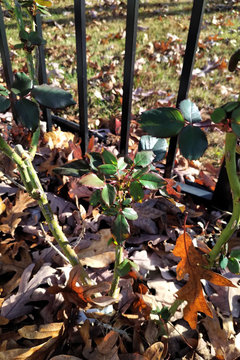
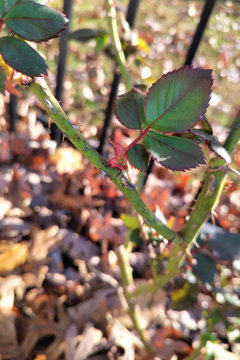
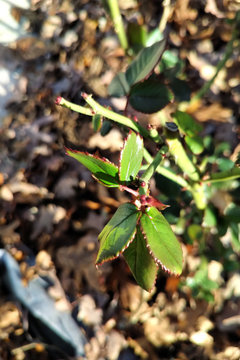
is this the beginning of rose rosette??

6 years ago
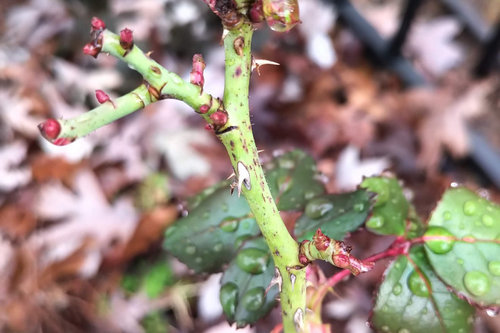
(I have tried to post three times now so this is abbreviated)

Does this look like RRD... I keep going back and forth. I have some David Austin roses about 10 feet away and would hate to lose them so I am anxiously trying to figure out about this one and if I need to take it out. Thank you.


Comments (16)

  • 6 years ago

    Let it grow a little more, but it looks like it, in order to confirm.

  • 6 years ago

    What makes you think it may be? It looks like new growth to me... but just my opinion. What rose is this ?

  • 6 years ago

    I don't think so. What zone are you? Is it fall now and cooling down?

  • 6 years ago

    I don't think RRD.

  • 6 years ago
    last modified: 6 years ago

    It looks like healthy growth to me

  • 6 years ago

    That is a whole lot of bud breaks in a very limited amount of canes. And that shade of red....isn't what we see at this time of the year.

    What are your daytime temperatures now? (to see if you need to worry about the potential vector mites' activity).


    Is there any chance that that rose got a very late season dose of fertilizer last month or early in November?

  • 6 years ago

    New growth can often be red. It just looks like new growth and new buds to me.

  • 6 years ago

    It's Anna's Promise, a grandiflora that I planted the previous spring. Yes, I don't know why it is having so much growth right now so that makes me suspicious. I'm in Atlanta - 7a and sure it's been a little warm here, past week had temps in the 70's. A few of my other roses are showing this sort of growth though so I guess it's not totally abnormal.

    I am also suspicious because it looks like it is getting more thorny (and it looks like tiny thorns are just starting to grow toward the tops of these canes) and the canes appear to be thickening. I haven't pulled it yet b/c I'm hoping it is just new growth and like I said, I keep going back and forth thinking it definitely is RRD and then taking a deep breathe and thinking 'no, it's fine - it's just healthy new growth'. I wish there was a definitive way to know.

    I don't think it got a dose of fertilizer. I can't remember giving any and it isn't near any pansies where I did fertilize.

    Thanks for the help and Happy Thanksgiving!

  • 6 years ago

    I tried to upload more than one pic last night when I first posted but was unsuccessful. Maybe it will work from my phone now.

  • 6 years ago

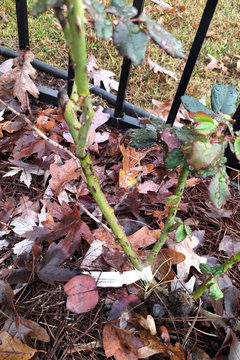
    That cane in the last two photos scares me, even more. Is there a chance that this is on Fortuniana root stock?

    In the last photo the vertical canes loos as wide as the one it came from and the two, together, look significantly wider than the part of the cane that has the label on it.

    The late Jonny Becnel showed this on some of his massive pot grown roses on Fort. that he grew down in Louisiana out on one of the arms of the Mississippi that was surrounded by the Gulf.

    BUT caliper normally doesn't get wider with newer growth without the earlier cane growth expanding as well.


    The reddish stipules at the base of the green leaf with a red edge don't bother me ....the business of leaves turning green is really wonky in the fall. That's one of the reasons that I try to find three RRD symptoms before pulling a rose out of my garden. Color isn't always a determinant. BUT, again, look at the leaf margins, stipule development, and the growth patterns. Don't just look at the colors of the leaves, etc.

    newsouthernbelle thanked stillanntn6b
  • 6 years ago

    Stillanntn6b - the angle of the photo is weird - the canes are equally thick; not just the one coming off at a higher point.


    So I've been researching but I feel like the only symptoms and things to look for are:

    - Weird 'broom' growth tops (which probably happens much later in the process right?)

    - Unusual number of thorns (and this requires knowing what is 'normal' for your particular rose, which feels impossible to me b/c that is not knowledge I just happen to have.)

    - The 'rosette' little bloom buds that never actually turn into full flowers

    - Sometimes red canes (but a lot of new growth on roses is naturally red anyway)


    What are the other symptoms I should be looking for? The ones I listed feel too arbitrary or really late in the progression of the virus and so not helpful at trying to identify it early and get it out of the ground to prevent it from spreading to other roses.


    I guess the only real way to know is to send it to a lab. I guess my next step is to look into that at the University of GA agg department.

  • 6 years ago

    Have you been to my ebook?

    Rose Rosette ebook

    First page : the emphasis should be on aberrant, excessive or unexpected. Those three adjectives I came up with fifteen years ago when I watched RRD come into my part of the world and was trying to help other people. At that time the word from ag departments was that RRD seldom infected cultivated roses. Balderdash.


    I managed to keep RRD to a minimum in my roses by catching appearances of earliest symptoms....Even overgrown stipules, multiple excessive growth sepals, leaves that were not symmetric and whose margins weren't 'normal', one side of a cane that grew faster than the other sides....


    The book is long and the FAQs will answer some of your questions.


    I have not updated with the recent discovery that the disease is a virus in the emara group of viruses....most of the papers about it are searchable. with Google Scholar.

    newsouthernbelle thanked stillanntn6b
  • 6 years ago

    Stillanntn6b - I just came across your e-book yesterday via a different source (fine gardening article on RRD I think) and started looking at it via my phone but figured I would be better off reading it on my computer and large screen. Thank you for the link here.

  • 6 years ago

    https://roserosette.org/ good info and they try to stay current.

    If you also go the the website at the universities who are heading the research you will find their most current finding. Also, If you call them they are very helpful. I do not claim to be expert but those pictures do not seems to resemble RRD. “Yesterdays news” seems to be ”old news” in this vIrus. USA gave grants to several universities to study various facets of RRD. I.E. University of Tennessee was doing the research on miticides. The mites overwinter so something to prevent them would seem to help. i find ID is more difficult when the bush has heavy thorns and heavy red new branching growth as part of its culture. Munstead Wood comes to mind. Your rose will show its colors soon enough if it is sick. Also since winter sending off samples is easy enough And gives time. They will also tell you if you have any of the eriophyid miteS on your bush. If you are in a warm climate.

  • 6 years ago

    It is my understanding that the funds were only held back from the University of Tennessee not the others Universities. . May be wrong but I think A &M still receives funds. Others would know about this better than I.