Software
Houzz Logo Print
szurekc

Polyurethane wood floor

6 years ago
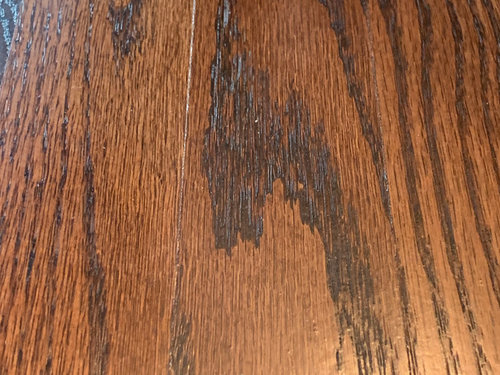


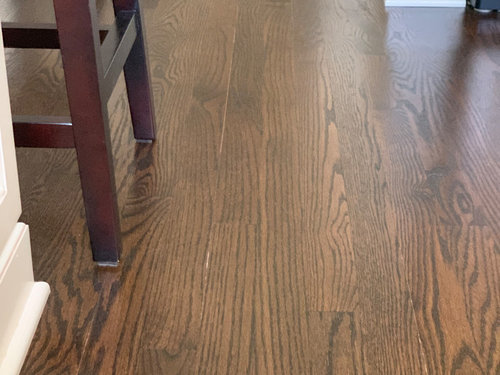
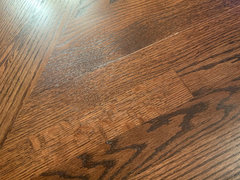
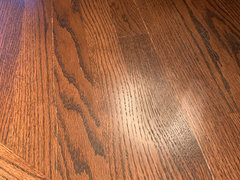
Our wood floor has three coats of oil base poly that has just been applied in the last 6 months. I have crevices where the filler is coming through. I have lowered my humidity to around 35-40 and still it is not going away. Was it a bad refinish by the floor company? He swears he did 3 coats, but it looks and feels so thin to me.

Comments (14)

  • 6 years ago

    Leave the humidity alone. It really needs to sit as close to the day it was installed (45% is ideal). Low humidity does MORE damage than consistent mid-range humidity. The winter is the 'dry time' for houses. Wood will contract (shrink) if it is too dry. And that opens another can of worms.


    How old is the wood? Is this a sand/refinish? Is this a new install? A stain was used - was their water popping? If so, did the finisher take that into account and be extra careful with knocking down the wood grain?


    And how much filler did he need to use? Was it spot-specific or was it over the entire floor? Are the pale lines pushing up crumbly stuff? Or is it just a visual look of 'pale' between the planks? Can you feel the filler coming up?


    What is the total square footage of your floor? What was the brand of polyurethane? How much was purchased for all 3 coats?


    The first coat of poly has a low coverage rate. Some product will only offer 300sf on the first coat. Then the second coat achieves 350 sf or so and then the final coat will have a decent coverage of 400sf. Some installers try to work the first two coats too thin (because they are trying to achieve the average coverage rate stated on the can). They forget the first coat goes down thirsty. And after that you start getting the average coverage.


  • PRO
    6 years ago

    szurekc , you may very well be drying your floors out so they are shrinking causing those issues between the planks. Have you read the warranty documents from the manufacturer? 35% is most likely much too low.

  • 6 years ago

    Following

  • 6 years ago


  • 6 years ago


  • 6 years ago


  • 6 years ago


  • 6 years ago


  • 6 years ago


  • 6 years ago

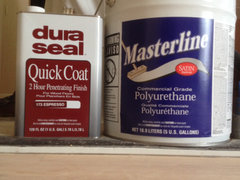
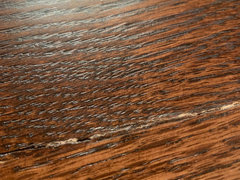
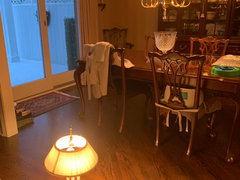
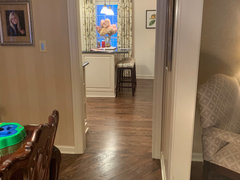
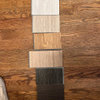
    Ok so here is the product he used, and yes it is crumbly in the cracks and you can scrape it with your finger nail, the floor was cupping in both rooms the kitchen is brand new and the dining room is 30 years old....the humidity was at 60 and he told me to get it down between 30 to 40 so I have. The cupping as pretty much gone away. My concern is that the old finish on the floors never did this and we were very careful to tell him we wanted the old fashion oil poly because we loved it, we even went to see one of his water base jobs because he really Likes using that but we liked what we had. I am not hard to work for, but we were very specific about how we wanted the Floors to turn out. The whole job he did for us was $5000 so this is not small change! He did a family room and foyer that are not doing this So I can’t understand why it is the kitchen and dining room!

  • 6 years ago

    Is this a newly installed floor or is it an older floor that has just had a sand/refinish done?


    By the technical specs, this is an oil modified polyurethane with VOC content of 550g/L (too high for California or the other 11 CARB compliant states). It has excellent coverage per gallon (that's a good sign) of 500 - 600sf (depending on which coat it is).


    The patch/filler is definitely lifting out. The house might be too dry for the floor. You will want to pump up the RH to sit between 45%-50%.


    I would say the floors are drying out (winter time) and the patch is being stretched is crumbling. Sadly this is what happens to patching material. It eventually crumbles and falls out.


    To slow this process down (you will never stop it), you will need to maintain the humidity in the high 40% range. Forever.


    The floors look well coated. I'm not seeing anything that concerns me re: coverage. You have a lovely looking floor. The stain is even, the coating is even, The floors look happy but they are certainly drying out and the patch/filler is coming out...which is something that happens to all wood floors that have filler.

  • 6 years ago
    last modified: 6 years ago

    Ooops you finished your comments at the same time I did.

    Please clarify: Which floors were CUPPING? You said two rooms were cupping. Which one's were those? I assume they were the OLD floors? How long ago were the new floors installed? Before or after the 'cupping' disappeared?

    How long ago did you start the dehumidification? Before or after the install/refinish?

    Now which floors have the crumbling patch? Old or new?

    And the family room and foyer? Are they new or old? What was the weather like at time of install? And how long were the new wood planks allowed to acclimate in the home before installation?

    And for a sand/refinish in my neck of the woods, the $5k = 1000sf of sanding and refinishing with a top of the line water based polyurethane (aka: $180/gallon).

    I know this is frustrating but try to layout your thoughts/answers to the questions as clearly as possible. I have some ideas why some of this is occurring and other areas are not...but we need just a bit more input. Your almost there.

  • PRO
    6 years ago

    The MC and RH for the new floor will need to be maintained to whatever the installation condition was. Is there a basement below the new floor? That area will need to be maintained also.

Sponsored
Kuhns Contracting, Inc.
Average rating: 5 out of 5 stars26 Reviews
Central Ohio's Trusted Home Remodeler Specializing in Kitchens & Baths