Software
Houzz Logo Print
lepetitmatin

Bluestar RNB griddle material?

6 years ago

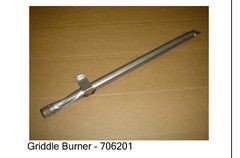
We are considering the Bluestar RNB 48” with griddle and grill. I don’t love that you can only have them in the middle with burners on each side but apparently that configuration cannot be changed. We were able to see the platinum’s griddle in store, which I know is different in several ways, but they did not have a floor model with the RNB griddle. The Platinum’s is cast iron, which is similar to what we have now on our Thermador. Is the RNB’s griddle stainless steel or something else? I hesitate to get a stainless steel griddle as I feel like everything would stick to it! How have people found cooking on it?

Comments (28)

  • 6 years ago

    There is a good reason for why the griddle needs to be in the center. One of the big selling points of Bluestar ranges is the built-in wok burner. But a wok (and some large stock pots) are big enough that it overhangs adjacent burners. With the 30" range, you get a filler piece in the center that addresses this issue. With the larger ranges you don't get that. But the griddle essentially acts as a spacer for your pots.

    The griddle in the RNB and in the Platinum are different. I believe only the RNB griddle is thermostatically controlled. Many people prefer that. So, picking the RNB is probably a good choice in your situation.

    As far as I can remember, both griddles are made from cast iron.

    Personally, I spent a lot of thought on whether I wanted to upgrade our 30" RNB to a different model, and in the end decided against it. As you correctly stated, having burners on the outside of a 48" range seems awkward. Also, a griddle takes a long time to preheat, and I find a thin rolled-carbon skillet is frequently the more pragmatic and functional situation. If I did decide to use a griddle, I'd probably just get a big overlay griddle. Those tend to be bigger than the built-in models anyway, and that seems important. Also, it gives me free choice of material.

    I also don't like that I lose so much upper cabinet space (at least 54" for a 48" range). The cost for the hood is insane, it's noisier, and it needs elaborate make-up-air.

    And finally, while I like the 30" oven in our RNB range, I am not thrilled by the oven configurations of the larger models. I'd rather have additional wall ovens instead; we have a 24" Miele CSO, and a Miele SpeedOven. This configuration turns out extremely versatile and IMHO is a much better choice than a 48" range.

    Just some food for thought. Not everybody will reach the same conclusion that I arrived at. But I spent many months of research before finalizing my decision and I am very happy that I did.

  • 6 years ago

    Thanks M. Unfortunately we have a 48” space we’re stuck with, so need to go with a 48” range (I wouldn’t if I had a choice).

    Also I confirmed with the dealer at the showroom (who confirmed with BS via phone) that the griddle on the RNB is SS while the Platinum is not and you cannot buy the Platinum’s overlay griddle/grill for the RNB.

  • 6 years ago

    Thank you queen e! SO helpful. We are probably going to do the griddle and grill (we use our current grill on our Thermador a lot), so it’s very helpful to hear your feedback on the griddle.

    A separate question (maybe I should create a separate thread...): the wall behind our range is not tiled. Our Thermador has a tall 22” backguard with shelf. Getting something similar to attach to a BS would add about $1400 to the purchase. Or we could tile the space in our kitchen (not sure how much that would cost; it’s not a ton of space, though we would likely do some space additional to just the wall behind the oven). My concern is that I read an old post on Houzz commenting on the immense heat given off by these large and powerful ranges (the BS burners have higher BTUs than my current Thermador too), and that the adjacent wall should have steel beams instead of wood for fire safety (even if tiled). Is this true? Is this something I should be concerned about? It’s the only reason I had thought we should just go with the backguard but now am thinking twice.

    The only other annoying thing is that we have to change our wiring from 220v to 110 to go from DF to AG. And our gas connection juts our from the wall a bit so there will always be a few inch gap behind the range. It’s currently covered by a stainless steel plate that matches everything, which I guess we can reuse. Don’t think I want to throw more money at the gap issue at this point anyway.

  • 6 years ago

    Yes you need the backguard even if the wall is tiled. Tile does not make a wall noncombustible.

  • 6 years ago

    Does everyone get these types of large pro ranges with backguards then? I feel like most pics I see are without

  • 6 years ago

    We have the 48 inch Platinum and yes we have the backguard. We had a 48 inch Wolf in our previous house and had the backguard.

  • 6 years ago

    On the back guard dilemma, we initially ordered ours without, because like you said, that seems to be what all the pictures showed. But then we did some reading and realized we'd better order the 6" back guard, even though the wall behind our backsplash is brick, it has wood studs and will eventually be tiled. I had no desire to change the studs to metal. The 22K burners are on the front corners, but of course the 15K burners also kick out a lot of heat. The back guard comes in a separate box anyway, and was easy to attach once your realize that BS is basically like Lego, everything comes apart and fits together vert nicely. Now I think it would look kind of naked without a back guard, and I am skeptical of all the pretty pictures that show island trim against walls that I doubt are all modified to be non-combustible.


    On the gas valve issue, I feel your pain. Our valve is on the floor, and just barely clears (like 1/4 inch) the bottom of the range, which I find unsettling. I am going to see if it can be turned so the off lever is parallel to the floor, rather than on top of the valve. I wish there was a better option, because realistically, the range is not moving anywhere once our tiling is done and it is in place once and for all, so why would you ever need the lever where it is?

  • 6 years ago
    last modified: 6 years ago

    We have a few inch gap behind ours as well due to the gas line. It bothered me at first but I don’t really notice it anymore. Our walls are log so the line comes up from the floor. Also as far as the small oven goes we use ours all the time.

  • 6 years ago
    <?xml version="1.0" encoding="UTF-8"?><md>Ok guess we’re getting the backguard! I’m wary because I think it’s the source of our problem with our current - just another part that can break. Vinmarks how tall is yours? Our dealer seemed the 6” wouldn’t do much in terms of protection so recommended one of the taller ones. Ours right now is 22” so was thinking of the highest (17”) BS one.
  • 6 years ago

    I should say our Thermador backguard has fans or something built into them, so it’s functional (for operation of the oven). My understanding is the BS one is the same?

  • 6 years ago

    We have the 24 inch backguard with high shelf. It does not have fans in it.


  • 6 years ago

    If you tell your plumber where the gas needs to be hooked up to the range (just show him the manual, if you don't have the range on-site just yet), they usually can be more proactive in moving the gas valve to a location where it is easily accessible. Also, our plumber was really cool and installed two gas valves in series. The second valve is in another cabinet in the kitchen, where is it easily accessible without having to crawl under or behind the range.


    We used to have the 6" backguard which seemed to work great. In our remodel, we installed deeper cabinets, which means the range is now pulled forward from the wall by quite a bit of space. I believe Bluestar only requires 6" distance between the back of range and the backsplash. So, we could get away with island trim. And of course, with the extra space behind the range, the island trim piece looks much more natural than the 6" backguard.


    So, we have had both options, and I am really happy with both of them. They both fill a need, are functional, and IMHO look nice.

  • 6 years ago

    Vinmarks, is that the platinum? And it looks like there are vents at the top of the backguard, no?

  • 6 years ago

    And how old is your unit?

  • 6 years ago

    Our range is 2 years old. Yes the backguard is open at the top front.

  • 6 years ago

    Unless this has changed very recently the built in griddle on the BS is made of 3/8” cold rolled steel, not stainless steel. This was as reported by Trevor Lawson. It is supported by the instructions in the manual. It talks about preventing rust. It also talks about not using soap.

    The cover is stainless steel. If they have changed to stainless that would make the surface heat even more unevenly. It would be strange to do that.

    http://www.cookingforengineers.com/article/120/Common-Materials-of-Cookware

    It would also be difficult to season.


    If a built in griddle is the most important thing, consider Wolf which has a thicker (either 1/2” or 3/4” steel depending which part of the website you read) and an infrared element both of which help to provide more even heat.

    Wolf infrared element

    BlueStar


  • 6 years ago

    Vinmarks, does air (hot or cold?) come out of those vents? I guess it’s creating space for air to go when oven is on, but nothing in the backguard is actively pulling air (as my Thermador does)?

  • 6 years ago

    Yes, that's the vent for the ovens and hot air does come out while the ovens are operating. But no, it is not actively ventilated. No fans pushing any hot air. It's all just convection.

  • 6 years ago

    What M said.

  • 6 years ago

    Ok. Is the 6” guard as effective for the combustion issue as the higher ones? What are the pros/cons of the lower/higher backguards? Is it just stylistic?

  • 6 years ago

    We live in a log cabin. The wall the range is on is log and there would be no tile on it so we wanted as tall a backguard as we could get.

  • 6 years ago

    As @wekick said, the griddle on the Wolf is better than the Bluestar RNB. It has more even temps across its surface and maintains temps better over time. That said, the griddle on the RNB is still considerably better than any kind of overlay griddle such as is on the Bluestar Platinum. OTOH, the open burners on the RNB are better than those on the Wolf.

    Wolf (and SZ) win the customer service contest. Actually, from what I've read here and heard from others, Bluestar quite massively looses the customer service contest with exceptionally poor customer service.

    We are nervously planning to get an RNB. If the griddle is much worse than our current Wolf then we'll sell it, get another Wolf and deal with the poor Wolf burners.


  • 6 years ago

    Opone, I didn’t say better. “Better” is such a relative term. It all depends on what is important and how you will use it.

    I much prefer an add on griddle, although not one like the Platinum.

    If even temperatures across the surface are your goal, I would be looking for something aluminum. See the article on cookware for engineers. Of the built in griddles, Thermador has a cast aluminum plate and a six pass element.

    The plate is covered with a nonstick material but does allow for easy replacement. It is ridiculously expensive though.

    I love my overlays because they have about 50% greater area on a two burner size than a built in. I can use bare aluminum or nonstick aluminum or steel. I mostly use it when I am cooking large amounts of something. I can pick the griddle up and put it in the oven if I want to. Temperature changes are much quicker with aluminum.

    http://royalindustriesinc.com/index.php?main_page=product_info&cPath=4_22_48&products_id=82

    Some people like the Chef King which is steel. It seasons a little easier than the aluminum. Some people like zones of heat for holding areas.

    Other advantages to an overlay are-

    There is a lot more available heat. Some people use it to stir fry or just want higher heat. The heat from 15-25K BTUs in 2 burners is a lot more than the usual 15-18K on most 2 burner built in griddles.

    You are able to use all of your burners as burners if you want to.

    You can control each burner separately.

    You can clean it in the sink.

    They are very inexpensive to buy or in the case nonstick, replace.

    If you are looking for “even temperature over time”, the built in griddles all fluctuate by coming on and off. An add on griddle has constant heat once it is adjusted. I don’t know that this makes much difference in actual cooking. The thermostat does allow you to set the same temperature repeatedly.


    “the open burners on the RNB are better than those on the Wolf.”

    Open or sealed burner trays aren’t really performance issues, just cleaning preferences. It is other aspects of the burner that determine the performance. The differences are that BS star burner keeps the flame more to the middle by not having a burner cap, allowing the flame to go in more of a straight up direction. The star design with the ports along the side keep the flame in the foot print of the burner a little more. This is good if you stir fry or need high heat in the middle. The star disperses the heat a little better if you use cookware like cast iron or steel that doesn’t conduct heat very well. If you have copper or aluminum, the cookware evens the heat out. I have Wolf burners and they work well for me because I use big pans. I’m using highest heat on the widest pans so I like the flare as you turn the heat up. Some gas burners get super wide though so you have to see how they are. Wolf keeps the flare from getting too wide with the dual stacked burners. I have been stir frying more lately and it has been pretty good for that but I move my wok around a lot.

    Wolf has the reputation for great service but that has not been my experience and they continue, over the last 10 years to knowingly sell ovens with the blue interior that chips. BS has been good and bad.

  • 6 years ago

    Thanks for all your feedback! I’ve heard that BS’s customer service more recently has been better, but is that wrong? I’d also love more thoughts on the backguard height if anyone has experience with this! Thank you

  • 6 years ago

    From what I can tell, Bluestar is a relatively small company. That's not necessarily a bad thing. In fact, it means that they can do a better job of catering to a specific market niche without having to chase the fad of the day. And that's probably why they are so popular on Houzz. The combination of high-performance, easy servicability, and modular constructions targets a niche that finds a lot of fans in this forum.

    But being so small, they can also easily get overwhelmed. Throughout the many years that I have been following Houzz (or Gardenweb) and everybody's experiences with Bluestar, this has been a recurring theme. Bluestar's service department means well, they often do come through, but they also occasionally drop the ball. If you are persistent, communicate clearly and politely, and have reasonable expectations, I always found that their customer service was just fine.

    It does help though, if you are at least willing to learn about how your range works, to do basic maintenance/adjustments by yourself, and to install replacement parts if Bluestar has to send them to you. You don't absolutely have to go DIY, but you'll be happier with your purchase if this concept doesn't scare you.

    As for the height of the backguard, we originally had the short one (I think, that's 6"). Over the years, it got some minor burned-in splatter and scorch marks. So, clearly it is doing its job and it does get hot. But I also never felt that the backsplash behind it got excessively hot. So, if you don't have a particularly heat-sensitive backsplash, I wouldn't worry about going for the 6" backguard.

    On the other hand, if you have more fragile material, or if you simply like the looks of a taller backguard, then that's also available to you.

    I'd offer you the old backguard that we have for you to try out (and keep if you like it), but that won't do you any good, as ours is only 30" wide. Also, you'd have to arrange to pick it up from the San Francisco Bay Area. I suspect that shipping would be prohibitively expensive. We now use the island trim, but that required a non-standard distance from the back of the wall.

  • 3 years ago

    Do i beed a bsckguard if i have marble mother od pearl tiles for backsplash ? thanks

  • 3 years ago

    The issue is heat on the wall conducting into the wall structure and causing distillation of wood chemical components leading to strength reduction and increased susceptibility to fire. The degradation in many residential settings is likely to be a long-term progressive one, but one that the code writers have addressed.

    In general, what is needed with respect to the wall construction versus range configuration is provided by the manufacturers' installation manuals, and if they write 6-inches of gap or use a backguard, then that should be done. Otherwise for Do-It-Yourselfers, the requirements of IMC Section 308 have to be followed.

    While the tiles may be non-combustible, the surface they are on and everything 6 inches into the wall (possibly including the picture hanging on the other side) are required to be non-combustible. For some heating devices, this distance may be even greater. Carefully review the installation manual before buying the candidate range.