Software
Houzz Logo Print
bpath

Wallpaper removal abyss

6 years ago

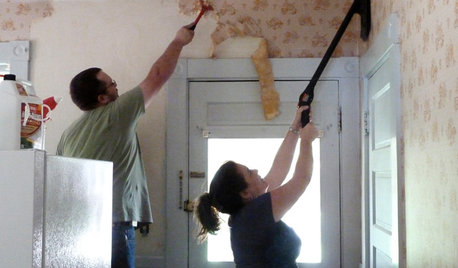
We are having wallpaper removed in a half-bath. Previous owners put it up probably 25 years ago, but was starting to show wear. A couple of seams were becoming ragged. So we included its removal in a painting estimate. Well, it is refusing to come down. I mean, flat-out will not come off. The painter has tried several methods over the past two days. He isn’t usually a wallpaper or drywall guy, and we were just talking about alternatives. We even talked about putting new drywall over what’s there, and now I’m thinking we may as well do a complete remodel in there! (I’d love to replace the vanity.). But, of course, then it gets into “if you give a mouse a cookie” because of the connecting laundry room, and the way the tile floor was installed (also by the PO) over the original sheet flooring.

I know, why am I asking here when I have the painter, but I’m just trying to brainstorm. Can we kind of mud the entire wall, right over the remnants of wallpaper, then paint?

Comments (21)

  • 6 years ago

    Sorry, no suggestions ... though I don't see why you coldn't mud over it, you'd need someone really good at mudding to do it. That's a bummer that it's not coming off. I was just finishing striping the wallpaper in my pink 1950's guest bathroom over the weekend and mentally thanking the previous owners for putting up wallpaper that came off with just water and a scrapper. I'll replace with peel and stick wallpaper, which will be very easy to remove.

  • 6 years ago

    Has he tried scoring (w/paper tiger) the paper and saturating it with fabric softener mixed with warm water? It works surprisingly well.

  • 6 years ago

    I agree with maddielee, that is how I do it. Put the softener in a pump up garden sprayer, score first then spray. He may have to spray a couple of times. Once it starts to loosen then scrap it off. Repeat until it is all down.


    If you try to mud over it then it will need to be sealed well first so that the mud does not penetrate the paper and loosen it.

  • 6 years ago

    The fabric softener tricked worked for me on five layers, oldest presumed to date back 110 years, with one of the layers in the middle having been painted over. Took a long time and made a mess, but certainly worked.

  • 6 years ago

    MaddieLee, yes he did. Then used a heat gun on it.

    It’s crazy. There was a hanging mirror over the sink that I took down for this project. When he started removing the paper, he saw that there had been a medicine cabinet and light fixture at one time. The medicine cabinet had been removed and the hole closed off, but they had simply capped the wires and papered over the light fixture box! No drywall patch!

  • 6 years ago

    Did they try steaming it off yet?

  • 6 years ago

    It's against code to drywall patch over capped wires. Not that wallpapering over capped wires is legal either!


    The problem with skim-coating over the wallpaper is that the wallpaper seams could start being seen through the skim coat and paint. And the mud may not adhere to the paper. But if you google it, there are lots of people who do it.

  • 6 years ago

    Most wallpapers consist of two layers of paper; the decorative paper, then a thinner layer, similar to thin blotter paper. The top layer usually will peel off at the seam like the skin of a banana.

    Then do as others suggested and soak (I mean soak till it's dripping) the bottom layer with lukewarm water (and fabric softener if you wish). Keep it saturated for like 5 or 10 minutes, it should scrape right off. Be careful not to spray water on those capped wires, or anything else electrical.

  • 6 years ago

    Rent a steamer. Sometimes it's the only option.

  • 6 years ago

    In our last home the wallpaper had been installed over un-primed, unpainted drywall. Our wallpaper guy used a huge plate steamer to get it off. At one point I opened the door to the bedroom to ask a question and the steam was so thick there was a cloud hovering over his head. It was a mess but it worked and we had to do that in 4 bedrooms and 2 baths.

  • PRO
    6 years ago

    Get a steamer. I have removed wallpaper from every room in my house, including walls, cielings, painted over, and even on unprimed drywall (which doesn't go well). The steamer priceless. We loan it out to people regularly!

  • 6 years ago

    I agree - a steamer. It works.

  • 6 years ago
    last modified: 6 years ago

    If the paper is bonded that well, leave it. The reason you remove it is to prevent it from coming down when you don't intend it to, but it obviously doesn't want to. We went through the same thing on a DIY powder room project and I was determined to "do it right." We steamed, sprayed, used fabric softener, some other product, tried a couple of different tools (don't bother with the Tiger things -- they do more damage than good-- awful!) . At some point you realize you are doing more damage to the sheetrock and getting very little paper removed. We were either going to have to redo the sheetrock and much more work than we intended or I was going to have to give up on what I was "supposed to do." I got the same advice from a painting store guy I trusted and a couple of pros -- so I went with it.

    To prep the wall with paper in place, you clean it and remove loose edges, float the edges with mud like you do drywall tape and prime it with a shellac primer (the original KILZ-- the stink stuff). If the walls are going to be textured, you can prime first to seal bond between the paper and the drywall, then float the seams and texture. The shellac will mean that paper will become glued to and a permanent part of the drywall -- but it works. I've done it in that powder room and one other room -- don't remember which now, but neither had any problems with the texture, paint or the paper bubbling or peeling.

  • 6 years ago

    Lascatx, I wish we’d done that. The painter suggested it in the beginning, but I pointed out areas where the paper was fraying at the edges and peeling in a couple places, and I thought it best if it came down altogether. I wish he’d tried harder to convince me!

  • 6 years ago
    last modified: 6 years ago

    You can still do that -- just remove the loose edges and fix anything else with the mud and texture. No harm done -- just a bit of lost time and effort, and you don't know until you try. Everything else is recoverable. Done it in 2 bathrooms and was never sorry. I still try and do get it off in most rooms, bit if it is impossible, I don't fight it. The shellac Kilz is the important step.


  • 6 years ago

    I've had a lot of experience removing wallpaper. A kitchen had plaster walls with 100 years of alternating paint and paper. That required a scraper. 30 years later, my elbow still reminds me of how much fun I had. The bathroom in the same home had been remuddled, so that was only one layer on drywall. The person didn't prepare the walls properly, so removing the vinyl coated wallcovering severely damaged the paper cover of the drywall. That's how I learned how to mud a wall with with drywall compound. Fortunately, it was a small bathroom. I'd start with a steamer.

  • 6 years ago

    When I bought my house, it had a few rooms with textured wallpaper over un-primed drywall. The top layer of the wallpaper had some sort of coating on it, and scoring it did not work. But we sanded the top layer of the wallpaper off, and then we used wallpaper remover to get the backing off the wall. The drywall was not damaged. In one of the rooms they had painted over the wallpaper, and the sanding method worked for it as well.

  • 6 years ago

    Sometimes vinegar and water will dissolve the glue. Saturate well and plan on skim coating.

  • 6 years ago

    A steamer will definitely work when nothing else does.


  • 6 years ago

    After removing wall paper from the ceiling of a small powder room, I decided there was a special place in heck for people who paper ceilings. This was years ago and I haven't had wallpaper in a house since.