Software
Houzz Logo Print
webuser_588100343

Gas Fireplace Questions

6 years ago

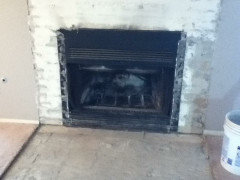
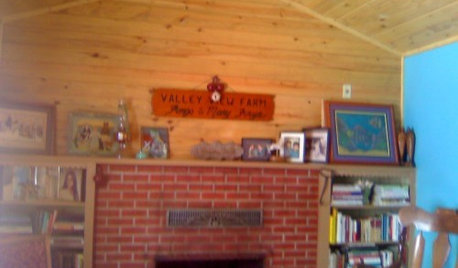
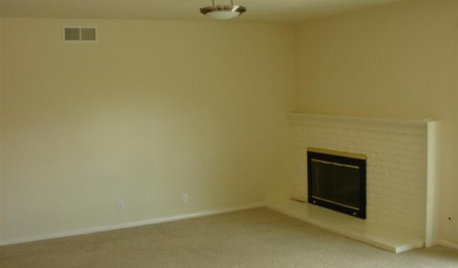
Hi, I'm trying to get more information about putting either a gas fireplace or gas insert into an existing wood fireplace with a gas conversion. We had an inspector check it out, and the flue had a little bit of water damage, but he said it was still usable. This fireplace heats a medium (20x20') room. The brick-to-brick dimensions are 36.5x31.25". Inside it's a little more questionable how large it is, since I'm not sure what would have to be removed for an insert. There's a hearth lip that sticks up about 1" from the floor, which I could remove. and there's a damper coming down a few inches at the top too. If we just talk about hearth to ceiling, the inside room is 30x19.5", so quite a bit smaller, especially on the height.


Assuming the 8" flue pipe is in tact and I can run the inlet/outlet pipes for gas inside of that, what would be the best way to go? Can I remove this whole unit, reuse that 8" flue and just put a new gas fireplace in? The only inserts that I've found that can fit in that spot only push out about 20,000 BTUs, so not great for a room this size. Other full models, like the heat-n-glow 6000 seem to get up to 40,000. What would you guys recommend given my situation? Picture is attached.


Comments (10)

  • PRO
    6 years ago

    Have you considered just adding a ventless gas log? You install them in your existing fireplace without making any modifications. They burn gas to virtually 100% complete combustion, so the resulting byproducts are carbon dioxide and water vapor. So can you burn them with the damper closed and 99% of the heat goes into the room. This will heat more efficiently than any gas insert, except for a vent free gas insert, which is basically the same thing, just more expensive.


    Anything that requires a vent does not burn the gas completely, so it produces carbon MONOXIDE, carbon dioxide, water vapor and soot, which are the byproducts of incomplete combustion. Since carbon monoxide is a lethal odorless gas, they must be vented, hence the reason gas inserts require a vent.


    BTW: Normally, when you look at the BTU of a gas fireplace, they are rated by the BTU input. In other words, not how much heat they put out, but how much gas they burn. So you must consider the efficiency of the unit to determine how much heat they actually produce. Since ventless gas logs put all of the heat into the room, a 20,000 BTU ventless gas log would produce the same heat as a 40,000 BTU gas fireplace that is 50% efficient.


    Shop for Ventless Gas Logs at Hansen Wholesale

  • 6 years ago
    last modified: 6 years ago

    Hi @Hansen Wholesale, the current fireplace is indeed converted to a ventless gas log fireplace. It's hard to see in the picture, but you can see a metal pipe coming in from the left side. The reason I didn't really add that as an option is the refractory panels are cracked, so 3/4 of them would have to be replaced. Since Marco has long gone out of business, it has to be a generic panel cut to size, and that was around $1000. Beyond that, since the flue had water damage, the inspector said that if we did use it, we would probably want it inspected yearly to ensure it didn't develop holes.

    So with that in mind, I figured it would be safer to have 2 3" pipes letting in and out air that are brand new and have the old 8" flue around that, rather than rely on the main flue to stay in tact. What I was trying to avoid was to rip out the 8" flue since it's a 2-story house and it would be quite a lot of drywall repair. What do you think?


    Edit: I should add I'm in california and ventless fireplaces are now illegal. I think ours was made long before the law.

  • 6 years ago

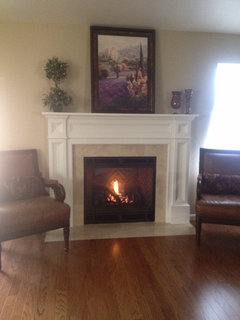
    I also live in California. I purchased a foreclosure and found, upon inspection, the zero clearance metal firebox was cracked. I replaced it with a new gas fireplace. It is controlled with a remote where I can set the temperature, just like the thermostat that is connected to your heater. It uses 45,000 BTU whereas my heater uses 90,000 BTU.
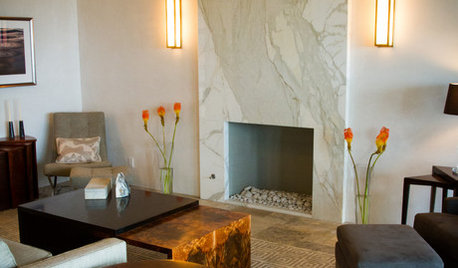
    I’ve posted before and after photos.

  • 6 years ago

    @amateurdeziner looks great! Were you able to keep the same 8" flue pipe or did you have to rip that out as well?

  • 6 years ago

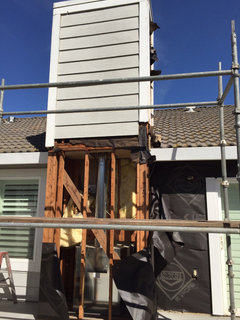
    Thank you, Cliff. I wasn’t living in the house at the time due to renovations but I believe it was replaced. This was done in 2011.
    You can see the new flue in the picture I took while having my siding replaced...

  • 6 years ago

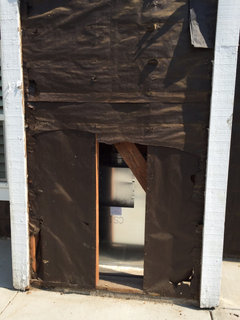
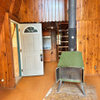
    Here is a picture of the unit

  • PRO
    6 years ago

    Cliff,


    You have two choices here. Install a direct vent insert into your existing fireplace and run the two 3" pipes up your current chimney, or remove the entire fireplace and install a completely new direct vent fireplace like amateurdeiziner did.


    Option #1: A direct vent insert option is going to leave you very limited on your choices of units that fit into your small firebox. So you will be taking a small fireplace and making it even smaller. Personally, I don't think it will look good, but it will be cheaper.


    Option #2: Replacing your wood burning fireplace with a new direct vent fireplace is a much better choice as you can choose from various size fireplaces and make the opening even larger than your current one. Even more, with a direct vent fireplace you can actually terminate the vent directly out the back, thus avoiding having to run the chimney all the way up the 2 story chase. You could potentially leave the existing chimney in place and just use a new direct vent termination out the back. Of course, you would want to block off the existing chimney so cold air does not come into the chase.


    I would suggest exploring the products at Heat N Glo


    I used to sell this brand years ago and they are the most advanced. You will need to find a local dealer and have them come to your home and quote you some prices. They would be able to discuss the above options with you and offer you better advice than I can.


  • 6 years ago

    Thanks @Hansen Wholesale, so is it a true statement that you cannot do option 2 with the existing vent? I was trying to avoid all the drywall work and such, but maybe that's the only way...

  • PRO
    6 years ago

    Venting for a direct vent insert is usually 2 separate 3" diameter vents, which are easy to run up an existing chimney. The pipe for a new Direct Vent Fireplace is different. It is a single piece of pipe. So it may be possible to run that pipe up your existing chimney if it is a straight shot. If there are elbows required, that could complicate the issue. I do not recall what the outer diameter of DV pipe is, and it varies per fireplace model. So, I do suggest you find a local dealer so you can get a direct answer to this question.